


Shoe Business Pitch Deck Ppt Template




Try Before you Buy Download Free Sample Product
 Impress Your
 Audience
 100%
100% Editable
 Save Hours
 of Time


The faster you can get a product to market in the Apparel, the more competitive your company will be. Because of the necessity of speed to market, AFA companies must maintain an agile supply chain. Here is a professionally designed Shoe Business Pitch Deck. It includes various challenges faced by the customers, such as low quality of material used by the manufacturing companies, meeting the diverse expectations of the customers, etc. It also includes the solutions offered by the footwear company, which covers new technology products provided by the footwear company, its background, mission, significant statistics, etc. It covers the value proposition slide, which shows why a customer should buy a product or service from our business, such as accessibility, innovation aspects, etc. Also, this template includes significant trends related to the footwear and accessories industry. It helps in addressing the primary target market of the company. The proposal covers slides related to Year on Year Market Growth in Percentage, Competitive Analysis Using Perceptual Map, investment asks by the company with information related to the utilization of funds, etc. Download it now.
People who downloaded this PowerPoint presentation also viewed the following :
Content of this Powerpoint Presentation
Slide 1: This slide introduces Shoe Business Pitch Deck. State Your Company Name and begin.
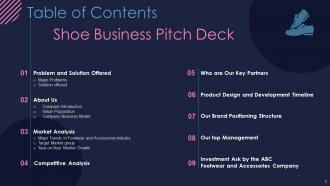
Slide 2: This slide presents Table of Content for the presentation.
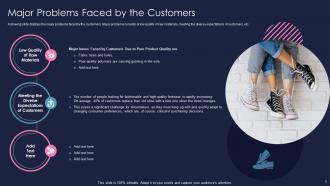
Slide 3: This slide presents major problems faced by the customers.
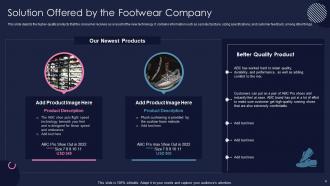
Slide 4: This slide displays higher-quality products that the consumer receives as a result of the new technology.
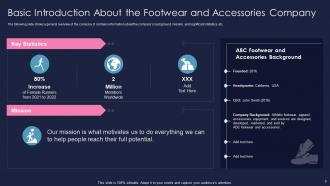
Slide 5: This slide represents Basic Introduction About the Footwear and Accessories Company.
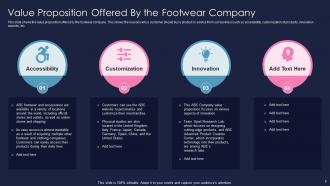
Slide 6: This slide showcases Value Proposition Offered By the Footwear Company.
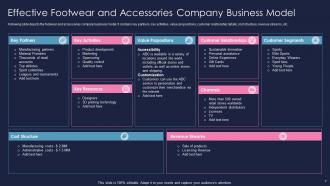
Slide 7: This slide shows Effective Footwear and Accessories Company Business Model.
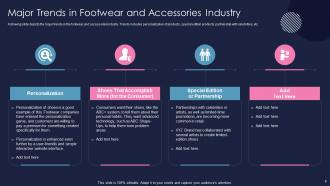
Slide 8: This slide presents Major Trends in Footwear and Accessories Industry.
Slide 9: This slide displays primary target market of the company.
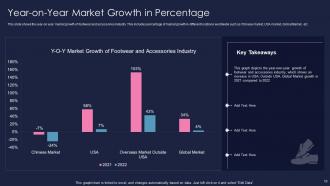
Slide 10: This slide represents the year-on year market growth of footwear and accessories industry.
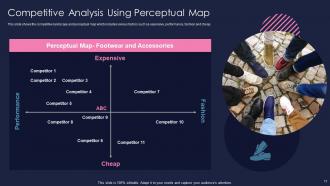
Slide 11: This slide showcases the competitive landscape and perceptual map which includes various factors.
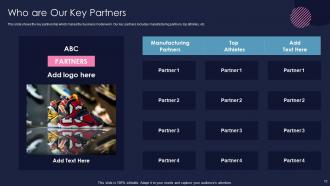
Slide 12: This slide shows the key partnership which makes the business model work.
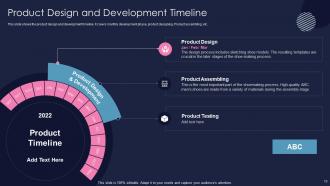
Slide 13: This slide presents the product design and development timeline.
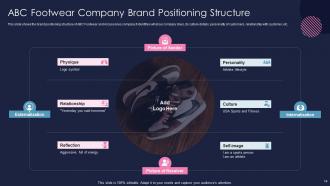
Slide 14: This slide displays the brand positioning structure of ABC Footwear and Accessories company.
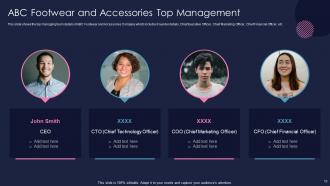
Slide 15: This slide represents the top managing team details of ABC Footwear and Accessories Company.
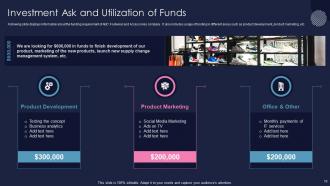
Slide 16: This slide showcases funding requirement of ABC Footwear and Accessories company.
Slide 17: This slide shows Our Contact Details for ABC Footwear and Accessories Pitch Deck.
Slide 18: This slide displays Icons for Shoe Business Pitch Deck.
Slide 19: This slide is titled as Additional Slides for moving forward.
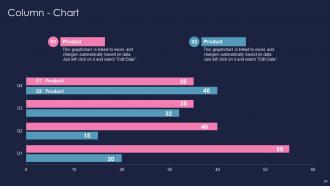
Slide 20: This slide displays Column chart with two products comparison.
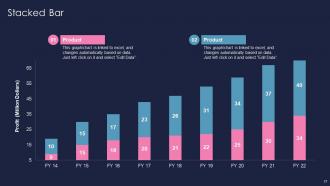
Slide 21: This slide represents Stacked Bar chart with two products comparison.
Slide 22: This is About Us slide to show company specifications etc.
Slide 23: This slide provides 30 60 90 Days Plan with text boxes.
Slide 24: This is an Idea Generation slide to state a new idea or highlight information, specifications etc.
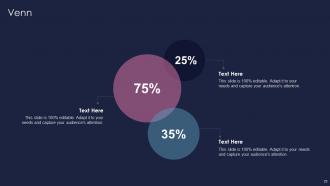
Slide 25: This slide depicts Venn diagram with text boxes.
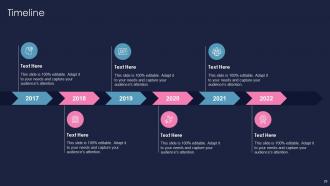
Slide 26: This is a Timeline slide. Show data related to time intervals here.
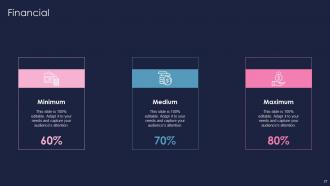
Slide 27: This is a Financial slide. Show your finance related stuff here.
Slide 28: This slide shows Post It Notes. Post your important notes here.
Slide 29: This is a Thank You slide with address, contact numbers and email address.
Shoe Business Pitch Deck Ppt Template with all 34 slides:
Use our Shoe Business Pitch Deck Ppt Template to effectively help you save your valuable time. They are readymade to fit into any presentation structure.









FAQs for Shoe Business Pitch
Honestly, sustainability is the big one right now. People actually care about eco-friendly materials and knowing where their shoes come from - not just millennials anymore either. Comfort tech is blowing up since we're all still working from home half the time and want shoes that don't suck by 3pm. Direct-to-consumer is pretty much essential now if you want decent margins. Customization's getting huge too - everyone wants their own colorways and fits. Oh and the resale market is wild, like StockX numbers are insane. I'd probably start with figuring out your sustainability story first, then work on the D2C piece.
So the shoe industry's getting pretty wild with sustainable stuff - recycled plastics, organic cotton, even mushroom leather (which honestly still sounds fake to me lol). Your customers are totally here for it though. They'll drop 15-20% more cash for eco-friendly kicks and want to know exactly what goes into making them. Sure, you'll need more time upfront finding new suppliers and figuring everything out. But costs usually even out eventually. I'd start by just asking your customers what they actually care about sustainability-wise - that'll tell you which materials to go after first.
Dude, tech is literally everywhere in shoe manufacturing now. 3D modeling lets designers skip making tons of physical samples - saves crazy money. CAD software, digital prototyping for testing comfort, robotic stitching, automated cutting machines. Oh and they're using AI to predict trends, which honestly seems a bit much but whatever works I guess. Manufacturing is way faster and less wasteful than before. If you're thinking about getting into this business, you'll need to budget serious cash for tech upgrades. Companies still doing everything by hand are basically screwed at this point.
Consumer behavior is everything when marketing shoes. Impulse buyers who chase trends? Hit them with social media ads and influencer stuff. But practical shoppers (like my dad who researches sneakers for months) need all the specs and reviews upfront. Where people shop matters too - Gen Z's glued to TikTok while older folks still wander around stores. You've gotta match your marketing to how your audience actually finds and buys shoes. Honestly, it's pretty straightforward once you figure out their habits.
Honestly, the sizing thing will drive you crazy - every country does it differently. Import regulations are a nightmare too, and don't get me started on figuring out what styles people actually want in each market. Your distribution setup probably won't work internationally, so that's another headache. Tariffs and currency swings make pricing super complicated. Oh, and competition is all over the place - your fancy hiking boots might bomb somewhere that cheap knockoffs rule. I'd pick one country first and get that dialed in before you even think about expanding. Way less messy that way.
Honestly, you gotta find your thing and stick to it. Can't compete with everyone, so pick your lane - sustainable materials, wide feet, comfort for healthcare workers, whatever. Then absolutely crush the customer experience part. Zappos literally became huge just by nailing customer service (though their selection helped too). Social media's your friend here - give people actual useful advice about shoe problems. Oh, and personalized recs work great if you can swing it. Just don't promise stuff you can't deliver on. Trust is everything in retail and once it's gone, you're screwed.
Seasonal forecasting is huge for shoes - that and nailing your size matrix. I track sell-through rates by style, size, and color like it's my religion because shoes are so picky about fit. Learned this lesson when I got buried in size 6s while constantly running out of 8.5s (classic mistake). ABC analysis helps you spot your fast movers. Don't sit on slow sellers too long either - footwear trends die quick, so markdown fast. Oh, and set up auto-reorders for your core styles. Nothing worse than going dark on popular sizes when you could've prevented it.
Your shoe business basically runs on seasons - boots crush it in fall/winter while sandals take over spring/summer. Back-to-school in August is insane, then holiday shopping hits hard in November/December. Athletic shoes are your lifesaver though, they stay pretty steady year-round. Here's the thing: you need to forecast at least 6 months out because production takes forever. I'd start tracking your monthly sales data to figure out your specific patterns. It's wild how predictable this stuff gets once you see the trends. Trust me on the 6-month planning - learned that one the hard way!
Photos are everything - get those 360 views and multiple angles. Size charts with actual measurements are crucial since everyone's feet are weird. Fast mobile loading is a must, people shop for shoes on their phones constantly. Reviews with customer photos basically sell themselves, way more convincing than product descriptions. Good filtering by size/brand/color saves people time scrolling through stuff they don't want. Oh and make returns super easy - shoes are honestly such a gamble online without trying them on first. Start with these basics before getting into fancy AR stuff.
Dude, you absolutely need to be on social media if you're doing shoes. Instagram and TikTok are perfect for this stuff - people love seeing cool sneaker shots and unboxing videos. I'm guilty of watching way too many myself lol. Focus on maybe two platforms where your people actually spend time instead of trying to be everywhere. Post regularly and find influencers who genuinely dig your brand, not just anyone with followers. It's crazy how much buying happens directly through social now. You'll build awareness and can chat with customers in real time. Honestly beats traditional advertising by miles.
Honestly, globalization is rough for local shoe makers. Cheap imports flood the market - you can't compete on price alone. Supply chains get wrecked when global stuff goes sideways (remember the whole shipping mess during COVID?). But here's the thing - you've got advantages those massive factories don't. Focus on custom work, quick turnarounds, and sell that whole "local craftsman" angle. People actually care about that now. You can still source better materials internationally if needed. Just don't try beating them at their own game - play yours instead.
Honestly? Skip the mega-influencers with millions of followers - they're overpriced and their audiences don't really engage. Find micro-influencers instead (like 10K-100K range). Way better engagement rates and they won't blow your budget. Some of my favorite shoe campaigns just used regular people who actually wore the brand daily. Let them post naturally instead of giving them some weird script to follow. Oh, and don't get caught up in reach numbers - track actual sales and engagement instead. Start with maybe 2-3 people, see what works, then expand from there.
Dude, the footwear game is getting wild. 3D-printed custom insoles are about to blow up, and Adidas is already doing entire shoes this way. Smart shoes with sensors that track your gait and auto-adjust cushioning? That's happening now. Feels like we're living in the future, honestly. Sustainability's huge too - mushroom leather, recycled ocean plastic, shoes that completely biodegrade. Some of this eco stuff actually looks better than traditional materials, which is crazy. You should probably start figuring out which direction fits your brand before everyone else jumps on it.
Honestly, your pricing basically tells customers everything about your brand before they even touch your shoes. Go too cheap and they'll think you're selling garbage quality. But jack up the price without earning it? You'll just confuse people - been there! Look at Nike charging $200+ because they spent decades building that reputation. I'd start by checking what your competitors are doing, then go slightly higher if you want the "premium" vibe or a bit lower to steal some market share. Just make sure whatever you pick actually matches what you're delivering, you know?
Honestly, start with warehousing - regional centers will save you a ton on shipping costs and time. For transport, air freight's fast but crazy expensive. Sea freight's way cheaper but you're looking at like 6 weeks from Asia (patience required lol). Don't forget all the customs paperwork and import duties - every country's different there. Shoes are bulky compared to their value so that affects pricing too. My take? Pick 2-3 markets max, get those running smooth first. Way better than spreading yourself thin trying to ship everywhere right away.
-
Extensive range of templates! Highly impressed with the quality of the designs.
-
The website is jam-packed with fantastic and creative templates for a variety of business concepts. They are easy to use and customize.