

Software company pitch deck ppt template




Try Before you Buy Download Free Sample Product
 Impress Your
 Audience
 100%
100% Editable
 Save Hours
 of Time


Introducing our software company pitch deck PPT template. Give an overview of your company and its functioning with the help of our e-commerce assistance PowerPoint deck. This pitch elevation PPT theme showcases the company operational overview with segments and revenue splits. This readymade finance pitch deck PowerPoint design contains a slide that displays the vision, mission, and values of the company. Utilizing this organization capitalization PPT layout will help you display the operations as well as the financial statements of the company. Incorporating this corporate investment PPT theme allows you to present unique selling propositions of the company. This pitch finance promotion PowerPoint creative set contains a slide that relays the current growth status of the company. Selection of this investor fund sponsoring PowerPoint template provides you with a slide that displays the product sales forecast chart of the company. Download this PPT slide to explore true perfection.
People who downloaded this PowerPoint presentation also viewed the following :
Content of this Powerpoint Presentation
Slide 1: This title slide introduces the SOFTWARE COMPANY PITCH DECK. Add the name of your company here.
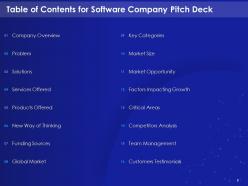
Slide 2: This slide contains the Table of Contents for the Software Company Pitch Deck. It includes - Company Overview, Problem, Solutions, Services Offered, Products Offered, etc.
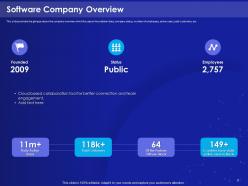
Slide 3: This slide presents the Software Company Overview. It provides a glimpse of the company overview which focuses on foundation date, company status, number of employees, active users, paid customers, etc.
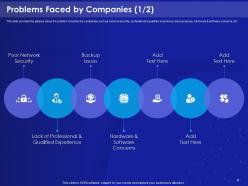
Slide 4: This slide presents the Problems Faced by Companies (1/2). It provides a glimpse of the problem faced by the companies such as network security, professional & qualified experience, backup issues, hardware & software concerns, etc.
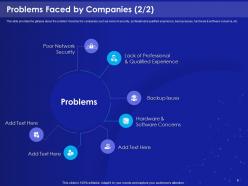
Slide 5: This slide presents the Problems Faced by Companies (2/2). Continue to note the problems faced by the company here.
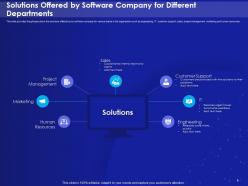
Slide 6: This slide presents the Solutions Offered by Software Company for Different Departments. It provides a glimpse of the solutions offered by our software company for various teams in the organization such as engineering, IT, customer support, sales, project management, marketing, and human resources.
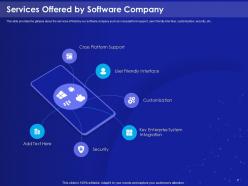
Slide 7: This slide presents the Services Offered by Software Company. It provides a glimpse of the services offered by our software company such as cross-platform support, user-friendly interface, customization, security, etc.
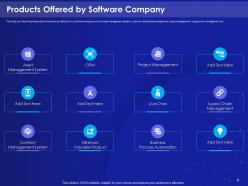
Slide 8: This slide presents the Products Offered by Software Company. It provides a glimpse of the products offered by our software company such as asset management systems, customer relationship management, project management, supply chain management, etc.
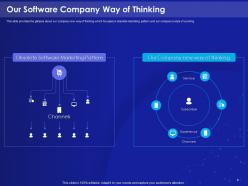
Slide 9: This slide presents Our Software Company Way of Thinking. It provides a glimpse of our company's new way of thinking which focuses on obsolete marketing patterns and our company’s style of working.
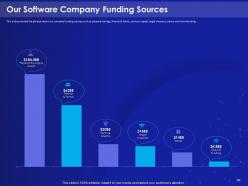
Slide 10: This slide presents Our Software Company Funding Sources. It provides a glimpse of our company funding sources such as personal savings, friends & family, venture capital, angel investors, banks, and crowdfunding.
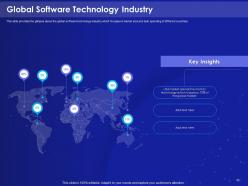
Slide 11: This slide presents the Global Software Technology Industry. It provides a glimpse of the global software technology industry which focuses on market size and bulk spending of different countries.
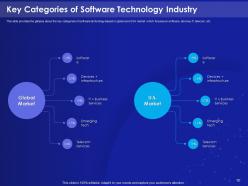
Slide 12: This slide presents the Key Categories of the Software Technology Industry. It provides a glimpse of the key categories of software technology based on global and USA markets which focus on software, devices, IT, telecom, etc.
Slide 13: This slide presents the Software Services Market Size Projections. It provides a glimpse of the software services market sizing across different industries such as finance, sales, and marketing, human resource, etc.
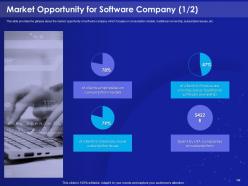
Slide 14: This slide presents the Market Opportunity for Software Company (1/2). It provides a glimpse of the market opportunity of a software company that focuses on consumption models, traditional ownership, subscription issues, etc.
Slide 15: This slide presents the Factors Impacting Software Growth in 2021. It provides a glimpse of the factors driving negative and positive growth of software in 2021 such as existing customer business, new client segments, internal operations, sales, and marketing, etc.
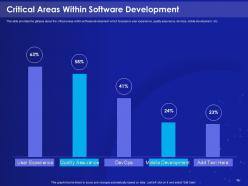
Slide 16: This slide presents the Critical Areas Within Software Development. It provides a glimpse of the critical areas within software development which focuses on user experience, quality assurance, DevOps, mobile development, etc.
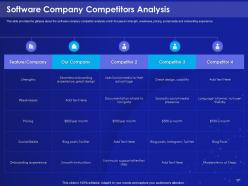
Slide 17: This slide presents the Software Company Competitors Analysis. It provides a glimpse of the software company competitor analysis which focuses on strengths, weaknesses, pricing, social media, and onboarding experience.
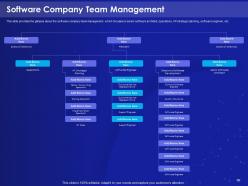
Slide 18: This slide presents the Software Company Team Management. It provides a glimpse of the software company team management which focuses on senior software architect, operations, VP strategic planning, software engineer, etc.
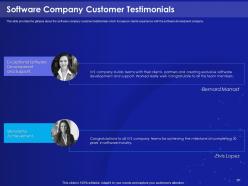
Slide 19: This slide presents the Software Company Customer Testimonials. It provides a glimpse of the software company's customer testimonials which focuses on clients’ experience with the software development company.
Slide 20: This is the Software Company Pitch Deck- Icons Slide.
Slide 21: This slide presents the Additional Slides.
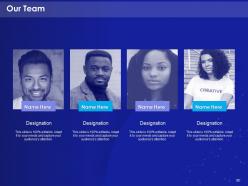
Slide 22: This slide shows the members of the company team with their name, designation, and photo.
Slide 23: This slide provides a Venn diagram that can be used to show interconnectedness and overlap between various departments, projects, etc.
Slide 24: This slide contains Post-It Notes that can be used to express any brief thoughts or ideas.
Slide 25: This is the Puzzle slide to showcase the parts that make up a concept whole.
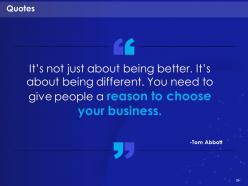
Slide 26: Use this slide to presents appropriate Quotes here.
Slide 27: This slide presents the Mind Map to show interconnectedness between ideas.
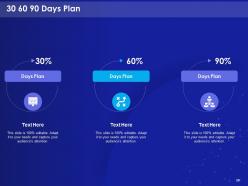
Slide 28: This is a slide with a 30-60-90-Days Plan to set goals for these important intervals.
Slide 29: This is a Thank You slide where details such as the address, contact number, and email address are added.
Software company pitch deck ppt template with all 29 slides:
Use our Software Company Pitch Deck PPT Template to effectively help you save your valuable time. They are readymade to fit into any presentation structure.




FAQs for Software company pitch
Alright, so you need problem statement, solution, market size, business model, traction, team, and funding ask. Start with the problem slide - I can't stress this enough. So many founders jump straight to their solution and lose everyone. Make investors actually feel that pain point first. Then show your fix. Throw in competitive analysis and go-to-market strategy too. Each slide should hammer home one main point, don't overcrowd them. The whole thing needs to flow like a story in 10-12 slides max. Oh and practice the actual pitch out loud! The slides are just your backup - you're the one selling it.
Honestly, visuals are what turn your pitch from a snooze-fest into something people actually remember. Like, charts showing user growth or product screenshots tell your story way better than bullet points ever will. Nobody wants to sit through walls of text - that's just painful. Each visual should move your narrative forward though, whether it's highlighting the problem or showing off your traction. I've seen too many decks with random pretty graphics that don't actually mean anything. Pick stuff that backs up what you're saying, not just eye candy.
Don't lead with technical stuff - you'll kill the room before you even get started. Jump straight into the problem you're solving instead. That whole "we'll capture 1% of this trillion dollar market" thing? Super cringe, everyone says it. Skip those endless competitor slides too, they're boring as hell. Focus on what makes you different and show real numbers if you have them. Keep your demo short but make it actually impressive. Oh and practice the whole thing out loud first - trust me on this one, the flow matters way more than you think.
Figure out what problem you solve that others don't - that's your goldmine. Don't just list features though, talk about outcomes. Instead of "advanced analytics," try "spot revenue leaks 3x faster than spreadsheets." I've seen way too many founders ramble about capabilities without mentioning actual pain points (honestly drives me nuts). Throw in real numbers and customer stories when you can. The test? Someone should be able to repeat your value prop after hearing it once. Oh, and definitely run it by people outside your company first - you're probably too close to see the gaps.
Okay so focus on the numbers that actually matter for showing growth and proving people want your product. MRR/ARR is obvious. User growth rate, CAC, and LTV too - that LTV:CAC ratio needs to be above 3:1 or investors get weird about it. Churn rate's huge, especially if it's going down. Gross margins and MAUs depend on your business model I guess. Here's the thing though - don't go crazy with like 15 different metrics. Pick maybe 5-6 that really show your momentum. Each one should basically scream "this is why you should give us money."
Oh man, this is huge. Investors want to see money stuff first - market size, revenue projections, how you'll actually make profit. They're calculating ROI in their heads constantly. But customers? Start with their pain points and how you fix them. Skip all the financial forecasts - they don't care about your projected Series A, lol. Show them demos, features, other customer wins instead. I've watched so many people bomb because they used identical decks for both. Totally different mindsets. Your opening slides especially matter since that's what hooks them initially.
Dude, seriously get feedback on your pitch deck before showing investors. Test it with users, other founders, maybe some advisors - anyone who'll give you honest input. What seems obvious to you might be total nonsense to everyone else. Ask specific stuff like "does this problem actually matter to you?" instead of generic "thoughts?" questions. I've watched founders bomb because they skipped this step and their messaging was all over the place. Take the feedback seriously and actually change things. Your deck will be way better after a few rounds of this. Trust me on this one.
Just make a simple comparison chart showing 3-4 things you actually do better than competitors. Skip the feature list - explain WHY your way works. Don't trash talk other companies (honestly, it makes you look sketchy). Instead, give them credit where it's due but show clear proof of your advantages. Use real numbers, customer quotes, whatever backs up your claims. Make it super visual so investors can scan it quickly. The whole point is proving you get the competition and have a solid plan to steal their customers. Oh, and keep the technical stuff simple unless they're all engineers.
Show them a day-in-the-life comparison - what their routine looks like without your software vs. with it. Customer stories are absolute gold, especially when you've got real quotes or numbers. Nothing beats a solid "this process went from 6 hours to 20 minutes" example. The classic problem/solution approach still works great too - hit them with a pain point they'll instantly recognize, then show how you fix it. Oh, and make everything as concrete as possible. People need to actually picture themselves using your stuff, not just understand it conceptually.
Stick to 10-15 slides max - investors are swamped and honestly their attention is toast after that. Cover the basics: problem, solution, market size, business model, traction, team, financials, and your ask. One key point per slide though. This isn't about closing them right away, just getting that next meeting. I'd aim for 10-12 minutes so there's time for questions after. Oh and definitely test it on someone who's never heard of your product - they'll catch the confusing parts you're blind to. Trust me on that one.
PowerPoint's definitely your go-to here. You can present live, share screens without drama, and make those inevitable last-minute changes. PDF's perfect for sending afterwards since it won't get messed up or accidentally edited. Google Slides works well if you're collaborating or presenting remotely. Skip Keynote unless everyone's using Mac - learned that one the hard way. Oh, and always keep a backup PDF ready because tech will fail you at the worst possible moment. That's just Murphy's law with presentations.
Honestly, consistency is everything here. Use the same colors, fonts, and logo on every slide - that's your starting point. Don't randomly switch from casual to corporate speak if your brand is normally chill. I've seen way too many pitch decks that look like they're from totally different companies, it's wild. Your messaging needs to match what's already on your website and other stuff. The whole story should feel like it naturally fits with your brand. Oh, and definitely keep your brand guidelines open while you're working - saves you from second-guessing every design choice.
Honestly, less is more here. White space is your friend - cramped slides just confuse people. Stick to maybe two fonts max and pick colors that actually match your brand. For software stuff, screenshots are everything. Investors want to see your actual product, not hear you describe it for 10 minutes. You can throw in some interactive bits or short videos if they add value, but don't get carried away with fancy transitions. Those cheesy PowerPoint animations from 2003? Skip 'em. Your design should back up your story, not steal the spotlight from it.
Definitely scatter them throughout, but placement matters. Customer quotes work great on your problem/solution slides - validates that people actually feel those pain points. After your product demo, drop in a detailed case study to show real results. Screenshots of actual metrics are way more convincing than fluffy testimonials, honestly. Your traction slide should have those impressive customer logos for instant credibility. Oh, and keep testimonials short and specific - nobody cares about generic "great product!" stuff. If you can swing a quick video testimonial from a customer, use that for your closing. It's basically cheat code level persuasive.
Show, don't tell - that's your golden rule here. Quick video demos or interactive prototypes work way better than static screenshots (those are just boring honestly). Focus on the core problem you're solving, not every tiny feature you've built. You want that "holy shit, this actually works" moment from investors. Keep demos under 30 seconds and talk through what's happening. Can't demo live? Record quality screen captures with decent audio - but seriously, test everything beforehand. Nothing tanks a pitch faster than your demo crashing mid-presentation. Been there, seen it happen.
-
Excellent Designs.