


Pitch deck slide use of funds powerpoint show





Try Before you Buy Download Free Sample Product
 Impress Your
 Audience
 100%
100% Editable
 Save Hours
 of Time


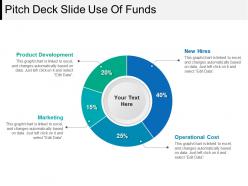
Make a proper allocation of your organizational funds using this professionally designed Pitch Deck Slide Use Of Funds PowerPoint Show template. With the help of this template, you can guide your teammates, sales personnel, the employees, and subordinates on how to spend the funds on productive activities. This will help you in assigning duties and tasks to different individuals and in an organized manner. Also, your audience will understand the duties clearly when explained through this slide. This way, you can have control over the unnecessary expenditure and can productively allocate the funds. Familiarize your staff that how much amount is to be spent on marketing, product development, for new hirings and for the operational cost. This way, you can work according to the planned strategies and can use the funds in an efficient and productive manner.
People who downloaded this PowerPoint presentation also viewed the following :
Pitch deck slide use of funds powerpoint show with all 5 slides:
Allow every element to emerge effectively with our Pitch Deck Slide Use Of Funds Powerpoint Show. They help break it all down.



FAQs for Pitch deck slide use of
So most companies split their money into like 5 main areas: operational stuff (payroll, rent, utilities), big purchases like equipment and tech, R&D, marketing/sales, and paying off debt or giving money back to investors. Operations will probably be your biggest expense - just basic keeping-the-business-running costs. R&D and marketing budgets are all over the place depending on what industry you're in, but you can't really skip them if you want to grow. Honestly, comparing your spending in these areas to what other companies in your space are doing is a good way to figure out where you might be wasting money or need to invest more.
Okay so first thing - map out where your money's going against what you're actually trying to achieve. I know it sounds basic but you'd be shocked how many businesses skip this. Break everything into three buckets: stuff you absolutely need, things that help you grow, and everything else (spoiler: ignore bucket three). Score each project on ROI and how much it actually moves your business forward. The scoring doesn't have to be fancy - just consistent. Check in every quarter and cut the dead weight. Honestly, being ruthless here is half the battle. Most budgets feel all over the place because people aren't willing to say no to the nice-to-have stuff.
Look, market research is like your insurance policy before dumping money into something new. You'll find out if people actually want what you're making, who you're up against, and what they'll pay. Skip this step and you're just gambling - I've watched so many projects crash because someone thought they had the next big thing but never bothered checking. The data helps you pick which features matter most and set budgets that make sense. Even basic validation beats going in blind. Trust me on this one.
Yeah, funding sources totally control how you can spend. With equity, you get way more freedom - investors want growth but aren't breathing down your neck about payments every month. Debt's a different beast though. Those fixed payments don't care if you're having a rough quarter (learned that one the hard way). Banks also love their covenants telling you exactly what you can't do with their cash. Honestly, just match your funding to what you actually need. Don't pile on debt when you're trying to fund some experimental project that might take years to pay off.
Track your ROI and payback period first - those numbers don't lie. Then add 3-4 metrics that match what you actually spent money on, like cost per customer or revenue per employee. Customer satisfaction matters too if you invested there (though yeah, softer to measure). Honestly, most people pick too many metrics and get overwhelmed. Stick to what directly connects to your funding goals. Check them monthly so you can course-correct if needed. Oh, and set up some kind of dashboard now while you remember - scrambling for data later is the worst.
Okay so three main things you gotta nail down. First, quarterly reports showing where every dollar went - but here's the thing, don't let your own finance people review them. Get outside auditors or board members, someone with fresh eyes. Documentation is huge too, like receipts and approvals for anything over whatever amount you set. Most places totally bomb this part honestly. Short sentences work better for clarity. If you're dealing with public money, maybe throw in annual transparency reports? The whole point is making your cash flow so obvious that my grandma could follow it without getting confused.
Dude, you're looking at some serious headaches if this goes wrong. Legal trouble, reputation damage, losing donors - the whole mess. I've actually watched nonprofits crash and burn over mishandled restricted funds, so don't mess around with this. Set up clear spending rules from day one. Keep those restricted funds in separate accounts if you can - makes life way easier. Document everything obsessively and do regular financial check-ins. An annual independent audit is probably smart too, even if it feels like overkill. Basically, build systems that prevent screw-ups before they happen. Future you will thank you.
Most tech companies dump like 60-80% of their budget into R&D and hiring engineers - they're basically burning cash to grow fast. Healthcare's totally different though. They're stuck dealing with FDA approvals (which cost a fortune, honestly) plus all that regulatory stuff and clinical trials. Manufacturing falls somewhere in the middle with their equipment and supply chain costs. My advice? Check what other companies in your industry are spending first. If your ratios look way off from the norm, you better have a good reason why. Otherwise investors start asking awkward questions.
Zero-based budgeting is your friend here - justify every single expense from scratch instead of just copying last year's mess. Get department heads involved early since they actually know what's needed (learned this the hard way). Real-time expense tracking saves your butt when things start going sideways. Every dollar should connect to actual goals, not just stuff that sounds good in meetings. Build in maybe 15% wiggle room because something always comes up. Oh, and do quarterly check-ins so you can move money around to what's actually working instead of throwing good money after bad.
Honestly, get yourself some automated cash flow forecasting - it'll predict when you need money and where it's all going. Real-time dashboards are clutch for seeing your spending patterns instantly. The AI analytics catch inefficiencies you'd never notice on your own (I missed so much before using this stuff). No more manual reconciliation headaches when everything syncs between your accounting software and banking platforms. Set up automated alerts too. They'll ping you about weird transactions or when you're blowing past budget limits. Just pick one decent financial platform that plays nice with what you're already using. You'll notice the difference pretty quick.
Honestly, every funding decision comes down to stakeholder interests. Investors want their returns, employees need job security, customers are pushing for better products. Regulators? They just want you to follow the rules. It's exhausting being pulled in all these directions! Before you touch that budget, map out who actually matters and what they care about. I learned this the hard way - used to just wing it and wonder why everyone was pissed. Once you know what drives each group, the funding decisions start making sense. Well, mostly anyway.
Ugh, compliance is such a headache but it basically controls where your money goes and how you document it all. There's tons of rules about separating funds, what counts as eligible expenses, timing stuff - you can't just shuffle money between different sources whenever you want. The paperwork alone will make you want to scream. Detailed tracking, constant reports, the whole nine yards. Miss something? Boom - audit time and penalties that'll wreck your budget. Here's what saved my sanity: map out all the compliance stuff first, then build your funding strategy around that. Don't try to force square pegs into round holes later.
Honestly, just be super clear and consistent with everything you tell them. Use simple words, actual numbers, and show exactly where the cash is going. Don't wait for them to come asking questions - that's always awkward. Set up regular calls, send quarterly updates, maybe even quick informal check-ins. Those annual filings? Nobody actually reads them, so don't rely on those. Charts and visuals help a ton since people can see your priorities instantly. The whole thing works way better when you're proactive about it. Stick to whatever schedule you set up, even during boring months when nothing's really happening.
Blended financing might be perfect for you - it mixes grants, loans, and equity so you're not putting all your eggs in one basket. Social impact bonds are trendy right now too. Basically investors only get paid if you actually hit your goals. Revenue-based financing is honestly way less stressful than regular loans since payments go up and down with your cash flow. Crowdfunding works great for specific projects, or maybe try a membership model for steady income? I'd map out what you've got now and pick 1-2 options that fill your biggest holes.
Look, it really comes down to where you are in the business cycle. Starting out? You're basically throwing money at product dev, figuring out if anyone actually wants what you're building, hiring your first real employees. Everything's a test. Once you hit growth mode, that's when you dump cash into scaling up and marketing hard - gotta beat competitors to the punch. This is make-or-break time for most startups, honestly. Mature companies are different though - they focus on getting more efficient, paying dividends, maybe buying other businesses. Just match your spending to whatever gets you to that next big milestone.
-
Use of icon with content is very relateable, informative and appealing.
-
Graphics are very appealing to eyes.