


Skincare Industry Business Plan Powerpoint Presentation Slides




Try Before you Buy Download Free Sample Product
 Impress Your
 Audience
 100%
100% Editable
 Save Hours
 of Time


Starting and operating a skincare store may appear to be simple, but the truth is that if you want to avoid stress, you must make the necessary preparations to ensure that it will withstand the test of time. Therefore, our team has crafted this Skincare Business Plan PPT to provide you with detailed insight into the skincare industry. It lists all the essential elements, including market research, industry trends, growth or revenue drivers, target market, competitive landscape, etc. In addition to it, the document also includes porters framework and its impact on the skincare industry, market gap and opportunities, market sizing, including TAM, SAM, and SOM, go-to marketing strategy, sales funnel, etc. Entity details, executive summary, products and services, mission and vision, exit strategy, etc., are also covered in this business plan. Furthermore, to give users an insight into the financial aspect, the skincare business plan also portrays a financial summary section in which a detailed 5-year analysis has been executed considering the market scenarios. It covers the revenue model, profit and loss statement, cash flow statement, break-even analysis, DCF valuation, balance sheet, etc. Download this 100 percent editable presentation and get access to our highly researched and skillfully designed product.
People who downloaded this PowerPoint presentation also viewed the following :
Content of this Powerpoint Presentation
Slide 1: This slide introduces Skincare Industry Business Plan. State your company name and begin.
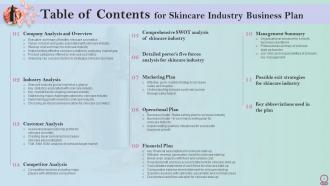
Slide 2: This slide shows Table of Content for the presentation.
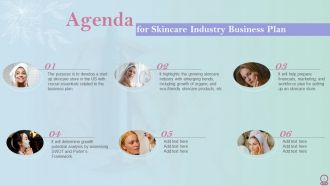
Slide 3: This slide states Agenda of the presentation.
Slide 4: This slide highlights title for topics that are to be covered next in the template.
Slide 5: This slide presents Executive summary of healthy skincare cosmetics.
Slide 6: This slide displays Vision, mission and goals associated with skincare industry.
Slide 7: This slide represents Start-up cost summary for skincare industry.
Slide 8: This slide showcases Implementing effective skincare solution by analyzing market gap.
Slide 9: This slide shows Product categories offered by skincare cosmetics.
Slide 10: This slide presents Analyzing key success factors to strategize skincare business.
Slide 11: This slide highlights title for topics that are to be covered next in the template.
Slide 12: This slide displays Skincare industry global market at a glance.
Slide 13: This slide represents Key statistics associated with skincare industry.
Slide 14: This is another slide continuing Key statistics associated with skincare industry.
Slide 15: This is another slide continuing Key statistics associated with skincare industry.
Slide 16: This slide showcases Key market trends shaping skincare industry.
Slide 17: This slide shows Addressing major challenges catered by skincare industry.
Slide 18: This slide presents Determining growth drivers for skincare industry.
Slide 19: This slide displays Choosing an ideal business location for skincare cosmetics.
Slide 20: This slide highlights title for topics that are to be covered next in the template.
Slide 21: This slide represents Assessing target customer profile for skincare cosmetic.
Slide 22: This slide showcases Creating buyer personas to increase skincare personalization.
Slide 23: This slide shows TAM SAM SOM analysis of skincare target market.
Slide 24: This slide highlights title for topics that are to be covered next in the template.
Slide 25: This slide presents Competitive analysis including major players with attributes comparison.
Slide 26: This slide highlights title for topics that are to be covered next in the template.
Slide 27: This slide displays Comprehensive SWOT analysis of skincare industry.
Slide 28: This slide highlights title for topics that are to be covered next in the template.
Slide 29: This slide represents Detailed porter’s five forces analysis for skincare industry.
Slide 30: This slide highlights title for topics that are to be covered next in the template.
Slide 31: This slide showcases Effective go-to-market strategy to increase sales and revenue.
Slide 32: This is another slide continuing Effective go-to-market strategy to increase sales and revenue.
Slide 33: This is another slide continuing Effective go-to-market strategy to increase sales and revenue.
Slide 34: This is another slide continuing Effective go-to-market strategy to increase sales and revenue.
Slide 35: This slide shows Understanding skincare customer journey through sales funnel.
Slide 36: This slide highlights title for topics that are to be covered next in the template.
Slide 37: This slide presents Business model - Retail selling plan for skincare industry.
Slide 38: This slide displays Business model – E-commerce selling plan for skincare industry.
Slide 39: This slide represents Implementing quarterly milestones for successful business growth.
Slide 40: This slide highlights title for topics that are to be covered next in the template.
Slide 41: This slide showcases Key financial assumptions for skincare start-up.
Slide 42: This slide shows Effective revenue generation model for skincare start-up.
Slide 43: This slide presents Break-even analysis with fixed and variable cost.
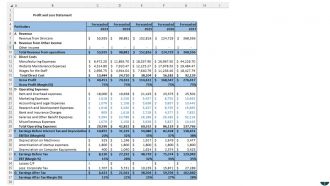
Slide 44: This slide displays Projected profit and loss account statement for skincare start-up.
Slide 45: This is another slide continuing Projected profit and loss account statement for skincare start-up.
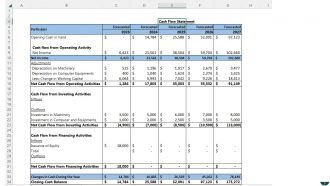
Slide 46: This slide showcases Consolidated statements of cash flows for skincare start-up.
Slide 47: This is another slide continuing Consolidated statements of cash flows for skincare start-up.
Slide 48: This slide shows Comparative balance sheet statement for skincare start-up.
Slide 49: This slide presents Comparative balance sheet statement for skincare start-up.
Slide 50: This slide showcases Scenario analysis with optimistic, pessimistic and nominal cases.
Slide 51: This is another slide continuing Scenario analysis with optimistic, pessimistic and nominal cases.
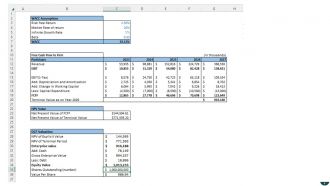
Slide 52: This slide shows Discounted cash flow valuation for skincare start-up.
Slide 53: This slide highlights title for topics that are to be covered next in the template.
Slide 54: This slide presents Organizational structure for smooth business operations.
Slide 55: This slide displays Professional summary of skincare start-up founder.
Slide 56: This slide represents Job roles and responsibilities of skincare key management.
Slide 57: This is another slide continuing Job roles and responsibilities of skincare key management.
Slide 58: This slide highlights title for topics that are to be covered next in the template.
Slide 59: This slide showcases Possible exit strategies for skincare industry.
Slide 60: This slide highlights title for topics that are to be covered next in the template.
Slide 61: This slide shows Key abbreviations used in the plan.
Slide 62: This slide contains all the icons used in this presentation.
Slide 63: This slide is titled as Additional Slides for moving forward.
Slide 64: This is Our Mission slide with related imagery and text.
Slide 65: This slide shows Post It Notes. Post your important notes here.
Slide 66: This is Our Team slide with names and designation.
Slide 67: This slide describes Line chart with two products comparison.
Slide 68: This is a Financial slide. Show your finance related stuff here.
Slide 69: This slide depicts Venn diagram with text boxes.
Slide 70: This slide presents Roadmap with additional textboxes.
Slide 71: This slide contains Puzzle with related icons and text.
Slide 72: This slide displays Mind Map with related imagery.
Slide 73: This is a Thank You slide with address, contact numbers and email address.
Skincare Industry Business Plan Powerpoint Presentation Slides with all 78 slides:
Use our Skincare Industry Business Plan Powerpoint Presentation Slides to effectively help you save your valuable time. They are readymade to fit into any presentation structure.





FAQs for Skincare Industry Business Plan
Start with market research - figure out who you're selling to and what competitors are already doing. Your product strategy comes next, then marketing/branding stuff. Financial projections are huge - startup costs, pricing, realistic sales forecasts for three years minimum. Operations like manufacturing and distribution need planning too. Oh, and regulatory compliance is a nightmare in skincare but you can't ignore it or you're screwed later. Honestly? Build a bare-bones version first, test it with real customers, then expand from there. Way smarter than going all-in without knowing if people actually want what you're making.
Honestly, just start with who you're actually trying to reach - what age, skin issues, how much they spend. Social media polls work great for quick feedback. I'd also stalk your competitors' pricing and read their reviews to see what people complain about. Industry reports like Mintel are amazing but expensive AF. Facebook skincare groups are where people get real about products they hate - way more honest than reviews sometimes. Oh, and make a simple spreadsheet to keep track of everything. You'll start seeing patterns pretty quickly once you organize it all.
Honestly, men's skincare is going absolutely crazy right now - like, finally catching up to where it should've been years ago. Clean beauty and personalized products are huge too. Everyone wants to know exactly what's in their stuff and wants it made specifically for their skin type. Gen Z kids are starting anti-aging routines at like 16, which is wild but smart I guess? K-beauty brands are still killing it, and so are smaller indie companies. My advice? Pick one thing and get really good at it instead of trying to do everything. Way better chance of actually making it work.
Honestly, you gotta get way more specific than just "women 25-45" - that tells you nothing useful. What problems are they actually dealing with? Acne, wrinkles, or maybe they just want something super simple? Figure out their income, where they usually shop, how much they'd realistically spend on skincare each month. I'd create like 2-3 detailed personas with actual names and backstories - sounds cheesy but it works. Then here's the key part: validate all this by running surveys or polls on social media before you blow money on development. No point making products nobody wants, right?
So skincare stuff falls under cosmetics regulations - FDA doesn't pre-approve them but you're still on the hook if anything goes sideways. Get your formulations tested for sure. The labeling requirements are honestly such a pain, like they have rules about font sizes and where everything goes. You'll need proper ingredient lists and safety data before launching. Plus there's state regulations depending where you're selling, and don't even get me started on international rules if you go that route. My advice? Check out FDA's cosmetic guidance docs first, then maybe talk to a regulatory consultant early on. Way better than scrambling to fix compliance issues later when you're already invested.
Think of it like this - you're drowning in a sea of face creams, so what makes yours different? Could be your ingredients, who you're targeting, pricing, whatever. Just pick something specific. Without that, you'll end up competing on price alone (total nightmare). Here's what works: when someone mentions dry skin or acne or whatever, they should instantly think of YOUR brand. That's positioning done right. Oh, and once you figure out your main thing, don't muddy the waters - every post, ad, email should hammer home that same message. Consistency is everything in skincare marketing.
Okay so first figure out your actual costs - ingredients, packaging, labor, all that stuff. Then multiply by like 4-6x for retail. I know it sounds crazy high but that's how it works. Definitely stalk your competitors' pricing but don't just copy them exactly. Premium stuff can cost more, obviously. Simpler products should be cheaper. Honestly the whole pricing thing is terrifying at first - I get it. Try testing different price points with small batches if you can swing it. Here's the weird part though: people literally think expensive = better quality with skincare. So don't sell yourself short! Start somewhere and adjust based on what actually sells.
Honestly, Instagram and TikTok are where it's at for skincare brands. People are obsessed with those before/after posts and morning routines - I spend way too much time watching them myself lol. You don't need huge celebrities either. Sometimes those smaller influencers with like 10K followers actually get better engagement than the big names. Once you hook people, email marketing keeps them coming back for more products. YouTube tutorials are great too since skincare's all about trust - nobody wants to mess up their face, you know? I'd say start with Instagram, build up that community vibe first, then expand.
Okay so you've gotta figure out what actually makes you different - not just say you're different. Most skincare brands are literally copy-pasting the same "clean beauty" stuff and it's so boring. What demographic isn't being served well? Are there problems competitors totally ignore? Your angle might be specific ingredients, or honestly even just how you package things or do customer service. I'd start by making a list of what's genuinely unique about your products from your customer's POV, not yours. Could be your brand story, price point, whatever. Just make sure it's real differentiation that people can actually feel.
Dude, sustainability isn't optional anymore in skincare - it's basically expected. Younger customers especially will research the hell out of your brand before buying anything. You'll want to focus on eco-friendly packaging and clean ingredients right from the start. Supply chain matters too, like where you're getting your stuff from. I'd honestly pick 2-3 realistic green commitments you can actually deliver on and promote those hard. Brands ignoring this are getting crushed in the market. It's way more than just a trend now.
Three main things to nail down: compliance stuff, good packaging, and solid branding. FDA requires ingredient lists (use those INCI names), net weight, your business info - basic legal stuff. Packaging actually matters more than people think - UV protection for vitamin C, airless pumps for antioxidants. I've watched so many good products fail because someone cheaped out on containers. Keep your design clean so people instantly get what it does. Quality printing is worth it - nothing screams amateur like smudged labels. Oh, and check your state requirements first since they're all different.
Look, skincare marketing is basically all about showing transformation - those before/after shots are pure gold. Instagram and TikTok should be your main focus since they're so visual. TikTok's algorithm is honestly kind of wild - nail a trending sound with good skincare tips and you could blow up fast. Don't spread yourself too thin though, just pick 1-2 platforms to start. Post consistently, actually respond to comments, and find some micro-influencers who genuinely use your stuff (not just anyone with followers). Oh, and document your brand's real story behind the scenes - people eat that up.
Okay so you'll need 3-year revenue projections broken down by product line and sales channel - online vs retail, that stuff. Startup costs are huge in skincare though - development, inventory, marketing, plus all the regulatory headaches. Monthly cash flow for year one is crucial since beauty has those crazy seasonal spikes. Don't forget COGS and operational expenses for your break-even analysis. Honestly, investors hate when founders are too optimistic, so lowball your revenue and pad those expense estimates. Better to under-promise than look like you have no clue what you're doing.
Honestly, I'd start by figuring out where your customers actually hang out - boutique shops, Sephora, wherever they're already buying stuff. Put together a pitch deck with your pricing and margins, plus any sales numbers if you've got them. Samples are huge though - buyers want to actually touch your products before committing. Each retailer has their own weird submission process, so you'll need to dig around for the right buyer contacts. Distributors might be your best bet at first since they already have those retail connections locked down. Build some credibility with local stores first, then go bigger from there.
Honestly, the competition is insane right now - literally everyone's trying to launch a skincare brand. Customer acquisition costs will destroy your budget if you're not careful. Plus the regulations are no joke, FDA stuff can trip you up fast. My advice? Pick one specific niche instead of going broad. Build your audience through content first rather than burning cash on ads. Get your formulations dialed in and make sure all the legal boxes are checked before you even think about scaling. I know it's tempting to rush, but nail the basics first. The foundation work is boring but it's everything.
-
Definitely a time saver! Predesigned and easy-to-use templates just helped me put together an amazing presentation.
-
“As you have innovative ideas and they are all customizable, this saves a huge chunk of your time to prepare well-read presentations.”