

Step By Step Guide To Skincare Start Up Powerpoint Presentation Slides




Try Before you Buy Download Free Sample Product
 Impress Your
 Audience
 100%
100% Editable
 Save Hours
 of Time


Starting and operating a skincare store may appear to be simple, but the truth is that if you want to avoid stress, you must make the necessary preparations to ensure that it will withstand the test of time. Therefore, our team has crafted this Step by Step Guide to Skincare Start ups to provide you with detailed insight into the skincare industry. It lists all the essential elements, including market research, industry trends, growth revenue drivers, target market, competitive landscape, etc. In addition to it, the document also includes porters framework and its impact on the skincare industry, market gap, and opportunities, market sizing, including TAM, SAM, and SOM, go to marketing strategy, sales funnel, etc. Entity details, executive summary, products and services, mission and vision, exit strategy, etc., are also covered in this business plan. Furthermore, to give users an insight into the financial aspect, the skincare business plan also portrays a financial summary section in which a detailed 5 year analysis has been executed considering the market scenarios. It covers the revenue model, profit and loss statement, cash flow statement, break even analysis, DCF valuation, balance sheet, etc. Download this 100 percentage editable presentation and get access to our highly researched and skillfully designed product.
People who downloaded this PowerPoint presentation also viewed the following :
Content of this Powerpoint Presentation
Slide 1: This slide displays the title Step-by-Step Guide to Skincare Start-up.
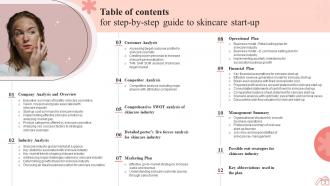
Slide 2: This slide exhibit table of content.
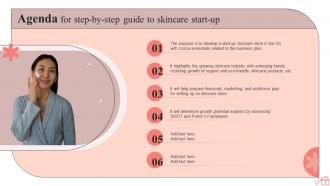
Slide 3: This slide display the title Agenda for step-by-step guide to skincare start-up.
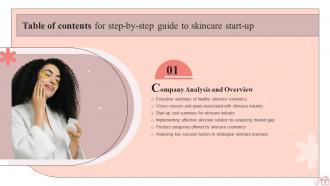
Slide 4: This slide exhibit table of content- Company Analysis and Overview.
Slide 5: This slide provides a glimpse of Executive summary of healthy skincare cosmetics.
Slide 6: This slide covers the skincare industry's vision, mission, and goals to ensure that it will deliver healthy and effective skincare solutions.
Slide 7: This slide provides information about start-up expenditures that incur during the process of establishing a skincare store.
Slide 8: This slide covers the problem associated with the skincare industry and how the company will implement an effective solution to overcome the existing gap.
Slide 9: The purpose of this slide is to provide a glimpse of the key product categories offered by the skincare cosmetics.
Slide 10: This slide covers the essential points to be considered while selling skincare products in the market.
Slide 11: This slide exhibit table of content- Industry Analysis.
Slide 12: The purpose of this slide is to highlight the market size of the global skincare industry.
Slide 13: This slide highlights the thorough assessment of a market within the skincare industry.
Slide 14: This slide highlights the thorough assessment of a market within the skincare industry.
Slide 15: This slide highlights the thorough assessment of a market within the skincare industry.
Slide 16: This slide highlights the key market trends that have the potential to change the current market scenario.
Slide 17: This slide portrays details about various challenges catered by the skincare industry such as expensive skincare products.
Slide 18: This slide caters to details about various growth drivers resulting in skincare industry progress.
Slide 19: This slide portrays an ideal business location for skincare products that minimize the risk of failure.
Slide 20: This slide exhibit table of content- Customer Analysis.
Slide 21: This slide covers an assessment of how the company's products will fit into a particular market and where they will acquire the most traction with customers.
Slide 22: This slide provides a glimpse of how to better understand the target audience, to fine-tune marketing campaigns, and increase skincare personalization.
Slide 23: The purpose of this slide is to depict the market potential of skincare in terms of TAM, SAM, and SOM to assist startups and enterprise firms.
Slide 24: This slide exhibit table of content- Competitor Analysis.
Slide 25: The purpose of this slide is to provide a glimpse of major participants and key competitors of the industry.
Slide 26: This slide exhibit table of content- Comprehensive SWOT analysis of skincare industry.
Slide 27: The purpose of this slide is to identify the industry' strengths, weaknesses, opportunities, and threats related to the business.
Slide 28: This slide exhibit table of content- Detailed porter’s five forces analysis for skincare industry.
Slide 29: The slide highlights porter’s five forces model and its implications in the US skincare industry.
Slide 30: This slide exhibit table of content- Marketing Plan.
Slide 31: This slide is to implement an effective go-to-market strategy for bringing the company's products or services to an end customer.
Slide 32: The purpose of this slide is to implement an effective go-to-market strategy for bringing the company's products or services to an end customer.
Slide 33: The purpose of this slide is to implement an effective go-to-market strategy for bringing the company's products or services to an end customer.
Slide 34: The purpose of this slide is to implement an effective go-to-market strategy for bringing the company's products or services to an end customer.
Slide 35: This slide provides information regarding the skincare customer journey mapping to track users' actions and key touch points across levels.
Slide 36: This slide exhibit table of content- Operational Plan.
Slide 37: The purpose of this slide is to highlight the skincare store's retail selling plan.
Slide 38: This slide covers the e-commerce selling plan for the skincare business.
Slide 39: The slide covers particular objectives or goals that the organization intends to attain as part of its business plan.
Slide 40: This slide exhibit table of content- Financial Plan.
Slide 41: This slide provides a glimpse of important financial assumptions that are to be made while setting skincare store.
Slide 42: The slide shows the effective revenue model of the skincare industry, which displays the cost incurred and the various sources of income.
Slide 43: The slides highlight the break-even analysis of the firm.
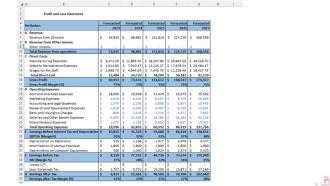
Slide 44: The slides provide a glimpse of the projected profit and loss statement to visualize the skincare store’s financial performance for the next five years.
Slide 45: The slides provide a glimpse of the projected profit and loss statement to visualize the skincare store’s financial performance for the next five years.
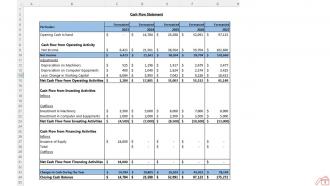
Slide 46: The slides highlight the company's cash flow statement to provide a detailed picture of what happened to a business's cash during a specified period.
Slide 47: The Company will have a sufficient amount of cash during the projected period to plan the expansion of the business.
Slide 48: The slides cover the snapshot of the company's financial position at a specific time by showing the details of the assets of the company.
Slide 49: The slides cover the snapshot of the company's financial position at a specific time by showing the details of the assets of the company along with its liabilities.
Slide 50: This slide is to examine the effects of potential future events on the company’s performance by considering different outcomes.
Slide 51: The purpose of this slide is to examine the effects of potential future events on the company’s performance by considering different outcomes.
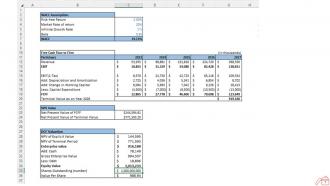
Slide 52: The purpose of this slide is to calculate the amount of money an investor would get from an investment after adjusting for the time value of money.
Slide 53: This slide exhibit table of content- Management Summary.
Slide 54: The slide highlights the organizational hierarchy in the company.
Slide 55: This slide highlights the Professional summary of skincare start-up founder.
Slide 56: This slide highlights the job roles and responsibilities of skincare key management people to determine what kind of job has to be done.
Slide 57: This slide highlights the job roles and responsibilities of skincare key management people to determine what kind of job has to be done.
Slide 58: This slide exhibit table of content- Possible exit strategies for skincare industry.
Slide 59: This slide highlights the Possible exit strategies for skincare industry.
Slide 60: This slide exhibit table of content- Key abbreviations used in the plan.
Slide 61: The purpose of this slide is to highlight the shorter version of existing words to save time and take up less space.
Slide 62: This is the icons slide.
Slide 63: This slide presents title for additional slides.
Slide 64: This slide depicts 30-60-90 days plan for projects.
Slide 65: This slide presents your company's vision, mission and goals.
Slide 66: This slide showcases financials of company.
Slide 67: This slide displays column chart for different products.
Slide 68: This slide shows details of team members like name, designation, etc.
Slide 69: This slide shows roadmap of company.
Slide 70: This slide depicts posts for past experiences of clients.
Slide 71: This slide shows puzzle for displaying elements of company.
Slide 72: This slide displays Venn.
Slide 73: This is thank you slide & contains contact details of company like office address, phone no., etc.
Step By Step Guide To Skincare Start Up Powerpoint Presentation Slides with all 78 slides:
Use our Step By Step Guide To Skincare Start Up Powerpoint Presentation Slides to effectively help you save your valuable time. They are readymade to fit into any presentation structure.





FAQs for Step By Step Guide To Skincare Start Up
Right now it's all about clean beauty, personalized skincare, and K-beauty stuff. Everyone's obsessed with minimal ingredients and sustainable packaging - like, people actually read labels now instead of just buying whatever looks pretty. Custom formulations are everywhere too, based on skin scans or even DNA tests which is kinda wild. TikTok basically broke how beauty trends work. Things blow up overnight now. But honestly? The real shift is people wanting brands to be transparent about what actually works instead of just having good marketing. My advice - pick one trend you actually know about and go deep rather than jumping around trying to do everything.
Start with the basics - age, income, lifestyle stuff, plus what skin issues they're dealing with. Stalk your competitors' social media to see who's actually buying their stuff (sounds creepy but it works). Don't fall into that "everyone needs skincare" trap - way too broad and you'll get nowhere. Hit up Instagram polls or Reddit skincare groups to survey people directly. What are they complaining about that nobody's fixing well? Your goldmine is where unmet needs meet people with actual spending money. Build detailed personas with real problems, then - this part's key - have real conversations to test if you're right about what they want.
FDA stuff is your biggest headache - they're super picky about cosmetics vs drugs. Mess up your labeling and you're screwed. Any therapeutic claims? That means drug approval territory, which is honestly brutal. You'll also want Good Manufacturing Practices certification. USDA Organic or Ecocert could work if you're going that route. The whole regulatory maze is insane though. Seriously, hire a cosmetic chemist or regulatory person early on instead of DIYing it. Trust me, the upfront cost beats dealing with compliance disasters later. I learned this the hard way with a friend's skincare launch.
You gotta find something the big players are totally missing. Clean beauty is everywhere now - honestly kinda played out. Talk to people about what's actually bugging them with their current stuff. That's where you'll strike gold. Maybe it's skincare for people working nights, or products that actually work in humid climates. Could be addressing skin problems from certain meds - there's tons of gaps if you look. Your formulation or story needs to fix something others ignore. Don't just go broad. Get super specific about who you're helping and why.
Oh definitely - branding makes or breaks skincare startups. The market's so crowded that amazing products literally fail because they look cheap or generic. You're not just selling face cream, you're selling trust and an experience. Your brand has to scream what makes you different - clean ingredients, affordability, whatever. I'd start with nailing down your brand personality first (are you the cool minimalist brand or the luxury one?), then let that drive everything else. Visual consistency matters huge, but honestly? Authentic storytelling is what really hooks people. Don't sound like every other "clean beauty" brand out there.
Oh man, so many people rush to launch without testing their stuff properly first. The FDA is absolutely ruthless with cosmetic claims too - don't even think about cutting corners there. Budget way more time and money for compliance than seems reasonable. Also? Skip the fancy packaging initially. I see founders blow tons of cash on pretty bottles before their formula even works right. Focus on nailing ONE incredible product that actually solves something people care about. You can always expand later once you've got that hero item dialed in perfectly.
Okay so customer feedback is literally your cheat sheet for making better products. Like when people complain your moisturizer breaks them out or the pump bottle sucks - that's actually super valuable intel. You'll spot problems you totally missed during development. Some of my best product tweaks came from reviews that honestly hurt to read at first lol. Set up ways to collect this stuff regularly - surveys, review monitoring, just talking to customers directly. Look for patterns in what people keep saying and use that to guide what you work on next. They're basically doing market research for free.
Honestly, I'd start by looking for those third-party certifications - Fair Trade, Rainforest Alliance, USDA Organic. They're not just fancy stickers; they actually mean something. Dig into their supply chain transparency too. I got burned once by a "sustainable" supplier who was total BS when I looked closer. Ask about farmer relationships and labor practices. Do they support local communities? Environmental impact? Also - and this might seem obvious but whatever - thoroughly vet 3-4 suppliers instead of just going with whoever's cheapest. Trust me on this one.
Honestly, packaging can make or break your skincare brand. It's literally the first thing people see, so it better look good! Your bottles and labels need to scream quality while showing off your brand vibe. Clean design with clear ingredient lists is key - people want to know what they're putting on their face. Plus good packaging lets you charge more (which is kinda genius if you think about it). Just make sure it pops on shelves and looks Instagram-worthy. Trust me, invest in this part.
Instagram and TikTok are your best bet - skincare just kills it on visual platforms. Before/after shots, quick tutorials, that kind of stuff. Go with micro-influencers instead of the big names (they actually engage way better anyway). Educational content is key since people want to trust what they're putting on their face. Oh, and email marketing is massive for skincare - it's all about building those repeat habits, you know? Get your customers posting their own results too. Honestly, start with just one platform and really figure it out there before jumping around everywhere.
Honestly, start with consumer testing first - way cheaper and you'll learn if people actually want to use your stuff daily. Send samples to your target users, have them fill out surveys about their experience. Clinical trials are where you get the real data though. Participants use your product for like 4-12 weeks while researchers measure hydration, elasticity, wrinkle depth with fancy instruments. Derms eat that stuff up. But yeah, clinical studies can run you $50K+ easily, so maybe save those for when you're more confident in your formula and ready to make some serious marketing claims.
Dude, honestly most people blow it by only thinking about product development costs. Formulation and testing alone will run you $10-20k, then you're looking at another $15-30k for packaging and those brutal minimum orders. Safety testing and regulatory stuff adds more on top. Marketing's huge too - I mean, the market's so saturated now. Get quotes from manufacturers first though, that'll give you the real picture. I'd honestly budget closer to $50-75k minimum to do this right. Could be way more if you're doing multiple products or something complex.
Honestly, education-based content is your best bet right now. Post skincare tips and ingredient breakdowns on Instagram and TikTok - people are obsessed with knowing what's actually in their products. Consistency matters more than perfection though. Actually respond to comments (not just hearts), and find micro-influencers who genuinely use skincare daily. User-generated content works amazingly well too, so get customers sharing their results. The beauty space is insanely crowded, so being helpful instead of salesy will make you stand out. Oh, and start documenting everything now before you even launch!
Start with your own website - you'll keep way more profit and control your messaging. Instagram and TikTok are insane for skincare right now, people literally buy products from 30-second videos. Amazon moves volume but they take a huge cut. Sephora/Ulta are the dream but good luck getting in as a newbie. Try boutique stores, dermatology offices, maybe local spas instead. Honestly, test a bunch of different places at once and see what actually works. Every brand's different - what kills it for one might flop for another.
Honestly, micro-influencers are your best bet here. Way better engagement than the big names and you won't blow your entire budget on one post. Find people who actually use skincare stuff already - like, check if they're posting about it naturally before you even reach out. I swear half these brands just mass-DM everyone and wonder why it doesn't work. Send them products first to try. Then work out deals for multiple posts, stories, maybe some longer reviews too. Oh and definitely track what's actually bringing in sales, not just the pretty engagement numbers.
-
Thanks for all your great templates they have saved me lots of time and accelerate my presentations. Great product, keep them up!
-
The templates you provide are great! They have saved me tons of time and made my presentations come alive. Thank you for this awesome product. Keep up the good work!