

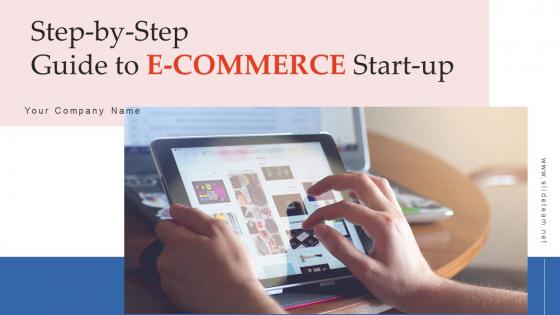
Step By Step Guide To E Commerce Start Up Powerpoint Presentation Slides




Try Before you Buy Download Free Sample Product
 Impress Your
 Audience
 100%
100% Editable
 Save Hours
 of Time


Starting and operating an e-commerce platform may appear to be simple, but the truth is that if you want to avoid stress, you must make the necessary preparations to ensure that it will withstand the test of time. Therefore, our team has crafted this Step-by-Step Guide to E-commerce Start-up to provide you with detailed insight into the e-commerce industry. It lists all the essential elements, including market research, industry trends, growth or revenue drivers, target market, competitive landscape, etc. In addition to it, the document also includes porters framework and its impact on the e-commerce industry, market gap and opportunities, market sizing, including TAM, SAM, and SOM, go-to marketing strategy, sales funnel, etc. Entity details, executive summary, products and services, mission and vision, exit strategy, etc., are also covered in this business plan. Furthermore, to give users an insight into the financial aspect, the e-commerce business plan also portrays a financial summary section in which a detailed 5-year analysis has been executed considering the market scenarios. It covers the revenue model, profit and loss statement, cash flow statement, break-even analysis, DCF valuation, balance sheet, etc. Download our 100 percent editable e commerce ppt presentations and get access to our highly researched and skillfully designed products.
People who downloaded this PowerPoint presentation also viewed the following :
Step By Step Guide To E Commerce Start Up Powerpoint Presentation Slides with all 69 slides:
Use our Step By Step Guide To E Commerce Start Up Powerpoint Presentation Slides to effectively help you save your valuable time. They are readymade to fit into any presentation structure.







FAQs for Step By Step Guide To E Commerce Start Up
Start by figuring out if people actually want your thing - survey potential customers even though it feels super awkward. Their feedback is everything. I'd test with a basic landing page or MVP before going all in. Run some small ads or try pre-orders to see if folks will actually pay, not just say "oh that's cool." Also check your supply chain and profit margins early because honestly, those boring details can totally sink you. The whole point is proving demand exists before you build your entire business around an assumption.
Honestly, just start with your budget and how tech-savvy you are. Shopify's perfect if you want something simple, but those monthly fees plus apps get expensive fast. WooCommerce is technically free but you'll be wrestling with WordPress constantly - and trust me, that gets old quick. BigCommerce is kind of the middle ground with decent features already built in. What are you selling though? Digital stuff, subscriptions, or physical products all work differently on each platform. My advice? Pick 2-3 and actually build test stores on each. You'll know pretty fast which one doesn't make you want to throw your laptop.
Honestly, you gotta nail the basics first - multiple product photos from different angles and clear pricing right upfront. Write descriptions that actually tell people how it'll help them, not just boring specs. That add to cart button? Make it impossible to miss. Customer reviews are like gold - seriously, they sell way better than any copy you'll write. Don't hide your shipping costs and return policy either. People hate surprises at checkout. Oh and definitely optimize for mobile since everyone's shopping on their phones these days. Try different layouts and see what actually works for your customers.
Definitely research a bunch of suppliers first - relying on just one is risky as hell. I made that mistake once with a guy who swore he could handle big orders but totally flaked after 100 units. Get samples from everyone and make sure they can actually produce what you need. Negotiate payment terms early and put quality standards in writing (seriously, don't skip this). Dropshipping's not a bad way to test products without buying tons of inventory upfront. Oh, and always keep 2-3 backup suppliers ready because things go sideways fast in this business.
Honestly, start with content marketing and email - way better ROI when you're bootstrapping. Make stuff that actually helps your customers solve problems, then grab their emails with lead magnets. Reviews are everything these days (I literally won't buy anything without reading them first lol). User-generated content works great too. Your onboarding needs to be smooth, and follow-up emails are clutch. Set up automations for abandoned carts and post-purchase stuff. Oh, and track customer lifetime value from day one - you'll need that to figure out acquisition spend later.
Dude, SEO is a game changer for your store - basically free customers who already want to buy stuff. Your product pages need good titles and descriptions with words people actually type into Google. Don't forget alt text for images (I always forget this one tbh). Speed is huge - slow sites are death. You'll want proper URLs and mobile optimization so Google doesn't hate you. Start with keyword research first though. Ubersuggest works, or just see what Google suggests when you start typing. Trust me, it's worth the effort.
Honestly, social media is like having free marketing on tap for your startup. Pick where your customers actually are - maybe Instagram if you've got cool visual stuff, or TikTok if your audience skews younger. Don't spread yourself too thin trying to post everywhere though, that's exhausting. Facebook's still decent for customer service stuff, weirdly enough. The real trick? Just be consistent and actually talk to people instead of posting into the void. I'd start with one platform, get good at it, then maybe add another. Way better than half-assing three different accounts.
Dude, track your inventory turnover and set reorder points for everything. Black Friday taught me this lesson when I completely ran out of my top seller - worst feeling ever! Figure out your weekly sales, then trigger reorders when you've got 2-3 weeks left. TradeGecko works great, but honestly spreadsheets with alerts do the job too. Look at last year's numbers for seasonal stuff to predict when demand goes crazy. The tricky part is balancing enough stock without locking up all your cash. Seriously though, start tracking this stuff now before you get burned.
Oh definitely start with the obvious ones - Visa, Mastercard, Amex, and PayPal. Those cover most people. Apple Pay and Google Pay are pretty much essential now too since everyone's obsessed with tapping their phone to pay for everything. I'd throw in Afterpay or Klarna because younger shoppers are obsessed with those buy-now-pay-later things (honestly saved my ass a few times lol). The whole point is giving people options so they don't bail at checkout. Maybe start with like 5 methods and see what your customers actually use?
Dude, three things will make or break your site. Loading speed is huge - if it takes more than 3 seconds, people are gone. Navigation should be brain-dead simple, like 3 clicks max to find anything. Categories need to make sense and stick that search bar somewhere obvious. Your checkout process can't suck either. Guest checkout is a must, throw in multiple payment options, and show shipping costs right away. Nobody likes surprise fees at the end - learned that the hard way myself. Oh, and test everything on mobile constantly since that's where most people shop now. Walk through buying something on your own site every week. You'll catch weird bugs before customers get frustrated and bail.
So first thing - pick your business structure. LLC's pretty solid for most people. Then you gotta register for licenses and permits in your state. Sales tax is where it gets messy though - you'll need to collect it wherever you have "nexus" and honestly that stuff gets confusing super quick with online sales. Oh and make sure your website has terms of service, privacy policy, return policy, all that legal stuff. Product liability is another thing to think about if you're selling physical products. I'd definitely talk to a business attorney first - sounds expensive but trust me, way cheaper than fixing problems later.
Google Analytics is free and honestly does the job for beginners - don't overthink it. Track your conversion rates, customer acquisition costs, and average order values right from the start. Figure out which traffic sources bring your best customers and what products people buy together. Cart abandonment data is gold too. Maybe your mobile checkout is trash or your product descriptions aren't hitting right - the numbers will tell you stuff you'd never guess. I usually check weekly reports and actually change things based on what I see. Sounds boring but it works.
Honestly, shipping is where you can really make or break customer trust. Give people options - fast shipping for those who'll pay extra, cheaper slow options for bargain hunters. Always send tracking info and status updates because nobody wants to wonder where their stuff is. That radio silence thing drives people crazy. If you start getting busy, check out services like ShipBob or FBA since they've got way better shipping rates than you'll get solo. Oh and whatever delivery times you promise upfront, stick to them no matter what. Under-promise if you have to.
Figure out what actually makes you different first - not just "we have great quality" but something real customers can't find anywhere else. Your colors, fonts, all that visual stuff should match this vibe consistently. Honestly, most online stores look identical these days, so that's kind of an opportunity for you? How you write emails and product descriptions matters too - it should sound like YOU, not some generic brand. Oh, and test this stuff with actual people early on. The memorable brands aren't always the prettiest ones. They just feel authentic.
Look, I'd focus on SEO, Facebook/Instagram ads, and email marketing first. SEO's slow but free once it works. Paid social gets you quick wins if you target right. Email has crazy good ROI - just don't be annoying about it. Google Ads work but they'll drain your budget fast when you're starting out. TikTok's worth trying too if your crowd's younger, the organic reach is still decent there. Honestly though? Pick one thing and actually get good at it before jumping around. I see too many people spread themselves thin and wonder why nothing's working.
-
Kudos to SlideTeam for achieving the high success rate in delivering the top-notch slides.
-
The quality of PowerPoint templates I found here is unique and unbeatable. Keep up the good work and continue providing us with the best slides!