


Ecommerce proposal template powerpoint presentation slides





Try Before you Buy Download Free Sample Product
 Impress Your
 Audience
 100%
100% Editable
 Save Hours
 of Time


For your prospective clients, deciding which e-commerce expert to hire for their project is a huge decision to make. They have to think about how their virtual store should look like, what should be the return and delivery policy, which mode of payment is the most acceptable to them etc. A solid ecommerce proposal will simply this process to some extent. If you are a marketing agency dealing with offering ecommerce services, our Ecommerce Proposal Template functions as a sample for you to learn how to pitch your services in a way that converts your prospects into clients. This PPT slideshow uses a very straightforward language that helps in showing your client that your services will give them what they really desire: a highly profitable and fully functional ecommerce store. The scope of this PowerPoint presentation includes deliverables like project objectives, investment, process, scope, timeframe, etc. that helps in explaining how your company progresses when a project is given to them. Also feel free to state your additional services if at all your company offers like copywriting, inbound marketing, web-support retainer, etc. You can also gain your customer’s loyalty by stating a few customer testimonials which show how great and useful your services are. These customer testimonials prove very useful when you want to show the value of your services and how they helped your clients progress and grow. So, without any further ado, grab this professional and very practical Ecommerce Proposal Template slideshow, the slides of which can be customized as per your need and requirement. Not only that you can add your important information to make this PPT more useful and personalized.
People who downloaded this PowerPoint presentation also viewed the following :
Content of this Powerpoint Presentation
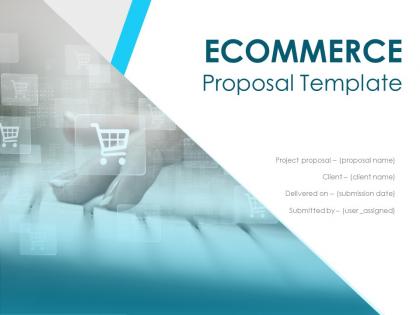
Slide 1: This slide introduces the Ecommerce Proposal Template.
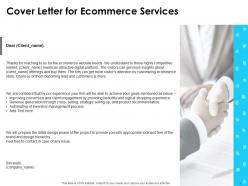
Slide 2: This slide reveals the Cover Letter for Ecommerce Services.
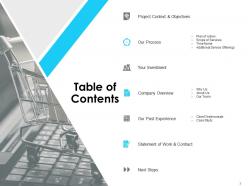
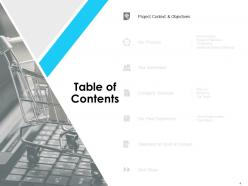
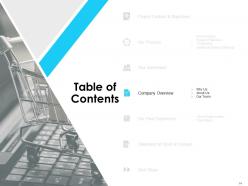
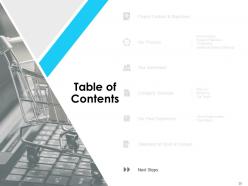
Slide 3: This slide shows the Table of Contents- Project Context & Objectives, Your Investment, Company Overview, Why Us, About Us, Our Team, Our Past Experience, Client Testimonials, Case Study, Next Steps, Statement of Work & Contract, Plan of Action, Scope of Services, Time frame, Additional Service Offerings, Our Process.
Slide 4: This slide again shows the Table of Contents.
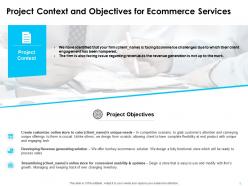
Slide 5: This slide depicts the Project Context and Objectives for Ecommerce Services.
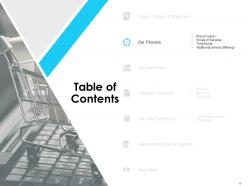
Slide 6: This slide shows the Table of Contents.
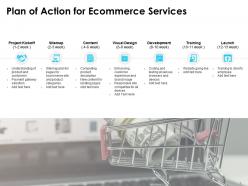
Slide 7: This slide shows the Plan of Action for Ecommerce Services.
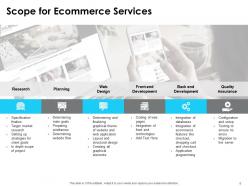
Slide 8: This slide portrays the Scope for Ecommerce Services such as Research, Planning, Web Design, Front end Development, Back end Development, and Quality Assurance.
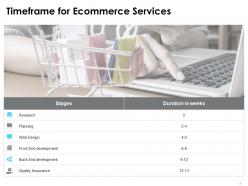
Slide 9: This slide portrays the Timeframe for Ecommerce Services.
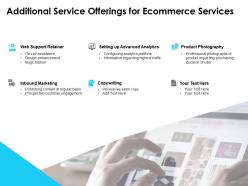
Slide 10: This slide showcases the Additional Service Offerings for Ecommerce Services- Web Support Retainer, Product Photography, Inbound Marketing, Setting up Advanced Analytics, Copywriting.
Slide 11: This slide shows the Table of Contents.
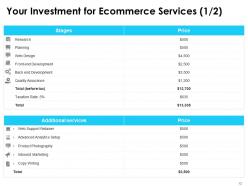
Slide 12: This slide portrays Your Investment for Ecommerce Services.
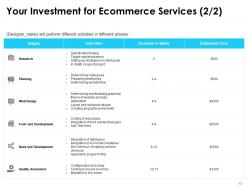
Slide 13: This slide again portrays Your Investment for Ecommerce Services.
Slide 14: This slide shows the Table of Contents.
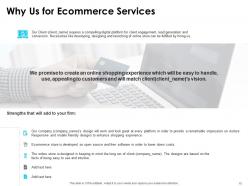
Slide 15: This slide depicts Why Us for Ecommerce Services.
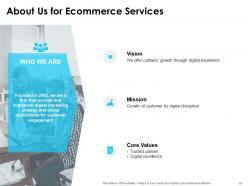
Slide 16: This slide depicts About Us for Ecommerce Services- Vision, Mission, Core Values.
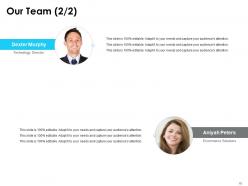
Slide 17: This slide reveals the names and designation of Our Team members.
Slide 18: This slide again reveals the names and designation of Our Team members.
Slide 19: This slide shows the Table of Contents- Project Context & Objectives, Your Investment, Company Overview, Why Us, About Us, Our Team, Our Past Experience, Client Testimonials, Case Study, Next Steps, Statement of Work & Contract, Plan of Action, Scope of Services, Time frame, Additional Service Offerings, Our Process.
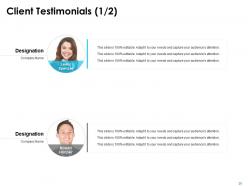
Slide 20: This slide reveals the Client Testimonials.
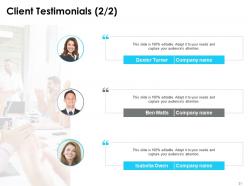
Slide 21: This slide again reveals the Client Testimonials.
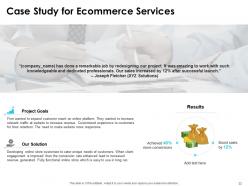
Slide 22: This slide portrays the Case Study for Ecommerce Services.
Slide 23: This slide shows the Table of Contents.
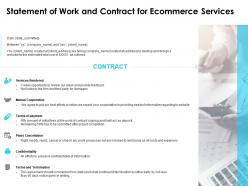
Slide 24: This slide shows the Statement of Work and Contract for Ecommerce Services.
Slide 25: This slide again depicts the Table of Contents.
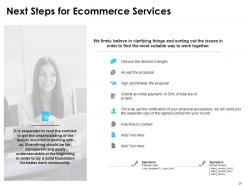
Slide 26: This slide reveals the Next Steps for Ecommerce.
Slide 27: This is a contact us slide consisting of Company NAME, Company Address, Phone number, and email Id and website.
Slide 28: This slide is titled as Additional Slides for moving forward.
Slide 29: This slide depicts About Us.
Slide 30: This slide reveals Our Mission.
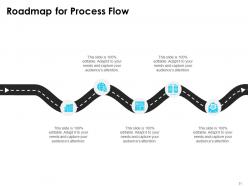
Slide 31: This slide unveils the Roadmap for Process Flow.
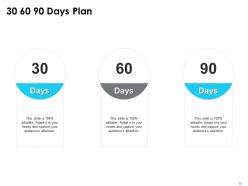
Slide 32: This slide shows the 30 60 90 Days Plan.
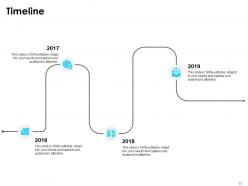
Slide 33: This slide shows the Timeline.
Ecommerce proposal template powerpoint presentation slides with all 33 slides:
Use our Ecommerce Proposal Template Powerpoint Presentation Slides to effectively help you save your valuable time. They are readymade to fit into any presentation structure.

FAQs for Ecommerce proposal template
So your ecommerce proposal should hit the main stuff - scope, timeline, budget, what you're delivering. Talk about which platform you'd recommend, payment setup, security, mobile optimization (seriously, everyone's on their phones). Oh and definitely show off your team's experience with similar projects, maybe throw in some case studies if you have good ones. Post-launch support is huge too - clients always need help after going live. End it with super clear next steps so they don't just sit on it forever.
Dude, templates are a game changer for ecommerce proposals. You're not reinventing the wheel every single time - just swap in their specific stuff and you're golden. Saves me hours honestly, especially when I'm dealing with like 5 different clients. You won't accidentally leave out important bits like pricing or deadlines that totally kill deals. Makes you look way more put-together too. I learned this the hard way after sending a messy proposal last year and losing a decent client. Just grab a solid template and tweak it for whoever you're pitching to.
Put your value prop right at the top - don't make them hunt for it. Clean design with lots of white space, tons of bullet points because honestly? Dense paragraphs are where proposals go to die. Throw in metrics and case studies from their specific industry. The pricing section needs ROI calculations that actually make sense for their situation. Templates feel cold, so leave obvious spots where you can drop in personal stuff about their challenges. Keep it under 7 pages (5 is even better) and wrap up with next steps plus realistic timelines.
Honestly, visuals save your proposals from being boring text dumps that nobody reads. Charts with ROI projections hit way harder than describing numbers in paragraphs. Same with mockups and before/after shots - they show value instantly. I've seen too many proposals that are just walls of text (yawn). Screenshots of competitor stuff, user flows, even basic icons help break things up. Different people process info differently anyway. Just don't throw in random graphics that don't actually support your points. That's worse than no visuals at all.
Focus on conversion rates and average order value - those numbers actually mean something to decision makers. Bounce rates and cart abandonment are huge too since fixing those hits revenue directly. Traffic projections are fine I guess, but honestly everyone talks about traffic these days. What really gets stakeholders excited? Show them how bumping conversion by 2% or adding $20 to AOV translates to real money. Customer acquisition costs matter too, plus payback periods. Make the math super obvious so they can see exactly where their investment goes. Numbers don't lie, and neither should your presentation.
So basically you need to swap out the boring generic stuff for what actually matters to each industry. Fashion brands want inventory tracking and seasonal campaigns. B2B manufacturers? They're obsessed with bulk ordering and making sure it plays nice with their existing systems. Healthcare is all compliance and security - those people love their certifications. Honestly, the ROI metrics thing is huge too. What gets a retailer excited is totally different from what a manufacturer cares about. I'd keep one master template but always customize the case studies and feature priorities before hitting send. Makes such a difference.
Look, market research is what separates real proposals from pipe dreams. It proves there's actual demand for your product and helps you figure out who's buying. Without it, you're just guessing at pricing and hoping your marketing works. The data shapes everything - your target audience, competitive strategy, product positioning. I learned this the hard way on my first proposal tbh. Dig into customer surveys and industry reports before you write anything. Investors can smell BS from a mile away. Solid numbers make your whole pitch way more believable.
Start with a customer story that hits close to home - like "Sarah was hemorrhaging 30% of her sales to cart abandonment..." Way more engaging than jumping into features right away. Weave little narratives throughout showing how you transform their business. Problem, struggle, then boom - resolution. I've found clients eat this up because they see themselves in the story. Make THEM the hero though, not your product (rookie mistake). Each section should tie back to what they actually want to achieve. It's basically turning your boring proposal into something they'll actually want to read.
The worst thing you can do? Send some generic template that screams "mass email blast." Clients spot that garbage instantly. Don't drown them in tech speak either - they want results, not your coding credentials. Be super specific about timelines and costs because vague estimates make you look amateur. Keep it short too (seriously, no one's reading War and Peace). Start with their actual problems, show how you'll fix them, then list clear deliverables. Oh, and always customize that opening paragraph - maybe throw in an industry example so they know you've done your homework on their business.
So basically, B2B folks care about ROI and how your thing integrates with their existing setup. You'll want to talk about bulk ordering, custom pricing, inventory management - all that operational stuff. B2C is totally different though. Individual buyers just want a smooth experience and easy mobile checkout. Oh, and payment processing is weird - B2B companies love their invoicing systems while regular consumers expect instant transactions. Honestly, the easiest fix is just switching out your case studies and metrics depending on who you're presenting to. Makes a huge difference.
Look at 2-3 platform types for your proposal. Enterprise stuff like Shopify Plus or Magento Commerce handles complex requirements. Mid-market options work for most businesses - think Shopify or WooCommerce. Then you've got headless platforms like Strapi Commerce if they want something totally custom. Real talk though? Shopify wins most of the time now, probably like 70% of projects I see. Match what the platform actually does to what your client needs - transaction volume, integrations, how much customization they're after, budget constraints. Don't just go with whatever's trendy. Throw in a comparison table that shows why your pick makes sense for their situation and where they're headed growth-wise.
So I'd definitely include a competitor section - pick 3-4 main ones and break down their pricing, UX strengths/weaknesses, marketing stuff, conversion tactics. SWOT analysis is clutch here, clients eat that visual stuff up. Get specific with metrics if you can find them - cart abandonment rates, how many checkout steps they have, whatever. The whole point is spotting gaps where your solution actually beats theirs. Oh and wrap it up with a clear opportunity statement that connects to your strategy recommendations. Makes the whole thing feel more concrete.
Honestly, just be super upfront about everything - subscription vs one-time fees, all that stuff. Show how you compare to competitors and why your price makes sense. Break down your tiers clearly since people love having choices. Implementation costs, ongoing fees, payment terms... list it all because surprise charges are the worst. Volume discounts are great if you have them. The whole pricing section should tell a story about value instead of just being a boring list of numbers. Oh, and definitely show the ROI they'll get - that's what really sells people on spending money.
Don't just stick all your testimonials at the end - sprinkle them throughout the whole thing. Right after you mention a benefit, boom, hit them with a client quote. Like if you're talking conversion rates, immediately drop "Client X got a 45% sales boost in 3 months." I probably go overboard with testimonials but honestly? Clients love that stuff. Match each one to whatever problem you're solving. And use real numbers - saying "increased revenue" is pretty meh compared to "generated $50K in new sales." Case studies work perfect for backing up your bigger promises too.
Okay so first thing - get your data privacy stuff sorted (GDPR, CCPA). Payment security is huge too, PCI DSS compliance. Then there's terms of service and privacy policies obviously. ADA compliance is actually kinda terrifying these days, those lawsuits are everywhere. Protect your IP around product photos and descriptions. Industry-specific regulations depend on what they're selling. Oh and liability limits, dispute resolution - that whole mess. Honestly though? Skip the DIY route and just pay a lawyer to review everything. I know it's annoying but it's way cheaper than getting sued later.
-
Perfect template with attractive color combination.
-
Unique design & color.
-
Nice and innovative design.
-
Nice ppt