


Ecommerce strategy playbook powerpoint presentation slides




Try Before you Buy Download Free Sample Product
 Impress Your
 Audience
 100%
100% Editable
 Save Hours
 of Time


The e-commerce strategy playbook caters to a step by step framework for scaling up business across eCommerce platforms. It serves as a guideline for generating sales, revenues, conversion, and enhancing customer interaction across digital touchpoints. Here is a professionally designed e-commerce Strategy Playbook template that covers details about e-commerce consumer journey steps to develop an effective eCommerce strategy. The playbook covers B2B strategies for creating an eCommerce platform. Various steps for eCommerce website development caters development of homepage as a first touchpoint, development of standard website pages, tracking key activities across eCommerce site infrastructure, building product detail page, build blogs and media pages for value addition, organizing customer checkout and shopping cart section and automated promotional email marketing. Moreover, it caters to eCommerce to advertising strategies to nurture site traffic and optimum customer outreach. The cost management initiatives for eCommerce platform development are covered. Customer experience enhancement strategies are captured by building a seamless shopping experience across the platform, reducing load time for online store navigation, optimizing on-site personalization, deploying potential attention-grabbing offers for users, and enhancing customer service. The eCommerce platform performance is tracked through dashboards. Get access now.
People who downloaded this PowerPoint presentation also viewed the following :
Content of this Powerpoint Presentation
Slide 1: This slide introduces Ecommerce Strategy Playbook. State Your Company Name and begin.
Slide 2: This slide shows Agenda for Ecommerce Strategy Playbook.
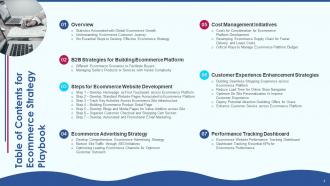
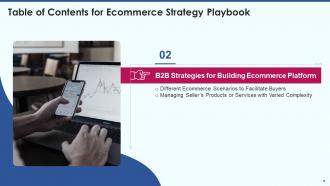
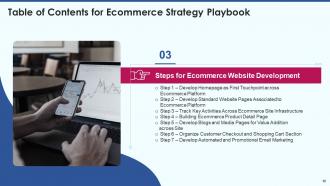
Slide 3: This slide presents Table of Contents for Ecommerce Strategy Playbook.
Slide 4: This slide shows title for topics that are to be covered next in the template.
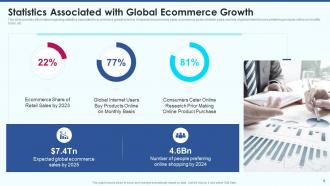
Slide 5: This slide provides information regarding statistics associated to growth in terms of expected ecommerce sales.
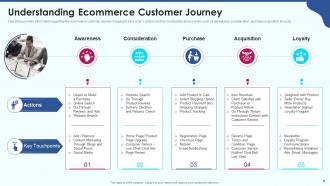
Slide 6: This slide displays information regarding the ecommerce customer journey mapping.
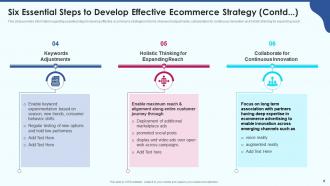
Slide 7: This slide provides information regarding essential steps to develop effective ecommerce strategies.
Slide 8: This slide represents essential steps to develop effective ecommerce strategies in terms of keyword adjustments.
Slide 9: This slide shows title for topics that are to be covered next in the template.
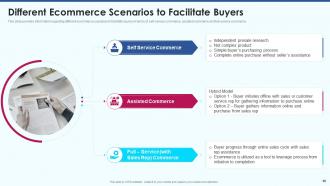
Slide 10: This slide showcases Different Ecommerce Scenarios to Facilitate Buyers.
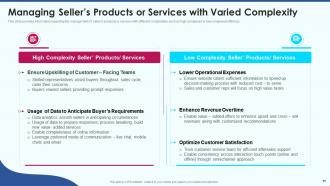
Slide 11: This slide presents Managing Seller’s Products or Services with Varied Complexity.
Slide 12: This slide shows title for topics that are to be covered next in the template.
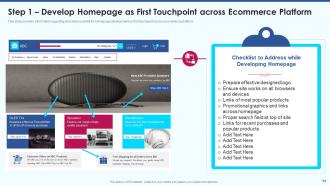
Slide 13: This slide displays checklist essential for homepage development as first touchpoint across ecommerce platform.
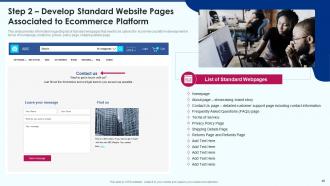
Slide 14: This slide represents list of standard webpages that need to be catered for ecommerce platform.
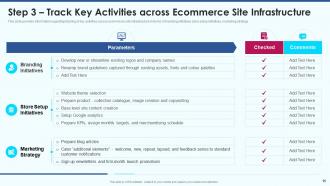
Slide 15: This slide showcases tracking of key activities across ecommerce site infrastructure in terms of branding initiatives.
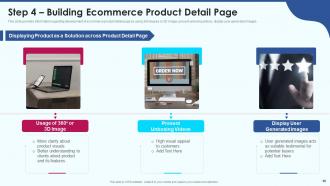
Slide 16: This slide presents development of ecommerce product detail page by using 360 degree or 3D image.
Slide 17: This slide displays development of ecommerce product detail page by offering concise product overview.
Slide 18: This slide represents development of blog and media pages for value addition across site.
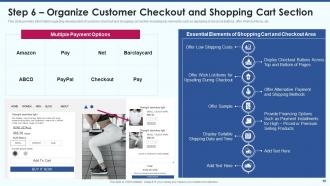
Slide 19: This slide showcases development of customer checkout and shopping cart section.
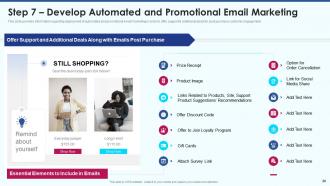
Slide 20: This slide presents deployment of automated and promotional email marketing in order to offer support.
Slide 21: This slide shows title for topics that are to be covered next in the template.
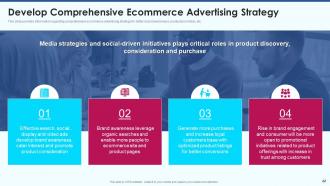
Slide 22: This slide presents Develop Comprehensive Ecommerce Advertising Strategy.
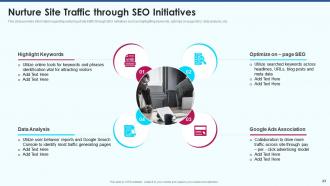
Slide 23: This slide displays nurturing of site traffic through SEO initiatives such as highlighting keywords, optimize on-page SEO, data analysis, etc.
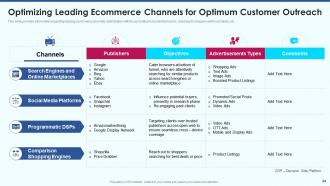
Slide 24: This slide represents Optimizing Leading Ecommerce Channels for Optimum Customer Outreach.
Slide 25: This slide shows title for topics that are to be covered next in the template.
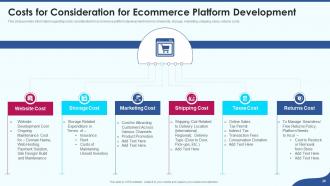
Slide 26: This slide presents Costs for Consideration for Ecommerce Platform Development.
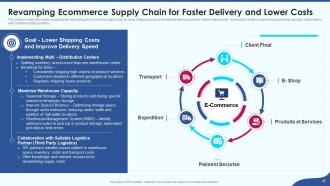
Slide 27: This slide displays Revamping Ecommerce Supply Chain for Faster Delivery and Lower Costs.
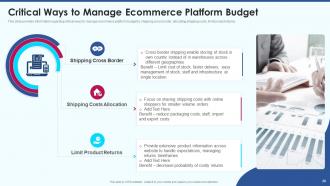
Slide 28: This slide represents Critical Ways to Manage Ecommerce Platform Budget.
Slide 29: This slide shows title for topics that are to be covered next in the template.
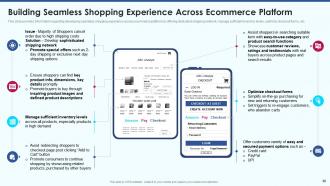
Slide 30: This slide displays Building Seamless Shopping Experience Across Ecommerce Platform.
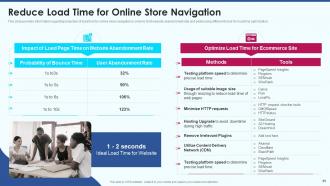
Slide 31: This slide represents reduction of load time for online store navigation in order to limit website abandonment rate.
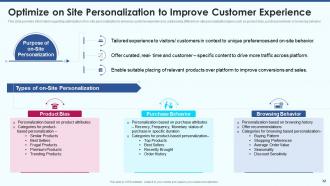
Slide 32: This slide showcases Optimize on Site Personalization to Improve Customer Experience.
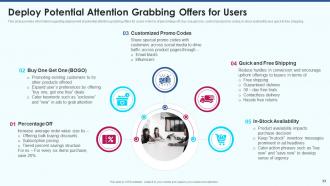
Slide 33: This slide shows Deploy Potential Attention Grabbing Offers for Users.
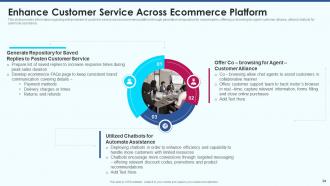
Slide 34: This slide presents Enhance Customer Service Across Ecommerce Platform.
Slide 35: This slide shows title for topics that are to be covered next in the template.
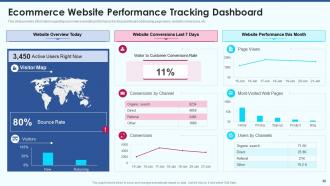
Slide 36: This slide presents ecommerce website performance tracking dashboard addressing page views, website conversions, etc.
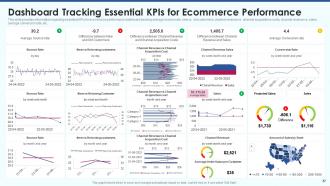
Slide 37: This slide displays Dashboard Tracking Essential KPIs for Ecommerce Performance.
Slide 38: This slide represents Icons for Ecommerce Strategy Playbook.
Slide 39: This slide is titled as Additional Slides for moving forward.
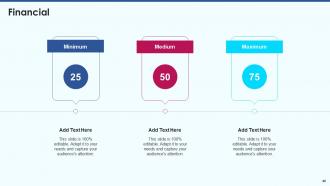
Slide 40: This is a Financial slide. Show your finance related stuff here.
Slide 41: This is About Us slide to show company specifications etc.
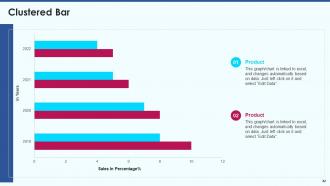
Slide 42: This slide showcases Clustered bar chart with two products comparison.
Slide 43: This is a Timeline slide. Show data related to time intervals here.
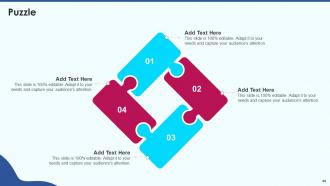
Slide 44: This slide contains Puzzle with related icons and text.
Slide 45: This slide shows Post It Notes. Post your important notes here.
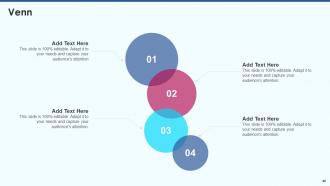
Slide 46: This slide depicts Venn diagram with text boxes.
Slide 47: This is a Thank You slide with address, contact numbers and email address.
Ecommerce strategy playbook powerpoint presentation slides with all 52 slides:
Use our Ecommerce Strategy Playbook Powerpoint Presentation Slides to effectively help you save your valuable time. They are readymade to fit into any presentation structure.











FAQs for Ecommerce strategy playbook
Honestly, focus on four main things for ecommerce: know exactly who you're selling to, price competitively, make your site stupid easy to use, and figure out how to get customers. That first one's huge - once you nail your target audience, everything else clicks into place. Fast checkout is non-negotiable these days (seriously, people will abandon cart over one extra step). Traffic comes from SEO, ads, social - pick what works for your budget. Oh, and don't sleep on keeping existing customers happy. They're like 5x cheaper to sell to than new ones. I'd start by walking through your own buying process and see where it feels clunky.
Honestly, start with Google Analytics if you don't have it yet - it's free and covers most of what you need. Track stuff like cart abandonment rates and which products actually sell vs. just get clicks. Heat mapping tools are seriously amazing for seeing how people move around your site (I was skeptical at first but they really work). Look at your traffic sources to figure out which marketing channels bring in actual sales, not just visitors. Customer lifetime value is huge too. Run A/B tests on your product pages and checkout - the data will show you what's working. Oh, and conversion rates obviously. It sounds like a lot but you can tackle it piece by piece.
Dude, UX can make or break your sales. I've literally watched sites lose 70%+ of their customers just from having a terrible checkout process - it's wild how fast people bounce. Fast loading times matter. So does intuitive navigation and making sure everything works on mobile (obviously). Your product pages need to build trust, and the payment flow has to be dead simple. People will abandon their cart over the smallest friction. Honestly? Start by fixing your checkout first - that's where most of the money gets left on the table. Everything else you can tweak later, but nail that process and you'll see conversions jump pretty quickly.
Honestly, social media can be a game-changer for ecommerce. Pick Instagram or Facebook - wherever your customers actually spend time scrolling. You'll get more traffic and people will start recognizing your brand. The visual stuff works great for showing off products, and targeted ads let you zero in on exactly who you want to reach. User reviews and content from real customers build way more trust than anything you could post yourself. Oh, and now people can literally buy straight from your Instagram posts which is pretty neat. Here's the thing though - listen to what people are actually talking about first, then create content around that. Don't try to be everywhere at once.
Honestly, ditch those boring feature lists and tell people how your product actually helps them. Like, don't just say "waterproof" - say "won't die when you spill coffee on it." Use bullet points so people can scan quickly. Your photos matter way more than you think though. Multiple angles, good zoom, maybe show someone actually using it? I saw this one listing yesterday with literally one blurry pic and was like... really? Also throw in something for scale - a hand holding it or whatever. Would you buy from your own listings? Be honest.
Dude, payment options are everything for conversions. Like 18% of people literally abandon their cart when they can't pay how they want - that's wild. We made this mistake early on by only taking credit cards. Big oops. Your customers need options: PayPal, Apple Pay, those buy-now-pay-later things like Klarna. Mobile wallets are honestly the easiest quick win you can add. The more familiar the checkout feels, the less likely someone bails at the last second. I'd start with PayPal since everyone trusts it, then add mobile payments. You'll see your conversion rate jump pretty fast.
Look, subscription models are pretty sweet for predictable revenue - makes planning way easier. Customers stick around longer too, so you get better data and higher lifetime value. But honestly? You can't phone it in. People will drop you fast if you're not delivering constant value. The tricky part is managing churn when you screw up (and you will). Customer service gets heavier, billing becomes a pain, and your onboarding better be perfect. That first month basically determines if someone stays or goes. My advice? Start simple and obsess over those early user experiences.
Honestly, I'd just start with whatever customer data you already have - their purchase history, what they browse, basic demographics. Email campaigns work great for recommending stuff based on past purchases. Your website can show different products to different people too. The data collection part is kinda a pain initially, not gonna lie. But once that's running smoothly, you can personalize pretty much everything - product suggestions, special pricing, all of it. I'd say begin with email personalization since it's easier, then move to your homepage and product pages when you've got the hang of it.
Dude, mobile optimization is seriously crucial - we're talking 20-40% revenue swings here. Your customers are mostly shopping on phones now, and a slow or janky mobile site will kill your sales instantly. I actually saw this firsthand with a campaign we ran last year (total disaster until we fixed the mobile experience). Here's the thing though - when mobile works well, those users convert like crazy because they're usually ready to buy right then and there. Honestly, just spend an hour this week clicking through your site on your phone. You'll probably find some annoying stuff that needs fixing immediately.
Honestly, demand forecasting is everything - you gotta analyze your sales data to predict what's gonna move. Get some inventory management software that tracks stuff in real-time, and set up automatic reorder points so you don't sell out of bestsellers. ABC analysis is clutch too, focus on your top performers first. I made this mistake during Black Friday once and it was brutal! Don't forget supplier lead times and seasonal patterns when you're planning. Oh, and make sure you can see stock levels across all your channels - that's saved me so many headaches.
Honestly, start with your checkout - that's where you'll get the biggest wins. Cut out random form fields nobody needs and let people buy without creating accounts. The worst thing? Hiding shipping costs until the very end. People hate that. Show everything upfront. Mobile's huge too since everyone's shopping on their phone these days. Those security badges and reviews actually work for building trust. Also set up some automated emails to hit people who bail - like within a few hours of them leaving. I know it sounds pushy but it totally works. Focus on checkout first though.
Dude, SEO is huge for ecommerce. Think about it - when someone googles "wireless bluetooth headphones under $100" they're basically ready to buy, right? That's way better than social media traffic where people are just scrolling around. You want those searchers finding YOU, not your competitors. The trick is figuring out what keywords your customers actually type in (not what you think they search for - there's usually a difference). Then optimize your product pages and descriptions to match those terms. Honestly, it's often your biggest source of free traffic that actually converts.
So here's what actually works: amazing customer service is obvious, but personalization is where you'll really win. Send them stuff based on what they've bought before - it sounds basic but most brands still suck at this. Quick returns and fast responses are just expected now, so don't pat yourself on the back for that. Loyalty programs with points or early access to sales definitely help with repeat buyers. Oh and email marketing isn't dead, despite what everyone says on social media. I'd start by looking at where customers get frustrated in your process and fix those pain points first.
So you want everything to feel connected - your emails, social posts, texts, website, whatever. Map out where customers actually hit your brand first. Then keep your messaging consistent everywhere (easier said than done lol). Data tracking is where it gets interesting though. Someone who browses on mobile but bails on checkout? They need a totally different follow-up email than a brand new visitor. Set up attribution tracking that goes beyond just "last click wins" - that stuff's pretty much useless. You'll want to see the whole journey so you know what's actually working and what isn't.
Okay so three big things: AI personalization is huge right now - like actually smart product recommendations, not the garbage ones we're used to. Social commerce is taking off too, people are buying stuff directly on TikTok and Instagram without even leaving the app. Wild how that happened so fast. Sustainability's the other one - customers literally won't buy from you if your packaging sucks for the environment. I'd start by checking what personalization tools you've got and maybe test some social selling features. Oh and honestly? The checkout flows are changing so quickly it's hard to keep up.
-
Presentation Design is very nice, good work with the content as well.
-
Unique research projects to present in meeting.