


Cosmetic Industry Business Plan Powerpoint Presentation Slides




Try Before you Buy Download Free Sample Product
 Impress Your
 Audience
 100%
100% Editable
 Save Hours
 of Time


Starting and operating a cosmetic store may seem simple, but it can be challenging. To avoid stress, you must make the necessary preparations to ensure it will withstand time. Grab our insightfully designed Cosmetic Industry Business Plan. It lists all the essential elements, including market research, industry trends, growth and revenue drivers, target market, competitive landscape, etc. Our Cosmetics industry business plan also includes Porters framework and its impact on the cosmetic industry, market gap and opportunities, market sizing, including TAM, SAM, and SOM, go-to marketing strategy, sales funnel, etc. Entity details, executive summary, products and services, mission and vision, exit strategy, etc., are also covered in this business plan. Furthermore, to give users an insight into the financial aspect, it also portrays a financial summary section in which a detailed 5-year analysis has been executed considering the market scenarios. Moreover, our Trends shaping cosmetic industry PPT covers the revenue model, profit and loss statement, cash flow statement, DCF valuation, balance sheet, etc. Download this 100 percent editable presentation and get access to our highly researched and skillfully designed product.
People who downloaded this PowerPoint presentation also viewed the following :
Content of this Powerpoint Presentation
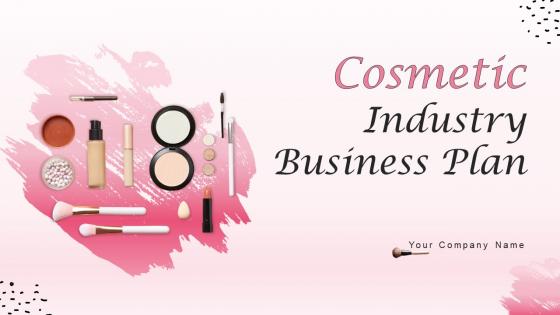
Slide 1: This slide introduces Cosmetic Industry Business Plan. Commence by stating Your Company Name.
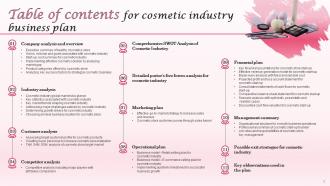
Slide 2: This slide includes the Table of contents.
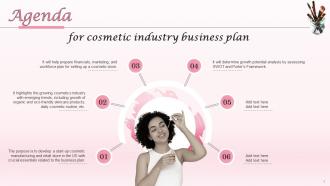
Slide 3: This slide depicts the Agenda of the presentation.
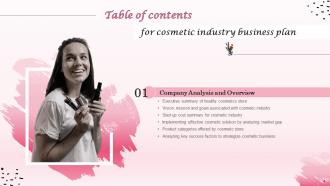
Slide 4: This slide highlights the Title for the Topics to be covered further.
Slide 5: This slide provides a glimpse of key highlights of the cosmetic store.
Slide 6: This slide covers the cosmetic industry's vision, mission, and goals.
Slide 7: This slide shows the Start-up cost summary for cosmetic industry.
Slide 8: This slide deals with Implementing effective cosmetic solution by analyzing market gap.
Slide 9: The purpose of this slide is to provide a glimpse of the key product categories offered by the cosmetic store.
Slide 10: This slide focuses on Analyzing key success factors to strategize cosmetic business.
Slide 11: This slide highlights the Heading for the Contents to be discussed next.
Slide 12: This slide reveals the Cosmetic industry global market at a glance.
Slide 13: This slide states the Key statistics associated with cosmetic industry.
Slide 14: This slide continues the Key statistics associated with cosmetic industry.
Slide 15: This slide further continues the thorough assessment of a market within the cosmetic industry.
Slide 16: This is yet another slide continuing the Key statistics associated with cosmetic industry.
Slide 17: This slide highlights the key market trends that have the potential to change the current market scenario.
Slide 18: This slide deals with Addressing major challenges catered by cosmetic industry.
Slide 19: This slide focuses on Determining growth drivers for cosmetic industry.
Slide 20: This slide shows Choosing an ideal business location for cosmetic store.
Slide 21: This slide includes the Title for the Ideas to be discussed further.
Slide 22: This slide emphasizes on Assessing target customer profile for cosmetic products.
Slide 23: This slide continues Assessing target customer profile for cosmetic products.
Slide 24: This slide focuses on Creating buyer personas to increase cosmetic personalization.
Slide 25: The purpose of this slide is to depict the market potential of the cosmetic store in terms of TAM, SAM, and SOM.
Slide 26: This slide includes the Heading for the Ideas to be covered in the following template.
Slide 27: This slide states the Competitive analysis including major players with attributes comparison.
Slide 28: This slide depicts the Title for the Contents to be discussed further.
Slide 29: This slide showcases the Comprehensive SWOT analysis of cosmetic industry.
Slide 30: This slide incorporates the Heading for the Topics to be covered in the following template.
Slide 31: This slide presents the Detailed porter’s five forces analysis for cosmetic industry.
Slide 32: This slide indicates the Title for the Topics to be discussed further.
Slide 33: This slide talks about the Effective go-to-market strategy to increase sales and revenue.
Slide 34: This slide continues the Effective go-to-market strategy to increase sales and revenue.
Slide 35: This slide further continues the Effective go-to-market strategy to increase sales and revenue.
Slide 36: This is yet another slide continuing the Effective go-to-market strategy to increase sales and revenue.
Slide 37: This slide illustrates the Cosmetic store customer journey through sales funnel.
Slide 38: This slide contains the Heading for the Contents to be covered in the upcoming template.
Slide 39: The purpose of this slide is to highlight the cosmetic store's retail selling plan.
Slide 40: This slide covers the e-commerce selling plan for the cosmetic business.
Slide 41: This slide deals with Implementing quarterly milestones for successful business growth.
Slide 42: This slide depicts the Title for the Ideas to be further discussed.
Slide 43: This slide states the Key financial assumptions for cosmetic store start-up.
Slide 44: The slide shows the effective revenue model of the cosmetic industry.
Slide 45: This slide continues the Effective revenue generation model for cosmetic start-up.
Slide 46: This slide highlights the break-even analysis of the firm.
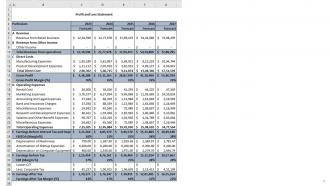
Slide 47: This slide displays the Projected profit and loss account statement for cosmetic start-up.
Slide 48: This slide continues the Projected profit and loss account statement for cosmetic start-up.
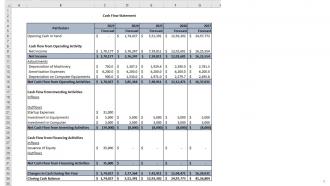
Slide 49: This slide portrays the Consolidated statements of cash flows for cosmetic start-up.
Slide 50: This slide continues the Consolidated statements of cash flows for cosmetic start-up.
Slide 51: This slide covers the Comparative balance sheet statement for cosmetic start-up.
Slide 52: This slide continues the Comparative balance sheet statement for cosmetic start-up.
Slide 53: This slide reveals the Scenario analysis with optimistic, pessimistic and realistic cases.
Slide 54: This slide continues the Scenario analysis with optimistic, pessimistic and realistic cases.
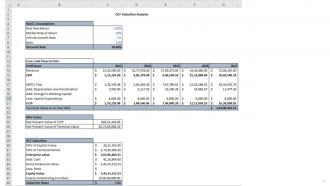
Slide 55: This slide calculates the amount of money an investor would get from an investment after adjusting for the time value of money.
Slide 56: This slide includes the Heading for the Ideas to be discussed in the upcoming template.
Slide 57: The slide highlights the organizational hierarchy in the company.
Slide 58: This slide reveals the Professional summary of cosmetic start-up founder.
Slide 59: This slide exhibits the Job roles and responsibilities of cosmetic store.
Slide 60: This slide continues the Job roles and responsibilities of cosmetic store key management.
Slide 61: This slide shows the Title for the Contents to be covered in the upcoming template.
Slide 62: This slide portrays the Possible exit strategies for cosmetic industry.
Slide 63: This slide depicts the Heading for the Topics to be discussed further.
Slide 64: This slide states the Key abbreviations used in the plan.
Slide 65: This is the Icons slide containing all the Icons used in the plan.
Slide 66: This slide is used for depicting some Additional information.
Slide 67: This slide contains the Post it notes for reminders and deadlines.
Slide 68: This is Our goal slide. State your company-goals here.
Slide 69: This is the Venn diagrams slide.
Slide 70: This slide showcases the firm's Timeline.
Slide 71: This slide is used for the purpose of Comparison.
Slide 72: This is Our team slide. State your team-related information here.
Slide 73: This slide represents the organization's Roadmap.
Slide 74: This slide elucidates information related to the Financial topic.
Slide 75: This is the Thank You slide for acknowledgement.
Cosmetic Industry Business Plan Powerpoint Presentation Slides with all 80 slides:
Use our Cosmetic Industry Business Plan Powerpoint Presentation Slides to effectively help you save your valuable time. They are readymade to fit into any presentation structure.






FAQs for Cosmetic Industry Business Plan
You'll want solid market research on your target customers first. Competitive analysis too - see what's already crowding the space. Financial projections are huge since investors need realistic revenue forecasts and startup costs. Honestly, the regulatory stuff for cosmetics is a nightmare but you can't skip it. Your marketing plan should hit both digital and retail - beauty brands really do live or die by marketing. Oh, and supply chain planning matters more than people think. Start with an executive summary that actually grabs attention, then back everything up with real data instead of just hoping for the best.
Honestly, market research is a lifesaver because it shows you what people actually want instead of what you think they want. Those two things are rarely the same, trust me. You'll spot gaps in the market and figure out pain points before wasting money on development. Plus you can see where competitors are screwing up so you don't make the same mistakes. I'd start with focus groups or online surveys - ask potential customers early and keep asking throughout the process. Oh, and it helps nail down pricing too, which is huge.
Honestly, the beauty industry is insane right now - everyone and their mom is launching something. But here's the thing: you've gotta nail down what makes you actually different. Clean ingredients? Luxury that doesn't break the bank? Maybe you're going after people everyone else ignores. Start with ONE product that's genuinely better than what's out there already. Your packaging needs to scream your vibe instantly. Skip the big influencers (they're overpriced anyway) and work with smaller ones who actually fit your brand. Most importantly though? Build a story that hits people in the feelings, not just their wallets.
Okay so basically split it three ways: 30-40% for product development (formulation, packaging, inventory), 25-35% for marketing stuff, and the rest for operations like legal and insurance. Honestly the product development always ends up costing way more than you budget for - learned that the hard way! Marketing covers your branding, website, social ads. Operations is the boring but necessary stuff. Figure out your total cash first, then adjust the percentages based on what matters most to you. Oh and if you're bootstrapping it, skip the fancy packaging at first and put that money into digital marketing instead.
Honestly, demographics are everything when you're planning a cosmetic business. Think about it - a 20-year-old wants completely different products than someone who's 50. Age and income basically decide your pricing strategy right there. You'll also need to figure out their skin concerns and lifestyle stuff because that shapes what you're actually making. Like, some people care more about being cruelty-free while others just want results. Oh, and it totally changes how you market too - TikTok vs Facebook, you know? Create those customer personas first before you dive into the other big decisions.
Figure out who you're actually selling to first - like really dig into their age, what they care about, their daily struggles. Too many beauty brands look exactly the same because everyone's just copying what's trendy instead of being real. Your messaging should focus on the actual change you're giving people. Confidence boost? Better skin? Whatever it is, stay consistent with that voice everywhere. Oh, and definitely test your ideas with real people before you blow money on fancy packaging. Surveys or small focus groups work great - you'll be surprised what you learn.
So basically you need to deal with FDA stuff first - they don't pre-approve cosmetics but you're on the hook for safety and labeling. The ingredient lists have to be spot-on and displayed right. State rules are different everywhere too, which is honestly annoying. If you're going international, good luck - EU regulations are crazy strict. Oh and definitely get liability insurance, trust me on that one. Product testing docs are a must. The FDA's cosmetic guidance is actually pretty decent for figuring out the basics. It's way more paperwork than you'd expect but totally doable.
Honestly, user-generated content is where it's at right now. Get your customers posting before/after pics with a branded hashtag - way more trustworthy than regular ads. I'd skip the big influencers everyone's using and go for smaller creators who actually fit your audience. AR filters are killing it on Instagram and Snapchat too, though I'm still figuring out how expensive those are to make. Limited drops work great for creating FOMO - people lose their minds over exclusive stuff. Oh, and subscription boxes if that fits your business model. Don't try everything at once though, pick like two things max.
Honestly, start with packaging - refillable containers and biodegradable formulas are huge right now. Clean ingredients matter too, but don't try to overhaul everything at once. Find suppliers who actually care about fair trade stuff, not just the ones who say they do. A return program for empties is smart if you can swing it. Oh, and concentrate formulas cut down on waste big time. Pick like 2-3 things you'll genuinely commit to instead of going halfway on ten different green initiatives. Customers can smell fake sustainability from a mile away, so whatever you choose has to feel real to your brand.
Honestly, it's all about knowing where your people hang out. Instagram and TikTok are clutch if you're going after Gen Z - influencers there actually convert like crazy. Sephora and Ulta still give you that legit brand credibility, though getting in there is a total nightmare. Your own website plus Amazon are basically non-negotiable at this point. Oh, and subscription boxes are surprisingly good for getting discovered - people love that surprise factor. I'd probably test like 2-3 of these first rather than spreading yourself too thin. What's your main demographic again?
Dude, social media trends can totally make or break your cosmetic business. Like when that "clean girl" look blew up on TikTok? Companies that jumped on it fast made bank. You need flexibility built into your plan for quick product pivots when these things happen. Honestly, I think it's maybe the biggest factor right now - way more than traditional marketing. Budget for tools that track what's trending and have processes ready to move fast. Oh, and don't sleep on Instagram either. These platforms literally drive what people buy now.
Okay so you'll definitely need 3-year projections covering revenue, startup costs, and ongoing expenses. Manufacturing, packaging, marketing, regulatory stuff - all that adds up fast. Inventory's tricky because cosmetics expire, so you can't just hoard products forever. Cash flow projections are huge since beauty sales get weird around holidays. Break down your customer acquisition costs and lifetime value, especially for DTC. Oh and be super conservative with sales estimates - I learned this the hard way. There's always some random cost that blindsides you later.
Honestly, social media comments are where you'll get the most brutal truth - people don't hold back there. Set up surveys and track reviews too, but those Instagram comments? That's where the real feedback lives. Look for patterns in what people complain about - texture issues, packaging problems, weird shade ranges. That stuff is pure gold for your product team. Positive feedback shows you what's actually working, so you can lean into those features more. Oh, and don't forget shipping/customer service complaints - those matter just as much. I'd say organize everything monthly and share the biggest insights with your dev team so they know what to fix first.
Okay so influencer partnerships are huge for beauty brands - people actually trust those reviews way more than ads. I'd start with micro-influencers though, they're cheaper and honestly their followers engage more anyway. Beauty boxes like Birchbox are amazing for getting your stuff out there fast. Then there's the obvious retail thing - Sephora, Ulta, even Target if that fits your vibe. Oh and brand collabs work really well too, like pairing with skincare companies or wellness brands. My friend did this and said the crossover audience was perfect for her launch.
Honestly, the tech stuff in beauty is getting crazy good. AI can predict how ingredients will work together before you waste money testing them - saves tons of time. 3D printing makes prototyping packaging super fast, and there's VR that shows how products look on different skin tones (which is actually really helpful). Digital skin analysis gives you real customer data instead of just guessing what people want. Don't try everything at once though. Pick something small like ingredient sourcing software first, then expand from there. My friend started with just a customer feedback app and it totally changed her whole approach.
-
Such amazing slides with easy editable options. A perfect time-saver.
-
A beautiful, professional design paired with high-quality images and content that is sure to impress. It is a must-use PPT template in my opinion.