

B2B Account Marketing Strategies Playbook Powerpoint Presentation Slides




Try Before you Buy Download Free Sample Product
 Impress Your
 Audience
 100%
100% Editable
 Save Hours
 of Time


B2B sales playbook is considered an essential document that helps the B2B sales workforce deploy best practices and strategies along the various stages of the selling process. It ensures consistent engagement of the sales workforce and B2B demand generation. Check out our competently designed B2B Account Marketing Strategies Playbook that caters to details about acknowledging the B2B sales model, including selecting a strategic B2B sales model, streamlining the B2B sales model for improved performance, and steps involved in the B2B sales process. It covers guidelines to progress through the B2B buyers journey. It covers the management of B2B demand generation through sales initiatives across the top of the funnel TOFU, middle of the funnel MOFU, and bottom of the funnel BOFU. The playbook displays details about sales pitching through content with sales content management, leveraging content experience for revamped B2B buyer engagement, optimizing sales content returns, content planning worksheet, and potential lead nurturing program. Moreover, sales management through partners is highlighted by showcasing the partners role in leveraging sales effectiveness, demand generation initiatives utilized by partners, co partnered campaigns to drive sales and marketing goals. Sales performances and activities are tracked through essential metrics dashboards. Download Playbook of our marketing strategy ppt now.
People who downloaded this PowerPoint presentation also viewed the following :
Content of this Powerpoint Presentation
Slide 1: This slide introduces B2B Account Marketing Strategies Playbook. State Your Company Name and begin.
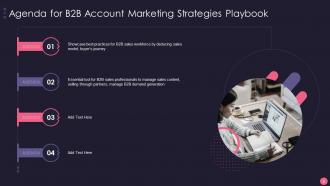
Slide 2: This slide states Agenda of the presentation.
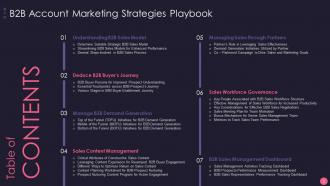
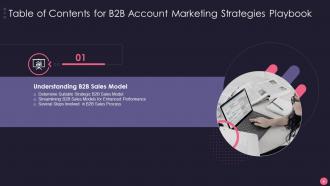
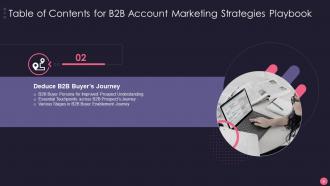
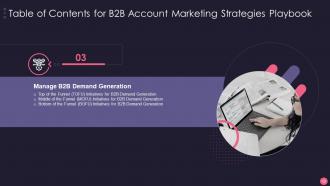
Slide 3: This slide presents Table of Content for the presentation.
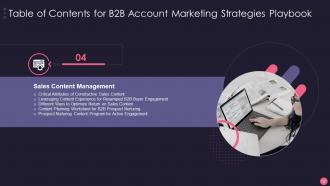
Slide 4: This slide shows title for topics that are to be covered next in the template.
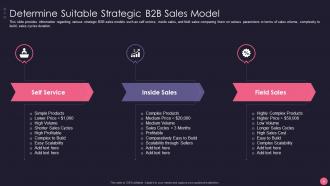
Slide 5: This slide provides information regarding various strategic B2B sales models.
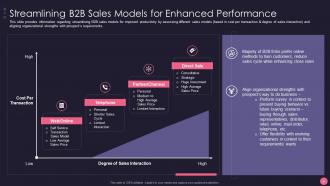
Slide 6: This slide displays Streamlining B2B Sales Models for Enhanced Performance.
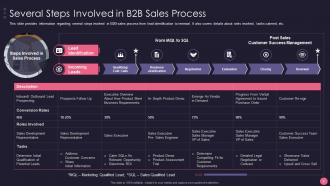
Slide 7: This slide represents several steps involved in B2B sales process from lead identification to renewal.
Slide 8: This slide shows title for topics that are to be covered next in the template.
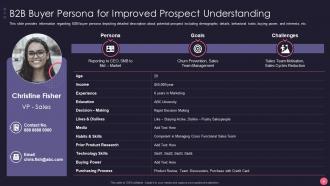
Slide 9: This slide showcases B2B Buyer Persona for Improved Prospect Understanding.
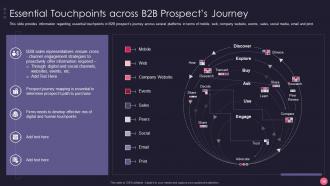
Slide 10: This slide provides information regarding essential touchpoints in B2B prospect’s journey.
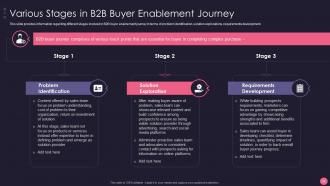
Slide 11: This slide shows Various Stages in B2B Buyer Enablement Journey.
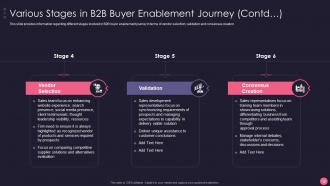
Slide 12: This is another slide continuing Various Stages in B2B Buyer Enablement Journey.
Slide 13: This slide shows title for topics that are to be covered next in the template.
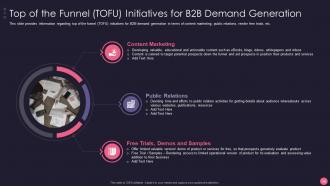
Slide 14: This slide presents Top of the Funnel (TOFU) Initiatives for B2B Demand Generation.
Slide 15: This slide displays Middle of the Funnel (MOFU) Initiatives for B2B Demand Generation.
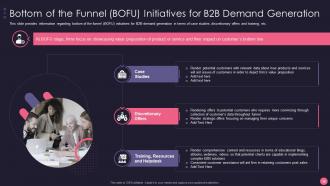
Slide 16: This slide represents Bottom of the Funnel (BOFU) Initiatives for B2B Demand Generation.
Slide 17: This slide shows title for topics that are to be covered next in the template.
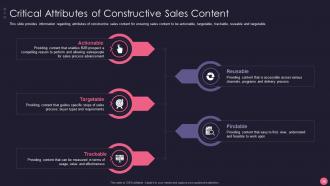
Slide 18: This slide presents Critical Attributes of Constructive Sales Content.
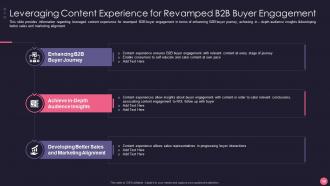
Slide 19: This slide displays Leveraging Content Experience for Revamped B2B Buyer Engagement.
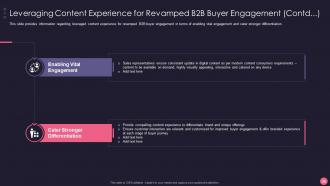
Slide 20: This slide provides information regarding leveraged content experience for revamped B2B buyer.
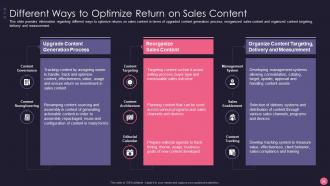
Slide 21: This slide represents Different Ways to Optimize Return on Sales Content.
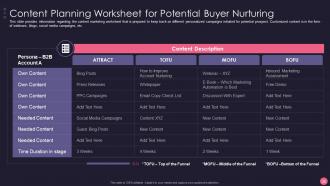
Slide 22: This slide showcases Content Planning Worksheet for B2B Prospect Nurturing.
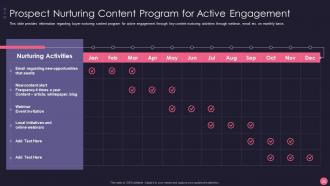
Slide 23: This slide shows Prospect Nurturing Content Program for Active Engagement.
Slide 24: This slide shows title for topics that are to be covered next in the template.
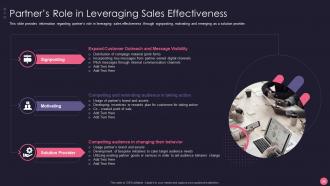
Slide 25: This slide provides information regarding partner’s role in leveraging sales effectiveness.
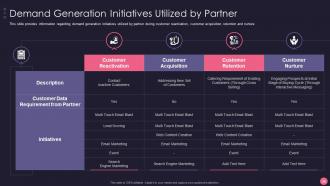
Slide 26: This slide presents Demand Generation Initiatives Utilized by Partner.
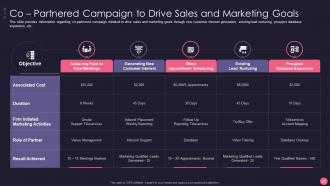
Slide 27: This slide provides information regarding co-partnered campaign initiated to drive sales.
Slide 28: This slide shows title for topics that are to be covered next in the template.
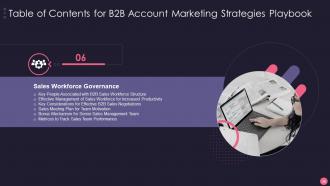
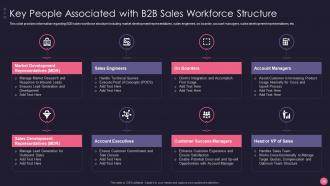
Slide 29: This slide presents Key People Associated with B2B Sales Workforce Structure.
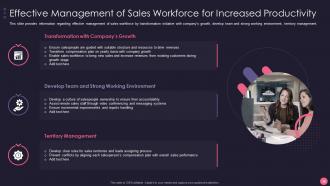
Slide 30: This slide displays Effective Management of Sales Workforce for Increased Productivity.
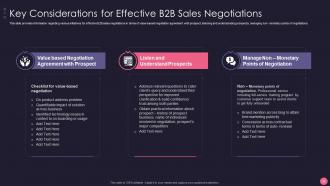
Slide 31: This slide provides information regarding various initiatives for effective B2B sales negotiations.
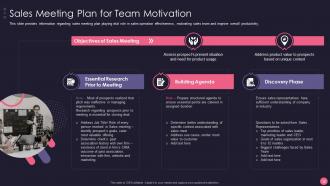
Slide 32: This slide represents sales meeting plan playing vital role in sales operation effectiveness.
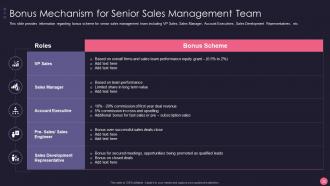
Slide 33: This slide showcases Bonus Mechanism for Senior Sales Management Team.
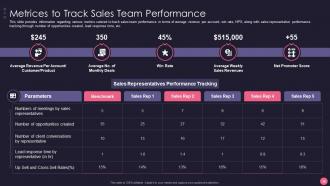
Slide 34: This slide provides information regarding various metrics catered to track sales team performance.
Slide 35: This slide shows title for topics that are to be covered next in the template.
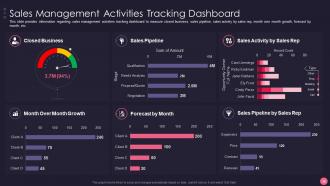
Slide 36: This slide presents Sales Management Activities Tracking Dashboard.
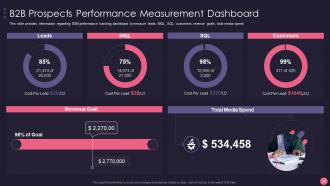
Slide 37: This slide displays B2B Prospects Performance Measurement Dashboard.
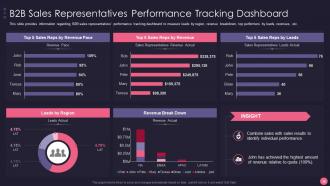
Slide 38: This slide showcases B2B Sales Representatives Performance Tracking Dashboard.
Slide 39: This slide is titled as Additional Slides for moving forward.
Slide 40: This is About Us slide to show company specifications etc.
Slide 41: This is Our Mission slide with related imagery and text.
Slide 42: This slide contains Puzzle with related icons and text.
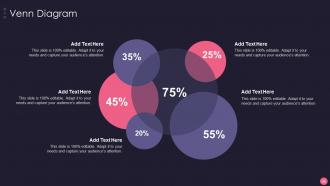
Slide 43: This slide depicts Venn diagram with text boxes.
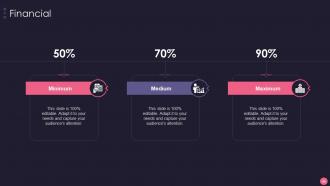
Slide 44: This is a Financial slide. Show your finance related stuff here.
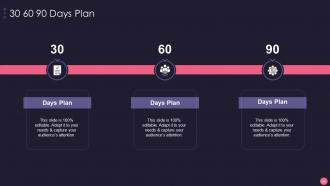
Slide 45: This slide provides 30 60 90 Days Plan with text boxes.
Slide 46: This slide shows Post It Notes. Post your important notes here.
Slide 47: This is Our Target slide. State your targets here.
Slide 48: This is a Thank You slide with address, contact numbers and email address.
B2B Account Marketing Strategies Playbook Powerpoint Presentation Slides with all 54 slides:
Use our B2B Account Marketing Strategies Playbook Powerpoint Presentation Slides to effectively help you save your valuable time. They are readymade to fit into any presentation structure.









FAQs for B2B Account Marketing Strategies Playbook
Okay so basically B2B means you're dealing with committees and endless meetings - those sales cycles drag on forever. B2C is just one person clicking "buy now" after seeing an Instagram ad. With B2B, you need all that heavy stuff like case studies and whitepapers because they actually read that boring content (unlike us regular consumers). B2C buyers want quick, shiny things that make them feel good. Here's the weird part though - B2B people genuinely want sales calls. I know, crazy. Meanwhile B2C folks will literally hide from salespeople at the mall. Bottom line: B2B is all relationship-building and proving ROI over months. Way different game.
Honestly, content marketing is just about being helpful instead of pushy. You're creating stuff people actually want to read - industry insights, case studies, guides that solve real problems. Way better than cold calling random people (ugh, nobody wants that). The trick is matching your content to where someone is in their buying process. Someone just learning about a problem needs different info than someone ready to purchase. I'd start by figuring out what keeps your ideal customers up at night, then create content around those specific headaches. It attracts people already looking for what you sell.
Honestly, data analytics is like having a GPS for your B2B campaigns - finally you can see what's actually making money vs what just looks pretty on reports. Track your whole customer journey from that first website visit to the signed contract. You'll spot your best prospects and stop wasting budget on dead-end channels. Plus leadership will actually believe your ROI numbers instead of giving you that skeptical look. Different audience segments respond to totally different content too, which is wild when you first see it. Set up attribution tracking everywhere first - seriously, you'll discover some crazy stuff about how people actually buy from you.
LinkedIn's where you want to be - that's where actual decision makers hang out and actually use the platform. YouTube can work too if you're willing to make educational videos, which honestly takes more effort than most people realize. Twitter's decent for jumping into industry conversations and building thought leadership. Facebook? Skip it unless you have some super niche audience. I'd say start with LinkedIn though. Get your company page looking good, share stuff your audience actually cares about, and comment on their posts authentically. Don't spread yourself too thin trying to be everywhere at once - you'll just burn out.
Ditch the generic sales stuff - nobody wants that. Instead, break up your email lists by industry or company size, then actually tailor what you send them. Share useful things like case studies or industry insights rather than just pushing product features. Honestly, I've noticed companies doing way better when they help solve actual problems instead of just selling. Timing's huge too - skip Mondays and Fridays if you can. The whole point is building trust through stuff that's genuinely helpful. Quick test: look at your current emails and ask yourself if you'd personally find them useful.
Skip the basic demographics stuff for B2B - you need their actual job pressures and how they make buying decisions. Talk to real customers, not just your sales people (though they know things too). Company size, what they're measured on, industry headaches - that's the good stuff. Honestly, most people go crazy and make like 12 personas which is just... why? Start with 2-3 max based on your biggest segments. Figure out their buying process and what they're reading at each step. Oh and make them specific enough that when your content team sits down to write, they can actually picture who they're talking to.
Dude, SEO is honestly your best bet for B2B leads long-term. B2B buyers aren't impulse shopping - they're doing crazy amounts of research before buying anything. They're literally typing their problems into Google! If you're not showing up, you're missing people who already want what you sell. Focus on those longer, specific keywords that match how your ideal customers actually search. Oh and definitely look at what search terms your current best clients used to find you - that's pure gold right there. Way better ROI than most other channels.
Focus on the metrics that actually connect to revenue - qualified leads matter way more than total volume. Track your cost per qualified lead and how fast you're moving prospects through the pipeline. B2B sales cycles are painfully long anyway, so pipeline velocity becomes everything. Also watch your customer acquisition cost vs lifetime value ratio because that's what'll save your butt in budget meetings. Honestly, impressions and clicks are just vanity metrics that look pretty but don't pay bills. Set up attribution tracking first so you know which channels actually close deals, not just drive random traffic.
So ABM totally changes how you do sales - you ditch the whole spray-and-pray thing and go super targeted instead. Pick maybe 10-20 accounts you really want and treat each one like they're your only customer. Your marketing and sales teams actually work together (crazy concept, right?) because they're focused on the same accounts. You'll create campaigns that speak to each company's specific problems rather than generic stuff. Honestly, it's way better than chasing random leads all day. Your reps end up talking to people who can actually buy from you.
Dude, webinars are honestly clutch for B2B. They make you look like the expert while pulling in solid leads. Decision-makers dig not having to leave their office - can't blame them there. You're building real connections and getting contact info from people who actually care about your stuff. Oh, and here's the kicker - you can chop up that content later. Blog posts, social media, email campaigns, whatever. My advice? Start with questions your sales team hears constantly. That's where the magic happens because you know it's already on people's minds.
Dude, partnerships are honestly a game-changer for B2B marketing. You'll tap into their audience while they get yours - it's like trading customer bases. Co-hosted webinars work really well, or you could do joint content stuff. The leads from these collaborations are usually way better quality than cold outreach. Splitting costs helps too, especially if budgets are tight. But here's the thing - when another business recommends you, people actually listen. It beats shouting into the void with your own promotional posts. Look for companies targeting your same customers but not competing directly with you.
Look, thought leadership works because it proves you actually get the industry instead of just hawking your stuff. Share real insights or even screw-ups you've learned from - suddenly you're the trusted advisor, not another sales guy. Generic pitches are dead anyway. Pick 2-3 things you genuinely know inside and out, then consistently drop valuable takes on those topics. Answer the stuff your audience actually loses sleep over. Honestly, most people can smell fake expertise from a mile away, so you've got to be authentic about it. Take stands on industry trends and back them up with experience.
Okay so basically you wanna match your content to where people are in the buying process. Top of funnel = educational stuff like blog posts and webinars that actually help them (no sales pitch yet). Then move into case studies and product demos once they're warmed up. Honestly, most companies totally blow it here by going straight for the hard sell - huge mistake. Bottom funnel is testimonials, free trials, that kind of thing. Set up email sequences that trigger based on what they do. Someone downloads your guide? Hit them with related content in a few days. The whole thing works way better when you're genuinely helpful instead of pushy.
Look, stop selling and start solving actual problems first. Ask what's keeping them up at night business-wise, then show how you can help. Check in regularly even when you're not pitching - share useful stuff, make introductions, whatever adds value. B2B is all about fewer relationships but they're worth way more, so go account-based. Map out who makes decisions at each company because your main contact probably isn't the only voice that matters. Oh, and don't just focus on one person - spread those relationships around. You'll close more deals when multiple people know and trust you.
Dude, AI is seriously changing how B2B marketing works. Lead scoring gets crazy accurate - like, it'll tell you exactly which prospects are ready to buy. Email campaigns can be personalized for thousands of people without you doing the manual work. Chatbots handle the initial "hey, tell me about your pricing" stuff around the clock, which honestly saves so much time. The predictive stuff is probably the coolest part though - it's scary good at forecasting conversions. I'd say start with something simple like automated email segmentation, then build from there once you get the hang of it.
-
Design layout is very impressive.
-
It is my first time working with them and that too on a friend's recommendation. I would say, I am not expecting such a worldly service at this low price.