


B2B Marketing Strategies To Grow Your Brand MKT CD V




Try Before you Buy Download Free Sample Product
 Impress Your
 Audience
 100%
100% Editable
 Save Hours
 of Time


Business marketing is the process of selling products or services to other brands or businesses. Grab our B2B Marketing Strategies to Grow your Brand template. It can help companies scale their businesses, improve brand awareness, and convert potential leads into sales. Our B2B Marketing deck presents a thorough competitive analysis section to find out the most powerful competitor in their industry. Additionally, it caters to a budget section through which marketing professionals can project the expected cost of running marketing campaigns. Our Marketing Strategy PPT also includes online Influencer marketing, video marketing, email marketing, and search engine optimization SEO and offline marketing channels Guerilla marketing campaign to increase organizational sales and profit. Further, it showcases the different software tools which are required by marketers to streamline their operations. Lastly, our Lead Generation module helps managers to evaluate the performance of B2B marketing strategies through key performance indicator KPI dashboards. Get access to this 100 percent editable template now.
People who downloaded this PowerPoint presentation also viewed the following :
Content of this Powerpoint Presentation
Slide 1: This slide introduces B2B Marketing Strategies to Grow your Brand. Commence by stating Your Company Name.
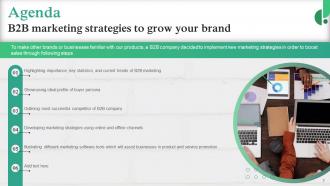
Slide 2: This slide depicts the Agenda of the presentation.
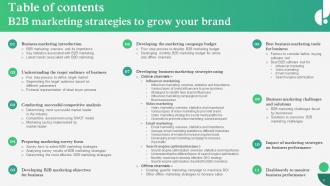
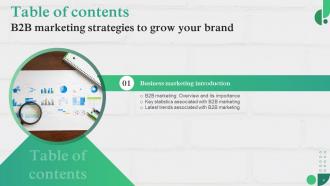
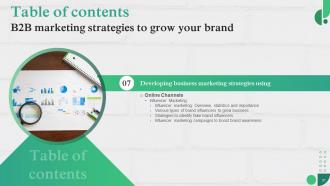
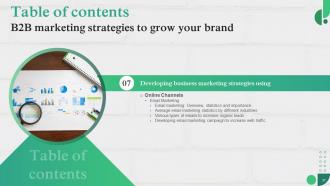
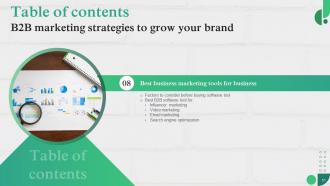
Slide 3: This slide incorporates the Table of contents.
Slide 4: This slide highlights the Title for the Topics to be covered further.
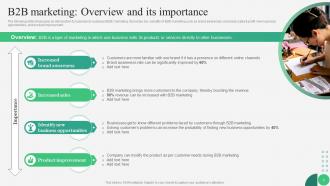
Slide 5: The following slide showcases an introduction to business-to-business (B2B) marketing.
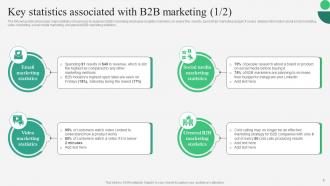
Slide 6: This slide states the Key statistics associated with B2B marketing.
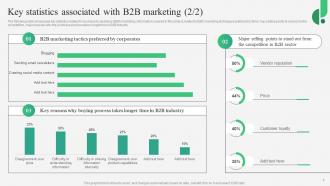
Slide 7: This slide continues the Key statistics associated with B2B marketing.
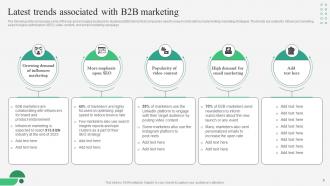
Slide 8: This slide reveals the Latest trends associated with B2B marketing.
Slide 9: This slide indicates the Heading for the Components to be discussed in the following template.
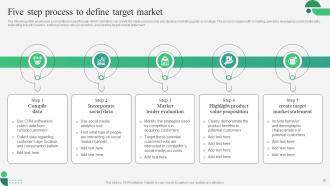
Slide 10: This slide states the Five step process to define target market.
Slide 11: This slide talks about Segmenting the target audience based on different parameters.
Slide 12: This slide displays the Fictional representation of ideal buyer persona.
Slide 13: This slide portrays the Title for the Ideas to be covered in the forth-coming template.
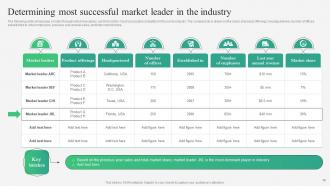
Slide 14: This slide deals with Determining most successful market leader in the industry.
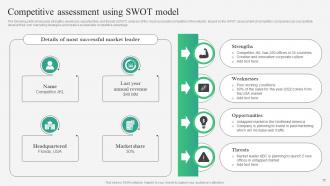
Slide 15: This slide showcases the Competitive assessment using SWOT model.
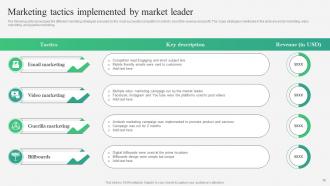
Slide 16: This slide exhibits the Marketing tactics implemented by market leader.
Slide 17: This slide displays the Heading for the Ideas to be discussed in the following template.
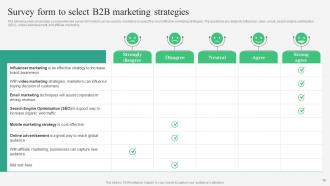
Slide 18: This slide highlights a Survey form to select B2B marketing strategies.
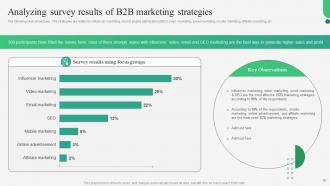
Slide 19: This slide deals with Analyzing survey results of B2B marketing strategies.
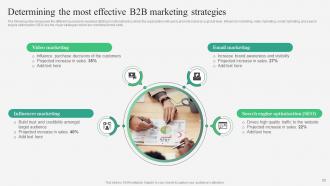
Slide 20: This slide focuses on Determining the most effective B2B marketing strategies.
Slide 21: This slide includes the Title for the Contents to be covered next.
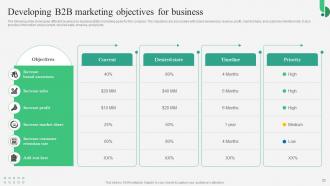
Slide 22: This slide emphasizes on Developing B2B marketing objectives for business.
Slide 23: This slide contains the Heading for the Topics to be covered in the next template.
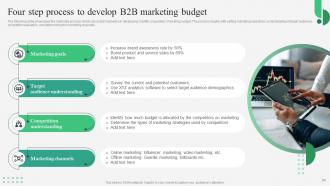
Slide 24: This slide dpeicts the Four step process to develop B2B marketing budget.
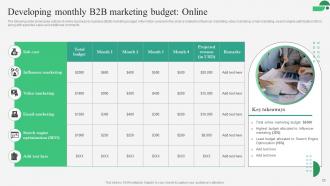
Slide 25: This slide mentions about Developing monthly B2B marketing budget.
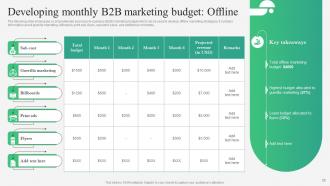
Slide 26: The following slide showcases a comprehensive business-to-business (B2B) marketing budget to develop offline marketing strategies.
Slide 27: This slide portrays the Title for the Ideas to be discussed next.
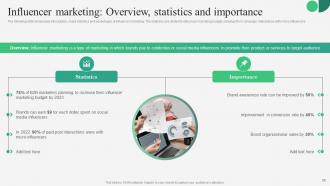
Slide 28: This slide showcases introduction, major statistics and advantages of influencer marketing.
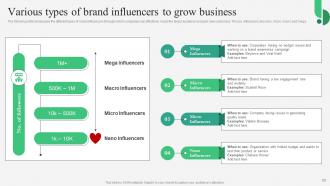
Slide 29: This slide exhibits the Various types of brand influencers to grow business.
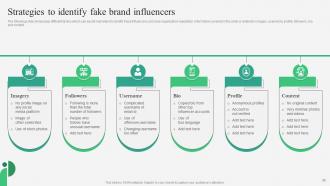
Slide 30: This slide presents the Strategies to identify fake brand influencers.
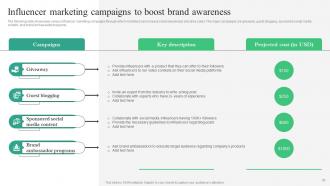
Slide 31: This slide talks about the Influencer marketing campaigns to boost brand awareness.
Slide 32: This slide reveals the Heading for the Ideas to be covered in the following template.
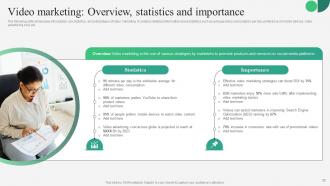
Slide 33: This slide outlines the introduction, key statistics, and advantages of video marketing.
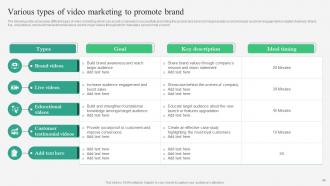
Slide 34: This slide states the Various types of video marketing to promote brand.
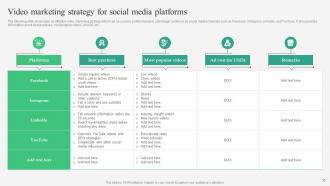
Slide 35: This slide portrays the Video marketing strategy for social media platforms.
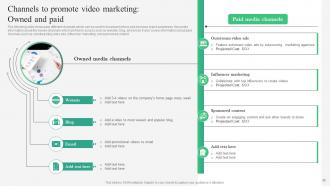
Slide 36: This slide indicates the different channels which can be used to broadcast videos and increase brand awareness.
Slide 37: This slide includes the Title for the Components to be discussed further.
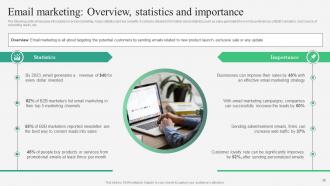
Slide 38: The following slide showcases introduction to email marketing, major statistics and key benefits.
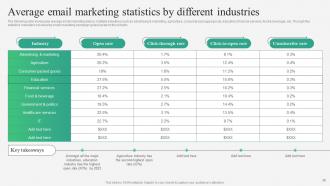
Slide 39: This slide represents the Average email marketing statistics by different industries.
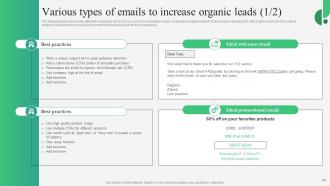
Slide 40: This slide exhibits the Various types of emails to increase organic leads.
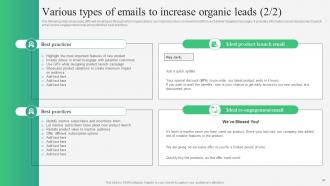
Slide 41: This slide continues the Various types of emails to increase organic leads.
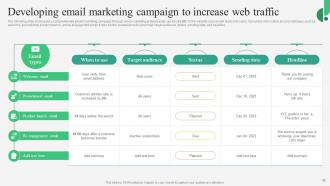
Slide 42: This slide deals with Developing email marketing campaign to increase web traffic.
Slide 43: This slide reveals the Heading for the Topics to be covered next.
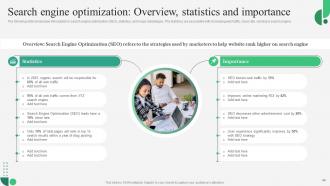
Slide 44: This slide showcases introduction to search engine optimization (SEO), statistics, and major advantages.
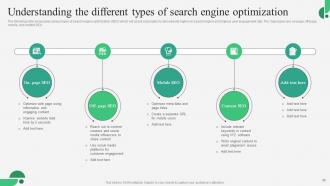
Slide 45: This slide focuses on Understanding the different types of search engine optimization.
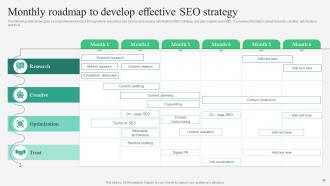
Slide 46: This slide elucidates the Monthly roadmap to develop effective SEO strategy.
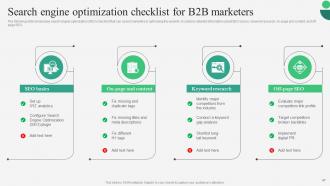
Slide 47: Thsi slide deals with Search engine optimization checklist for B2B marketers.
Slide 48: This slide includes the Title for the Topics to be discussed in the upcoming template.
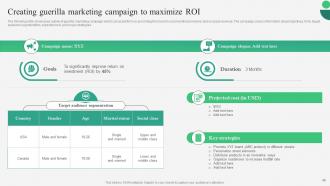
Slide 49: This slide emphasizes on Creating guerilla marketing campaign to maximize ROI.
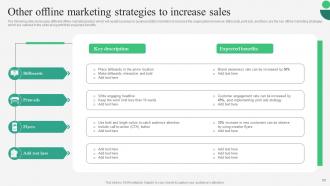
Slide 50: This slide mentions about the Other offline marketing strategies to increase sales.
Slide 51: This slide exhibits the Heading for the Contents to be covered next.
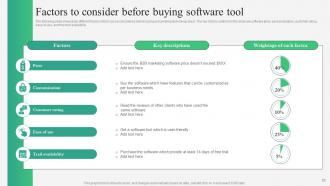
Slide 52: This slide states the Factors to consider before buying software tool.
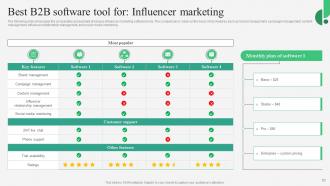
Slide 53: The following slide showcases the comparative assessment of various influencer marketing software tools.
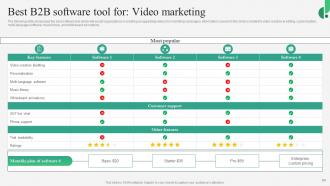
Slide 54: This slide reveals the best software tool for creating an appealing videos for marketing campaigns.
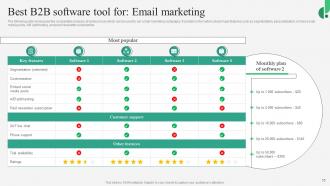
Slide 55: This slide indicates the comparative analysis of various tools to run email marketing campaigns.
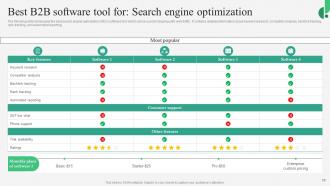
Slide 56: The following slide showcases the best search engine optimization (SEO) software tool which can be used to target quality web traffic.
Slide 57: This slide reveals the Title for the Ideas to be discussed further.
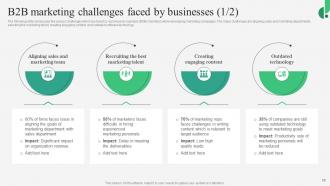
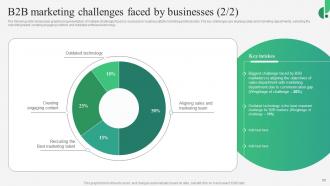
Slide 58: This slide talks about the B2B marketing challenges faced by businesses.
Slide 59: This slide continues the B2B marketing challenges faced by businesses.
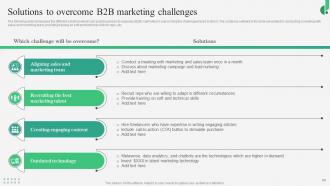
Slide 60: This slide represents the Solutions to overcome B2B marketing challenges.
Slide 61: This slide contains the Heading for the Ideas to be covered in the forth-coming template.
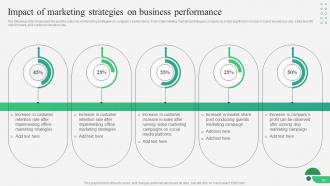
Slide 62: This slide highlights the Impact of marketing strategies on business performance.
Slide 63: This slide depicts the Title for the Contents to be discussed further.
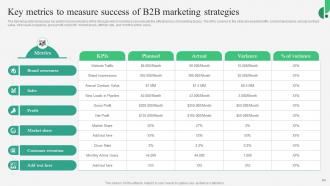
Slide 64: This slide exhibits the Key metrics to measure success of B2B marketing strategies.
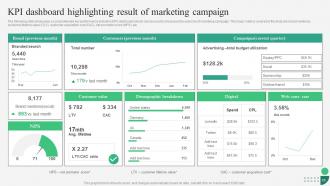
Slide 65: This slide illustrates the KPI dashboard highlighting result of marketing campaign.
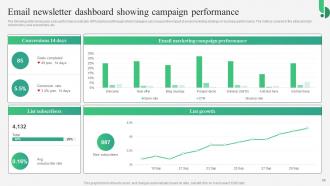
Slide 66: This slide presents the Email newsletter dashboard showing campaign performance.
Slide 67: This is the Icons slide containing all the Icons used in the plan.
Slide 68: This slide dipslays the Additional information.
Slide 69: This slide elucidates the Pie chart.
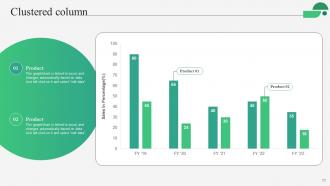
Slide 70: This is the Clustered column sldie with related imagery.
Slide 71: This is the About us sldie. State your company-related information here.
Slide 72: This slide presents the organziation's vision, mission and goal.
Slide 73: This is Meet our team slide. State your team-related information here.
Slide 74: This is the Idea generation sldie for encouraging fresh ideas.
Slide 75: This slide represents the Financial diagram.
Slide 76: This slide exhibits the firm's Timeline process.
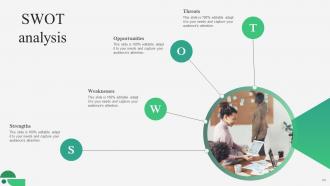
Slide 77: This slide reveals the SWOT analysis.
Slide 78: This is the Puzzle slide with related imagery.
Slide 79: This is the Magnifying glass for minute details.
Slide 80: This is the Quotes sldie for motivation.
Slide 81: This slide showcases the Roadmap of the firm.
Slide 82: This is the Thank You slide for acknowledgement.
B2B Marketing Strategies To Grow Your Brand MKT CD V with all 82 slides:
Use our B2B Marketing Strategies To Grow Your Brand MKT CD V to effectively help you save your valuable time. They are readymade to fit into any presentation structure.










FAQs for B2B Marketing Strategies To Grow Your Brand
Okay so B2B is totally different - way more relationship-heavy and honestly, painfully slow. Multiple people have to sign off on everything, budgets need approval, the whole nine yards. Meanwhile B2C buyers just see something they want and buy it on the spot. With B2B you're basically selling to a committee who all need to justify the ROI to their boss. Skip the flashy ads - they want educational content that solves real problems. LinkedIn crushes it over Instagram obviously. Oh and figure out everyone who's actually involved in their buying process first. It's never just one person deciding, which makes everything more complicated but whatever.
So here's the deal with B2B content marketing - you want to become the person prospects actually trust, not just another vendor bugging them. Write stuff that genuinely helps: whitepapers, case studies, industry reports that solve their real headaches. Sure, gate some content for emails, but seriously don't go overboard or people will just bounce. Blog posts and LinkedIn articles work great for building credibility. Oh, and map everything to where buyers are in their journey - someone just researching needs different content than someone ready to buy. Consistency beats perfection every time.
Look, B2B prospects are definitely on social media doing their homework before they'll even take a sales call. LinkedIn's your best bet - I mean, that's literally what it's built for. You'll want to post regularly and actually engage with people's stuff instead of just spamming your products. Twitter's decent for jumping into industry conversations and showing you know your stuff. YouTube works great for demos and how-to content. Facebook though? Unless you're in some weird niche, I'd honestly just skip it. Start with LinkedIn and nail that first.
Stop chasing vanity metrics - they don't pay the bills. Attribution modeling shows you which touchpoints actually convert people. Then calculate your CAC and CLV because those numbers matter. Marketing qualified leads are whatever, but sales qualified leads and closed deals? That's the real stuff. HubSpot or Salesforce can track everything from first click to purchase. Here's the thing though - you've got to get on the same page as your sales team about what counts as a lead. Otherwise you're measuring completely different things. Monthly campaign reviews will show you what's actually driving revenue vs. what just looks pretty on paper.
Honestly, start by matching content to where people are in your funnel. Educational stuff like blogs for awareness, then case studies and demos when they're considering you. ROI calculators and free trials seal the deal. Email nurturing is everything, but skip those boring newsletters nobody opens. Instead, segment by industry and company size - way more effective. Send stuff that actually hits their pain points. LinkedIn outreach works too, just don't be pushy about it (learned that the hard way). Track what's working and adjust from there. Being genuinely helpful beats being salesy every time.
Dude, personalized marketing in B2B is honestly a game-changer. These buyers are drowning in generic sales pitches every single day. When you actually speak to their specific problems and industry stuff, you cut through all that noise instantly. Nobody wants to feel like just another name on some mass email list, you know? Use whatever data you've got - company size, their role, past interactions. Customize your subject lines and content offers around that info. Even something simple like dropping their company name and mentioning their industry will bump up your response rates big time. Start there and build from it.
Start with the client's actual problem, then show your solution step-by-step. Numbers are your best friend here – percentages, dollars saved, whatever you can measure. Get real quotes from people if you can (makes such a difference). The whole thing should spotlight their success, not just how brilliant you are. Oh, and definitely get approval before you publish anything – learned that one the hard way. Use headers and bullets so people can skim it. Honestly, the most compelling case studies feel like stories with a clear beginning, middle, and "holy crap, look at these results" ending.
Honestly, most companies obsess over demographics when they should focus on firmographics instead - company size, industry, revenue, that stuff. Look at your best customers first and find the patterns. What problems do they actually have? How do they make decisions? Behavioral data matters too - buying patterns, how much they engage with your content. Map out where they are in their buying journey. I'd stick to maybe 3-5 segments tops because more than that gets messy real quick. Then you can craft messaging that hits each group's specific pain points. Way more effective than generic outreach.
Honestly? Trade shows are worth the money if you do them right. You're talking to actual decision-makers who showed up because they're actively looking to buy stuff - which is like, the dream scenario. The networking is insane too, plus you get to spy on what your competitors are doing (always fun). Yeah, they're pricey and exhausting, but the leads you get are usually gold. Here's what I'd do: pick maybe 2-3 really good events per year instead of running around to every random conference. And seriously, figure out your follow-up game before you even leave for the thing. That's where most people screw up.
Skip the generic "software" keywords - go for specific stuff like "enterprise software for manufacturing compliance" instead. Your B2B buyers are searching for solutions to actual problems, especially late at night when they're stressed about deadlines. LinkedIn articles are surprisingly good for this. I'd start by checking what keywords your competitors rank for using SEMrush or similar tools. Build content around those industry pain points and technical questions. Topic clusters work well if you organize them around your main services. Don't forget the boring technical SEO stuff either - it actually matters. Local B2B searches can be gold too if that applies to you.
Honestly, ABM is tough because it eats up so many resources and getting sales/marketing on the same page is like herding cats. Start super small though - maybe 10-20 accounts max. Don't go crazy right away. Your sales team needs to actually care, not just pretend they do in meetings (you'll know the difference). Good data tools are worth the investment since you'll need to show results fast. Oh, and pick accounts where you already have some connection or inside info first. It's risky putting everything into fewer deals, but it works when you nail it.
Okay so here's the thing - B2B people get bombarded with terrible emails all day. Your best bet? Actually segment your lists by role or company size so you're not sending the same boring pitch to everyone. Address real problems they're dealing with, not some generic "increase efficiency" nonsense. Subject lines matter way more than people think. Make your content easy to scan with bullet points and stuff. Always give them one clear thing to do next - download something, book a call, whatever. Oh and don't try to close them immediately. Building the relationship first actually works better long-term.
B2B branding matters way more than people think. You're asking decision-makers to trust you with serious money and multi-year deals - that's not happening without solid credibility. Your brand is what makes you memorable when they're finally ready to purchase. Honestly, most B2B companies completely phone it in here. Big mistake. Keep your messaging consistent everywhere - website, sales decks, how your team talks to prospects. First though, nail down what makes you different. Then just hammer that message home in everything you do. It's really that simple, but somehow everyone overthinks it.
Dude, analytics is a game changer for B2B - you'll finally know what's actually working instead of just throwing stuff at the wall. Track which content hits with different buyer types and spot exactly when leads are ready to buy. Pretty much gives you superpowers to see where people bail out of your funnel. The predictive stuff is wild too - you can forecast buying patterns before they happen. Oh, and campaigns? You'll see which ones bring in quality leads vs just noise. First thing though - get tracking set up on your main conversion points or you're flying blind.
AI personalization is huge right now, plus account-based marketing keeps getting smarter. Interactive stuff like calculators actually work well - people love that. Video's literally everywhere now, even in emails which still feels strange to me but whatever. Buyers want to educate themselves, so don't gate everything. Intent data helps you time outreach way better. LinkedIn's moving past those crappy connection requests into real conversations. Honestly, just pick one thing that fits what you're already doing and test it small first. Don't try to do everything at once or you'll mess it all up.
-
Impressive templates. Designing a presentation is fun now!
-
Thank you for offering such helpful pre-designed templates. They are really beneficial to me in my job.