


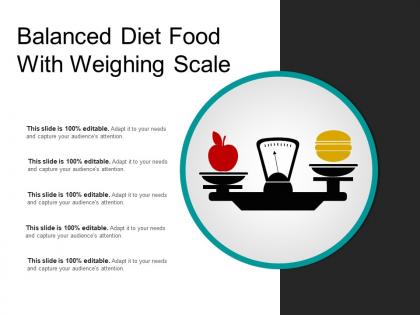
Balanced diet food with weighing scale




Try Before you Buy Download Free Sample Product
 Impress Your
 Audience
 100%
100% Editable
 Save Hours
 of Time


Balanced Diet Food With Weighing Scale is a great data visualization tool to showcase a healthy lifestyle through a prudent diet. Dieticians and nutritionists can reap benefits of this visually-striking PPT template on balanced diet. Any health-conscious user can take advantage of our custom healthy eating PowerPoint template by editing it with their health goals. The weighing scale icon developed by our PPT slide designers acts as an impactful visual metaphor for a wholesome diet. Nutritional balance PowerPoint presentation is an ideal virtual tool to illustrate the key to sidestepping diseases and deficiency. Obesity is a gateway disease, hence, use this healthy diet PPT format to promote the importance of physical wellbeing. Those involved in childcare health programs can employ our balanced meal PowerPoint slide to inculcate a good eating routine. Mention invaluable merits of well-balanced diet like delayed aging, improved energy levels, and boosted focus through this PPT. So, hit the download button and create a stirring presentation within minutes. Devise a brilliant approach with our Balanced Diet Food With Weighing Scale. Your dream will develop into a fact.
People who downloaded this PowerPoint presentation also viewed the following :
Balanced diet food with weighing scale with all 5 slides:
Get spoilt for choice with our Balanced Diet Food With Weighing Scale. They are available in great abundance.

FAQs for Balanced diet food
A balanced diet includes fruits and vegetables, whole grains, lean proteins, healthy fats, and adequate hydration. These components work together by providing essential nutrients, supporting metabolic functions, and maintaining energy levels throughout the day, with many nutritionists finding that this strategic combination ultimately delivers improved physical performance and long-term health outcomes.
A balanced diet contributes to overall health by providing essential nutrients, maintaining optimal body weight, supporting immune function, and reducing chronic disease risk. Through proper nutrition, individuals experience increased energy levels, improved cognitive performance, and better emotional stability, while organizations increasingly recognize that employee wellness programs featuring balanced nutrition ultimately deliver enhanced productivity, reduced healthcare costs, and stronger workplace performance.
Daily nutritional requirements vary significantly across age groups, with infants needing 40-50 calories per pound, children requiring 1,200-2,000 calories with higher protein ratios, adults needing 1,800-2,400 calories with balanced macronutrients, and seniors requiring fewer calories but increased calcium and vitamin D. These requirements enable optimal growth, sustained energy levels, and healthy aging outcomes.
Achieving a balanced diet on a budget involves strategic meal planning, bulk purchasing of staples like grains and legumes, seasonal produce selection, and home cooking over processed foods. These approaches streamline grocery expenses by minimizing food waste, maximizing nutritional value per dollar, and enabling families to maintain healthy eating habits while reducing overall food costs significantly.
Macronutrients include carbohydrates, proteins, and fats, which should typically comprise 45-65% carbs, 10-35% protein, and 20-35% fats respectively in a balanced diet. These proportions enable optimal energy production, muscle maintenance, and nutrient absorption, with many nutritionists finding that personalized ratios based on activity levels ultimately deliver better health outcomes and sustained wellness.
Micronutrients enhance immune function by supporting white blood cell production, antibody synthesis, and antioxidant defense mechanisms, while deficiencies significantly compromise disease resistance. Healthcare systems and corporate wellness programs increasingly recognize that adequate zinc, vitamin D, and selenium intake strengthens immunity, reduces infection rates, and ultimately delivers lower healthcare costs and improved productivity outcomes.
Incorporating plant-based foods into a balanced diet delivers enhanced nutritional diversity, increased fiber intake, improved heart health, better weight management, and reduced inflammation markers. These foods streamline nutrient absorption while providing essential vitamins, minerals, and antioxidants, with many individuals finding that plant-forward eating patterns ultimately support sustained energy levels and long-term wellness outcomes.
Cultural dietary practices align with balanced diet principles by incorporating traditional whole foods, seasonal vegetables, lean proteins, and time-tested cooking methods that naturally provide essential nutrients. Many cultures, including Mediterranean, Japanese, and traditional Indian diets, demonstrate how regional ingredients and ancestral wisdom create nutritionally complete meals, ultimately delivering both cultural authenticity and optimal health outcomes.
A balanced diet significantly enhances mental health and cognitive function by providing essential nutrients like omega-3 fatty acids, B vitamins, and antioxidants that support neurotransmitter production and brain cell maintenance. These nutritional components streamline cognitive processes, reduce anxiety and depression symptoms, and improve memory retention, with healthcare professionals and educational institutions increasingly finding that proper nutrition delivers enhanced focus, emotional stability, and overall mental performance.
Food labels help individuals maintain a balanced diet by providing nutritional information, ingredient lists, serving sizes, and percentage daily values that enable informed food choices. Through careful label reading, consumers can monitor calorie intake, limit added sugars and sodium, and ensure adequate protein and fiber consumption, ultimately delivering better portion control and nutritional awareness for long-term health management.
Common misconceptions about balanced diets include believing all fats are harmful, that carbohydrates should be completely eliminated, that expensive superfoods are essential, that portion sizes don't matter with healthy foods, and that supplements can replace whole foods. These myths often lead individuals and organizations to adopt unsustainable nutritional strategies, ultimately undermining long-term health outcomes and workplace wellness programs.
Hydration complements a balanced diet by enhancing nutrient absorption, supporting metabolic processes, and facilitating the transportation of vitamins and minerals throughout the body. Proper water intake enables optimal digestion, helps maintain energy levels, and supports cellular function, with many nutritionists finding that adequate hydration ultimately maximizes the benefits of healthy eating patterns.
Trendy "balanced" diets often lack scientific backing, promote unrealistic restrictions, eliminate essential food groups, and emphasize quick fixes over sustainable habits. These approaches can lead to nutrient deficiencies, metabolic disruption, and psychological stress around food choices, with many individuals finding that sustainable wellness requires personalized nutrition strategies rather than one-size-fits-all solutions.
Meal prepping ensures balanced diet adherence by planning nutritious portions, controlling ingredient quality, and eliminating impulsive food choices throughout the week. This strategic approach enables consistent macro and micronutrient intake, reduces reliance on processed foods, and streamlines healthy eating habits, with many individuals finding that pre-planned meals ultimately deliver better nutritional outcomes and sustained dietary success.
Dietary restrictions like gluten-free or vegan present both challenges and opportunities for maintaining nutritional balance, requiring careful planning around protein sources, vitamin B12, iron, and calcium intake. With proper meal planning and strategic supplementation, these approaches enable enhanced health outcomes, reduced inflammation, and improved energy levels, ultimately delivering sustainable wellness benefits while meeting all essential nutritional requirements.
-
Thanks for all your great templates they have saved me lots of time and accelerate my presentations. Great product, keep them up!
-
Good research work and creative work done on every template.