

Beauty brand business model for beauty and cosmetic brand ppt styles introduction




Try Before you Buy Download Free Sample Product
 Impress Your
 Audience
 100%
100% Editable
 Save Hours
 of Time


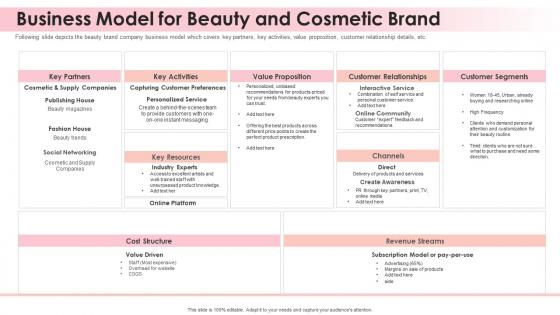
Following slide depicts the beauty brand company business model which covers key partners, key activities, value proposition, customer relationship details, etc.
People who downloaded this PowerPoint presentation also viewed the following :
Beauty brand business model for beauty and cosmetic brand ppt styles introduction with all 9 slides:
Use our Beauty Brand Business Model For Beauty And Cosmetic Brand Ppt Styles Introduction to effectively help you save your valuable time. They are readymade to fit into any presentation structure.








FAQs for Beauty brand business model for beauty and cosmetic brand
Okay so you need four main things. First, nail down your target audience - like are you going after Gen Z skincare addicts or busy professionals? Product differentiation that customers actually care about is huge too. Don't just rely on your website either - you'll want multiple sales channels. Brand storytelling matters more than people think. Honestly, DTC sounds cool but customer acquisition costs will eat you alive. Distribution is everything - Sephora partnerships, Amazon, maybe Target if you can scale up. Oh and build a real community around your brand instead of just pushing products constantly. Start with perfecting one thing before you expand though. You'll spread yourself way too thin otherwise.
Dude, skip the whole "clean beauty for everyone" thing - it's been done to death. Get super specific about who you're actually helping. Maybe it's people with eczema, or folks in their 60s, or whatever gap you see that big brands are totally ignoring. Your story needs to feel real, not like marketing BS. And honestly? Don't just slap pretty packaging on the same old formulas. Find something you can actually defend when copycats show up - could be ingredients, target audience, whatever. Just make sure it's something that'll stick around longer than this year's trending colors, you know?
Honestly, e-commerce is everything for beauty brands right now. You're cutting out the middleman instead of giving Sephora a huge chunk of your profits. Plus you actually get to know your customers - like, real data about who's buying what. Testing new products becomes way easier too since you don't need some buyer at Nordstrom to approve it first. TikTok shop is blowing up (my friend made $10k last month just from that). Traditional retail isn't dead or anything, but your direct-to-consumer stuff is where the real money lives. Definitely start there if you're launching something.
Honestly, beauty content is all about showing not telling - before/after shots, quick tutorials, that kind of stuff works amazingly well. Instagram and TikTok are perfect for this. Skip the huge celebrities and go for micro-influencers instead. They actually use the products and their followers trust them way more (plus it won't break your budget). Focus on educational content - skincare routines, makeup tricks - rather than just "buy this now!" posts. Reply to every comment and DM you can. Oh, and don't spread yourself too thin at first. Pick one platform, post consistently for a month, then see what gets saved and shared most.
Honestly, start with your packaging - refillable containers are huge right now. Partner with suppliers who actually care about the environment, not just ones who say they do. Biodegradable ingredients are worth the investment too. People can spot greenwashing from a mile away these days, so don't try to fake it. Take-back programs work well - customers return empties for refills or recycling. Reducing water in manufacturing is smart, plus renewable energy if you can swing it financially. Pick one thing that fits your budget first. I'd probably go with packaging since it's the most visible to customers anyway.
Dude, partnerships are seriously where it's at for beauty brands. You tap into someone else's audience instead of starting from zero – way smarter than grinding alone. I've literally watched brands blow up overnight from one good collab with the right influencer or retailer. The trick is finding partners whose followers actually want what you're selling, not just going after whoever has the most followers (learned that one the hard way lol). Co-created products especially kill it because they feel exclusive and get people talking. Just make sure there's real overlap with your target market or you'll waste a ton of cash.
First thing - get your CAC and LTV numbers locked down, plus that LTV:CAC ratio. Without those, you're basically throwing money into the void. Track repeat purchases and average order value too. Monthly recurring revenue if you've got subscriptions going. Beauty is brutal for customer retention, so that's make-or-break honestly. Oh, and watch your inventory turnover per SKU like a hawk - nothing murders your margins faster than dead stock sitting around. I'd check these weekly at first. Once you're solid there, then worry about conversion rates and social stuff.
Honestly, demand forecasting is everything - you've gotta track seasonal trends and which shades people actually want. Beauty inventory is such a pain because trends change overnight and stuff expires. Get flexible MOQs from manufacturers, trust me on this one. I got burned with summer bronzer sitting around in winter once, learned that lesson fast! Having backup suppliers saves your ass when things go wrong. Good inventory software that connects to all your sales channels is worth the investment. Oh, and track your sell-through rates weekly by category - that data's gold.
Honestly, influencer marketing is huge for beauty brands right now. People trust influencers way more than regular ads - especially when it's something going on their face, you know? The visual aspect is perfect for beauty too. Someone actually showing your product work is worth like 10 traditional commercials. I've seen conversion rates that are 2-3x higher than other channels. Just don't get caught up in follower counts though. You want someone whose audience actually matches who you're trying to reach. Oh, and the ROI can be insane if you pick right.
Dude, you gotta price based on what your people can actually pay. Gen Z on TikTok? They'll drop $15-30 if it looks legit, but premium customers will shell out $50+ - though they're annoyingly picky about every ingredient. The middle market is honestly a nightmare because everyone's fighting over it. Don't just copy competitor prices though. Get some focus groups going with your actual target audience and test different price points. I learned this the hard way with my cousin's startup lol. Real feedback beats guessing every time, then you can tweak from there.
Oh man, cosmetics regulations are such a pain. FDA will be all over your labeling and ingredients - can't just slap "anti-aging miracle" on there without proof, you know? California's got their own annoying chemical disclosure rules too. Don't even get me started on selling internationally... EU regulations make the US look like the wild west. Seriously though, get a cosmetic chemist and regulatory person ASAP. I've seen companies get completely screwed because they tried to wing it. The whole thing's honestly kind of overwhelming but doable if you plan ahead.
Honestly, customer feedback is like having a cheat code for your business. Reviews, social media comments, surveys - all that stuff tells you exactly where you're screwing up or winning. If people keep bitching about your packaging being wasteful, time to go green, right? I'd track which products people actually love vs the ones getting zero buzz. Double down on what's working. Ditch what isn't. Instagram polls and quick email surveys work great for staying plugged in. Oh, and actually DO something with what they tell you - don't just collect feedback and let it sit there gathering digital dust.
Okay so honestly, personalization and inclusive shades are huge right now - people actually expect that stuff. Sustainability matters too since everyone's reading ingredients now (which is kinda wild but good). Clean beauty is everywhere though the term doesn't really mean anything specific lol. Social commerce is blowing up. Like people are literally buying straight from TikTok stories without even leaving the app. But here's the thing - don't try to do everything at once or you'll burn out. Pick whatever actually fits your brand first, then expand from there. Way better than spreading yourself thin chasing every trend.
Honestly, tech can be a game-changer for beauty brands if you do it right. AR try-ons are huge right now - customers actually want to see how lipstick looks before buying online. AI does solid work with personalized recommendations too. Smart packaging with QR codes might sound basic, but people eat that interactive stuff up. Data analytics helps you spot trends early, which is clutch. Here's the thing though - don't just pick whatever's trendy. Figure out what's actually frustrating your customers first, then find tech that fixes those problems. That's how you build real loyalty instead of just looking fancy.
Honestly, the two big mistakes I see all the time: launching with way too many products and thinking customer acquisition will be cheap. Don't do 20 SKUs right away - pick like 3-5 solid products first. Also those Facebook ad costs? They're brutal and keep going up. I learned this the hard way, but you can't just rely on paid social forever. Build some actual community too. Oh and inventory planning is weird with beauty stuff because of expiration dates and seasonal trends. Test small batches first, see what people actually buy, then grow from there. Year one should be about keeping customers happy, not chasing new ones constantly.
-
Excellent design and quick turnaround.
-
Qualitative and comprehensive slides.
-
Design layout is very impressive.