


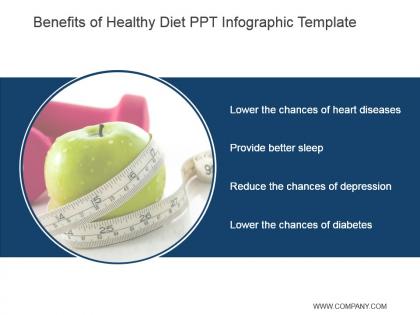
Benefits of healthy diet ppt infographic template




Try Before you Buy Download Free Sample Product
 Impress Your
 Audience
 100%
100% Editable
 Save Hours
 of Time


Our Benefits Of Healthy Diet Ppt Infographic Template help ideas get across without any hassle. They ensure seamless connectivity.
People who downloaded this PowerPoint presentation also viewed the following :
Benefits of healthy diet ppt infographic template with all 5 slides:
Address complex concerns with our Benefits Of Healthy Diet Ppt Infographic Template. Effectively erase doubts that emerge.

FAQs for Benefits of healthy diet
Long-term healthy diet benefits include reduced chronic disease risk, improved cardiovascular health, enhanced cognitive function, stronger immune systems, and increased longevity. Through consistent nutritional choices, individuals experience lower diabetes rates, better weight management, and improved mental clarity, while healthcare organizations increasingly recognize that preventive nutrition ultimately delivers reduced medical costs and enhanced quality of life.
A balanced diet significantly impacts mental health and cognitive function by stabilizing blood sugar levels, supporting neurotransmitter production, and reducing inflammation that affects brain performance. Through nutrient-rich foods like omega-3 fatty acids and antioxidants, individuals experience enhanced focus, improved mood regulation, and better stress management, while reducing anxiety and depression symptoms, ultimately delivering sharper cognitive abilities and sustained mental well-being.
Antioxidants combat oxidative stress and cellular damage by neutralizing harmful free radicals, reducing inflammation, and protecting DNA integrity. These compounds, found abundantly in berries, leafy greens, and colorful vegetables, help prevent cardiovascular disease, certain cancers, and diabetes, with many healthcare professionals finding that antioxidant-rich diets significantly enhance long-term health outcomes.
A healthy diet enhances athletic performance by providing sustained energy through complex carbohydrates, supporting muscle function with adequate protein, and maintaining hydration with proper electrolyte balance. Strategic nutrition timing enables faster recovery, reduces inflammation, and optimizes muscle repair, with many endurance athletes and professional sports teams finding that comprehensive dietary planning ultimately delivers improved stamina and competitive advantage.
Diet directly influences gut health by affecting the composition and diversity of intestinal bacteria, with fiber-rich foods, fermented products, and prebiotics promoting beneficial microbes while processed foods can disrupt microbial balance. This relationship enables improved digestion, enhanced immune function, and better nutrient absorption, with many healthcare organizations finding that strategic dietary choices ultimately deliver reduced inflammation and stronger overall health outcomes.
Reducing processed food intake enhances overall well-being by minimizing artificial additives, reducing sodium and sugar consumption, and increasing nutrient density from whole foods. This dietary shift enables better weight management, improved cardiovascular health, and enhanced energy levels, with many individuals finding that eliminating packaged meals and snacks ultimately delivers sustained vitality and reduced chronic disease risk.
Plant-based diets significantly reduce cardiovascular disease risk by lowering cholesterol levels, blood pressure, and inflammation markers while improving arterial function and circulation. These dietary approaches streamline heart health management by eliminating saturated fats, enhancing fiber intake, and delivering essential nutrients, with many healthcare organizations finding that patients achieve better long-term cardiovascular outcomes.
Maintaining a healthy diet affects weight management by controlling calorie intake, boosting metabolism, and reducing cravings for processed foods. These nutritional approaches streamline weight control through balanced macronutrients, portion regulation, and sustained energy levels, with many individuals finding that consistent dietary habits ultimately deliver faster results and long-term maintenance success.
Essential immune-boosting nutrients include vitamin C, vitamin D, zinc, selenium, and omega-3 fatty acids, along with antioxidants like beta-carotene and vitamin E. These nutrients enhance immune function by supporting white blood cell production, reducing inflammation, and strengthening cellular defenses, with many health professionals finding that consistent intake delivers improved resistance and faster recovery times.
Meal planning contributes to healthier eating habits by encouraging deliberate food choices, reducing impulsive decisions, and ensuring nutritional balance across weekly meals. This strategic approach enables individuals and families to streamline grocery shopping, minimize food waste, and consistently maintain portion control, ultimately delivering better dietary outcomes and long-term wellness sustainability.
Sugar creates rapid energy spikes followed by crashes that can trigger irritability, fatigue, and mood swings throughout the day. While initial glucose boosts provide temporary alertness, the subsequent insulin response often leads to decreased concentration, increased cravings, and emotional instability, with many health professionals finding that balanced nutrition delivers more sustained energy and stable moods.
A nutrient-dense diet supports healthy aging by reducing inflammation, maintaining muscle mass, and enhancing cognitive function through antioxidants, lean proteins, and omega-3 fatty acids. These nutritional strategies enable seniors to maintain independence, minimize healthcare costs, and improve quality of life, with many healthcare organizations finding that preventive dietary approaches deliver better patient outcomes and reduced medical interventions.
Portion control is essential for maintaining caloric balance, preventing overeating, supporting weight management, optimizing nutrient absorption, and reducing digestive strain. It enables individuals to enjoy diverse foods while maintaining metabolic efficiency, with many nutritionists finding that controlled portions enhance satiety signals, improve energy levels, and ultimately deliver sustainable dietary habits and long-term health outcomes.
Hydration significantly enhances dietary effectiveness by optimizing nutrient absorption, supporting metabolic processes, and regulating appetite signals that influence food choices. Proper water intake enables better digestion of fiber-rich foods, reduces false hunger cues that lead to overeating, and supports cellular function, with many nutritionists finding that adequate hydration amplifies healthy eating benefits while improving energy levels.
Fermented foods deliver enhanced gut health through beneficial probiotics, improved nutrient absorption, strengthened immune function, and better digestive wellness. These foods streamline metabolic processes by supporting microbiome balance, reducing inflammation, and optimizing nutrient bioavailability, with many health-conscious individuals finding that regular consumption ultimately enhances overall vitality and digestive efficiency.
-
Easily Understandable slides.
-
Best way of representation of the topic.