

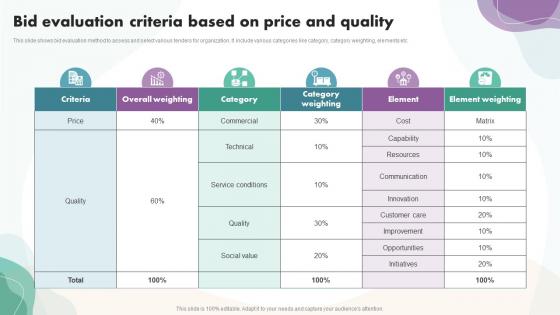
Bid Evaluation Criteria Based On Price And Quality




Try Before you Buy Download Free Sample Product
 Impress Your
 Audience
 100%
100% Editable
 Save Hours
 of Time


This slide shows bid evaluation method to assess and select various tenders for organization. It include various categories like category, category weighting, elements etc
People who downloaded this PowerPoint presentation also viewed the following :
Bid Evaluation Criteria Based On Price And Quality with all 6 slides:
Use our Bid Evaluation Criteria Based On Price And Quality to effectively help you save your valuable time. They are readymade to fit into any presentation structure.





FAQs for Bid Evaluation Criteria Based On
So obviously price is huge, but don't forget technical skills and whether they've actually delivered similar projects before. Timeline matters too - can they meet your deadlines? I always check if their team is actually qualified and if the company won't go bankrupt halfway through lol. Also look at how well they understood what you're asking for in their proposal. References are clutch. Oh and all the boring compliance stuff - did they follow your submission rules and can they legally do the work? Set your scoring criteria upfront so nobody can complain later about being unfair.
Honestly, scoring systems are game-changers for this stuff. You basically assign numbers to different criteria - price, experience, technical skills, whatever matters to you. Then score each vendor the same way. Super helpful when you've got a team evaluating because everyone has their own priorities, you know? The numerical scores give you solid proof of why you chose someone, which saves your ass if people start questioning it later. Oh, and definitely figure out your criteria and weights before you start. Trust me on that one - it'll prevent so many arguments down the line.
So cost analysis is basically your reality check when you're looking at bids. Break down their pricing and see if it actually makes sense compared to market rates. Watch out for prices that seem way too low - there's usually a catch there. Don't just go for the cheapest though, you want the best overall value. I always tell people to think about long-term costs too, not just what you're paying upfront. Oh and double-check that their breakdown matches what you actually need for the project.
So quantitative stuff is just the hard numbers - price, delivery dates, technical specs, performance data. Pretty straightforward. Qualitative criteria? That's where it gets tricky because you're making judgment calls on things like team expertise, company reputation, or whether they actually "get" your project. I always think of car shopping (weird comparison but whatever) - gas mileage and sticker price are quantitative, but trusting the brand or loving the interior design? Totally qualitative. You'll want both types in your scoring, but honestly? The numbers are way easier to justify if someone questions your decision later. Just make sure you nail down clear standards for evaluating the subjective stuff before you start.
Vague criteria will absolutely kill you - learned that one the hard way when we got challenged on inconsistent scoring. Don't weight price too heavily either, you'll regret the quality issues later. Test everything with your team first to catch weird wording before it goes live. Oh, and never change criteria mid-process even if you realize it's wonky. That's asking for trouble. Make sure you can actually measure what you're asking for too - sounds obvious but you'd be surprised how often people mess this up. Basically avoid anything that accidentally favors one bidder.
Honestly, you'll want to get different departments involved before you finalize anything. End users, finance, operations - they all spot stuff you'd never think of. I've watched too many procurement teams go rogue and pick vendors that seemed perfect but totally bombed once people actually had to use them. Different perspectives help you weight your criteria better too. Finance cares about cost obviously, but operations might flag maintenance nightmares you hadn't considered. Brief stakeholder interviews upfront are worth it - saves you from expensive screw-ups later when everyone's pointing fingers.
Focus on four main things when vetting vendors: money stuff, experience, technical chops, and track record. Check their financials first - credit, cash flow, bonding capacity. Last thing you want is them folding halfway through your project. Their past work matters too, so look at similar projects they've done and whether their team actually knows what they're doing. Honestly, references are everything here. Actually call them and ask the hard questions about quality and deadlines. Oh, and make a scoring system that fits your project's needs - then don't second-guess yourself when you're picking.
Just bake the risk stuff right into your scoring matrix - create categories for financial stability, delivery history, resource availability, all that. I usually do 15-25% weighting for risk factors, but honestly depends how messy your project might get. Score their mitigation plans and track records systematically instead of going with gut instinct (learned that one the hard way). Build clear rubrics so you're actually comparing the same things across bidders. Oh, and don't forget to look at how they handle problems when stuff goes sideways - that tells you everything.
Dude, compliance stuff is basically your entry ticket - mess it up and you're out before anyone even looks at your pricing. Most companies check this first as a pass/fail thing because they can't risk getting stuck with someone who'll cause legal headaches later. I've seen solid bids get tossed immediately just for missing one tiny regulatory requirement. Make sure you hit every single compliance point in the RFP and spell out exactly how you meet them. Don't assume they'll figure it out themselves. It's honestly the easiest way to accidentally kill your chances before the real competition even starts.
Make a scoring system that gives points for stuff like project completion rates, on-time delivery, staying on budget, and client happiness scores. Get bidders to show you real numbers - how many similar projects they've done in the last 3-5 years, whether they hit their timelines, actual results they got. Recent work matters way more than old stuff, honestly. Markets move too fast these days. Also throw in reference checks where you rate their communication and problem-solving with numbers. The key is having one standardized scorecard for everyone so you're not comparing random things. Makes the whole process so much cleaner.
Document everything from day one - seriously, this stuff matters when vendors start asking questions later. Set your scoring criteria before any bids arrive and stick to them religiously. Have each team member evaluate the same sections consistently, and honestly? Get someone outside your team to double-check the whole process. Written records of every discussion help too. You want concrete evidence backing up decisions, not just "it felt right." Oh, and share results with the losers - builds goodwill for next time.
Okay so each industry cares about totally different stuff. Healthcare and aerospace? Safety certifications are everything - you literally can't cut corners. Tech companies will pay more for innovation and scalability instead of going with the cheapest option. Construction wants to see you've done similar projects before, plus bonding capacity matters. Government contracts are... well, they're obsessed with following every single procurement rule (bureaucracy at its finest). Financial services freak out about security standards and regulatory stuff. Honestly, you've got to figure out what keeps your industry up at night before writing any evaluation criteria, because generic checklists miss the mark completely.
Honestly, Excel is probably your best bet to start - most people just do weighted scoring matrices and it gets the job done for smaller stuff. Once you're dealing with bigger volume though, platforms like SAP Ariba or Coupa are worth it since they automate all the scoring comparisons. There's also specialized ones like BidClerk that handle everything soup to nuts. I'd say nail down your criteria weighting in a simple Excel template first (saves you headaches later), then move to proper software when you've got enough bids to justify the cost. Way easier than jumping straight into some fancy system.
Oh man, international vendors are tricky! You've gotta think about currency swings, their local regulations, and whether you'll actually be able to communicate clearly. Time zones become a nightmare for support calls too. The Jakarta project taught me this lesson the hard way - shipping delays and customs issues we never saw coming. Weight their technical skills more heavily since everything else gets messier across borders. Ask them specifically about other clients in your area and what local partners they work with. Don't let your scoring accidentally punish solid vendors just because they're far away. Also factor in whether they actually get your regulations.
Honestly, adding sustainability metrics to your bid evaluation is pretty smart - you'll find vendors who actually cut your environmental impact AND save money long-term. It's not just about looking good to stakeholders (though that matters too). Sustainable suppliers tend to be more innovative and help with risk management through stuff like energy efficiency. The catch? You gotta watch out for greenwashing BS. Pick 2-3 specific sustainability criteria that match what your company actually cares about, then weight them properly in your scoring. Don't just check boxes - make it count.
-
Stunning collection! With a wide variety of options available, I was able to find a perfect slide for my presentation. Thank you, SlideTeam!
-
I want to express my gratitude to SlideTeam’s presentation design services team for helping me create the best presentation of my life!