


Billiard balls with cue powerpoint presentation slides




Try Before you Buy Download Free Sample Product
 Impress Your
 Audience
 100%
100% Editable
 Save Hours
 of Time


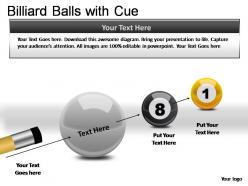
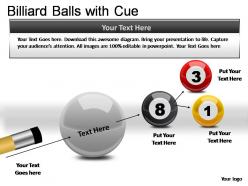
Take a look at our range of Billiard Balls With Cue Powerpoint Presentation Slides. You will be delighted with what you find.
People who downloaded this PowerPoint presentation also viewed the following :
Billiard balls with cue powerpoint presentation slides with all 20 slides:
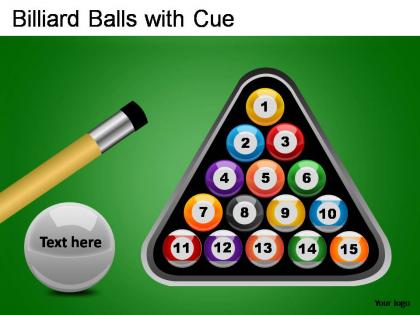
Paint the canvas with our Billiard Balls With Cue Powerpoint Presentation Slides. Add to the vibrancy of your views.

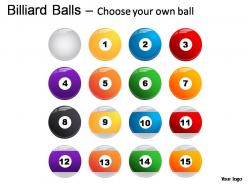


FAQs for Billiard balls with cue
Billiard balls are commonly manufactured using phenolic resin, polyester resin, acrylic materials, aramith phenolic compounds, and high-grade polymer blends. These materials enhance durability, consistent roll characteristics, and impact resistance by minimizing wear, maintaining spherical precision, and delivering optimal playing performance, with many professional venues finding that premium phenolic compositions ultimately provide superior longevity and game consistency.
Performance characteristics vary significantly across billiard ball brands, with factors like material density, surface finish, weight consistency, and durability affecting play quality. Premium brands like Aramith deliver superior resin composition and precise manufacturing tolerances, while budget options may show inconsistent roll patterns and faster wear, with competitive players and professional venues increasingly choosing higher-grade sets for optimal game precision.
Billiard ball weight and size directly impact accuracy, control, and game consistency, with standardized specifications ensuring uniform roll physics, predictable collision dynamics, and precise shot execution. The regulation 2.25-inch diameter and 5.5-ounce weight enable players to develop reliable techniques, calculate accurate angles, and execute strategic shots consistently, ultimately delivering professional-quality gameplay experiences across tournaments and recreational settings.
Billiard ball design and colors significantly influence player perception through visual contrast, depth perception, and psychological associations that affect shot accuracy and confidence. Strategic players leverage color patterns to enhance focus during complex shots, with many professional tournaments finding that high-contrast designs improve precision while specific color schemes can either calm or energize players, ultimately delivering competitive advantages.
Recent technological advances in billiard ball production include precision injection molding, advanced phenolic resin formulations, computerized weight distribution systems, enhanced surface finishing techniques, and automated quality control testing. These manufacturing innovations streamline production by ensuring consistent sphericity, optimizing density uniformity, and minimizing surface imperfections, with professional tournaments and recreational facilities finding that modern balls deliver superior playability, reduced wear patterns, and enhanced durability for competitive advantage.
Billiard balls feature a smooth, polished surface that minimizes friction with the cue stick, ensuring clean contact and precise energy transfer during strikes. This controlled texture enables players to achieve consistent spin, accurate directional control, and predictable ball behavior, while reducing unwanted deflection or grip that could compromise shot precision, ultimately delivering the reliability professional players require for competitive performance.
Temperature and humidity significantly affect billiard ball performance by altering dimensional stability, surface friction, and rolling consistency. Higher temperatures can cause slight expansion while humidity impacts surface grip and table felt conditions, with many professional tournaments controlling these variables at 68-72°F and 45-55% humidity, ultimately ensuring predictable ball behavior and maintaining competitive fairness across extended play.
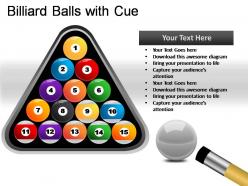
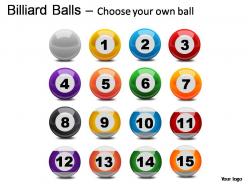
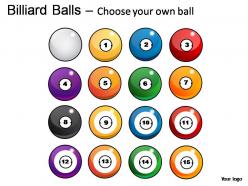
Billiard ball markings vary significantly across games, with pool using numbered solid and striped balls 1-15, snooker featuring colored balls with specific point values, and carom billiards using three unmarked balls. These distinct numbering systems enable different strategic approaches, scoring mechanisms, and game complexities, with many recreational facilities and professional venues finding that varied marking systems attract diverse player preferences and skill levels.
Essential maintenance practices include regular cleaning with proper ball cleaners, avoiding abrasive materials, storing balls in temperature-controlled environments, rotating usage patterns, and periodic professional polishing. These practices enhance ball longevity, maintain consistent roll characteristics, and preserve surface integrity, with many pool halls and recreational facilities finding that systematic maintenance delivers superior playing experiences and reduces replacement costs.
Different billiard games influence ball design through varying size requirements, weight specifications, and numbering systems, with pool using 2.25-inch balls, snooker requiring smaller 2.07-inch balls, and carom games using larger, unnumbered balls. These design variations enable optimal gameplay mechanics for each sport's specific rules and table dimensions, ultimately delivering enhanced precision, improved player performance, and standardized competitive experiences across different billiard disciplines worldwide.
Billiard ball design originated in the 15th century using wood, then evolved through ivory in the 1600s, celluloid in the 1870s, and modern phenolic resin since the 1970s. These material advances enhanced durability, consistency, and playability by reducing chipping, improving weight distribution, and delivering superior impact resistance, with professional tournaments and recreational facilities finding that modern composite materials ultimately provide more predictable ball behavior and longer equipment lifecycles.
Billiard balls require controlled storage conditions including consistent temperature between 60-75°F, low humidity levels, protection from direct sunlight, and adequate ventilation to prevent material degradation. Professional billiard halls, recreational centers, and tournament facilities increasingly invest in climate-controlled storage systems, ultimately preserving ball quality, maintaining consistent gameplay performance, and reducing replacement costs.
Professional tournaments regulate billiard ball specifications through strict standards covering weight, diameter, density, hardness, and surface finish, with governing bodies like the World Pool-Billiard Association establishing precise tolerances. These regulations ensure consistent play across competitions by requiring certified manufacturers, regular equipment inspections, and standardized materials, ultimately delivering fair competition conditions and maintaining the sport's integrity at professional levels.
Common misconceptions include believing harder shots are always more accurate, that all balls react identically regardless of weight variations, assuming perfect spherical contact in every collision, and thinking spin effects are purely cosmetic. Many amateur players overlook how table conditions, ball temperature, and cloth friction significantly influence dynamics, ultimately missing opportunities to develop more precise shot-making techniques and strategic positioning skills.
Handcrafted billiard balls involve manual turning, precision hand-polishing, and individual quality inspection, while mass-produced versions utilize automated molding, machine finishing, and standardized quality control systems. These different approaches enable manufacturers to serve distinct market segments, with artisanal producers delivering premium customization and exclusivity, while industrial operations streamline costs and consistency for broader accessibility.
-
Designs have enough space to add content.
-
Unique design & color.