



 0 Comment
 Customer Reviews

No one works only for salary; there has to be that intangible and tangible feeling of importance you, and your work holds. Without such reward and recognition, even the most well-paid professionals can find it difficult to maintain motivation.
In this context, a company is a community of individuals striving, failing, creating, and growing together. Modern workplaces transform into a cohesive tribe with well-designed Rewards and Recognition (R&R) programs. These well-designed structures around reward and recognition set the tone for an organization-wide appreciation of people’s contributions. An average 12x higher ROI is found in organizations that engage in recognition programs. In fact, companies with strong recognition cultures have reduced turnover, better engagement, and improved financial success.
A Rewards and Recognition (R&R) Program is a dynamic approach to recognizing, appreciating, and celebrating the hard work, achievements, and dedication of employees. It’s a blend of tangible and intangible benefits given to employees in recognition of their hard work. Take Google; the company’s methods of acknowledgment are just as cutting-edge as its products. Peer bonus and the “gThanks” platform allow employees to publicly thank one another. It doesn’t stop there, employees have the option to suggest their coworkers for a Peer Bonus, which may be anywhere from $100 to $500. Google’s R&R program is a world-class example of employee-centricity, integrating appreciation and incentives. Recognition is encouraged and celebrated at all levels.
Click here to learn more about the Reward Program. It is a cost-effective marketing and promotional strategy.
Celebrate your people to build a culture of winning.
Check out this blog on Top 10 Rewards and Recognition Program Templates with Samples and Examples to create a systematic framework for creating and implementing successful recognition programs. These templates will help with the establishment of a transparent system that standardizes the process. Use these as a guide to make sure your company’s recognition programs are in line with its beliefs and objectives. The 100% editable and customizable nature of the templates allows you to edit your presentations. The content-ready slides give you the much-needed structure.
Explore this blog on Top 5 Rewards and Recognition PPT Templates with Samples and Examples.
Template 1: Importance of Employee Reward Programs PPT
Modern organizations cannot function without a performance recognition framework. This PowerPoint Template emphasizes the importance of compensation and rewards in creating a positive work environment. Its benefits include higher retention rates, more productivity, improved teamwork, more talent attraction, and higher morale. Get your hands on this to learn how recognition strategies impact employee behavior, output, and morale in the workplace.

Template 2: Defining Employee Recognition and Rewards
Staff acknowledgement of your employee appreciation and incentive program is essential for establishing a direct correlation between their work and the organizational rewards. Download this PPT Slide to define employee rewards and performance recognition. This will guarantee that everyone recognizes, understands, and accepts the workplace recognition program. It also displays elements of a successful R&R Program, including timely acknowledgement, peer recognition, rewards, personalization, visibility, a feedback loop, and the celebration of milestones. Use it to encourage staff members to participate in the employee incentive program and pursue recognition.

Template 3: Types of Rewards: Monetary vs non-monetary
A well-designed recognition culture uses monetary and non-monetary rewards to boost employee engagement, performance, and loyalty. This PPT Framework outlines the pros and cons of both monetary and non-monetary incentives. Monetary rewards motivate and measure achievements, but non-monetary benefits create loyalty and engagement. Employ it to understand the benefits and limitations of both the incentive programs.

Template 4: Goals of Employee Recognition Programs
Voluntary employee turnover is 31% lower for companies with strong R&R programs. This PowerPoint Presentation outlines the goals of the appreciation program. A well-designed workplace recognition approach boosts morale, enhance performance, increase retention, encourage engagement, and strengthen teamwork. Save now to connect the incentive program to corporate goals, values, and performance.

Template 5: Framework for Designing Reward Programs
Use this PowerPoint Layout to develop an efficient compensation and rewards program. This slide presents a performance recognition framework that meets corporate and staff expectations. It divides the process into five sections: defining recognition strategy goals, determining eligibility (e.g., peer recognition, service awards, performance bonuses), selecting employee rewards, communicating the appreciation program, and assessing the impact.

Template 6: Key Drivers for Effective Recognition
This PowerPoint Template focuses on the key drivers for an effective recognition strategy. It includes timely, specific, peer-to-peer, visible, meaningful, and frequent. This makes performance recognition a key tool for an organization’s long-term success and viability. Get it today!

Template 7: Best Practices in Employee Recognition
Need to create employees’ rewards and appreciation programs that resonate? Use this PowerPoint Template to discuss and understand best practices for employee appreciation. Recognition should be timely, precise, consistent, personalized, and aligned with business values. Simply download to enhance the process and foster positive recognition culture.

Template 8: Feedback Mechanisms for Improvements
This PowerPoint Presentation illustrates compensation and rewards program feedback mechanisms for improvement. It shows methods such as online polls, suggestion boxes, focus groups, one-on-ones, performance reviews, and surveys for gathering input. Download now to gather data, identify gaps and drive success.

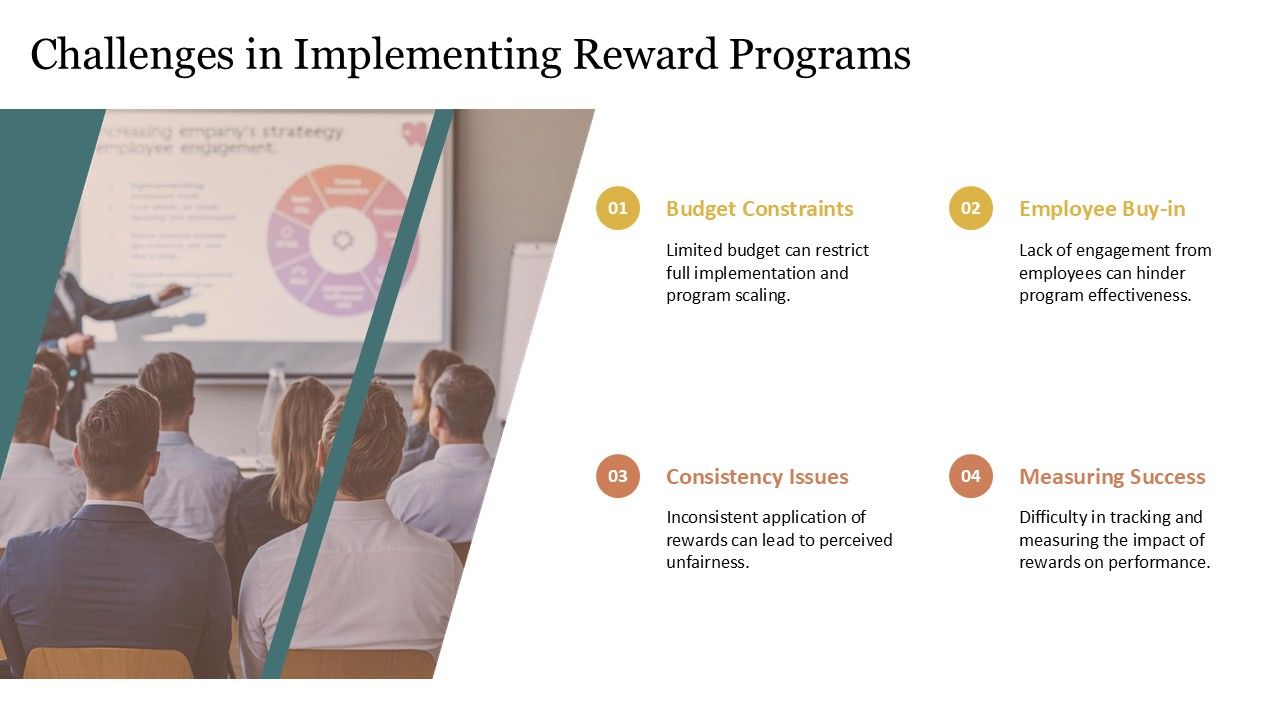
Template 9: Challenges in Implementing Reward Programs
This PowerPoint Template highlights challenges in implementing an effective employee appreciation program. It highlights issues with consistency, budget, staff buy-in, and success measurement. These challenges hinder staff acknowledgement and recognition strategies. Download today to solve these issues and create a proactive recognition culture.
Template 10: Engaging Remote Employees in Recognition
Over 40% of remote workers report experience loneliness. This emphasizes the need of remote team appreciation. This PPT Slide discusses remote employee recognition. It includes peer recognition, recognition platforms, feedback forums, virtual celebrations, personalized awards, and monthly spotlights. Save it now to recognize and engage remote workers.

******
Recognize. Reward. Retain.
Companies in the modern day cannot afford to go without a well-planned recognition and incentive program. Use these PowerPoint Templates from SlideTeam to establish a culture of appreciation. This ensures excellence and outstanding results.
PS Ready to elevate your recognition game? Get your hands on our professionally designed Employee Recognition Programs slides and learn ways to transform your business’s recognition program.
FAQs on Rewards and Recognition Program
Why are rewards and recognition important for employee motivation?
Recognition and rewards motivate employees in any organization. It fosters a sense of appreciation, value, and connection to the organization’s success. Employer recognition of efforts reinforces positive behaviors, increases employee engagement, and improves work satisfaction. This boosts morale and promotes performance. The result is a more productive workforce.
What are the key components of an effective recognition program?
The components of an effective employee recognition program are as follows:
1. Well-Defined Standards
2. Prompt Acknowledgment
3. Consistency
4. Alignment with Core Values
5. Recognition Methods
6. Instant Recommendation
7. Involvement of Leadership
8. Feedback and Observations
These programs promote a sense of appreciation among employees and motivate them to perform at their highest level.
How do rewards differ from recognition in the workplace?
Rewards are tangible benefits, such as incentives or promotions, that are awarded for the accomplishment of specific objectives. They are outcome-focused, cash rewards that encourage performance. Employee recognition is the expression of gratitude for their efforts or conduct, either in writing or verbally. It highlights gratitude and may be informal.