


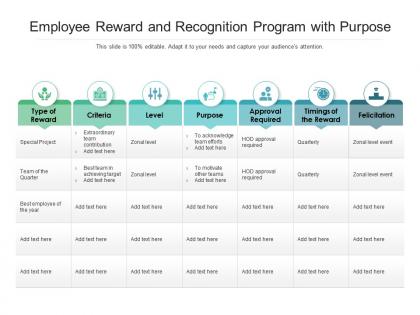
Employee reward and recognition program with purpose




Try Before you Buy Download Free Sample Product
 Impress Your
 Audience
 100%
100% Editable
 Save Hours
 of Time


Our Employee Reward And Recognition Program With Purpose are topically designed to provide an attractive backdrop to any subject. Use them to look like a presentation pro.
People who downloaded this PowerPoint presentation also viewed the following :
Employee reward and recognition program with purpose with all 2 slides:
Use our Employee Reward And Recognition Program With Purpose to effectively help you save your valuable time. They are readymade to fit into any presentation structure.

FAQs for Employee reward and recognition
Honestly, most people just want to feel appreciated and see where they're headed career-wise. Autonomy's big too - nobody likes being micromanaged, you know? Money matters but it's more like table stakes these days. Work-life balance is everything now (and rightfully so). Purpose helps, but here's the thing - your relationship with your team and being a decent manager? That'll make or break retention more than anything else. Just ask each person what drives them. I bet you'll get some answers that totally surprise you. Everyone's different.
Honestly, your company culture is everything when it comes to keeping people motivated. Trust, recognition, growth opportunities - that stuff makes employees actually want to show up and crush it. But toxic environments? They're motivation killers. I've watched good people just... check out mentally because of micromanaging bosses or zero feedback. Think about it - culture affects how you handle mistakes, whether people feel appreciated, all of it. My advice? Ask your team what gets them fired up vs. what burns them out. Then actually do something about their answers. That's where the magic happens.
Honestly, recognizing people's work is like magic for motivation. When you actually acknowledge what someone did well, they feel seen and want to keep crushing it. I've watched entire teams flip when their boss started being consistent about this stuff. Just don't be generic about it - nobody cares about another "great work!" email. Get specific about what they nailed, and do it quickly while it's fresh. Money's nice, but public shoutouts work too. So does extra PTO or cool project opportunities. People will bust their ass when they know you're paying attention to their wins.
Honestly, regular one-on-ones are your best bet here. Pulse surveys help too, but I'd watch for behavioral stuff - who's actually participating in meetings, taking on extra work, that kind of thing. Some people are just naturally quiet though, so don't read too much into that. Ask direct questions like "what's energizing you about work right now?" instead of just looking at performance numbers. Motivation changes constantly, so monthly check-ins beat those awful annual reviews. Pay attention to how people react to feedback or new challenges - tells you a lot.
Honestly, just give people real control over their stuff - let them pick projects, set deadlines, whatever. Most folks want to feel like their work actually matters, you know? Connect their day-to-day to the bigger picture so they see the impact. Try setting up "learning budgets" where they can mess around with passion projects or learn new skills. Peer recognition works way better than boss praise, trust me on that one. Oh, and let people mentor others or lead things - that's huge for motivation. Start small though. Pick one area and experiment with more autonomy there first.
Dude, team vibes totally make or break your motivation at work. Good communication and trust? You'll actually want to show up and contribute ideas. But toxic people are the worst - honestly, just one bad apple can ruin everything for everyone else. I've watched it happen too many times. Supportive teammates create this weird positive energy where suddenly you're all pushing each other to do better work. Watch how your team acts in meetings though. Address any weird tension fast before it spreads and kills everyone's morale completely.
So basically, intrinsic motivation is when people actually enjoy the work itself - like they genuinely love solving puzzles or whatever. Extrinsic stuff is your typical carrots and sticks: bonuses, promotions, that kind of thing. Here's the thing though - you can't just rely on one or the other. Money alone won't keep people engaged long-term, but you also can't expect someone to stay motivated on passion projects if they're getting paid peanuts. I've seen companies mess this up both ways. You need meaningful work AND decent rewards. It's not rocket science, but somehow lots of managers still don't get it.
Honestly, feedback and reviews can be game-changers if you don't mess them up. Your people need to know where they stand - it kills that anxious guessing game. Monthly check-ins work way better than those dreaded annual reviews (who even likes those?). The trick is making it feel like an actual conversation, not you just lecturing them. When employees see you're genuinely paying attention to their work and tying it to real growth opportunities, they'll actually care. Oh, and recognition mixed in doesn't hurt either. It's pretty simple but most managers still get it wrong somehow.
Dude, investing in your team's growth is such a game changer for motivation. Like, when people see you actually care about developing their skills, they feel valued beyond just showing up every day. Nobody wants to be stuck doing the same stuff forever - we all need that sense of progress, you know? It hits different because they're learning things they genuinely want to learn. Shows there's actually a future for them there too. Honestly, just ask what skills they want to build. You'll probably get some answers you weren't expecting, which is always interesting.
Honestly, remote work's a mixed bag for motivation. Some people absolutely love the flexibility - they can work during their peak hours and feel way more trusted. But others? They miss that office buzz and face-to-face brainstorming sessions. Isolation's the real killer though. When remote workers feel cut off from team culture, motivation nosedives fast. Regular check-ins help a ton, plus you've gotta create virtual hangout opportunities (even if they feel awkward at first). Clear expectations are huge too. Really just comes down to staying connected with your remote folks and figuring out what clicks for each person.
So there's three main theories that'll actually help you out. Maslow's hierarchy shows how people want different things depending on where they're at - basic security first, then eventually self-actualization stuff. Herzberg splits everything into hygiene factors (like pay and work conditions) versus actual motivators (recognition, growth opportunities). But honestly? Self-determination theory is where it gets interesting - autonomy, competence, and relatedness drive people way more than you'd think. I know it sounds super academic, but you can totally use this when you're setting up roles or thinking about how to give feedback to your team.
Look, your leadership style totally makes or breaks team motivation. I've watched amazing teams fall apart under crappy managers - it's painful to see. Transformational leaders who actually inspire people? They get everyone fired up. Micromanagers just suck the life out of everything. Here's the thing though - everyone's different. Some people thrive with tons of freedom, others need you checking in constantly. Figure out what makes each person tick. Just ask them straight up: "What kind of support helps you crush it?" Then actually listen and adjust. It's not rocket science, but most managers still mess it up.
Look, happy employees are motivated employees - it's that simple. When people actually like their jobs, they'll naturally work harder and stick around longer. Think about it from your own experience, right? If you hate going to work every day, you're not exactly gonna be giving 110%. But satisfied workers feel connected to what they're doing, which beats throwing money at the problem every time. Here's what I'd do: actually talk to your team and find out what's bugging them. Run some quick surveys, have real conversations. Once you know what's broken, you can fix it and watch motivation follow.
Look, first figure out what actually drives your different team members - can't just assume everyone's motivated the same way. Skip the surveys honestly, just have real conversations with people. Gen Z wants flexibility and growth while your seasoned folks might care more about stability or getting recognized properly. Cultural stuff matters too, plus where people are in their careers. Some love public shoutouts, others cringe at that and prefer private feedback or straight-up money. The whole trick is giving people options instead of forcing everyone through the same program. Break your team into groups and try different things.
Ugh, so many ways to kill team motivation! Micromanaging is the worst - nobody wants their boss hovering constantly. Unclear expectations frustrate people fast, and zero recognition makes everyone feel invisible. Limited growth opportunities? Recipe for losing good people. Oh, and definitely don't play favorites or dump massive workloads without proper support. Poor communication from leadership drives me crazy too. Market-rate pay matters more than most managers think. Honestly though, just ask your team what's bugging them instead of guessing. Make it safe for honest feedback, then actually do something about it.
-
Very unique and reliable designs.
-
It saves your time and decrease your efforts in half.
-
Perfect template with attractive color combination.
-
Out of the box and creative design.
-
Great designs, Easily Editable.
-
Best Representation of topics, really appreciable.
-
Top Quality presentations that are easily editable.