


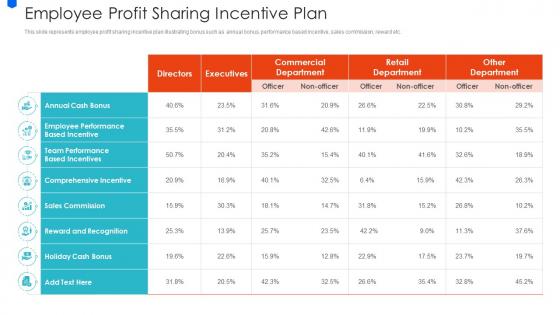
Employee Profit Sharing Incentive Plan




Try Before you Buy Download Free Sample Product
 Impress Your
 Audience
 100%
100% Editable
 Save Hours
 of Time


This slide represents employee profit sharing incentive plan illustrating bonus such as annual bonus, performance based incentive, sales commission, reward etc.
People who downloaded this PowerPoint presentation also viewed the following :
Employee Profit Sharing Incentive Plan with all 6 slides:
Use our Employee Profit Sharing Incentive Plan to effectively help you save your valuable time. They are readymade to fit into any presentation structure.





FAQs for Employee Profit
Honestly? Employee engagement goes through the roof when people actually have a stake in the company's success. Your team starts caring way more about the bottom line instead of just clocking in and out. Retention gets better too - nobody wants to leave when they're getting profit checks. Plus you'll attract better candidates who aren't just chasing salary. I mean, who doesn't want free money on top of their regular pay? The tax breaks are decent for your company as well. Look into what percentage other businesses in your field typically share to get started.
Yeah, profit sharing usually works pretty well for motivation. When people know they'll actually get money from the company doing well, they tend to care more about their work. Makes sense, right? It's like the difference between being a renter vs owning your place - you just treat it differently. The key thing is making sure everyone gets how their daily work connects to those payouts. If that link isn't clear, people won't see the point and the whole thing falls flat. Oh, and how you set it up matters a ton too - bad structure kills the effect.
So there's basically three ways to do this. Cash profit-sharing gives employees direct payments - pretty straightforward. Then you've got deferred profit-sharing where the money goes into their retirement accounts instead. Stock-based is the third option, where they get actual company shares. Honestly though? Most companies I've seen go with hybrid models mixing cash and deferred. Makes sense since people want something now but also care about their future. You should probably ask your team what they'd actually want first - no point setting up something they won't appreciate. Just match whatever you pick to your cash flow situation.
Honestly, the biggest thing is ditching all the corporate jargon and explaining it like you would to your neighbor. Schedule actual meetings - not just mass emails that people ignore. Show them real examples with dollar amounts they can relate to. Charts help too, especially for the visual learners. Make sure your managers actually understand it well enough to field random questions (because there will be tons). Oh, and don't sugarcoat the downsides - if there are conditions or caps, just say so upfront. People appreciate straight talk about money way more than fancy presentations that don't tell them what they'll actually get.
Honestly, just pick 2-3 things max or people get confused. Salary's the obvious one since everyone understands their base pay. Performance ratings can work great, but only if your review process isn't total garbage - trust me on that one. Some companies throw in tenure or how much their department actually made the company. Individual goal achievement is solid too. The main thing? Don't overcomplicate it and be upfront about the formula from day one. Nobody likes bonus surprises (well, bad ones anyway). Keep the math simple and transparent.
Honestly, profit sharing crushes regular bonuses for keeping people around. Your employees start thinking like mini-owners instead of just showing up for a paycheck. They're rooting for the company because their money's tied to how well you all do together - not some random quarterly goal that might change next month. Regular bonuses can feel pretty political sometimes, right? Like who gets what and why. But profit sharing's just... fair. Everyone wins when the business wins. People actually start caring about costs and working together more. If you want your team sticking around and giving a damn about results, I'd seriously think about making the switch.
Honestly, profit-sharing gets messy fast legally. ERISA compliance is a total pain if you're doing a formal retirement plan - those regulations are no joke. Tax stuff hits both you and your employees differently, and the IRS will come after you hard if your plan favors higher-paid people over everyone else. State employment laws throw another wrinkle in too. Get an employment lawyer and tax person involved from the start. I know it costs money upfront, but trust me - way cheaper than fixing screwups later.
So profit-sharing is pretty flexible - you can tweak the formula, when you pay out, who's eligible, all that stuff. Smaller companies usually go with basic percentage splits since they don't have HR teams doing crazy math. Bigger companies tie it to performance metrics or specific departments. Industry matters too - tech companies might focus on innovation goals while manufacturing cares more about safety records (makes sense, right?). The trick is matching it to your cash flow and what actually moves the needle for your business. Just pick your 2-3 biggest priorities and build from there.
Dude, transparency is everything with profit sharing. Show them exactly how profits get calculated and what affects their cut. People will assume management's just playing games otherwise - and honestly, can you blame them? Regular updates help too, not just dumping the final number on them at year-end. Once employees actually see the connection between company performance and their payout, they'll care way more about results. The math needs to be crystal clear or you'll lose buy-in completely.
Honestly, profit-sharing works best when you layer it on top of your current benefits package. Most companies I've seen pair it with 401(k) matching - doubles down on the retirement angle. You could also bundle it with performance bonuses or use it to sweeten those high-deductible health plans (nobody likes surprise medical bills). Some places get creative and let employees pick between cash payouts or extra vacation days, which is pretty cool. Really though, it's all about making it feel like bonus money rather than replacing something they already have. I'd definitely ask your team what combo would actually get them excited - their input matters way more than what looks good on paper.
Honestly, the math gets messy fast - especially when you're trying to explain why someone's bonus tanked during a rough quarter. Clear metrics are huge, but managing expectations is even harder. People get really confused about calculations, so you'll need super transparent formulas and regular check-ins. Variable payouts will stress everyone out (including you). Maybe try a hybrid thing with guaranteed minimums? That smooths out some of the chaos. Oh, and definitely pilot it first with like a small team before going company-wide. Trust me on that one.
Honestly, profit sharing is a game changer. Your employees start thinking like owners when their pay depends on how well the company does. No more "not my problem" attitude - suddenly everyone's watching costs and actually caring about those quarterly numbers. I've seen people go from checking out during company meetings to suggesting ways to improve processes. They'll collaborate better too since everyone wins together. The key is setting super clear goals upfront so people know exactly what affects their bonus. It's wild how fast the whole vibe shifts when inefficiency hits their wallets directly.
Definitely do this yearly when you're doing budget stuff anyway. Check if your formula still works - businesses change way faster than we expect, so what made sense two years ago might be totally off now. Are employees actually motivated by the payouts? Survey them or something, because confused employees won't care about profit-sharing at all. Also compare what you're offering to competitors - you don't want to be the stingy company everyone leaves. Get HR and finance involved since they'll catch things you miss. Honestly, just put a recurring calendar reminder right now or you'll forget until it's too late.
Definitely track this stuff over 3-5 years to see real changes. Revenue growth, profit margins, employee retention - get your baseline numbers first, then compare. Productivity per employee is clutch too, plus customer satisfaction scores. The retention thing alone will save you crazy money on hiring costs, which honestly most people don't think about. Compare yourself to industry benchmarks and companies without profit sharing. Growth targets matter too - are you hitting them faster? Set up quarterly check-ins so you can catch trends early instead of waiting years to realize something's off.
Definitely look at Southwest Airlines - they've been doing profit-sharing forever and their turnover is crazy low. Lincoln Electric started this back in the 1930s, so they basically wrote the playbook. Whole Foods caps executive pay while sharing profits broadly, which honestly seems fair. Starbucks rolled theirs out worldwide and retention went up. The thing is, none of these companies just randomly handed out money. They made everything transparent and tied payouts to actual performance metrics. Before you dive into this, seriously study how they explained the programs to their teams first - that communication piece seems huge.
-
Editable templates with innovative design and color combination.
-
Unique design & color.