


Employee Compensation And Benefits Powerpoint Presentation Slides






Try Before you Buy Download Free Sample Product
 Impress Your
 Audience
 100%
100% Editable
 Save Hours
 of Time


To keep your employees retained and motivated, compensation & benefit play a very crucial role. Present your company’s benefits using our employee compensation benefit PowerPoint presentation. This worker's remuneration benefits PPT consists of a total of 32 slides. This allowance compensation and benefit PPT presentation comprise of templates like basic employee compensation layout, employee compensation components, employee compensation break up, employee compensation system, employee compensation plan types, employee compensation package, compensation plan framework, employee compensation structure, employee compensation sheet, employee compensation report sample, etc. The employee benefits PPT presentation also includes additional slides like our mission and vision, our team members, financial, about us, swot analysis, etc. All the PPT slides are completely editable, and you can make changes as per your requirement. Quickly download the types of employee benefits PowerPoint deck to educate your employees about various benefits and schemes. Our Employee Compensation And Benefits Powerpoint Presentation Slides cater to your intuition. Get a chance to indulge your inner desires.
People who downloaded this PowerPoint presentation also viewed the following :
Content of this Powerpoint Presentation
Slide 1: This slide introduces Employee Compensation and Benefits. State your company name and begin.
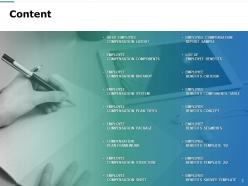
Slide 2: This slide shows Content of the presentation.
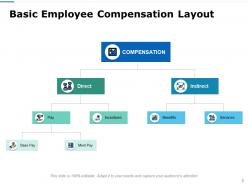
Slide 3: This slide shows Basic Employee Compensation Layout.
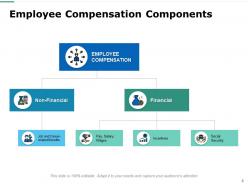
Slide 4: This slide presents Employee Compensation Components describing- Pay, Salary, Wages, Incentives, Social Security, Job and Career-related Benefits.
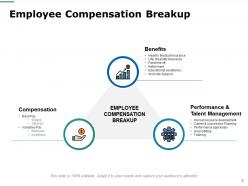
Slide 5: This slide displays Employee Compensation Breakup describing- Benefits, Compensation, Performance & Talent Management.
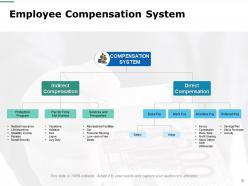
Slide 6: This slide represents Employee Compensation System describing- Protection Program, Pay for Time Not Worked, Services and Perquisites, Base Pay, Merit Pay, Incentive Pay, Deferred Pay.
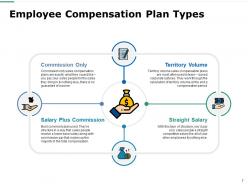
Slide 7: This slide showcases Employee Compensation Plan Types as Territory Volume, Straight Salary, Salary Plus Commission, Commission Only.
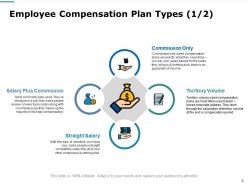
Slide 8: This is an optional slide on Employee Compensation Plan Types.
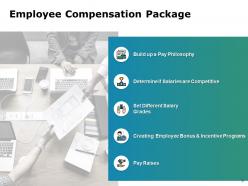
Slide 9: This slide shows Employee Compensation Package describing- Build up a Pay Philosophy, Set Different Salary Grades, Determine if Salaries are Competitive, Pay Raises, Creating Employee Bonus & Incentive Programs.
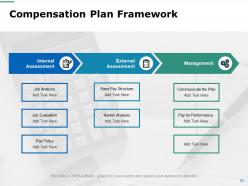
Slide 10: This slide presents Compensation Plan Framework with Internal Assessment, External Assessment, Management.
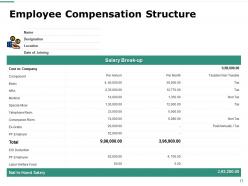
Slide 11: This slide displays Employee Compensation Structure describing salary break-up.
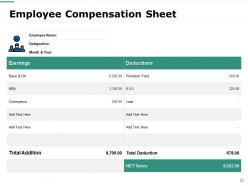
Slide 12: This slide represents Employee Compensation Sheet showing earnings, deductions and net salary.
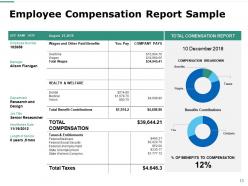
Slide 13: This slide showcases Employee Compensation Report Sample.
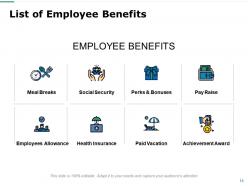
Slide 14: This slide shows List of Employee Benefits describing- Meal Breaks, Social Security, Perks & Bonuses, Pay Raise, Employees Allowance, Health Insurance, Paid Vacation, Achievement Award.
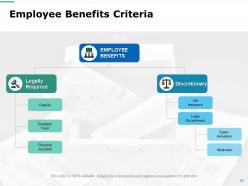
Slide 15: This slide presents Employee Benefits Criteria in hierarchy form.
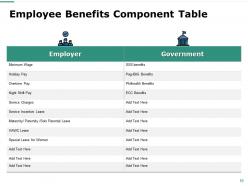
Slide 16: This slide displays Employee Benefits Component Table describing benefits provided by employer and government.
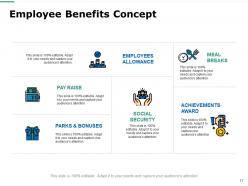
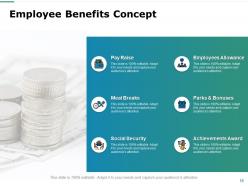
Slide 17: This slide represents Employee Benefits Concept with- Meal Breaks, Social Security, Perks & Bonuses, Pay Raise, Employees Allowance, Achievement Award.
Slide 18: This is another slide on Employee Benefits Concept.
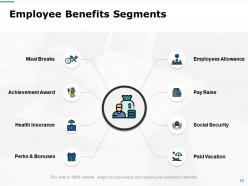
Slide 19: This slide shows Employee Benefits Segments.
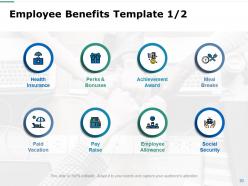
Slide 20: This slide shows Employee Benefits Template. You can add or edit data as per requirements.
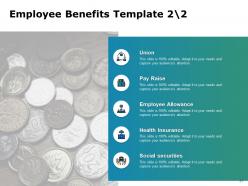
Slide 21: This is another slide presenting Employee Benefits Template.
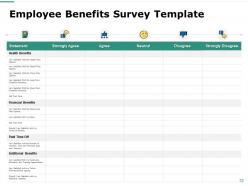
Slide 22: This slide represents Employee Benefits Survey Template with scale range from strongly agree to strongly disagree.
Slide 23: This is About Us slide to show company specifications etc.
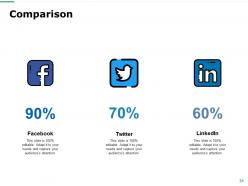
Slide 24: This is a Comparison slide to state comparison between commodities, entities etc.
Slide 25: This is an Idea or Bulb slide to state a new idea or highlight information, specifications etc.
Slide 26: This is Our Team slide with names and designation.
Slide 27: This is a Quotes slide to convey message, beliefs etc.
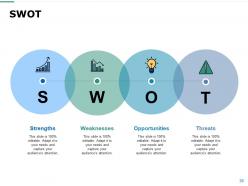
Slide 28: This slide shows Swot Analysis describing- Strengths, Weaknesses, Opportunities and Threats.
Slide 29: This is a Financial slide. Show your finance related stuff here.
Slide 30: This is Our Goal slide. Show your firm's goals here.
Slide 31: This is a Venn slide with text boxes.
Slide 32: This is a Thank You slide with address, contact numbers and email address.
Employee Compensation And Benefits Powerpoint Presentation Slides with all 32 slides:
Use our Employee Compensation And Benefits Powerpoint Presentation Slides to effectively help you save your valuable time. They are readymade to fit into any presentation structure.



FAQs for Employee Compensation And Benefits
Start with the basics - base salary, health insurance, and 401k matching. PTO and remote work flexibility are pretty much expected now. Performance bonuses or equity are nice if you've got the budget. Oh, and professional development stuff is weirdly popular these days - like people actually care about conference budgets and training. But here's the thing - don't do unlimited PTO unless your culture actually supports taking time off. I've seen too many places where it's just fake marketing. Survey your current team first to see what they'd actually use, then prioritize from there.
Yeah, pay varies like crazy depending on where you work and what you do. Tech and finance companies throw money at people, but nonprofits and schools? Not so much. Location makes a huge difference too - SF and NYC can pay 30-50% more than smaller cities. Healthcare and consulting have weird bonus structures that make my head spin honestly. I'd definitely check out Glassdoor or Levels.fyi before you negotiate anything. Those sites will give you the real numbers for your specific role and area.
Look, paying people well is literally how you win the talent game. Candidates will bounce if you're lowballing them - why wouldn't they? Your current team gets recruiter messages daily, so decent pay keeps them around. But honestly, salary is just part of it now. Benefits matter. Equity, flexible time off, working from home - people want the full package. You've gotta check what competitors are paying and make your offer actually appealing. Otherwise you're just watching good people walk out the door while you wonder what went wrong.
Start with companies that match your size and industry - same geography helps too. I usually pull from multiple sources like Radford, Mercer, plus job postings because honestly, relying on just one can be misleading. The tricky part is making sure you're actually comparing similar roles and levels, not just job titles. Markets move fast so update this stuff yearly. Oh, and definitely document how you did everything - you'll need to explain pay decisions to both employees and your boss later. Trust me on that one, it saves so much headache during budget season.
So yeah, performance-based pay definitely gets your top people fired up and can boost productivity since they're directly rewarded for results. Money's a great motivator, obviously. But it gets tricky - you'll probably see more competition between teammates, which isn't always healthy. People get stressed if the targets are crazy unrealistic too. Oh, and here's what I've noticed happens a lot - employees start tunnel-visioning on whatever gets measured and ignore the soft skills stuff like helping newer team members or just being a good collaborator. Make sure your metrics actually match what you want accomplished. Fair goals are key.
Look, pay absolutely matters for motivation, but it's weirdly complicated. Underpay someone and they'll either phone it in or start updating their LinkedIn - I've seen it happen so many times. Fair compensation is like the entry ticket, though more cash doesn't magically create higher performance forever. What really gets people is feeling fairly paid compared to their teammates and industry standards. Mix decent pay with actual growth opportunities and recognition? That's when things click. Oh, and definitely check salary benchmarks regularly - being upfront about how you decide pay builds way more trust than random bonuses ever will.
Ok so first things first - minimum wage, overtime, and equal pay laws are non-negotiable. The equal pay thing is honestly where I see companies mess up the most lately. Health insurance and retirement stuff has its own rules too if you're doing benefits. Also, state laws can be way stricter than federal - learned that one the hard way at my last job lol. Definitely get an employment lawyer to look everything over before you launch, especially if you've got people in different states. Trust me, it's worth the upfront cost.
So definitely benchmark your roles against market data and run internal pay equity audits to catch gaps. Map out job families first, then create clear pay grades - gives you actual structure. Here's the annoying part though: external market rates rarely line up with your internal hierarchy (seriously happens all the time). Don't panic and make huge changes that'll wreck your budget. Instead, gradually adjust the outliers over time. I'd check both internal and external data quarterly, but save the real adjustments for your annual comp cycle. Way less chaotic that way.
Honestly, start with turnover data from last year - that'll tell you everything. If people keep bailing, your pay sucks, plain and simple. Time-to-fill positions matters too, plus employee satisfaction surveys if you do those. Check how you compare to market rates, and don't forget about internal pay gaps between different groups. The real test though? Whether your top performers stick around. Those are the ones who'll tank your whole operation if they walk. I'd also peek at how long it takes to fill roles - nobody wants to work somewhere that's always short-staffed because the pay's trash.
Dude, don't sleep on non-monetary benefits – they can be huge. Good health insurance alone saves you like $800+ a month if you had to pay out of pocket. That's more than most raises! Retirement matching is basically free money. Then you've got stuff like flexible work, extra PTO, gym memberships, tuition help. I learned this the hard way at my last job switch. When you're comparing offers, actually calculate what all that stuff is worth. Sometimes the "lower" salary ends up being way better total comp.
First thing - run a pay audit to see where you've got gaps by gender, race, all that stuff. Should've been happening already but whatever. Set up salary bands for each role and actually show them to people so they know what they can make. Transparency beats secrecy every time, trust me. You might want to publish your whole compensation approach too - like how you decide what to pay and why. Oh and don't try fixing anything until you know what's broken. The audit comes first or you're just guessing.
Pay transparency laws are forcing companies to actually post salary ranges now, which is huge. Skills-based pay is replacing the old hierarchy stuff too. Remote work totally messed up geographic pay scales - honestly wild to watch. Companies aren't just focusing on base salary anymore either, they're getting creative with equity and letting people customize their benefits packages. Oh, and total rewards thinking is everywhere now. If you're looking at comp strategy, transparency should be priority one. Also start figuring out how you'll value skills over just time served - that shift's happening whether companies like it or not.
Honestly, global compensation is such a headache compared to domestic stuff. You've got currencies fluctuating, wildly different cost of living, and tax laws that'll make your head spin. Domestically you can basically copy-paste pay scales across states - easy enough. But internationally? Local market rates matter way more than you'd think. Then there's the whole equal pay vs locally competitive pay debate, which gets messy fast. Benefits are another nightmare - what works in Germany might be totally useless or illegal in Singapore. My advice? Start digging into compensation benchmarks for whatever regions you're eyeing first.
Honestly, you can't do comp management at scale without decent tech anymore. HRIS systems handle your payroll automatically and track merit increases while keeping you compliant with wage laws. They'll also spot pay equity issues before they blow up - which is huge. I've seen companies still using spreadsheets and it's just a disaster waiting to happen. The analytics are pretty solid too, giving you real-time trends. Best systems connect with performance tools so raises tie directly to actual performance data. Maybe start by looking at what you're currently using? You might find tons of stuff you could automate tomorrow.
Honestly, you've gotta blast this info everywhere - don't assume one email will cut it. I'd start with detailed messages explaining WHY the changes are happening, not just what's changing. Nobody wants to be blindsided about their paycheck, you know? Schedule some face-to-face meetings too because people always have questions you didn't think of. Then send written follow-ups so nothing gets forgotten. Oh, and prep your managers beforehand - they'll definitely get cornered in the break room later. Better to overdo the communication than deal with angry employees who feel left out.
-
nice
-
Great product with effective design. Helped a lot in our corporate presentations. Easy to edit and stunning visuals.
-
Perfect template with attractive color combination.
-
good