


Employees Salary Management Powerpoint Presentation Slides





Try Before you Buy Download Free Sample Product
 Impress Your
 Audience
 100%
100% Editable
 Save Hours
 of Time


Employees Salary Management PowerPoint Presentation Slides: Manage salaries and create payroll using professionally designed Employees Salary Management PowerPoint Presentation Slides. Keep a track of company’s records of its employees, salaries, wages, bonuses, taxes, and a lot more. Incorporate employee’s salary management PowerPoint slideshow to calculate funds and taxes. This professionally designed content-ready employees salary management PowerPoint deck comprises of templates like recruitment tracker, recruitment budget, employee information management, employee self-service, training management, goal setting & tracking, performance evaluation, leave tracker management, loan management, claim management, and exit clearance tracker. Get access to this tailor-made easy-to-understand employee salary management PPT templates to keep a tab on the employees’ attendance, leaves, overtime, allowances, loans, advance, bonus, encashment, deductions, and more. This deck is completely editable. You can customize each template as per your need. Edit color, text, icon, and font size if needed. Grab this ready-to-use employees salary PowerPoint presentation to manage employee salary. Express your individual interpretation with our Employees Salary Management Powerpoint Presentation Slides. Elaborate on the factors behind your inclination.
People who downloaded this PowerPoint presentation also viewed the following :
Content of this Powerpoint Presentation
Slide 1: This slide introduces Employees Salary Management. State Your Company Name and begin.
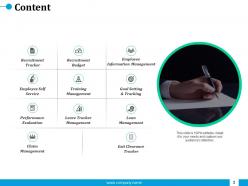
Slide 2: This slide presents Content with these points- Recruitment Budget, Training Management, Leave Tracker Management, Recruitment Tracker, Employee Self Service, Performance, Evaluation, Claim Management, Employee, Information Management, Goal Setting & Tracking, Loan Management, Exit Clearance Tracker.
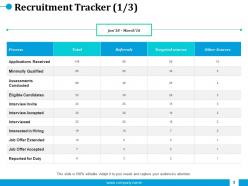
Slide 3: This slide showcases Recruitment Tracker (1/3) table. You can add the data.
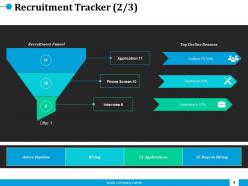
Slide 4: This slide presents Recruitment Tracker (2/3). You can add and use for recruitment.
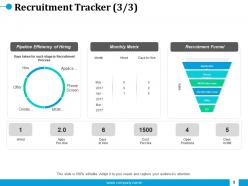
Slide 5: This slide showcases Recruitment Tracker (3/3). You can add the information for tracking.
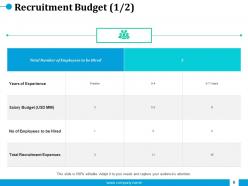
Slide 6: This slide presents Recruitment Budget (1/2). Use this as per your requirement.
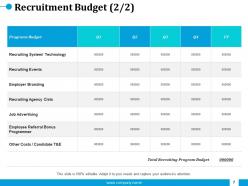
Slide 7: This slide showcases Recruitment Budget (2/2). Add the program budget and five qaurter.
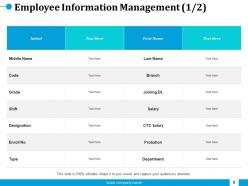
Slide 8: This slide presents Employee Information Management (1/2) with which you can add and use it for the employee names.
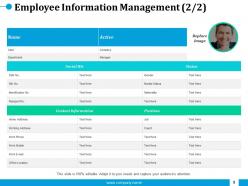
Slide 9: This slide shows Employee Information Management (2/2). You can use it for the information of the employees.
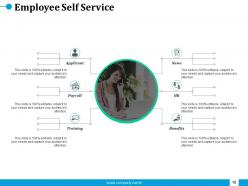
Slide 10: This slide presents Employee Self Service with these six components- Training, Payroll, Applicant, HR, News, Benefits.
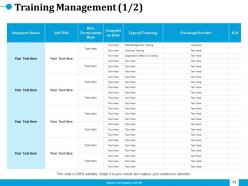
Slide 11: This slide showcases Training Management (1/2). You can add the data in the table and use it.
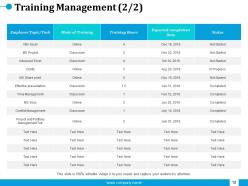
Slide 12: This slide presents Training Management (2/2). Add the different employee topic and training mode.
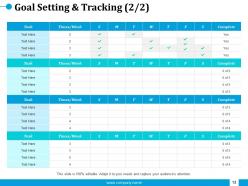
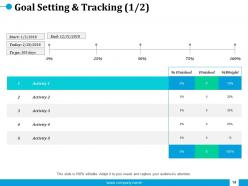
Slide 13: This slide showcases Goal Setting & Tracking (2/2). Add the task and use it with days.
Slide 14: This slide presents Goal Setting & Tracking (1/2). You can add the activity and add the percentage.
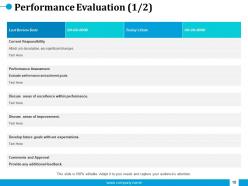
Slide 15: This slide shows Performance Evaluation (1/2) with last review date.
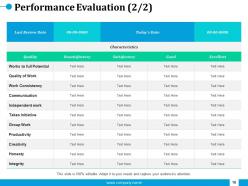
Slide 16: This slide displays Performance Evaluation (2/2).
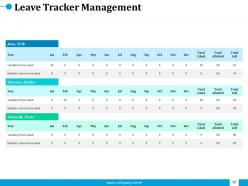
Slide 17: This slide showcases Leave Tracker Management. Add the data for your company.
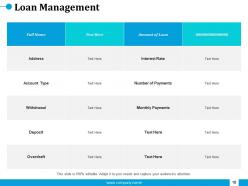
Slide 18: This slide presents Loan Management in which you can full name and amount of loan.
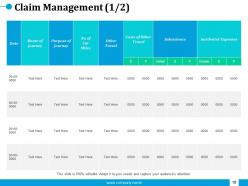
Slide 19: This slide showcases Claim Management (1/2) table. You can use to add the Rate of journey and many other parameters.
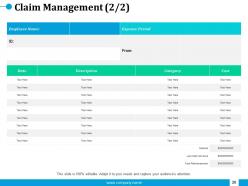
Slide 20: This slide displays Claim Management (2/2) with employee name and business purpose.
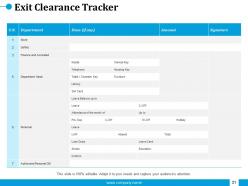
Slide 21: This slide showcases Exit Clearance Tracker.
Slide 22: Employees Salary Management Icon Slide
Slide 23: www.company name 23 Coffee Time Time :11:00 to 11:15 It’s time for a… This slide is 100% editable. Adapt it to your needs and capture your audience's attention. This slide is 100% editable. Adapt it to your needs and capture your audience's attention.
Slide 24: This slide is titled Additional Slides to move forward.
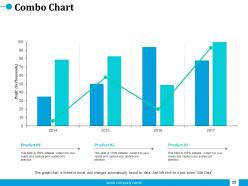
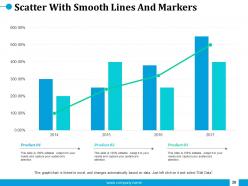
Slide 25: This slide presents Combo Chart. Add your details and use it.
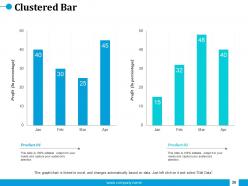
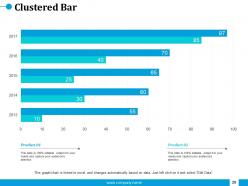
Slide 26: This slide presents Clustered Bar. You can add the data and use it.
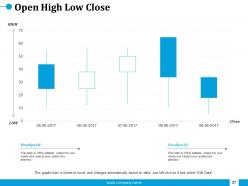
Slide 27: This slide displays as a parameter in terms of high and low, open and close.
Slide 28: This is a Competitive Analysis Scatter Chart slide to present- Data Import, Example, Pricing, Support, Update, Tutorials, Easy to use, Users Interface.
Slide 29: This slide showcases Clustered Bar.
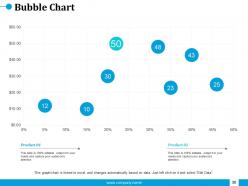
Slide 30: This slide shows bubble Chart/Radar Chart to compare.
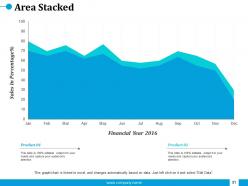
Slide 31: This is an Area Chart slide for product/entity comparison.
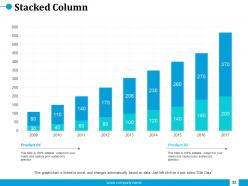
Slide 32: This slide showcases Stacked Column.
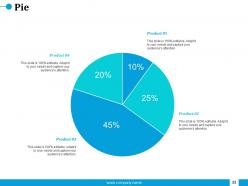
Slide 33: This slide presents Pie chart. You can add the product description.
Slide 34: This is an Our Team slide with name, image&text boxes to put the required information.
Slide 35: This is a Vision, Mission and Goals slide. State them here.
Slide 36: This is a Vision, Mission and Goals slide. State them here.
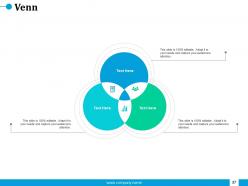
Slide 37: This is a Venn diagram image slide to show information, specifications etc.
Slide 38: This slide showcases a Puzzle with imagery.
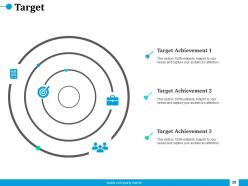
Slide 39: This slide shows Target image with text boxes.
Slide 40: This slide displays a Bulb or idea image.
Slide 41: This is a Thank You image slide with Address, Email and Contact number
Employees Salary Management Powerpoint Presentation Slides with all 41 slides:
Our Employees Salary Management Powerpoint Presentation Slides cause it to happen. You will acquire a grand flourish.









FAQs for Employees Salary Management
Honestly, most companies screw up at least one of these three things: market research, internal equity, and clear communication. Start by checking what you're paying vs industry standards - that's where you'll spot your biggest gaps. Make sure people doing similar work get similar pay (nobody wants those awkward "wait, they make WHAT?" conversations). Oh, and actually tell people how your pay philosophy works and what their career path looks like. Performance adjustments are key too. I'd also budget for annual increases because that always sneaks up on you. The transparency piece is huge - people hate feeling kept in the dark about money stuff.
Check your salary data at least once a year, maybe twice if you're in competitive roles. I pull from multiple sources - Radford, Mercer, even Glassdoor - to get the real picture. Base salary's just part of it though; you've gotta factor in bonuses and equity too. Here's where companies mess up: they compare junior roles to senior ones and wonder why their numbers are off. Make sure you're matching job level, location, company size - all that stuff matters more than people think. Set up reviews against 50th-75th percentile benchmarks and adjust from there.
Performance evals are honestly clutch for fair pay decisions. They give you actual data to back up raises and bonuses instead of just winging it. You can connect pay to real results rather than whoever schmoozes the boss best (which happens more than it should, let's be real). The whole process helps document who's actually crushing it vs. coasting by. Creates transparency too - people understand why Sarah got a bigger raise than Kevin. Just make sure you're measuring stuff that actually matters to the business. Otherwise you'll reward people for hitting meaningless targets while the real performers get overlooked.
Honestly, salary transparency can totally change the game for keeping people around. Your team will trust you more when they're not guessing what everyone else makes. People get motivated because they can actually see how to earn more - like a clear roadmap instead of some mystery. Retention gets better too since folks won't feel the need to shop around if they know they're getting fair pay. Fair warning though - you'll probably have some uncomfortable conversations about existing pay gaps. But it's worth it in the long run, trust me.
Honestly, the key is nailing down your criteria and deadlines first - keeps things from getting messy later. Grab all your performance data, market research, budget stuff upfront. Document everything (seriously, you'll blank on details when people ask questions). Compare roles fairly and look at both what teammates make plus market rates. Oh, and tell everyone the timeline so they're not constantly bugging you about when decisions are coming. The hardest part? You've gotta back up every decision with real examples and numbers. People might not love the outcome but they'll respect straight talk over vague explanations.
Start with pay audits - dig into the data by gender, race, all that stuff across similar roles. Trust me, most companies get a rude awakening when they actually look. Set up clear compensation bands for each position and actually stick to them when you're hiring and doing promotions. Your hiring managers need to know these ranges and write down why someone lands where they do in that band. Don't wait around for complaints to roll in. I'd say review your comp data every quarter and tweak things as needed. Way better to catch this stuff early.
Oh man, salary stuff is such a headache! BambooHR and Workday are pretty solid if you want everything in one spot - payroll, comp planning, the works. For market data, PayScale and Salary.com are decent but honestly kind of pricey. Excel still works if you're scrappy, though it gets crazy messy once you hit like 50+ people. Gusto's been great for smaller companies I know. My advice? Figure out what's driving you most insane first, then demo maybe 3 tools max. Otherwise you'll just confuse yourself with all the options out there.
Honestly, you'll want to mix regular pay surveys with exit interviews and those compensation chats during reviews. But here's the thing - most companies only do this once a year which is honestly pretty useless. Try quarterly pulse surveys instead, asking about pay transparency and whether people think compensation is fair. Anonymous feedback channels work great too, especially for sketchy compensation decisions. The real trick though? Actually doing something with the feedback you get. Don't just hoard the data like some companies I've worked with. Pick one method this quarter and build from there.
Okay so first things first - you've gotta nail the basics like minimum wage, overtime rules, all that legal stuff. Document everything when you're making salary decisions because wage discrimination lawsuits will absolutely wreck your budget (learned that one the hard way at my last company). Base your pay on actual factors - experience, education, performance - not anything that could get you in trouble. Oh and those pay transparency laws? They're everywhere now, so keep up with what's happening locally. Honestly, just partner with HR and legal to check your stuff regularly. Way easier than cleaning up a mess later.
Honestly, the market totally controls your salary decisions. Competitors paying more? You'll lose people. Economy's rough? Raises get frozen. I track industry reports and job postings constantly - it's like playing chess but with paychecks. When certain skills blow up (AI has been crazy lately), those roles need immediate bumps or everyone bolts. Don't wait for annual reviews though. I do market checks every quarter so I can stay ahead instead of scrambling when half my team threatens to quit. Way less stressful that way.
Do regular salary audits first - check every department and compare similar roles. Set up standard job levels and pay bands that work everywhere, because departments love creating their own random salary rules (it's wild how often this happens). Clear promotion criteria helps too. Make everything transparent so managers can't just wing it with compensation decisions. Your pay philosophy needs to be the same across all teams, not different everywhere. Document it all and communicate the standards clearly. Otherwise you'll end up with weird pay gaps that make zero sense.
Definitely do your homework first - look up what similar roles actually pay in your area. Figure out your budget range ahead of time because winging it is a disaster waiting to happen. I'd be upfront about salary early on so nobody wastes time. Don't forget you can get creative beyond base pay too. Stock options, better PTO, remote work, training budget - all that stuff matters when cash is tight. Honestly, the best deals happen when both people feel good about it rather than someone trying to "win." Oh and write down whatever you agree on right away.
Your salary budget is probably eating up most of your cash - it's usually the biggest expense you'll have. Get this wrong and you're either hemorrhaging money on overpaid staff or constantly hiring because people keep leaving for better pay. I've watched good companies completely implode over this stuff. You need to check market rates regularly and set up proper pay ranges so you're not just winging it when someone wants more money. Also track how much you're spending on salaries vs what you're actually bringing in each month - that ratio will tell you everything.
Definitely talk to them face-to-face if you can - don't just send an email and ghost them, that's the worst. Be straight up about why the salary's changing, whether it's performance stuff, market rates, or whatever company policy thing is happening. Honestly, people can smell BS from a mile away, so if it's bad news, just say it instead of trying to make it sound pretty. Follow up with the written details afterward - new amount, when it kicks in, all that. Oh and always let them ask questions! Nobody likes feeling like they can't even discuss their own paycheck, you know?
So the big ones to watch are pay equity ratios and retention rates - those will tell you the most. Track how long it takes to fill positions too. Internal promotions matter, and honestly, salary budget variance is where you'll see if you're just throwing money around for no reason. Employee satisfaction surveys help, though let's be real, people always think they're underpaid. I'd benchmark against market rates every quarter and keep an eye on offer acceptance rates. High turnover in certain departments or salary bands? That's your warning sign. Start there and you'll catch issues before they get expensive.
No Reviews