


Compensation Management Powerpoint Presentation Slides






Try Before you Buy Download Free Sample Product
 Impress Your
 Audience
 100%
100% Editable
 Save Hours
 of Time


Reward your employees on the basis of their performance level by using our Compensation Management Powerpoint Presentation Slides. With the help of employee benefits PPT template, a director can prepare a report on the direct and indirect revenues of an individual worker. There are several remuneration plans that are included in the compensation package presentation deck such as commission point of view, territory volume, salary plus commission, and straight salary. The performance-related pay PowerPoint slides help the senior authority to divide the package of an employee in accordance with their internal assessment, external assessment, productivity, communication with staff, behavioral approach, flexibility, etc. This compensation benefits PPT visuals consist of different perks like social security, allowances, meal breaks, bonuses, achievement award, health insurance, pay raise, and paid vacation which not only motivates but also encourage the staff in the completion of their target. Therefore, download this ready-to-use compensation management presentation deck and improve worker retention across the organization.
People who downloaded this PowerPoint presentation also viewed the following :
Content of this Powerpoint Presentation
Slide 1: This slide introduces Compensation Management. State Your Company Name and begin.
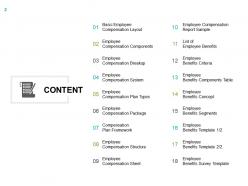
Slide 2: This slide shows Content of the presentation.
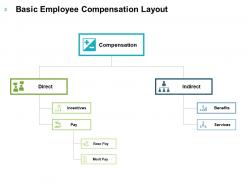
Slide 3: This slide shows Basic Employee Compensation Layout.
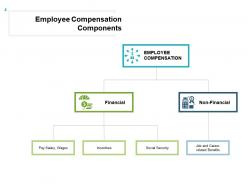
Slide 4: This slide presents Employee Compensation Components describing- Pay, Salary, Wages, Incentives, Social Security, Job and Career-related Benefits.
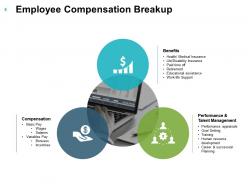
Slide 5: This slide displays Employee Compensation Breakup describing- Benefits, Compensation, Performance & Talent Management.
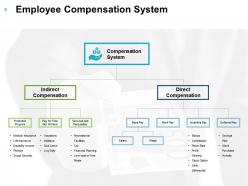
Slide 6: This slide represents Employee Compensation System describing- Protection Program, Pay for Time Not Worked, Services and Perquisites, Base Pay, Merit Pay, Incentive Pay, Deferred Pay.
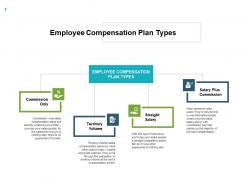
Slide 7: This slide showcases Employee Compensation Plan Types as Territory Volume, Straight Salary, Salary Plus Commission, Commission Only.
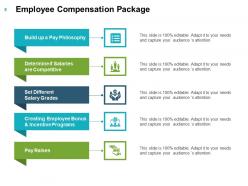
Slide 8: This slide shows Employee Compensation Package describing- Build up a Pay Philosophy, Set Different Salary Grades, Determine if Salaries are Competitive, Pay Raises, Creating Employee Bonus & Incentive Programs.
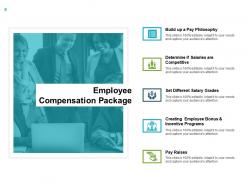
Slide 9: This is another slide for Employee Compensation Package.
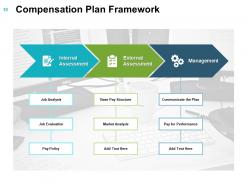
Slide 10: This slide presents Compensation Plan Framework with Internal Assessment, External Assessment, Management.
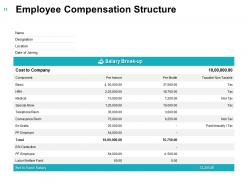
Slide 11: This slide displays Employee Compensation Structure describing salary break-up.
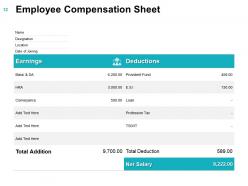
Slide 12: This slide represents Employee Compensation Sheet showing earnings, deductions and net salary.
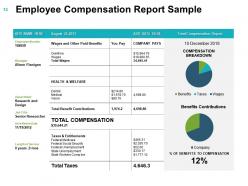
Slide 13: This slide showcases Employee Compensation Report Sample.
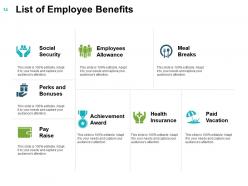
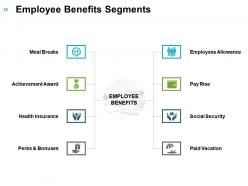
Slide 14: This slide shows List of Employee Benefits describing- Meal Breaks, Social Security, Perks & Bonuses, Pay Raise, Employees Allowance, Health Insurance, Paid Vacation, Achievement Award.
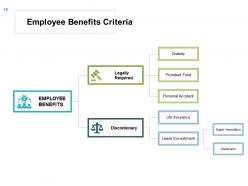
Slide 15: This slide presents Employee Benefits Criteria in hierarchy form.
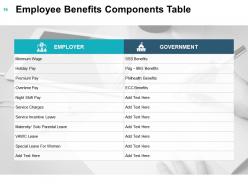
Slide 16: This slide displays Employee Benefits Component Table describing benefits provided by employer and government.
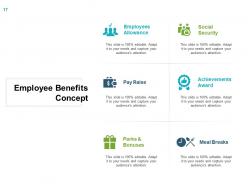
Slide 17: This slide represents Employee Benefits Concept with- Meal Breaks, Social Security, Perks & Bonuses, Pay Raise, Employees Allowance, Achievement Award.
Slide 18: This slide shows Employee Benefits Segments.
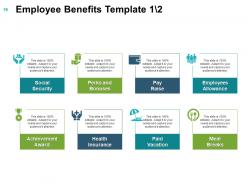
Slide 19: This slide shows Employee Benefits Template. You can add or edit data as per requirements.
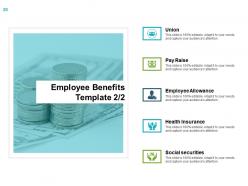
Slide 20: This is another slide presenting Employee Benefits Template.
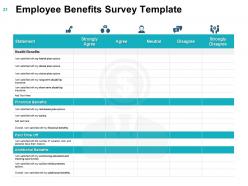
Slide 21: This slide represents Employee Benefits Survey Template with scale range from strongly agree to strongly disagree.
Slide 22: This slide displays Compensation Management Icons.
Slide 23: This slide is titled as Additional Slides for moving forward.
Slide 24: This is About Us slide to show company specifications etc.
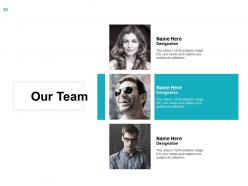
Slide 25: This is Our Team Template with names and designation.
Slide 26: This is About Us slide to show company specifications etc.
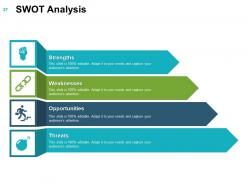
Slide 27: This slide shows SWOT Analysis.
Slide 28: This is a Quotes slide to convey message, beliefs etc.
Slide 29: This is Our Mission slide with related imagery and text.
Slide 30: This is Our Goal slide. Show your firm's goals here.
Slide 31: This is a Venn slide with text boxes.
Slide 32: This is a Comparison slide to state comparison between commodities, entities etc.
Slide 33: This is a Thank You slide with address, contact numbers and email address.
Compensation Management Powerpoint Presentation Slides with all 33 slides:
Use our Compensation Management Powerpoint Presentation Slides to effectively help you save your valuable time. They are readymade to fit into any presentation structure.



FAQs for Compensation Management
Start by figuring out what jobs are actually worth through proper evaluation, then benchmark against market rates so you're not way off. Performance needs to tie directly to pay - people have to see the connection or it's pointless. Your benefits package matters just as much as salary tbh. Development opportunities, recognition programs, all that stuff adds up. Be transparent about how decisions get made because employees will respect you more for it. I'd honestly audit where you stand now versus competitors first, then build your whole framework around those gaps you find.
So basically you're checking what other companies pay for the same jobs - that becomes your starting point for setting salaries. Pretty straightforward stuff. Use that data to make sure you're competitive enough to actually get good people, but don't go crazy and blow your whole budget either. It's honestly like pricing anything else, just with more boring spreadsheets. The analysis shows you where you might be underpaying (cue people quitting) or overpaying compared to everyone else. Then you can tweak your pay ranges and have solid numbers when you're asking leadership for more money.
So performance reviews are basically how companies decide who gets what money. Your rating directly impacts salary bumps, bonuses, all that stuff - like Sarah might get 5% while Bob only gets 2% based on their scores. Most places tie merit increases straight to performance numbers, though honestly the whole thing can feel pretty random sometimes. What matters is that your performance criteria actually match up with pay decisions. Oh and definitely document everything clearly so people aren't left wondering why their paycheck didn't change much. Makes the whole process way less awkward for everyone.
Do regular pay audits first - check your compensation data to catch gaps and bias patterns. Clear job levels with salary bands help too, so people know where they stand. Market data's your friend for benchmarking against industry standards. Make promotion and raise criteria super transparent and stick to them consistently. Honestly, most companies mess this up because they wing it instead of having a system. Document everything since you'll need to back up your decisions later. Oh, and train managers on unconscious bias - they're the ones making daily calls that can totally screw up equity if they're not careful.
Honestly, benefits and perks can matter way more than salary sometimes. I've literally watched people reject higher-paying offers because they didn't want to give up their amazing benefits package. Flexible schedules, professional development, wellness stuff - it all hits different needs beyond just the paycheck. Work-life balance is huge these days. Survey your team first though, see what they actually care about. No point offering gym memberships if everyone wants remote work options, you know? Then build your compensation around what matters most to them.
Oh man, you're still doing comp management manually? That sounds brutal. The software handles all the annoying stuff - salary benchmarking happens automatically, merit increases get tracked without you babysitting spreadsheets, and reports basically generate themselves. During review season it's honestly a game changer. Real-time market data gets pulled in, pay equity calculations run in the background, plus it'll catch compliance red flags before they blow up. Your managers can just check dashboards instead of bugging you constantly. Workday's solid if you have the budget, though BambooHR works too.
Track your turnover rates first - that's the big red flag if people are bailing for better offers. Time-to-fill positions matters too. Pay equity ratios are huge now with all these transparency laws (honestly, about time). Get employee satisfaction scores specifically about comp, not just general happiness surveys. Your compa-ratio shows how you stack up against market rates, and don't forget salary budget variance. Run these quarterly if you can. I'd build a simple dashboard - way easier than digging through spreadsheets every time leadership asks questions.
So compliance is basically your safety net for all comp decisions. Minimum wage, overtime, equal pay laws - there's a ton to track. What's tricky is these rules actually dictate how you structure jobs and document pay choices, not just legal stuff on the side. Mess it up? You're looking at lawsuits and fines that'll make your head spin. I learned this the hard way at my last job actually. Best move is getting tight with legal and HR teams early on. Run any big compensation changes past them first - trust me on this one.
Get ahead of it - tell people about pay changes before they happen, not after. I'd do an all-hands meeting plus follow-up emails. Your managers need to be ready for questions too, trust me on that one. The worst thing you can do is be vague about why things are changing. People will just make up their own stories. Be straight up - is it market adjustments? Performance? Budget issues? Whatever it is, just say it. Oh, and give them someone specific to contact with questions afterward. Nothing's worse than leaving people hanging with no one to talk to.
Look, salary research is just your starting point. What really matters is figuring out what each person actually wants - some care about cash, others want flexibility or growth opportunities. I'd do stay interviews with your top performers to find out what they value most. Remote work, professional development budgets, equity, even sabbaticals can be huge draws. Honestly, I've watched so many good people take pay cuts for better work-life balance lately. The trick is customizing packages instead of assuming everyone wants the same perks. Don't just throw money at the problem.
Honestly, fair pay is huge for keeping people engaged at work. People don't just want more money (though who doesn't, right?) - they want transparency. Show them how their salary connects to their performance and where the company's headed. Regular reviews help too. Clear paths for advancement make a massive difference. The worst thing you can do? Keep compensation mysterious or play favorites with raises. That'll kill morale instantly. Your team needs to feel like they're getting a fair deal compared to what's out there. Trust me, nothing tanks engagement faster than feeling underpaid and kept in the dark about it.
Just be honest about budget limits from day one - don't promise stuff you can't deliver. I've watched managers dig themselves into holes that way and it's messy. Look at the whole package though. Can't do 15% salary bump? Maybe flexible WFH days or training budget instead. Listen to what they actually care about too - sometimes people want growth opportunities more than cash. Oh and definitely write down what you discuss. Saves headaches later when someone remembers the conversation differently. Bottom line: make them feel valued even when your hands are tied financially.
Honestly, pay transparency is huge right now - more states keep adding those salary range laws. Skills-based pay is finally catching on too, which actually makes sense instead of just promoting people because they've been around forever. Remote work geography stuff is still a mess though, everyone's winging it. Companies are posting ranges everywhere now and employees want way more transparency than before. If your compensation feels sketchy or old-school, people will bounce. Oh, and forget about keeping salaries secret anymore - that ship has sailed.
Figure out what you actually want your business to achieve first - growth, keeping people around, whatever. Your comp strategy should push people toward those exact behaviors. Want to scale fast? Load up on equity and performance bonuses. Need better retention? Competitive base pay plus long-term stuff works better. Most companies just steal ideas from competitors without thinking, which is honestly pretty dumb. Every dollar should reward something that actually helps your business. I've seen too many places throw money around randomly and wonder why nothing changes. Be deliberate about it.
Honestly, the pay thing is gonna be your biggest headache. Like when someone moves from SF to Kansas - do you cut their salary or what? It's awkward as hell. Plus you lose that sense of who's actually grinding vs who just sends GIFs all day in Slack. Benchmarking salaries gets weird too when your team spans like 5 different markets. Performance reviews? Way harder when you can't see the daily hustle. My advice - nail down your location pay rules early and get some decent tracking tools. Otherwise you'll be scrambling later trying to figure out who deserves what.
-
Graphics are very appealing to eyes.
-
It saves your time and decrease your efforts in half.
-
Innovative and attractive designs.
-
Innovative and Colorful designs.
-
Use of icon with content is very relateable, informative and appealing.
-
Good quality
-
Good quality