


Employee Hiring Powerpoint Presentation Slides




Try Before you Buy Download Free Sample Product
 Impress Your
 Audience
 100%
100% Editable
 Save Hours
 of Time


Demonstrate the recruitment process with this content ready Employee Hiring PowerPoint Presentation Slides. You can streamline your employee selection process using this recruiting process presentation design. Employee recruitment and selection PowerPoint complete deck comprise of professional slides such as key management, department and teams, services, current vacancies, recruitment process, and sources, job description, recruitment funnel, tracker, budget, etc. This presentation is useful for HR managers. Showcase steps involved in the recruitment process with this impressive personnel selection PPT visuals. Incorporate the staffing process PowerPoint templates to build a result oriented recruitment process. All templates of employment sourcing PPT presentation are efficiently designed for a specific purpose. This allows users to create a presentation very quickly as these can be easily modified if required. Our human resource consulting presentation slides provide the required edge and appearance that are essential to capture viewers' attention.
People who downloaded this PowerPoint presentation also viewed the following :
Content of this Powerpoint Presentation
Slide 1: This slide introduces Employee Hiring. State the name of your company and begin.
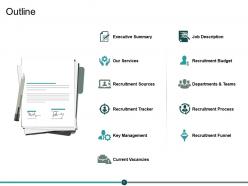
Slide 2: This slide presents the Outline with the following content- Executive Summary, Key Management, Departments & Teams, Our Services, Current Vacancies, Recruitment Process, Job Description, Recruitment Funnel, Recruitment Budget, Recruitment Tracker, Recruitment Sources.
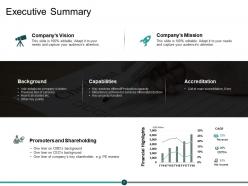
Slide 3: This slide shows the Executive Summary with- Background, Capabilities, Accreditation, Financial Highlights, Promoters and Shareholding, Company’s Mission, Company’s Vision to state.
Slide 4: This slide shows the Key Management members with name and designation to fill.
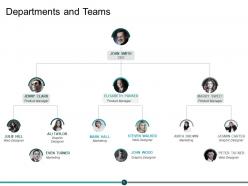
Slide 5: This slide presents Departments and Teams flow chart in which you can show the hierarchy of your team ranging from CEO, Product Manager to that of Web Designer etc.
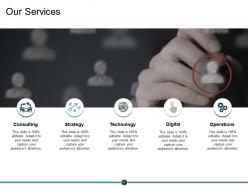
Slide 6: This slide shows Our Services. We have mentioned a few of these for your reference. You can use these or add your own services.
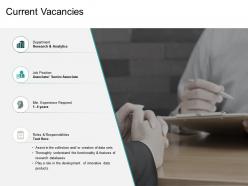
Slide 7: This slide shows Current Vacancies along with the following aspects- Job Position, Associate/ Senior Associate, Department, Research & Analytics, Min. Experience Required, Roles & Responsibilities.
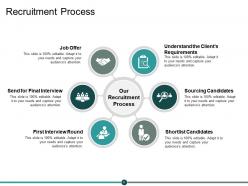
Slide 8: This slide shows the Recruitment Process with the following stages- Understand the Client’s Requirements, Sourcing Candidates, Shortlist Candidates, Job Offer, Send for Final Interview, First Interview Round.
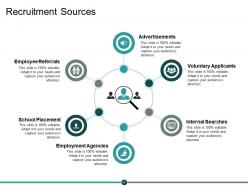
Slide 9: This slide presents some of the Recruitment Sources- Advertisements, Voluntary Applicants, Internal Searches, Employment Agencies, School Placement, Employee Referrals. You can add more as per your need.
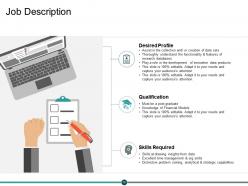
Slide 10: This slide shows the Job Description with the following categories Desired Profile, Qualification, Skills Required.
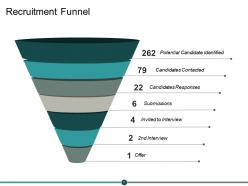
Slide 11: This slide shows the Recruitment Funnel which contains the following points- Potential Candidate Identified, Candidates Contacted, Candidates Responses, Submissions, Invited to Interview, 2nd Interview, Offer.
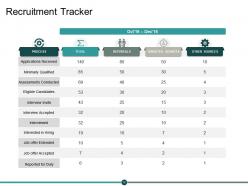
Slide 12: This slide shows the Recruitment Tracker.
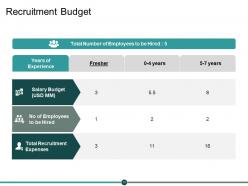
Slide 13: This is a Recruitment Budget slide showing the Total Number of Employees to be Hired.
Slide 14: This is the Drawing Tools Icons Slide. Alter/ modify icons as per your need.
Slide 15: This slide is titled Additional Slides to move forward. You can alter the slide content as per need.
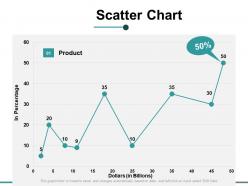
Slide 16: This slide showcases a ScatterChart to display growth of product/ entity etc.
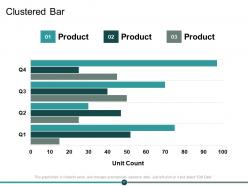
Slide 17: This slide showcases a Clustered Bar Chart to display the growth of three competitive products/ entities etc.
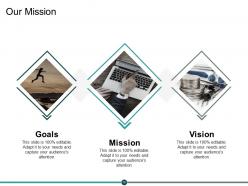
Slide 18: This is Our Mission, Vision and Goals slide.
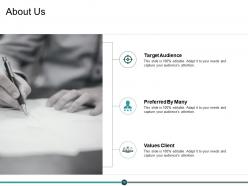
Slide 19: This is an About Us slide. State about your company team, company essentials, highlights etc. here.
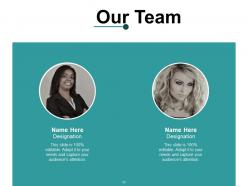
Slide 20: This slide presents Our Team with name and designation.
Slide 21: This is a Venn diagram image slide to show information, specifications etc.
Slide 22: This slide presents Quotes. State your inspirational quotes here. You can also change the slide content as per need.
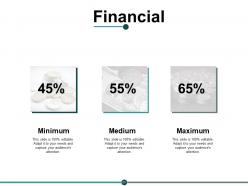
Slide 23: This slide presents Financial scores to display.
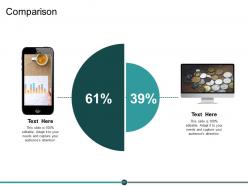
Slide 24: This is a Comparison slide for representing a contrast, specifications etc.
Slide 25: This is a Bulb or Idea slide to state a new idea or highlight specifications/ information etc.
Slide 26: This slide displays Our Target with a background image.
Slide 27: This slide showcases a Mind Map. State information, specifications etc. here.
Slide 28: This is a Thank You slide with Address# street number, city, state, Email Address, Contact Numbers.
Employee Hiring Powerpoint Presentation Slides with all 28 slides:
Examine your thoughts on themelting pot of life. Let our Employee Hiring Powerpoint Presentation Slides be the crucible.

 Click here to view PDF
FAQs for Employee Hiring
Honestly, I'd focus on three things: can they do the work, will they fit in, and do they seem like they'll grow? Don't stress about hitting every single requirement - most job posts are total wish lists anyway. Watch how they communicate and handle your questions. The good ones usually ask thoughtful stuff back and aren't afraid to say "I don't know that." Way better than someone who bulls*** their way through everything. Cultural fit matters too since you're stuck with them every day. This approach weeds out the wrong people fast.
Honestly, start with blind resume reviews - just strip out names and personal details because people are way more biased than they think. Structure your interviews too, like have the same core questions for everyone instead of just winging it. Skills tests work better than going with your gut or that whole "culture fit" thing (which usually just means "seems like me"). Oh, and if you can swing it, get different types of people on your interview panels. Don't try to fix everything at once though - that's a recipe for nothing actually changing. Pick whichever feels most doable first.
Okay so employer brand is just how people see your company as a workplace, right? And honestly, it makes a huge difference when you're trying to hire good people. Like, would you apply somewhere with terrible Glassdoor reviews? I wouldn't. Top candidates do their homework - they're stalking your LinkedIn, checking reviews, asking friends who work there. If your reputation sucks, you'll only get desperate applicants. But when you've got a solid brand, people actually get excited about joining your team instead of just needing any job. Start being real about your culture online and don't ignore those review sites.
Behavioral interviews work well - ask about work styles and how they deal with team drama. Have them grab coffee with different team members too, that's where you'll really see their personality come out. Watch how they communicate and if they're asking smart questions about team dynamics. Oh and definitely do reference checks, former coworkers will tell you the real deal about how someone collaborates. Sometimes your gut reaction tells you more than all the formal stuff though. Just make sure they interact with your actual team multiple times before you pull the trigger on hiring.
Honestly, you've gotta dig into the numbers - time-to-hire, cost-per-hire, and quality scores are your best friends here. Check retention rates first though. If people are bailing within six months, your screening's probably broken. I get way too into this data stuff, but it actually shows you what's happening. Pull offer acceptance rates monthly and ask hiring managers plus candidates for real feedback. Oh, and the 90-day mark is huge - that's when you'll know if someone's actually working out. Track everything monthly so you can catch problems before they get worse.
Look at time-to-productivity first - basically how fast new people actually hit their targets. Then track retention at 90 days, 6 months, and yearly. Performance scores during year one matter too. Honestly, quality of hire is what really tells the story, but you've got to wait to see it play out. Don't forget offer acceptance rates and those onboarding survey scores either. Here's the thing though - you can't just look at one metric. Like, great 90-day retention doesn't mean much if people are bombing their reviews. I'd do quarterly check-ins to catch any weird patterns early.
Honestly, AI and ATS stuff can be a game changer for hiring - it handles all the boring resume sorting automatically based on whatever criteria you set. No more spending hours going through stacks of applications. Some tools even do initial video screenings and highlight the good candidates for you. The ATS keeps everything organized in one spot too, which is huge because I've definitely lost track of candidates in email chains before. Oh, and they'll write job descriptions and interview questions if you're stuck. My advice? Start simple with just the resume filtering first. You can always add more bells and whistles once you're comfortable with it.
Honestly, panel interviews are clutch for big hires - you get way less bias when multiple people weigh in. Everyone's there at once so no endless scheduling nightmare. Candidates see how your team actually works together too, which is nice. But here's the thing - some people totally freeze up when there's like 4 people staring at them across a table (can't blame them). I'd do panels for senior roles where the whole team needs to be on board. For other stuff? One-on-one lets people relax and you actually see their real personality come through.
You don't have to pick one or the other - just get smarter about where you're looking for people. Partner with HBCUs, coding bootcamps, professional organizations that focus on diversity. Half those job requirements are probably BS anyway (seriously, does someone really need 5 years experience for an entry-level role?). Try skills-based tests instead of requiring degrees for everything. Cast a wider net but don't drop your standards. Start small - pick one job posting and see what requirements you can actually relax without hurting quality. It's more work upfront, but you'll find better candidates.
Dude, referrals are seriously worth it. Your employees won't recommend total duds, so you get better candidates right off the bat. Time-to-hire drops like crazy - we're talking half the usual time. And here's the kicker: these people actually stay. Referred hires stick around 25% longer, which honestly makes sense since they already know what they're getting into. You'll spend way less money than those expensive job boards too. Just don't be cheap with the referral bonuses or nobody will participate.
Honestly, just put yourself in their shoes first. Nobody wants to deal with those insane 20-page application forms - keep it simple. After interviews, actually follow through on your timelines instead of leaving people hanging. I can't tell you how many companies say "we'll get back to you by Friday" and then... crickets for three weeks. Quick updates make a huge difference, even if it's just "hey, still reviewing but wanted you to know we didn't forget about you." Write job descriptions that actually explain what the role involves upfront. Walk through your current process like you're the one applying - you'll probably find some obvious pain points pretty fast.
Oh definitely get your team involved! They'll catch stuff you totally miss - like whether someone's actually collaborative or just says they are. Plus your people feel way more bought-in when they help pick who they'll be working with. I'd have maybe 2-3 key folks do quick chats or grab lunch with the candidate. Don't go overboard though - I've seen hiring turn into this whole committee thing where nobody can decide anything. Your team gives input, but you make the call. Trust me, those "perfect" resumes don't mean much if the person's gonna be weird to work with daily.
Honestly, most companies either write super vague job posts or go crazy with requirements - both suck. Vague ones attract random applicants, while laundry lists of skills scare off good people. Also, nobody actually sells the job anymore? Like, they'll list 20 boring tasks but forget to mention why anyone would actually want to work there. Don't get me started on those "entry-level" jobs asking for 5 years experience - whoever writes those is living in fantasy land. Keep your requirements realistic, make it sound like somewhere you'd want to be, and explain what winning looks like. Quick test: would you apply to your own job posting?
So basically you want tests that actually match what the job needs. Cognitive tests work great for complex roles. Situational judgment ones show how people handle real workplace stuff. Personality tests? Eh, they're kinda random - sometimes useful, sometimes not so much. Don't just pick one test though. Mix a few different types to get the full picture of someone. Oh and make sure whatever you use has been validated for that specific job. Otherwise you're basically just making people jump through hoops for no reason, which sucks for everyone.
Dude, remote work flexibility is still huge - people literally won't even consider jobs without it. Also everyone's using ChatGPT for applications now so that's... interesting lol. Companies are finally dropping the degree requirements and focusing on actual skills instead. Gen Z job hunters care way more about your company values and mental health stuff than older workers did. Honestly it's pretty refreshing. Make sure your job posts mention flexibility upfront, and when you find someone good? Move fast or they'll be gone.
No Reviews