


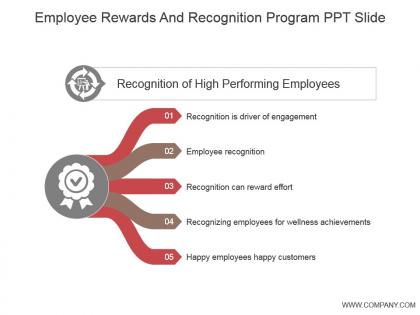
Employee rewards and recognition program ppt slide




Try Before you Buy Download Free Sample Product
 Impress Your
 Audience
 100%
100% Editable
 Save Hours
 of Time


Our Employee Rewards And Recognition Program Ppt Slide have got the formula right. They are a certainty to help you succeed.
People who downloaded this PowerPoint presentation also viewed the following :
Employee rewards and recognition program ppt slide with all 5 slides:
Explore the future with fair accuracy due to our Employee Rewards And Recognition Program Ppt Slide. You will display great insight.
FAQs for Employee rewards and recognition
Honestly, recognition programs are a game-changer for keeping people around. Your retention rates will improve big time, and you'll notice way better engagement too. People genuinely light up when they feel appreciated - I've seen it happen so many times. Productivity goes up because employees actually want to put in extra effort. Building that culture where good work gets noticed? Total win. Oh, and recruiting becomes easier since word spreads about companies that don't suck to work for. I'd start with simple peer-to-peer recognition first.
Don't just throw out generic "great job" messages - they're honestly pretty meaningless. Be specific about what someone actually did well and why it mattered. I've seen way too many awkward company-wide emails that feel super forced. Figure out how each person likes being recognized first. Some people love public shoutouts, others prefer private feedback or growth opportunities. Ask your team directly what recognition means to them instead of guessing. Timing matters too - don't wait weeks to acknowledge something. Oh, and skip the survey jargon, just have real conversations about it.
Honestly, start by just asking your remote people what they want - saves you from guessing wrong. Virtual coffee chats work great for celebrating wins publicly. I've seen teams do "remote employee spotlights" during meetings and it's surprisingly effective. Send personalized care packages to their house, or feature them in newsletters with photos of their home setup. Digital badges in Slack are pretty cool too. Oh, and virtual team activities where remote folks get special shoutouts. The main thing? Make recognition visible to everyone, not just a private DM. Remote workers already feel left out enough.
Honestly, rewards programs work because people just want to feel seen for their work. When someone knows their effort matters, they'll naturally do more. Skip the generic stuff though - nobody gets excited about standard employee-of-the-month anymore (okay maybe some do, but still). You want to tie rewards directly to the behaviors you're trying to encourage. Make it personal and quick too. Figure out what actually motivates your team first - some people love being praised in meetings, others would rather get extra PTO or learning opportunities. The timing matters way more than people realize.
Okay so here's the thing - you absolutely have to ask your people what they actually want, not just guess. Some folks love getting praised in front of everyone, others would literally die of embarrassment. I learned this the hard way when I kept doing public callouts and half my team hated it. Do quick surveys or just casual check-ins about recognition preferences. Stay interviews work great too. Then actually use what they tell you! Sounds obvious but most managers still assume everyone's motivated the same way. Spoiler alert: they're not.
Honestly, I'd start with the basics - engagement scores, how many people are actually sticking around, and whether folks are participating in your programs. Those numbers don't lie. But here's the thing - you've gotta ask people directly too through surveys. Do they feel valued? That's huge. I also watch productivity and sick days because good recognition usually helps both. The annoying part is figuring out if your programs are actually causing the changes, but whatever. Track everything from day one, then check back every few months to see what's working.
Honestly, most companies mess this up by being way too stingy with recognition - like once a year at reviews? Come on. Generic "thanks for your hard work" messages are almost worse than nothing. Don't make it all manager-driven either since your coworkers see the day-to-day stuff bosses miss. Big mistake I see is only celebrating major wins while ignoring the boring daily grind that actually keeps everything afloat. Oh, and don't just copy what Google does - your culture's different. Start small, ask people what they'd actually want, then tweak from there.
Honestly, gamification works really well for this stuff. Set up a points system where people earn badges for hitting goals or getting peer nominations. I've watched entire teams get weirdly obsessed with collecting digital badges - sounds dumb but it totally works! Monthly challenges are solid too. Maybe do "kudos points" where you get points both for giving AND receiving recognition? Then let people cash them in for actual rewards. Just don't make it so competitive that people get bitter about it. Start simple and see what sticks.
Honestly, just ask your team what they actually want - way better than guessing based on age. That said, younger folks usually go crazy for experiences and development stuff, plus they love getting called out on social media. Gen X is all about work-life balance and climbing the ladder. Boomers? They're into the classic stuff - formal awards, handwritten notes, proper face-to-face thanks. Money works for literally everyone though, let's be real. I'd start with a quick survey or just casual conversations. Way easier than overthinking it.
Here's the thing - your coworkers see all the stuff managers completely miss. They notice when you stay late to help debug someone's code or crush a presentation. Traditional recognition is all about the big wins and annual reviews, but peer recognition catches those everyday moments that actually matter. Honestly, getting called out by your team hits way harder than some generic "great job" from your boss. I'd just throw up a simple
-
Use of different colors is good. It's simple and attractive.
-
Helpful product design for delivering presentation.