


Employee loyalty awards




Try Before you Buy Download Free Sample Product
 Impress Your
 Audience
 100%
100% Editable
 Save Hours
 of Time


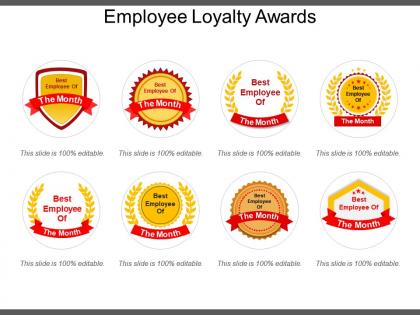
Reward your employees for their outstanding achievements using this Employee Loyalty Awards PowerPoint presentation. Take advantage of this employee benefits PPT template to demonstrate numerous rewards for employees including movie tickets, travel packages amongst others. Take the assistance of this incentive scheme PPT slide to depict the reasons for incentives such as increased productivity, rewarding high achievers, etc. Utilize this employee rewards PPT visual to highlight the importance of certain points like rewarding each employee, contribution of employees, etc. Portray the reward types namely extrinsic and intrinsic rewards along with the names of a few using this employee rewards PPT layout. Explore various types of incentives and decide the right one for the right employee according to his satisfaction level using this employee rewards PPT slideshow. Download this amazing employee benefits scheme PPT infographic and motivate your subordinates to reach their highest potential for greater monetary benefits.
People who downloaded this PowerPoint presentation also viewed the following :
Employee loyalty awards with all 5 slides:
Be a formidable force with our Employee Loyalty Awards. Folks will accept your defining contributions.
FAQs for
Effective employee loyalty awards programs include clear recognition criteria, meaningful milestone celebrations, personalized rewards, peer nomination systems, and consistent program communication. These components work together by creating transparent pathways for recognition, fostering workplace appreciation culture, and building long-term retention, with many organizations finding that strategic recognition ultimately enhances employee satisfaction and reduces costly turnover rates.
Employee loyalty awards significantly enhance retention by recognizing long-term commitment, creating emotional connections to the organization, and reinforcing desired behaviors through meaningful acknowledgment. These recognition programs reduce turnover costs, boost morale across teams, and strengthen company culture, with many organizations finding that consistent appreciation delivers improved employee satisfaction, increased productivity, and ultimately creates competitive advantage in talent retention.
Recognition awards, monetary bonuses, professional development opportunities, flexible work arrangements, and personalized gifts consistently rank as most appealing to employees. These awards address core motivational drivers by offering career advancement, work-life balance, financial security, and individual acknowledgment, with many organizations finding that combining multiple award types enhances retention and engagement more effectively.
Companies can measure loyalty award success through employee retention rates, engagement survey scores, internal promotion percentages, absenteeism reduction, and productivity metrics. Many organizations find that combining quantitative data with qualitative feedback from recognition recipients provides comprehensive insights, ultimately enabling strategic adjustments that enhance program effectiveness and deliver measurable improvements in workplace satisfaction.
Company culture determines loyalty award effectiveness by shaping recognition authenticity, peer relationships, and leadership credibility through consistent values alignment. In organizations with strong collaborative cultures, awards reinforce existing appreciation frameworks and trust, while companies with competitive or disconnected cultures often find awards feel superficial, ultimately requiring cultural foundation-building before implementing meaningful recognition programs.
Technology streamlines employee loyalty awards through automated tracking systems, digital nomination platforms, real-time analytics, and personalized recognition tools. These solutions enable organizations to efficiently monitor tenure milestones, gather peer feedback, and deliver customized rewards, while providing data-driven insights that help HR teams optimize recognition programs and ultimately boost employee engagement across departments.
Organizations should track employee retention rates, engagement scores, productivity metrics, internal promotion rates, and program participation levels to evaluate loyalty awards success. These metrics work together by revealing whether recognition translates into sustained commitment, with many companies finding that effective programs deliver reduced turnover costs, higher performance outcomes, and stronger workplace culture, ultimately creating measurable competitive advantages.
Employee loyalty awards vary significantly across industries, with technology companies offering stock options and flexible benefits, healthcare organizations providing continuing education and wellness programs, manufacturing focusing on safety recognition and tenure milestones, and retail emphasizing performance bonuses and career advancement opportunities. These industry-specific approaches reflect sector priorities and workforce needs, with organizations finding that tailored recognition programs enhance retention, boost morale, and strengthen competitive advantage in their respective talent markets.
Employee recognition and loyalty awards are interconnected strategies where recognition acknowledges immediate achievements and contributions, while loyalty awards celebrate long-term commitment, tenure milestones, and sustained performance over years. This strategic combination enhances retention by addressing both short-term motivation and long-term engagement, with many organizations finding that integrated recognition programs deliver stronger employee satisfaction, reduced turnover costs, and ultimately sustained competitive advantage.
Small businesses can implement effective loyalty awards through personalized recognition letters, flexible work arrangements, professional development opportunities, peer nomination programs, and milestone celebrations using existing resources. These cost-effective approaches enhance employee engagement and retention by leveraging creativity over capital, with many small organizations finding that meaningful recognition often outweighs monetary rewards in building lasting loyalty.
Common pitfalls include unclear criteria, infrequent recognition, one-size-fits-all rewards, lack of manager involvement, and poor communication about program benefits. These issues undermine engagement by creating confusion, reducing participation, and failing to align with diverse employee preferences, with many organizations finding that personalized recognition tied to clear performance metrics delivers significantly better retention and motivation outcomes.
Peer-to-peer recognition integrates into loyalty awards through nomination systems, collaborative voting platforms, and team-based achievement categories that enable colleagues to recognize each other's contributions. These approaches enhance workplace culture by fostering mutual appreciation, increasing program participation, and creating more meaningful recognition experiences, with many organizations finding that peer nominations often identify deserving employees management might overlook.
**INPUT**: What trends are shaping the future of employee loyalty awards? **OUTPUT**: Future employee loyalty award trends include personalized recognition experiences, digital platforms for peer-to-peer nominations, experiential rewards over traditional gifts, real-time feedback integration, and values-based recognition programs. These approaches enhance engagement by delivering meaningful acknowledgment, streamlining recognition processes, and creating continuous appreciation cultures, with many organizations finding that personalized, frequent recognition significantly improves retention and workplace satisfaction. [Word count: 60]
Organizations can tailor loyalty awards by offering flexible recognition options like remote work privileges, professional development opportunities, wellness benefits, cultural celebration days, and personalized gift choices. Through demographic surveys and employee feedback, companies enhance engagement across generational, cultural, and lifestyle differences, while delivering inclusive recognition programs that boost retention and workplace satisfaction.
Loyalty awards foster workplace community by creating shared celebrations, recognizing collaborative achievements, establishing common values, and encouraging peer-to-peer recognition programs. These initiatives strengthen interpersonal connections and team cohesion, with many organizations finding that regular recognition ceremonies and team-based awards significantly enhance employee engagement, reduce turnover, and ultimately deliver stronger organizational culture and improved collaborative outcomes.
-
Content of slide is easy to understand and edit.
-
Much better than the original! Thanks for the quick turnaround.