


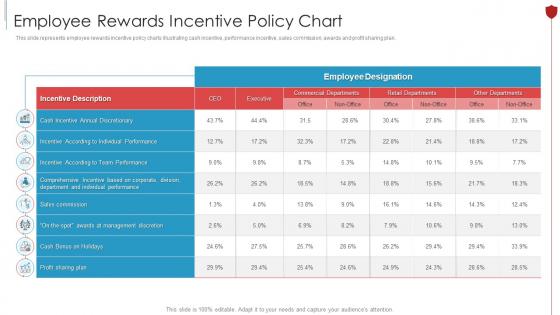
Employee Rewards Incentive Policy Chart




Try Before you Buy Download Free Sample Product
 Impress Your
 Audience
 100%
100% Editable
 Save Hours
 of Time


This slide represents employee rewards incentive policy charts illustrating cash incentive, performance incentive, sales commission, awards and profit sharing plan.
People who downloaded this PowerPoint presentation also viewed the following :
Employee Rewards Incentive Policy Chart with all 6 slides:
Use our Employee Rewards Incentive Policy Chart to effectively help you save your valuable time. They are readymade to fit into any presentation structure.





FAQs for Employee Rewards
Honestly? Skip the generic stuff and go personal. Recognition in meetings hits different than just money sometimes. Ask your team what they actually want first - you'll probably get answers you didn't expect. Extra PTO works great, or even just grabbing lunch vouchers. Public shoutouts are surprisingly effective too. Career development opportunities, flexible schedules, that kind of thing. Oh, and don't underestimate just asking for their input on decisions - people love feeling heard. The key is making it timely and specific to what they contributed. Money's obviously nice, but feeling valued? That's what really sticks.
Yeah, personalized rewards totally work because people feel like you actually *get* them. Instead of another generic gift card, you're giving someone what actually matters to them - maybe public shoutouts, growth opportunities, or WFH days. We're all wired differently, so what pumps up Sarah might bore the hell out of Mike. The crazy thing is most managers never bother asking what their team actually wants. Just straight up ask them what kind of recognition would mean something. It's such a simple move but makes people feel seen as real humans, not employee ID numbers.
Honestly, recognition is what makes rewards programs actually work instead of just being a waste of money. You can throw all the bonuses and perks you want at people, but without genuine recognition? They won't feel valued. It creates that emotional connection - shows employees their work matters. The timing is huge though. Don't wait until some annual review. When someone goes above and beyond, acknowledge it right away. Make it specific to what they actually did. That's what amplifies everything else you're giving them, whether it's promotions or benefits or whatever.
Honestly, just look at your turnover rates first - that'll tell you everything. If people are bailing, your rewards suck. Employee engagement surveys are clutch too, but only if you actually listen to what they're saying. Track participation in whatever programs you've got running. Oh, and measure productivity before and after you roll stuff out - might as well see if it's actually moving the needle. The best approach though? Just ask people straight up what's working. Set up those quarterly check-ins and don't ignore the feedback when it's not what you want to hear.
Honestly, budget stuff will drive you crazy first. People *always* compare what they got to everyone else's rewards - it's just human nature, you know? What gets Sarah excited might bore the hell out of Tom. The paperwork side gets messy fast without decent systems too. Start small though! Ask your team what they'd actually want instead of guessing. Regular check-ins help you pivot when something isn't working. Oh, and you'll constantly wonder if you're spending too much or too little - comes with the territory.
Honestly, going digital with rewards makes such a difference. Instead of waiting months for reviews, you can set up automatic recognition when people hit milestones. The analytics part is where it gets interesting though - you'll actually see what motivates each person. Some love the public praise, others just want gift cards or time off. Mobile apps let managers give instant kudos too, which is pretty clutch. I'd say start small - grab one tool that works with what you already have and test it with like 5-10 people first. Way less overwhelming that way.
So basically, intrinsic rewards are the internal stuff - when work actually feels meaningful or you're genuinely pumped about a project. Extrinsic is the external things like raises and promotions. I've noticed intrinsic motivation lasts way longer, though honestly both are pretty crucial. Like, you might love what you're doing, but bills don't pay themselves, right? When you're trying to motivate people (or yourself), tap into both. The internal satisfaction keeps you going when things get tough, but external recognition doesn't hurt either.
Yeah, generational stuff totally matters for rewards. Boomers usually want the classic things - cash bonuses, retirement money, formal recognition. Gen X is all about work-life balance and career development. Millennials? They're obsessed with experiences, flexible work, and that whole-person benefits thing. Gen Z wants instant feedback and learning opportunities, plus they care about social impact. Honestly though, I'd just survey your actual team instead of guessing. People don't always fit the stereotypes, and you might be surprised what they actually want. Way easier than trying to decode everyone's generational preferences!
Flexible schedules are huge - people love that stuff. Extra PTO days, good parking spots, or letting someone lead a cool project they're excited about. Conference tickets work great too if you've got the budget. Honestly, public recognition is underrated... like calling someone out in the team meeting or company newsletter. CEO lunch sessions sound fancy but people actually dig those. Oh, and handwritten notes hit different than emails - sounds old school but whatever. Team outings are solid too. Really though, just ask your team what they'd want most. No point guessing when you can find out.
Look, feedback is your secret weapon for rewards people actually care about. Survey your team or just chat with them - what do they want? Flex time? Training opportunities? Better coffee? (That last one's more important than most managers think lol.) Companies always screw this up by giving everyone the same boring gift cards. Ask specific questions about what bugs them and what they'd love to see. Then design rewards around those answers. It's way more personal that way. Start with a quick survey about current satisfaction and what they'd want next quarter.
Honestly, peer-to-peer recognition is a game changer. Instead of waiting for managers to notice good work (spoiler: they're usually swamped and forget), teammates can shout each other out directly. It breaks down those weird department walls too - suddenly people in accounting are seeing cool stuff the design team did. The ripple effect is real. Just make sure whatever platform you use isn't clunky, because if it's annoying to use, nobody will bother. When it's seamless though? Recognition becomes part of how people actually work together.
Dude, you absolutely have to be transparent about this stuff. People will think it's all favoritism if they don't get how rewards actually work - I've watched that kill team morale so fast. Make your criteria super specific and put them somewhere everyone can see. Like, what exact behaviors or numbers earn recognition? Reference those standards every time you give out rewards. Honestly, the "random reward" approach is such a disaster waiting to happen. Your team can't hit goals they don't even know exist, so spell out what success looks like. Consistency is everything here.
Yeah, there's definitely a strong link there. Better rewards usually mean people stay longer. Money helps, but it's not everything - you've got to figure out what your actual team cares about. Some people want flexible schedules, others are all about promotions and learning new stuff. Recognition goes way further than you'd think sometimes. Survey your employees regularly to see what they actually value, then adjust from there. I've seen companies waste tons on fancy perks nobody wanted while ignoring simple things like saying "thanks" more often.
Honestly, a solid rewards program is like having a secret weapon for hiring. Your current employees become walking advertisements - they'll rave about working there to their friends and post good stuff on Glassdoor. People definitely scope out the benefits before saying yes to offers now. It shows you care about more than just the salary, which matters way more than companies think. Staying longer means less turnover headaches for you too. Oh, and here's the thing - just ask your team what they actually want as rewards first. You'd be shocked how off-base most managers are about this stuff.
First thing - survey your team to see what actually motivates people. Not everyone wants the same stuff, obviously. Your criteria need to be super clear and measurable, otherwise you'll end up with bias issues. I've noticed the loudest people always get recognized first, which is annoying. Think about cultural differences too - some people hate being called out publicly. Mix up rewards beyond just money. Oh, and definitely track who's getting what so you can catch patterns. Maybe do a quarterly check to see if you're missing certain groups?
-
Great product, helpful indeed!
-
I didn’t expect such a good service for the money I am paying. But, they exceed my expectations. Great work SlideTeam.