Employee Survey Result Analysis Dashboard

Rating:
80%
Employee Survey Result Analysis Dashboard
Slide 1 of 7
Favourites Favourites

Try Before you Buy Download Free Sample Product

Audience Impress Your
Audience
Editable 100%
Editable
Time Save Hours
of Time
The Biggest Sale is ending soon in
0
0
:
0
0
:
0
0
Rating:
80%
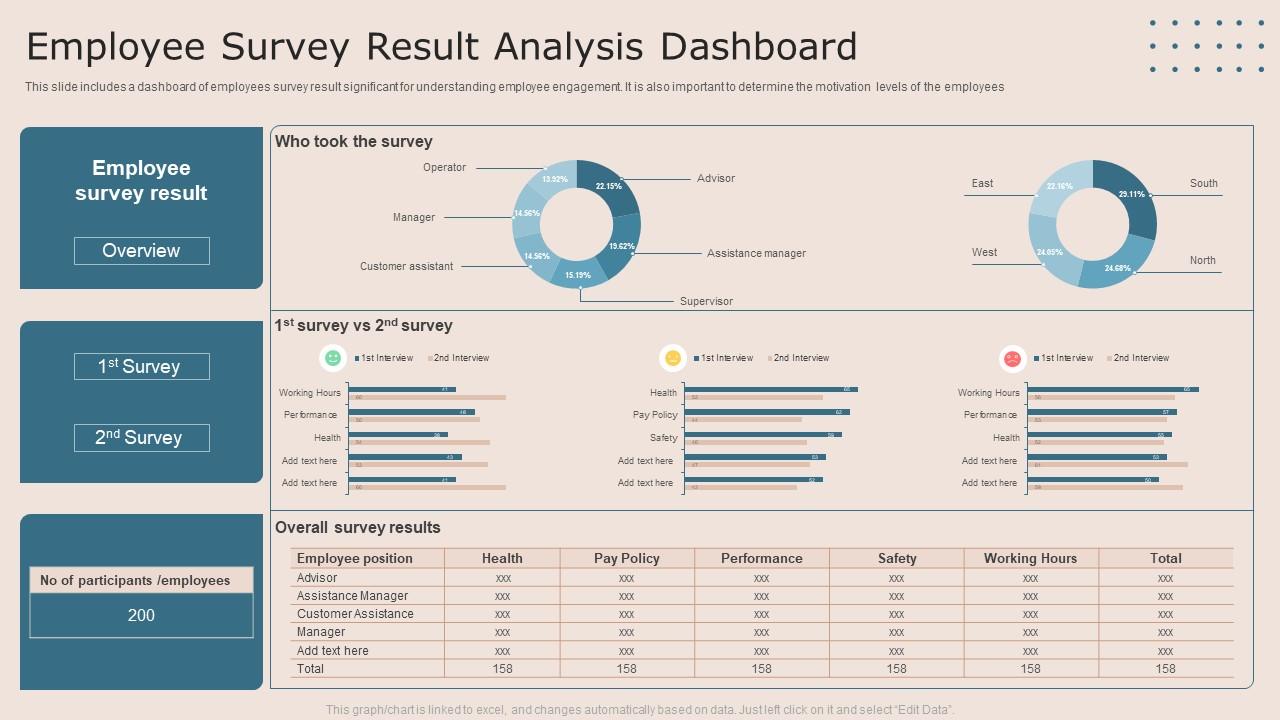
This slide includes a dashboard of employees survey result significant for understanding employee engagement. It is also important to determine the motivation levels of the employees. Presenting our well structured Employee Survey Result Analysis Dashboard. The topics discussed in this slide are Employee Survey, Result Analysis, Dashboard. This is an instantly available PowerPoint presentation that can be edited conveniently. Download it right away and captivate your audience.

FAQs for Employee Survey

Honestly, your team sees stuff you totally miss from where you're sitting. They know what's actually broken and what's working way better than you think. Getting their input early catches problems before they become disasters - trust me on this one. Plus people just want to feel heard, you know? It's not rocket science but it makes a huge difference for morale. Even doing quick monthly check-ins can reveal wild things about how things really run. Start small though. The insights you'll get are pure gold and it builds trust without much effort.

Honestly, start with something simple like monthly check-ins and maybe a quarterly survey. Don't make surveys crazy long though - people bail after like 5 questions max. Your managers need to actually know how to listen without getting all weird and defensive (harder than it sounds). The biggest thing? Be consistent about it. Can't just ask for feedback when everything's falling apart and expect people to trust you. I'd pick one approach and stick with it for at least six months before changing anything. Oh, and make sure whatever tool you use is actually easy - nobody's got time for complicated systems.

Honestly, the hardest part is just getting people to actually care enough to participate. Most employees think it's pointless corporate BS - and sometimes they're not wrong lol. They worry about retaliation or that nothing will change anyway. Plus you'll get wildly inconsistent feedback quality since most managers suck at giving constructive input. Then there's the whole nightmare of actually doing something with all that data once you collect it. My suggestion? Pick one small team first. Focus like crazy on follow-through and tell people exactly what you changed based on their feedback.

Honestly, tech makes feedback collection so much less of a pain. I'd check out platforms like 15Five or Culture Amp - they automate pulse surveys and let you track everything in real-time dashboards. The AI analysis stuff is actually pretty impressive at catching sentiment patterns you'd totally miss otherwise. Anonymous feedback is huge too since people are way more honest when they're not worried about backlash. Oh, and definitely test with just one small team first before rolling it out everywhere - learned that the hard way at my last job. Pick one tool and see how it fits your vibe.

Honestly, regular feedback is a game-changer for figuring out who needs help with what. Instead of those awful annual reviews (ugh), try monthly check-ins - way less stressful for everyone. It helps people actually understand what they're nailing and what needs work. Plus you'll spot your star performers who might be ready for bigger challenges. I've found it's also great for setting clearer expectations upfront. The trick is making it ongoing, not just a once-a-year torture session. Even 15-minute conversations can totally change how your team develops.

Oh man, this is so true from my experience. Some cultures wrap criticism in like 5 layers of politeness - you're sitting there wondering if they even gave you feedback lol. Then you've got places like the Netherlands where they'll just straight up tell you what's wrong, no sugar coating. Hierarchy matters too - in some teams, junior people won't give feedback to seniors no matter what. And don't get me started on the whole written vs verbal thing, or whether they want it privately or in front of everyone. Honestly just ask people upfront how they prefer getting feedback. Saves everyone the awkwardness.

Oh man, anonymity changes everything. People won't be honest if they think it'll bite them later - makes total sense. I've literally watched surveys where the anonymous feedback was night and day compared to what folks said in meetings. You get the real dirt on management problems and what's actually broken. But here's the thing - you can't just say it's anonymous then try playing detective afterward (seen managers do this, it's so dumb). Get a third-party tool or anonymous box, then resist the urge to figure out who wrote what. Trust me, the second people think you're trying to connect dots, you'll never get honest feedback again.

Honestly, you've got to be vulnerable first. Share your screw-ups and ask for feedback on your own leadership - nobody opens up to someone who seems perfect. Set up regular one-on-ones where feedback is just expected, not those scary performance reviews. Here's the thing though: this takes forever to build but one defensive reaction kills it all. So bite your tongue when criticism hits. Thank people publicly when they give you the hard stuff, even if it stings like hell. Start small - "what's one thing I could do differently?" works way better than "any feedback?" And actually do something with what you hear or they'll just stop talking.

Honestly? Regular check-ins are your best bet - don't wait weeks to bring up something that happened yesterday. I always do feedback right when stuff happens, plus those formal reviews obviously. Focus on what they actually *did* rather than saying like "you're disorganized" or whatever. Privacy matters too - nobody wants to get called out in front of everyone. The sandwich method gets trashed online but it actually works if you're not being fake about the compliments. Oh and listen to what they say back instead of just lecturing them. Being consistent beats being perfect every time.

Honestly, follow-up surveys are your best bet - compare satisfaction scores before and after your changes. Exit interviews tell you everything though, people are way more honest when they're already out the door. Track the usual stuff like engagement scores and retention rates, but don't sleep on absenteeism patterns either. Those can be pretty revealing. Keep an eye on your internal feedback channels too - if the same complaints keep popping up, your changes probably didn't stick. Oh and do quarterly pulse surveys instead of just checking once. You need to see trends over time to know if anything's actually working.

Honestly, just make it way more casual and frequent. Those quarterly hour-long meetings are the worst - nobody wants to sit through that. Instead, do quick 15-minute weekly chats. People actually show up for those! Coffee conversations work great too, or just shoot a Slack message like "what's going well this week and what sucks?" The whole trick is ditching the formal vibe. Make it feel like you're just talking, not doing some big performance review thing. I'd start small - maybe one casual check-in per week and see how it goes from there.

Yeah, so Gen Z wants feedback like all the time - weekly check-ins, Slack messages, whatever. They hate waiting around for annual reviews. Gen X and older millennials are more into scheduled feedback sessions with everything written down (which honestly makes sense). Boomers still prefer the face-to-face thing, formal reviews and all that. But here's the thing - don't just guess based on someone's age. Just ask people how they want their feedback delivered. Way easier than trying to decode generational preferences, and you'll actually get it right.

Culture Amp and Glint are honestly your best bet - they've got everything covered from quick pulse checks to exit interviews, plus the analytics don't suck. Google Forms works if you're tight on budget, but you'll be stuck doing all the number-crunching yourself (ugh). 15Five is solid for regular check-ins instead of those dreaded annual survey marathons that nobody likes. Whatever you pick, just don't go overboard - I've watched teams survey their people to death. Start basic, see what sticks. The real trick is actually doing something with the feedback once you get it.

Talk about specific actions, not their whole personality. Start with what they're doing right first - trust me on this one. Then say "when you do X, here's what happens" instead of "you always do this." That phrase is toxic honestly. Don't save feedback for formal reviews either. Have these chats regularly so it feels supportive, not like you're ambushing them. Oh, and always wrap up by asking what they need from you to actually succeed. Makes a huge difference in how they'll receive it.

Honestly, feedback can be a game changer - I've seen retention jump like 14-15% when companies actually do it right. The trick isn't just asking for input though. You gotta act on what people tell you, or it's basically pointless. When your team sees you making real changes based on their suggestions? That's when the magic happens. They feel heard, trust builds up, and suddenly people aren't eyeing the exit as much. I always tell managers to start small - grab one piece of feedback this month and make it happen visibly. Even something tiny works. Your people will definitely pick up on it.

Ratings and Reviews

80% of 100
Review Form
Write a review
Most Relevant Reviews
  1. 80%

    by Rodriguez Morgan

    Visually stunning presentation, love the content.
  2. 80%

    by Charlie Reed

    Great designs, Easily Editable.

2 Item(s)

per page: