


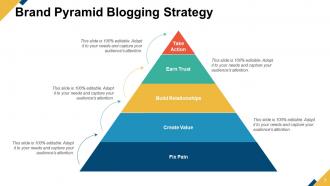
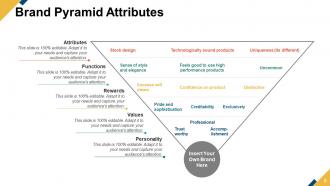
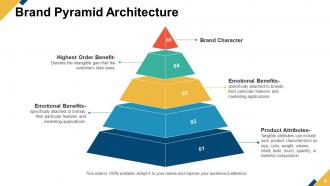
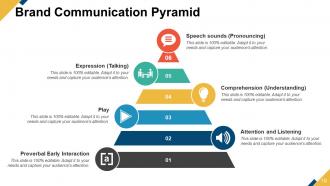
Brand Communication Pyramid Awareness Strategy Product





Try Before you Buy Download Free Sample Product
 Impress Your
 Audience
 100%
100% Editable
 Save Hours
 of Time


Delve on examples of fraud with our Brand Communication Pyramid Awareness Strategy Product. Enlighten folks about different attempts at cheating.
People who downloaded this PowerPoint presentation also viewed the following :
Brand Communication Pyramid Awareness Strategy Product with all 11 slides:
Enlighten folks about different attempts at cheating with our Brand Communication Pyramid Awareness Strategy Product. Delve on examples of fraud.



FAQs for Brand Communication Pyramid
Effective brand communication includes consistent messaging, authentic storytelling, clear value propositions, targeted audience engagement, and multi-channel integration. These elements work together by building recognition, establishing emotional connections, and reinforcing brand identity across touchpoints, with many companies finding that strategic consistency ultimately delivers stronger customer loyalty and competitive market positioning.
Storytelling enhances brand communication by creating emotional connections, making messages memorable, and differentiating brands from competitors through authentic narratives. Companies across retail, hospitality, and financial services leverage compelling stories to build trust, humanize their values, and drive customer engagement, ultimately delivering stronger brand loyalty and increased market resonance.
Social media serves as a primary channel for modern brand communication, enabling direct customer engagement, real-time feedback collection, targeted messaging, and community building across diverse platforms. Through strategic social media presence, companies streamline customer interactions, enhance brand visibility, and accelerate response times, with many retail and service organizations finding that integrated social strategies ultimately deliver improved customer loyalty and competitive market positioning.
Brands maintain consistency across communication channels by establishing comprehensive style guides, unified messaging frameworks, centralized content management systems, regular training programs, and cross-functional team coordination. These strategic approaches enable organizations to deliver cohesive brand experiences across digital platforms, traditional media, and customer touchpoints, ultimately building stronger brand recognition and customer trust in an increasingly fragmented communication landscape.
Brand communication effectiveness should be measured through brand awareness metrics, engagement rates, sentiment analysis, reach and frequency data, and conversion tracking. These metrics work together by monitoring recognition levels, audience interaction quality, and message resonance across channels, with many organizations finding that combining quantitative reach data with qualitative sentiment insights delivers comprehensive understanding of communication impact and competitive positioning.
Cultural differences significantly impact brand communication strategies through varying consumer values, communication styles, color symbolism, religious considerations, and local preferences across global markets. Companies like McDonald's adapt menu offerings regionally, while Coca-Cola modifies advertising approaches culturally, with successful brands finding that localized messaging, culturally relevant imagery, and region-specific campaigns ultimately deliver stronger market penetration and customer engagement.
Crisis communication best practices include establishing rapid response protocols, maintaining transparent stakeholder communication, acknowledging issues promptly, providing regular updates, and demonstrating corrective actions. These strategies enable organizations to preserve brand trust by controlling narratives, minimizing reputation damage, and showcasing accountability, with many companies finding that proactive crisis management ultimately strengthens long-term customer relationships and competitive positioning.
Visual design influences brand communication by establishing immediate recognition, conveying brand values, and creating emotional connections through consistent color schemes, typography, imagery, and layout principles. Strategic visual elements enable companies to differentiate themselves in competitive markets, with retail brands, financial institutions, and healthcare organizations finding that cohesive design systems enhance customer trust, streamline messaging, and ultimately drive stronger brand loyalty and business outcomes.
User-generated content significantly enhances brand communication by building authentic trust, expanding reach through social sharing, and creating genuine peer-to-peer recommendations that resonate more than traditional advertising. Through customer reviews, social media posts, and testimonials, brands achieve greater credibility and engagement, with many companies finding that UGC delivers higher conversion rates and stronger community connections.
Brands effectively communicate their values through consistent storytelling across multiple touchpoints, authentic content that demonstrates rather than declares principles, and interactive engagement that invites audience participation. Companies like Patagonia and Ben & Jerry's leverage social media campaigns, community partnerships, and transparent business practices to build trust, ultimately creating emotional connections that drive customer loyalty and competitive differentiation.
Integrating traditional and digital brand communication presents challenges including message consistency across channels, budget allocation between mediums, audience targeting disparities, timing coordination, and measuring unified campaign effectiveness. While traditional media offers broad reach and digital enables precise targeting, organizations increasingly find that strategic combination delivers enhanced brand visibility and customer engagement, ultimately creating competitive advantage through comprehensive market coverage.
Brands can leverage influencers to enhance communication by partnering with creators who align with their values, utilizing micro-influencers for targeted audiences, and integrating influencer content across multiple channels. This strategic approach enables authentic storytelling, expanded reach, and increased consumer trust, with retail and beauty brands finding that influencer partnerships deliver higher engagement rates and stronger brand credibility than traditional advertising methods.
Techniques for fostering two-way customer communication include social media engagement, interactive surveys, feedback platforms, live chat systems, and community forums. These approaches streamline customer interactions by encouraging dialogue, gathering real-time insights, and building stronger relationships, with many organizations finding that active engagement ultimately delivers improved customer satisfaction and enhanced brand loyalty.
Brand communication evolves through continuous consumer behavior analysis, trend monitoring, and strategic messaging adaptation across multiple touchpoints. Organizations increasingly leverage data analytics, social listening, and market research to identify shifting preferences, with brands in retail, healthcare, and financial services successfully pivoting their messaging strategies to maintain relevance, ultimately delivering enhanced customer engagement and stronger market positioning.
Brands can use data analytics to improve communication strategies by analyzing customer behavior patterns, segmenting audiences based on preferences, tracking engagement metrics across channels, personalizing messaging content, and optimizing campaign timing. Through predictive analytics and real-time insights, companies in retail, healthcare, and financial services streamline their outreach efforts, ultimately delivering more targeted experiences and significantly higher conversion rates.
No Reviews