


Brand Portfolio Management Process Branding CD V





Try Before you Buy Download Free Sample Product
 Impress Your
 Audience
 100%
100% Editable
 Save Hours
 of Time


Brand portfolio strategy entails designing, deploying, and managing multiple brands as a coordinated portfolio of meaning based assets that address the needs of diverse customers in a marketplace and maximize return while minimizing risk. This PowerPoint presentation Brand Portfolio Management Process covers details related to brand portfolio strategy, beginning with a brief introduction to the concept of the brand portfolio, including its benefits, elements, structure, and roles such as flaker brand, cash cow brand, low end, entry level brand, and high end prestige brand. This PPT deck also covers the introduction of brand portfolio strategy, its components, needs, 3Cs, guiding principles, and steps for creating a successful brand portfolio strategy. It also illustrates some common brand portfolio strategies such as a branded house, house of brands, hybrid brand, stages of brand portfolio management, best practices, and a checklist for creating a portfolio strategy. This deck also covers various brand portfolio management steps, such as analyzing customer need states, mapping future profits, and portfolio management through different brand scenarios. The slide of this complete deck also represents the introduction to the concept of brand architecture and its relationship with the brand portfolio. Get to know more by downloading our 100 percentage editable and customizable template, which is also compatible with Google Slides.
People who downloaded this PowerPoint presentation also viewed the following :
Content of this Powerpoint Presentation
Slide 1: This slide introduces Brand Portfolio Management Process. State your company name and begin.
Slide 2: This slide states Agenda of the presentation.
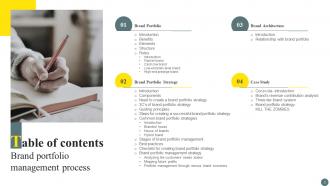
Slide 3: This slide shows Table of Content for the presentation.
Slide 4: This slide highlights title for topics that are to be covered next in the template.
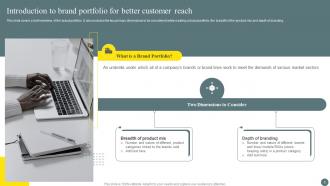
Slide 5: This slide covers a brief overview of the brand portfolio.
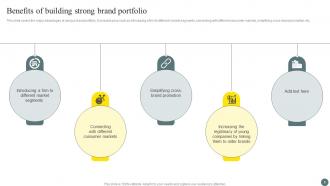
Slide 6: This slide covers the major advantages of using a brand portfolio.
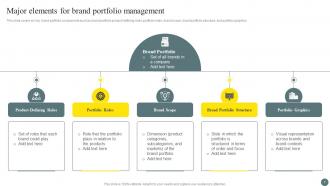
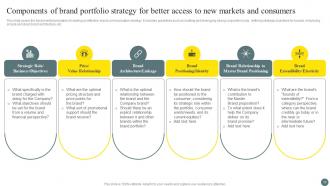
Slide 7: This slide covers six key brand portfolio components.
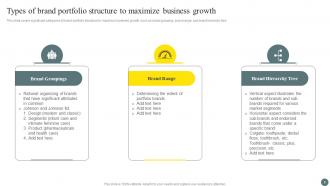
Slide 8: This slide covers significant categories of brand portfolio structure for maximum business growth.
Slide 9: This slide highlights title for topics that are to be covered next in the template.
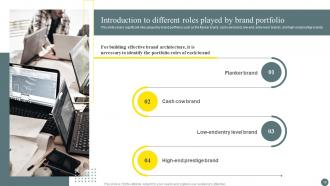
Slide 10: This slide covers significant roles played by brand portfolios.
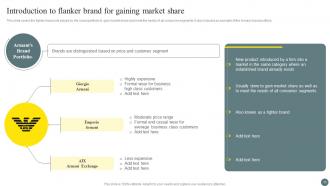
Slide 11: This slide covers the fighter brand role played by the brand portfolio to gain market share and meet the needs of all consumer segments.
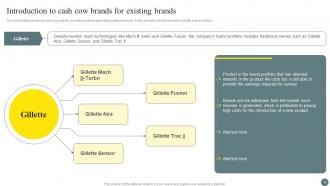
Slide 12: This slide briefly introduces cash cow brands, including revenue-generating mature products.
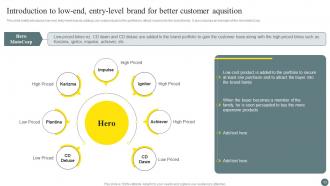
Slide 13: This slide briefly introduces low-end, entry-level brands adding Low-cost products to the portfolio to attract buyers into the brand family.
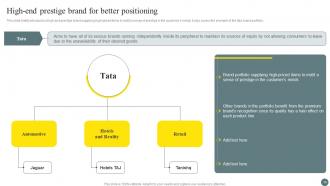
Slide 14: This slide briefly introduces a high-end prestige brand supplying high-priced items to instill a sense of prestige in the customer's minds.
Slide 15: This slide highlights title for topics that are to be covered next in the template.
Slide 16: This slide covers a brief overview of brand communication strategy.
Slide 17: This slide covers the fundamental principles of creating an effective brand communication strategy.
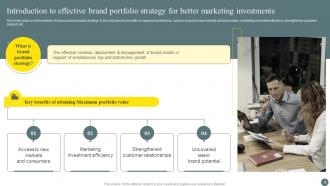
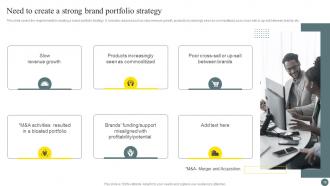
Slide 18: This slide covers the requirement for creating a brand portfolio strategy.
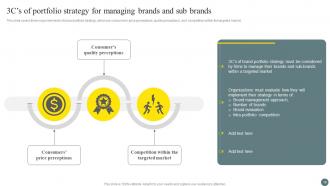
Slide 19: This slide covers three major elements of brand portfolio strategy.
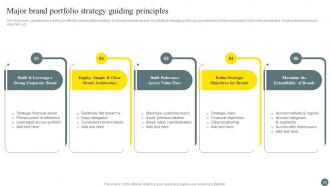
Slide 20: This slide covers guidelines for creating an effective brand portfolio strategy.
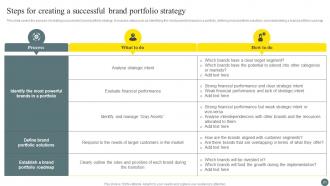
Slide 21: This slide covers the process of creating a successful brand portfolio strategy.
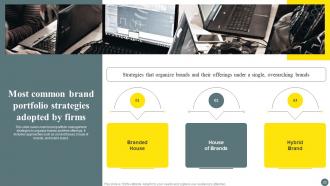
Slide 22: This slide covers main brand portfolio management strategies to organize brands and their offerings.
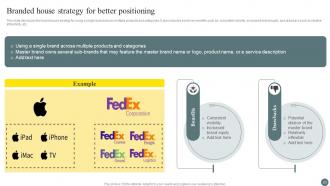
Slide 23: This slide introduces the brand house strategy for using a single brand across multiple products and categories.
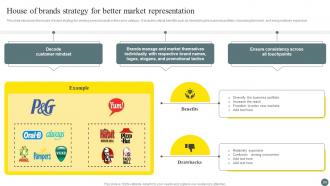
Slide 24: This slide introduces the house of brand strategy for owning several brands in the same category.
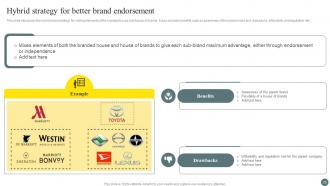
Slide 25: This slide introduces the hybrid brand strategy for mixing elements of the branded house and house of brands.
Slide 26: This slide talks about further topics that are to be disccused.
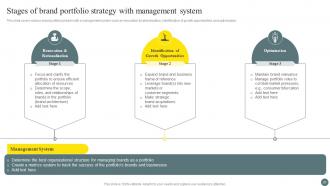
Slide 27: This slide covers various brand portfolio phases with a management system.
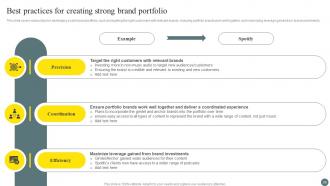
Slide 28: This Slide covers various tips for developing a solid brand portfolio.
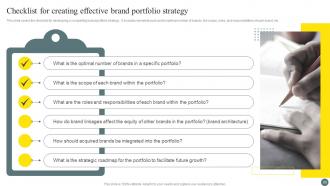
Slide 29: This slide covers the checklist for developing a compelling brand portfolio strategy.
Slide 30: This slide talks about further topics that are to be disccused.
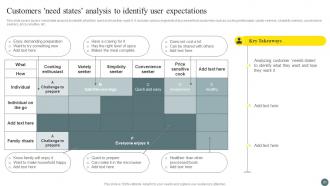
Slide 31: This slide covers buyers’ need state analysis to identify what they want and how they want it.
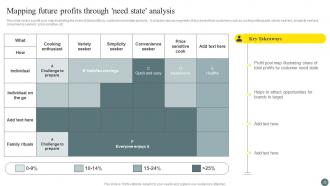
Slide 32: This slide covers a profit pool map illustrating the share of total profits by customer need state analysis.
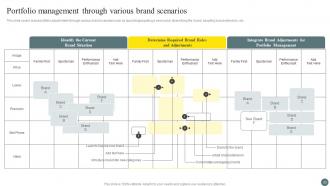
Slide 33: This slide covers brand portfolio adjustments through various brand scenarios.
Slide 34: This slide highlights title for topics that are to be covered next in the template.
Slide 35: This slide introduces brand architecture which acts as a framework for the interdependence of the brands.
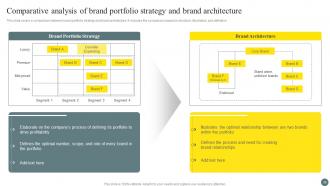
Slide 36: This slide covers a comparison between brand portfolio strategy and brand architecture.
Slide 37: This slide highlights title for topics that are to be covered next in the template.
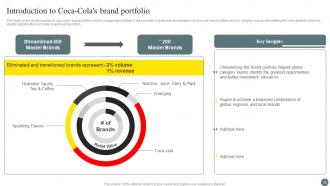
Slide 38: This slide covers an introduction to coca cola’s brand portfolio and its management strategy.
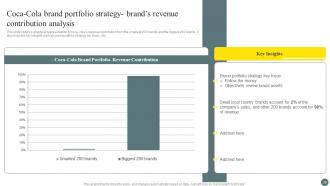
Slide 39: This slide covers a graphical representation of coca- cola’s revenue contribution from the smallest 200 brands and the biggest 200 brands.
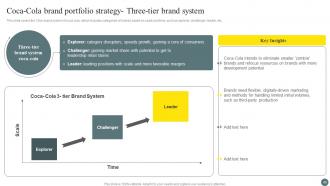
Slide 40: This slide covers the 3 tier brand system of coca cola, which includes categories of brands based on scale and time, such as explorer, challenger, leader, etc.
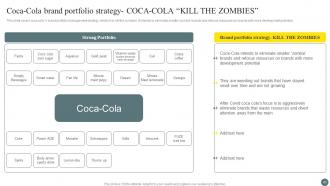
Slide 41: This slide covers coca cola’ s brand portfolio management strategy, which is to kill the zombies.
Slide 42: This slide contains all the icons used in this presentation.
Slide 43: This slide is titled as Additional Slides for moving forward.
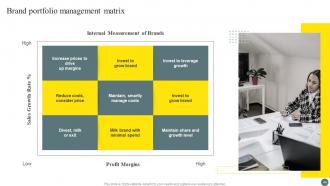
Slide 44: This slide presents Brand portfolio management matrix.
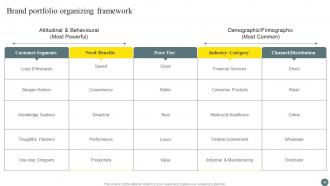
Slide 45: This slide presents Brand portfolio organizing framework.
Slide 46: This is About Us slide to show company specifications etc.
Slide 47: This slide contains Puzzle with related icons and text.
Slide 48: This is a Timeline slide. Show data related to time intervals here.
Slide 49: This slide shows Post It Notes. Post your important notes here.
Slide 50: This slide provides 30 60 90 Days Plan with text boxes.
Slide 51: This slide displays Column chart with two products comparison.
Slide 52: This is Our Target slide. State your targets here.
Slide 53: This is a Thank You slide with address, contact numbers and email address.
Brand Portfolio Management Process Branding CD V with all 58 slides:
Use our Brand Portfolio Management Process powerpoint presentation slides Branding CD to effectively help you save your valuable time. They are readymade to fit into any presentation structure.






















FAQs for Brand Portfolio Management Process
Effective brand portfolio management includes strategic brand architecture, clear positioning frameworks, resource allocation optimization, performance measurement systems, and synergy identification across brands. These elements work by minimizing brand overlap, maximizing market coverage, and ensuring each brand delivers distinct value propositions, with many organizations finding that strategic portfolio alignment drives stronger customer loyalty and operational efficiency.
Companies assess individual brand performance through financial metrics like revenue and profitability, market share analysis, customer satisfaction scores, brand equity measurements, and digital engagement analytics. These comprehensive evaluations enable portfolio managers to identify underperforming assets, optimize resource allocation across brands, and make strategic decisions about brand investments, with many organizations finding that regular performance reviews ultimately deliver clearer positioning and enhanced competitive advantage.
Consumer insights serve as the foundation for brand portfolio strategy by revealing market gaps, customer preferences, demographic shifts, and emerging trends that guide portfolio decisions. Through comprehensive market research and behavioral analysis, companies identify opportunities for brand extensions, repositioning, or discontinuation, while optimizing resource allocation across their portfolio to maximize market coverage and competitive advantage.
Mergers and acquisitions significantly complicate brand portfolio management by requiring strategic decisions about brand integration, consolidation, or elimination to avoid market confusion and redundancy. Companies must evaluate brand equity, customer loyalty, and market positioning across combined portfolios, with many organizations finding that successful integration ultimately delivers enhanced market reach, operational efficiency, and competitive advantage through streamlined brand architecture.
Businesses can identify brand portfolio gaps through comprehensive market analysis, competitive benchmarking, customer segmentation studies, demographic research, and performance metrics evaluation. These strategic approaches enable organizations to uncover underserved market segments, pricing tier opportunities, and geographic expansion possibilities, with many companies finding that systematic portfolio audits reveal lucrative white spaces for new brand development and competitive advantage.
Brand architecture enhances portfolios by creating clear hierarchical relationships between brands, defining strategic positioning, establishing consistent messaging frameworks, and optimizing resource allocation across different market segments. Through systematic brand architecture, organizations streamline their marketing efforts, reduce customer confusion, and maximize synergies between brands, with many companies finding that structured portfolios deliver stronger market presence and improved operational efficiency.
Key metrics for evaluating brand portfolio health include market share performance, brand equity scores, revenue contribution ratios, customer loyalty indices, and cross-brand cannibalization rates. These measurements enable organizations to optimize resource allocation, identify underperforming assets, and streamline portfolio architecture, with many companies finding that regular portfolio audits ultimately deliver stronger market positioning and improved ROI.
Companies should approach brand elimination by evaluating underperforming assets against strategic goals, market relevance, and resource allocation efficiency, while brand addition requires assessing market gaps, competitive positioning, and synergy potential. Through portfolio audits and consumer insights, organizations streamline operations, reduce complexity, and enhance focus, with many finding that strategic pruning ultimately delivers stronger market presence and improved profitability.
Common pitfalls include brand cannibalization, inconsistent messaging across portfolios, resource dilution, unclear brand hierarchy, and neglecting brand synergies. These challenges often result from insufficient market research, poor strategic planning, and inadequate cross-brand coordination, with many organizations finding that proactive portfolio audits and clear brand positioning frameworks ultimately deliver stronger market presence and operational efficiency.
Digital transformation influences brand portfolio strategies by enabling data-driven decision making, omnichannel customer experiences, and real-time market analysis across all brands. Through advanced analytics and AI-powered insights, companies can optimize resource allocation, streamline brand positioning, and enhance cross-portfolio synergies, with many organizations finding improved operational efficiency and stronger competitive advantage.
Brand positioning in multi-brand portfolios creates clear market differentiation, prevents internal competition, and maximizes customer reach across segments. Through strategic positioning, companies like Unilever and P&G ensure each brand targets distinct audiences with unique value propositions, ultimately delivering enhanced market share, reduced cannibalization, and stronger competitive advantage across diverse consumer needs.
Managing brand equity across a portfolio involves consistent brand positioning, strategic resource allocation, regular performance monitoring, clear differentiation strategies, and coordinated marketing communications. These practices streamline by maintaining brand integrity, optimizing investment decisions, and preventing portfolio conflicts, with many organizations finding that structured equity management delivers stronger individual brand performance, reduced market cannibalization, and ultimately enhanced overall portfolio value.
Cultural differences significantly impact brand portfolio management through varying consumer preferences, purchasing behaviors, communication styles, and regulatory requirements across global markets. Multinational companies like Unilever and P&G strategically adapt their portfolios by localizing products, messaging, and brand positioning while maintaining core brand equity, ultimately delivering culturally relevant experiences that enhance market penetration and competitive advantage.
Innovation serves as the cornerstone for sustaining diverse brand portfolios by enabling continuous product development, market adaptation, and competitive differentiation across multiple brand segments. Through strategic innovation initiatives, companies like Procter & Gamble and Unilever consistently refresh their portfolios, introducing new technologies and consumer solutions that maintain brand relevance, drive market share growth, and ultimately deliver sustained competitive advantage in evolving markets.
Effective brand storytelling enhances portfolio coherence by creating unified narratives that connect individual brands while maintaining their distinct identities, establishing consistent messaging frameworks, and reinforcing shared values across all touchpoints. Through strategic storytelling architectures, companies like Unilever and P&G seamlessly integrate diverse brands under cohesive umbrella narratives, ultimately delivering stronger consumer recognition and enhanced brand equity.
-
The design is very attractive, informative, and eye-catching, with bold colors that stand out against all the basic presentation templates.
-
Their designing team is so expert in making tailored templates. They craft the exact thing I have in my mind…..really happy.