

Brand Reinforcement Strategies Kellers Customer Based Brand Equity Model




Try Before you Buy Download Free Sample Product
 Impress Your
 Audience
 100%
100% Editable
 Save Hours
 of Time


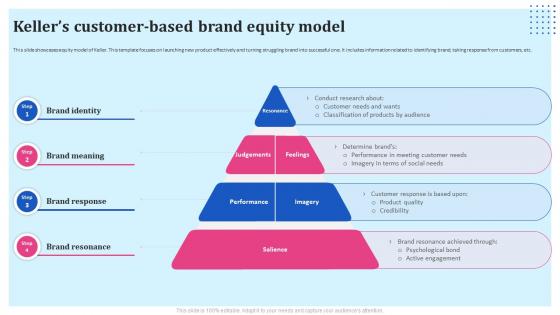
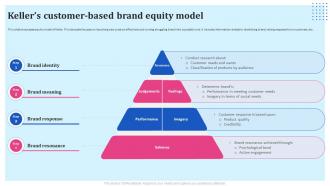
This slide showcases equity model of Keller. This template focuses on launching new product effectively and turning struggling brand into successful one. It includes information related to identifying brand, taking response from customers, etc.
People who downloaded this PowerPoint presentation also viewed the following :
Brand Reinforcement Strategies Kellers Customer Based Brand Equity Model with all 9 slides:
Use our Brand Reinforcement Strategies Kellers Customer Based Brand Equity Model to effectively help you save your valuable time. They are readymade to fit into any presentation structure.








FAQs for Brand Reinforcement Strategies Kellers Customer Based
Effective brand reinforcement strategies for small businesses include consistent visual identity across all touchpoints, regular social media engagement, customer testimonials and case studies, community involvement, and strategic partnerships with complementary businesses. These approaches streamline brand recognition by building trust, enhancing local visibility, and creating authentic connections, with many small businesses finding that consistent messaging and community engagement ultimately deliver stronger customer loyalty and competitive advantage.
Social media strengthens brand identity by enabling consistent messaging, authentic storytelling, and direct audience engagement across multiple platforms. Through strategic content creation, user-generated campaigns, and real-time customer interactions, brands like Nike and Starbucks build emotional connections, enhance brand recognition, and ultimately deliver stronger customer loyalty and competitive market positioning.
Customer feedback serves as a critical brand reinforcement tool by validating messaging effectiveness, identifying brand perception gaps, building authentic trust through testimonials, and guiding strategic adjustments. Through social media monitoring, review platforms, and direct surveys, companies like Amazon and Starbucks enhance customer experiences, strengthen brand loyalty, and ultimately deliver competitive advantage by demonstrating responsiveness to consumer needs.
Visual branding elements enhance brand recall by creating consistent, memorable touchpoints through distinctive logos, color schemes, typography, and imagery across all customer interactions. These cohesive design systems trigger immediate recognition and emotional connections, with companies like Coca-Cola and Apple demonstrating how strategic visual consistency increases brand memorability by up to 80%, ultimately driving customer loyalty and competitive differentiation.
Key metrics for measuring brand reinforcement success include brand awareness levels, customer retention rates, brand sentiment scores, share of voice, and net promoter scores. These metrics work together by tracking recognition improvements, loyalty strengthening, and market positioning, with many organizations finding that consistent measurement across touchpoints ultimately delivers enhanced customer lifetime value and competitive market advantage.
Partnerships and collaborations contribute to brand reinforcement by expanding market reach, enhancing credibility through association, and creating shared value propositions that strengthen brand positioning. Through strategic alliances, companies access new audiences, leverage complementary strengths, and build trust through established partner reputations, with many organizations finding that collaborative marketing efforts deliver greater brand visibility and competitive advantage than standalone campaigns.
Content marketing supports brand reinforcement strategies through consistent messaging, valuable educational resources, storytelling that reflects brand values, strategic social media engagement, and thought leadership positioning. These approaches strengthen brand recognition and trust by delivering relevant insights, addressing customer pain points, and demonstrating expertise, with many organizations finding that consistent, value-driven content ultimately enhances customer loyalty and competitive differentiation.
Storytelling creates lasting brand impressions by establishing emotional connections, building authentic narratives, developing relatable characters, and reinforcing core values through memorable experiences. These narrative strategies enhance customer engagement by transforming abstract brand concepts into compelling stories, with companies like Nike and Apple finding that consistent storytelling across touchpoints ultimately delivers stronger brand recall and deeper customer loyalty.
Consistent messaging across channels significantly strengthens brand reinforcement by creating unified customer experiences, building trust through reliability, and amplifying brand recall through repetition. This strategic alignment enables businesses to deliver cohesive communications whether customers interact via social media, email, or in-store touchpoints, with many retail and financial services organizations finding that synchronized messaging increases brand recognition by up to 23% while reducing customer confusion.
Experiential marketing initiatives reinforce brands by creating immersive, memorable interactions that foster emotional connections, increase brand recall, and encourage authentic customer engagement. Through interactive events, product demonstrations, and sensory experiences, companies like Nike with pop-up fitness studios and Coca-Cola with personalized campaigns deliver deeper brand understanding and loyalty, ultimately transforming customers into brand advocates.
Employee behavior alignment techniques include comprehensive onboarding programs, regular brand training workshops, performance metrics tied to brand values, recognition systems for brand-consistent actions, and internal communication campaigns. These approaches streamline cultural integration by embedding values into daily operations, decision-making processes, and customer interactions, with many organizations finding that consistent reinforcement ultimately delivers stronger brand authenticity and enhanced customer experiences.
Brands maintain relevance through consistent messaging across touchpoints, regular market research, strategic partnerships, content marketing, and adaptive visual identity updates. Through digital engagement and customer feedback integration, organizations like Nike and Apple continuously evolve their brand narratives while preserving core values, ultimately delivering sustained customer loyalty and competitive differentiation in increasingly dynamic markets.
Successful brand reinforcement strategies leverage psychological principles including repetition and familiarity bias, emotional conditioning, social proof validation, cognitive consistency, and anchoring effects. These principles enhance brand recall by creating positive associations, building trust through consistent messaging, and establishing competitive positioning, with many organizations finding that strategic psychological alignment ultimately delivers stronger customer loyalty and sustained market differentiation.
User-generated content reinforces brands by providing authentic customer testimonials, creating community engagement, and amplifying brand messaging through organic social proof. Through reviews, social media posts, and customer stories, businesses enhance credibility, expand reach cost-effectively, and build deeper emotional connections, with many retail and hospitality companies finding that authentic user content drives significantly higher engagement rates than traditional advertising.
**INPUT**: What are the challenges associated with implementing brand reinforcement strategies? **OUTPUT**: Brand reinforcement implementation faces challenges including maintaining message consistency across channels, measuring long-term impact, securing sustained budget allocation, and adapting strategies for diverse market segments. While these obstacles can strain resources and complicate execution, organizations increasingly find that strategic integration of reinforcement activities across touchpoints delivers enhanced customer loyalty and competitive differentiation in crowded marketplaces. [Word count: 58 words]
-
I looked at their huge selection of themes and designs. They appeared to be ideal for my profession. I'm sure I'll grab a few of them.
-
Thrilled to see several customizable templates catering various verticals and industries.