

Business And Technical Review For PI Planning




Try Before you Buy Download Free Sample Product
 Impress Your
 Audience
 100%
100% Editable
 Save Hours
 of Time


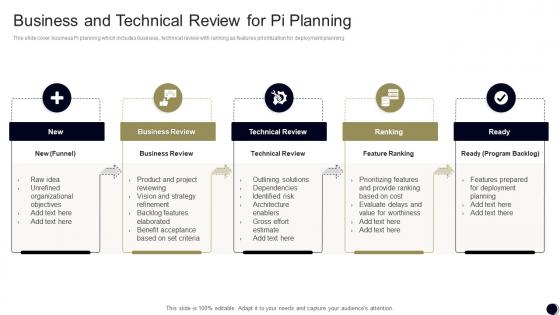
This slide cover business Pi planning which includes business , technical review with ranking as features prioritization for deployment planning
People who downloaded this PowerPoint presentation also viewed the following :
Business And Technical Review For PI Planning with all 6 slides:
Use our Business And Technical Review For PI Planning to effectively help you save your valuable time. They are readymade to fit into any presentation structure.





FAQs for Business And Technical Review
Honestly, the biggest thing is just getting everyone aligned on what actually matters. Figure out your blockers and dependencies first - that's where teams usually get screwed later. Make sure people understand how your stuff connects to the bigger picture because that's where most confusion happens. Also be realistic about what you can actually pull off (I've seen too many teams overpromise here). Check who's taking time off during the sprint so you're not caught off guard. Take decent notes and update your backlog right after while you still remember everything. The goal is walking out with clear objectives that actually make sense for the program increment.
So during PI Planning, definitely focus on the dependency board - teams always want to skip this part but it'll bite you later. Have each team map their features first, then figure out what they need from others. Sticky notes work great for visualizing all these connections. Getting everyone together (even virtually) is huge because you can actually negotiate timelines on the spot instead of playing email tag for weeks. Assign owners to each dependency and nail down those delivery dates. Oh, and don't just document everything and walk away - check that board daily while you're planning.
So during PI Planning, you're basically the customer's voice in the room. Teams will constantly ask you questions about requirements and priorities - honestly, it gets pretty hectic bouncing around between everyone. Your job is helping them understand what to build and why users actually care about it. Reality always smacks you in the face though, so be ready to adjust scope when things don't go as planned. Stay flexible but keep everyone focused on delivering actual value. Come with solid acceptance criteria and be prepared to make quick calls when teams get stuck.
PI Planning is this SAFe thing that's way more intense than regular Scrum planning. You'll have like 8+ teams in a room for 2 days straight, mapping out the next 10-12 weeks together. Pretty different from Scrum's quick sprint planning every few weeks. Honestly, it can feel overwhelming at first - there's so much cross-team coordination happening. Regular Scrum keeps things simple at the team level. But PI Planning? You're basically aligning an entire program. My buddy who switched from Scrum to SAFe said it felt like going from small team huddles to full company meetings. Just make sure you know your team's capacity beforehand.
Honestly? Dependencies between teams will kill you every time. Plus unclear priorities and cramming way too much into the PI - classic mistakes we all make. Capacity planning is brutal too. Teams either bite off more than they can chew or spend forever debating what's even possible. Get those dependencies up on a board ASAP. Have your PO be ruthless about ranking features (no ties allowed!). Timebox the hell out of discussions or you'll talk in circles all day. Oh, and build in buffer time because something always goes sideways. Your plan's gonna be imperfect anyway, so don't stress about it.
Honestly, start by figuring out who actually matters - Product Owners, Scrum Masters, architects, security people, compliance teams. Anyone who can either help you or completely screw things up. I've watched PIs crash and burn because nobody thought to include the infrastructure folks (ugh, classic mistake). Dependencies are huge, so get those people there even if it's just for certain sessions. Make a quick stakeholder list and run it by your team leads first. You want the actual decision-makers in the room, not someone who'll just say "lemme ask my manager" afterward.
Mix things up by switching who's running each session - keeps people on their toes. Digital boards and dot voting work great for getting everyone involved. Throw in some energizers every couple hours (yeah, even those awkward 2-minute stretches actually help). Before jumping into group discussions, try silent brainstorming so the quiet people can contribute without getting steamrolled. Timebox everything - creates this weird urgency that somehow keeps energy up. Oh, and actually follow through on that parking lot of random topics later, otherwise people stop trusting the process. The whole trick is just... don't let anyone get too comfortable in one format.
Honestly, having solid data makes PI Planning so much less painful. Your team's past velocity tells you what's actually doable - not what you hope you can pull off. I always check defect rates first because there's no point planning new features if you're drowning in bugs. Cycle times show you where things get stuck, which is super helpful. Customer satisfaction scores are crucial too - you don't want to waste months building stuff nobody uses. The trick is getting all this ready beforehand so when someone suggests something ambitious, you can actually back up your "maybe we shouldn't" with real numbers instead of just vibes.
Start with a retrospective before diving into new planning - sounds boring but trust me on this one. Spend like 30-45 minutes reviewing what actually happened last PI. Look at missed objectives, dependency nightmares, capacity planning fails. Document the patterns you see - maybe Team A always lowballs integration work or certain features hit the same regulatory roadblocks every time. Then adjust your assumptions and risk planning based on what you found. Oh and actually update your templates with this stuff, don't just talk about it and forget.
Look at your last 2-3 PIs for actual velocity - that's your reality check, not some hopeful number. Always add buffers because stuff will break (trust me on this one). Don't forget about holidays, PTO, and all that maintenance work that nobody wants to do but somehow takes forever. Your team's capacity matters more than the work list itself. Break features into smaller chunks so you can pivot when things go sideways mid-PI. Oh, and definitely get your whole team involved in estimating - they'll spot issues you missed and they're way more likely to hit numbers they helped create.
Dude, visual aids totally save PI Planning from being a mess. Program boards are clutch for mapping out dependencies between teams. Story maps help everyone see the user journey clearly. Don't forget parking lot boards - perfect for dumping risks and random issues that come up. Honestly? Sticky notes everywhere. They're weirdly satisfying to move around too. Templates for objectives and capacity planning keep teams speaking the same language. When everything's visible on walls or digital boards, people actually collaborate instead of working in silos. Start basic and add complexity as you go - don't overcomplicate it from day one.
Get yourself some good digital whiteboard tools - Miro works great for breakouts. Your video setup better be decent too because nobody wants to stare at blurry sticky notes all day, trust me on that one. Screen fatigue is brutal, so plan way more breaks than usual. If you've got people across different time zones, maybe split things up. Here's the tricky part though - you'll miss all those random hallway chats where important stuff gets sorted out. Set up dedicated Slack channels for each team and have coaches floating around breakout rooms. Over-communicate everything since teams can't just peek over at each other's work anymore.
PI Planning is basically your reality check between big picture stuff and what actually gets built. Every quarter, you're asking "are we still going in the right direction?" - honestly some of my favorite strategic conversations happen during these sessions. Dependencies always pop up that nobody saw coming, plus technical roadblocks that force you to pivot the roadmap (which is good, trust me). The whole team finally gets how their next 10 weeks connects to company goals. Best part? You're validating roadmap assumptions with the people who actually have to build this stuff.
Oh man, risk assessment during PI Planning is such a lifesaver. You're basically hunting for everything that could blow up your plans before you actually commit to them. Dependencies, tech stuff nobody understands yet, resource issues - all that fun stuff. Your team will catch things you totally missed, so get everyone talking. I know it feels boring as hell, but trust me, it beats scrambling later when everything falls apart. Actually write down the risks with real plans to deal with them though. Don't just chat about it and move on.
Get your Product Owner to rank stuff by business value beforehand - that's your baseline. Dependencies between teams will definitely come up during planning, so factor those in along with how complex things are technically. Dot voting works great for getting everyone's input, especially when you're tight on capacity. Honestly, I've watched teams argue about tiny features forever, so just time-box those conversations. Customer value comes first, then fill whatever capacity you have left with the smaller stuff. Oh and make sure you're not going completely sideways from what other teams are doing.
-
SlideTeam is my go-to resource for professional PPT templates. They have an exhaustive library, giving you the option to download the best slide!
-
Definitely recommend SlideTeam to all who need help with PowerPoint presentations. Their design team can create anything you need.