


Business Model Canvas Walmart Business Model BMC SS




Try Before you Buy Download Free Sample Product
 Impress Your
 Audience
 100%
100% Editable
 Save Hours
 of Time


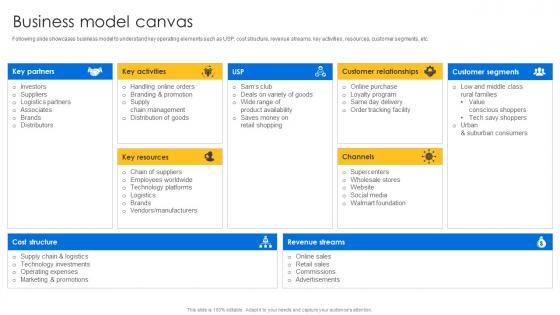
Following slide showcases business model to understand key operating elements such as USP, cost structure, revenue streams, key activities, resources, customer segments, etc.
People who downloaded this PowerPoint presentation also viewed the following :
Business Model Canvas Walmart Business Model BMC SS with all 9 slides:
Use our Business Model Canvas Walmart Business Model BMC SS to effectively help you save your valuable time. They are readymade to fit into any presentation structure.








FAQs for Business Model Canvas Walmart Business
So Walmart's whole thing is "Everyday Low Prices" - that's basically their entire strategy. They make money through crazy high volume but tiny margins on groceries, random stuff, and now online sales too. What makes them unstoppable? Their logistics are insane, plus they can strongarm suppliers with buying power that small stores can't even dream of. They've got this massive supply chain down to a science. Store locations are smart too - always targeting budget shoppers. Honestly, if you're looking at this for business ideas, notice how they don't waste money on flashy ads. Pure efficiency wins.
So Walmart's whole thing is "Everyday Low Prices" - they're massive so they can basically strong-arm suppliers into giving them rock-bottom costs. Then they pass those savings straight to customers. No coupon bullshit or waiting for sales like other stores. Prices just stay low across the board. Their entire supply chain runs on this promise, which is pretty smart tbh. I mean, who wants to hunt for deals constantly? The pricing thing isn't just marketing - it's literally what keeps people coming back to shop there.
So Walmart basically wins by cutting out all the middleman BS. They do this cross-docking thing where stuff goes straight from suppliers to stores - no warehouse sitting around collecting dust. Pretty smart, right? Their suppliers actually manage the restocking themselves, which sounds weird but works amazing for avoiding empty shelves. The crazy part is how their size lets them bully suppliers into better deals and faster shipping. Honestly, if you're trying to fix supply chains, just cut the unnecessary steps and get suppliers doing more of the heavy lifting themselves.
Walmart's basically built their whole customer thing around tech. Your purchase history gets tracked through their app, then they send you deals based on where you are and what you've bought before. Pretty smart honestly. They can see if you're browsing online, shopping in-store, or doing pickup - then adjust what they show you. The website does that whole "recommended for you" thing too. Oh, and their supply chain tech is actually solid so stuff doesn't just disappear when you want it. Bottom line: they're using your data to make shopping easier, not just randomly pushing products at you.
So Walmart's whole deal is selling everything dirt cheap but moving insane amounts of product. They're making like pennies per item but when you're selling billions of things, it adds up. Amazon's all about Prime memberships and marketplace stuff, Target does the cute trendy thing - but Walmart just wants to be the cheapest option period. Their supply chain is honestly pretty impressive when you think about it. They'd rather own the entire market than make big profits on each sale, which is kinda the opposite of what most companies do. It's boring but it works. Volume over margins, that's their thing.
Honestly, Walmart's biggest headaches come from Amazon breathing down their necks and the economy being weird. People love their low prices when money's tight, but that means Walmart has to keep everything stupidly cheap to compete. COVID totally screwed their supply chains too - remember when everything was out of stock? Labor shortages are still messing with them. Plus there's all this pressure to go green, which costs money. I swear though, just watch what Amazon does and you'll predict like half of Walmart's next moves. It's kinda predictable at this point.
So Walmart's got three big sustainability things going on - renewable energy, cutting waste, and better sourcing. Pretty solid actually. They're shooting for carbon neutral by 2040 and running facilities on wind/solar power. The supply chain stuff is where they really shine though - pushing suppliers to use less packaging and meet higher standards. Oh and they do clothing recycling programs too, which is kinda cool. What's smart is they've built sustainability metrics right into their performance tracking. Makes it real business strategy instead of just good PR, you know?
So Walmart's got this whole web of partnerships that basically runs everything. Suppliers are the obvious big one, but they also work with FedEx for deliveries, Microsoft for cloud stuff, and financial companies for money transfers. Oh and they're obsessed with private label deals - that's how you get Great Value products made directly with manufacturers. Honestly, it's pretty smart business. These aren't just regular vendor contracts though - they're strategic moves to keep prices down and stores stocked. Which directly affects what you pay and whether stuff's actually available when you shop there.
Walmart basically builds everything around price-conscious families and budget shoppers. You'll see their ads constantly pushing "everyday low prices" and rollback deals. They segment by demographics like families with kids, but also by mindset - targeting people who genuinely care about saving money. Geography matters too since they dominate suburban and rural areas. What's smart is how consistent they stay with their messaging. TV ads during family shows, direct mail to households, digital targeting for bargain hunters. I mean, they never really deviate from that core value prop because they know their audience so well.
Okay so Walmart's whole thing basically comes down to three huge advantages. First, their distribution setup is insane - they can get stuff from suppliers to stores crazy fast. Their tech systems predict what people will buy and figure out staffing, shelf layouts, all that. But honestly? The real power move is how suppliers bend over backwards for them. When you're that massive, companies will give you whatever prices you want just to get on their shelves. It creates this cycle that's nearly impossible for other retailers to compete with. Pretty genius if you think about it.
So Walmart totally changes things up depending on where they are. In India they can't even do regular retail - just wholesale to businesses because of their laws. China's all about fresh food and smaller stores, which honestly makes sense given how different shopping is there. Mexico's wild though - they run restaurants and banks on top of regular stores. The "low prices" thing stays the same everywhere, but literally everything else gets tweaked. Store sizes, what they sell, who they partner with - it's pretty much customized for each country rather than just copying what works in the US.
So Walmart's pretty clever about this - they hit you with surveys right at checkout and send follow-ups after you buy stuff online. They also track app ratings, mystery shoppers, and even stalk their Google reviews (honestly smart). All that data gets dumped into some analytics system where they can see if, say, the Phoenix location is tanking or if customers hate a specific product. What's kinda cool is they actually tie the feedback scores to store manager bonuses, so there's real skin in the game. You'll notice they respond to bad Yelp reviews too.
Walmart's going all-in on competing with Amazon right now. They've got curbside pickup everywhere, grocery delivery, and honestly their e-commerce game has gotten way better. The marketplace thing is pretty clever too - basically letting other sellers use Walmart's system. You'll see tons of automation when you go in stores now, plus they launched Walmart+ to go head-to-head with Prime. What's wild is they're trying to become a tech company that just happens to sell groceries and random stuff. Oh, and all those physical stores? That's actually their secret weapon against Amazon since they can do same-day delivery easier.
So basically Walmart turns their 4,700+ stores into mini warehouses - you can order online and grab it at the store, or return stuff you bought online to any location. Pretty smart actually. Their physical stores give them a massive edge over Amazon for getting stuff to you fast since there's probably one nearby. You can even check what's in stock online before wasting a trip. Oh and the whole thing works both ways - buy in store, return online, whatever. They're treating their real estate like a weapon against pure online retailers instead of some outdated burden.
Honestly, Walmart's in a tough spot right now. Amazon's crushing them online while Target somehow made shopping trendy again. Even Dollar General's beating them on convenience - which is wild when you think about it. Their huge size used to be this massive advantage, but now smaller competitors can change direction way faster. They're also dealing with rising labor costs eating into their already tiny profit margins. Oh, and they've got all these physical stores when everyone's shopping from their couch. Really think their whole future comes down to how well they can nail the tech and e-commerce game.
-
Commendable slides with attractive designs. Extremely pleased with the fact that they are easy to modify. Great work!
-
SlideTeam is the best in the business. Their templates are engaging and customizable. You can rely on them.