


Call Center KPI Powerpoint Ppt Template Bundles




Try Before you Buy Download Free Sample Product
 Impress Your
 Audience
 100%
100% Editable
 Save Hours
 of Time


Our Call Center KPI Powerpoint Ppt Template Bundles are topically designed to provide an attractive backdrop to any subject. Use them to look like a presentation pro.
People who downloaded this PowerPoint presentation also viewed the following :
Call Center KPI Powerpoint Ppt Template Bundles with all 18 slides:
Use our Call Center KPI Powerpoint Ppt Template Bundles to effectively help you save your valuable time. They are readymade to fit into any presentation structure.
-

Call Center KPI
-
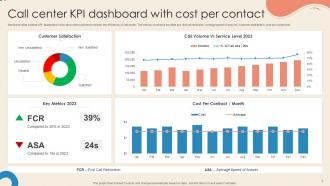
Call center KPI dashboard with cost per contact
-
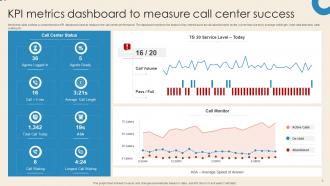
KPI metrics dashboard to measure call center success
-
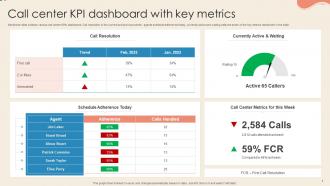
Call center KPI dashboard with key metrics
-
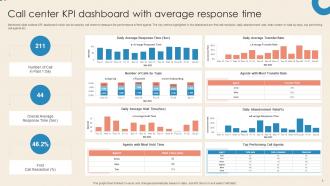
Call center KPI dashboard with average response time
-
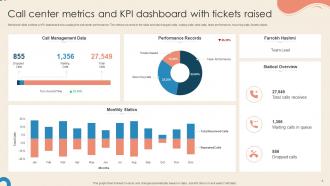
Call center metrics and KPI dashboard with tickets raised
-
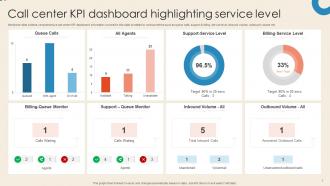
Call center KPI dashboard highlighting service level
-
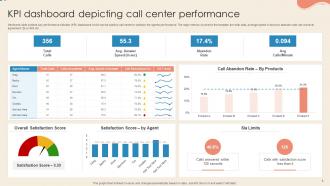
KPI dashboard depicting call center performance
-
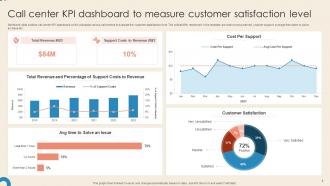
Call center KPI dashboard to measure customer satisfaction level
-
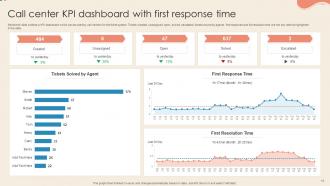
Call center KPI dashboard with first response time
-
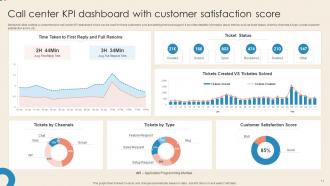
Call center KPI dashboard with customer satisfaction score
-
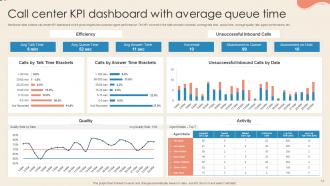
Call center KPI dashboard with average queue time
-
Thanks for watching
-

-

-

-

-

FAQs for Call Center KPI Powerpoint
Definitely focus on First Call Resolution, Average Handle Time, Customer Satisfaction, and Service Level first. FCR is honestly my favorite - shows you're actually fixing stuff instead of passing the buck. CSAT and response times matter too obviously. Oh, and don't sleep on agent utilization and quality scores. Miserable agents = miserable customers, you know? I'd probably start with just 3 metrics that match what you're trying to improve. Way easier than drowning in data from tracking like 10 different things. You'll actually learn something useful that way.
Honestly, you gotta connect your call center numbers to what the executives actually lose sleep over. Growth company? Focus on customer acquisition and retention instead of just how fast people answer calls. Revenue per call and lifetime value hit way harder in boardrooms than your standard efficiency stuff - though obviously those still matter day-to-day. Here's what I'd do: grab coffee with leadership and figure out their quarterly panic points, then work backwards to show which metrics prove your team's moving the needle. It's basically translating call center speak into money talk.
CSAT measures how happy customers are after talking to your team - it's honestly one of your most crucial metrics. Post-call surveys usually ask people to rate their experience 1-5. Fast call times are great, but if customers hang up pissed off, what's the point? We literally exist to help people, right? Look at CSAT alongside your other numbers too. When efficiency goes up but satisfaction drops, you're probably rushing calls. That's always a red flag in my experience.
Honestly, nothing kills customer loyalty faster than making people call back for the same damn problem. FCR is huge because when you actually fix things the first time, customers feel heard and trust your team knows what they're doing. Nobody wants to repeat their story three times - it's beyond annoying. There's research showing customers with bad FCR experiences are way more likely to bail within a year (like 3x more). Your best bet is usually better agent training and giving them faster access to customer accounts. Those two things alone make a massive difference in getting issues resolved quickly.
Break down your AHT into talk time, hold time, and after-call work first - that's where you'll see what's actually eating up time. Pull weekly data instead of daily (daily numbers jump around too much). Look at trends by agent, team, and call type. Here's the thing though - don't just chase speed. Compare AHT against first call resolution because faster calls are useless if customers keep calling back. Set alerts when agents hit 20% above team average. Coach on call quality, not just how fast they talk. Oh, and shadow your best performers first. They usually have tricks nobody else knows about.
Look, SLAs are basically your performance targets - they set what your call center KPIs need to hit. Promise customers a 30-second wait? Your speed of answer better back that up or you're screwed. Same deal with first call resolution and satisfaction scores. Here's the thing though - SLAs can totally tank your metrics if they're unrealistic. I've seen teams get crushed by impossible standards. You gotta set them based on actual staffing and resources, then track the right KPIs to show you're consistently hitting those marks. Otherwise it's just setting everyone up to fail.
Honestly, start with training - sounds basic but so many places skip proper coaching and wonder why their agents suck. Get a decent knowledge management system going so people aren't frantically googling mid-call (been there, it's painful). Smart call routing helps too - match people with what they're actually good at. Watch those break schedules because burned out agents will tank your numbers fast. Oh, and throw in some gamification if your team's into that competitive stuff. Don't try fixing everything at once though - pick one thing, see what happens, then move on to the next.
Survey customers right after their call ends - that's when everything's still fresh in their mind. Ask how likely they'd be to recommend your company based on that specific interaction. Break down your NPS scores by agent, team, and call type so you can actually see what's working and what isn't. Honestly, the follow-up questions are way more valuable than the score itself. Those "why" responses tell you exactly what's bugging people - maybe it's first-call resolution issues or agents who sound like robots. Use that feedback to coach your team on real problems, not generic stuff. Oh, and set up alerts when scores tank so you're not just finding out about disasters weeks later in some monthly report.
Honestly, you'll want to go beyond the usual FCR and AHT stuff. Customer Effort Score and NPS actually show you what customers think - way more valuable. Agent sentiment analysis is clutch for spotting turnover early. Track how long escalations take to resolve and whether people are using your knowledge base too. Predictive stuff like churn probability is pretty cool if you're into that. I'd probably start with CES though - it connects directly to repeat business and shows gaps your other metrics totally miss. Oh, and cross-team collaboration metrics matter more than most people realize.
Dude, engaged agents are like magic for your call center numbers. Customer satisfaction goes up, handle times drop, and people actually stick around instead of bailing after a few months. The flip side sucks though - disengaged employees drag everything down. Customers totally pick up on that "I hate my job" energy, calls take forever, and your turnover rate becomes a nightmare. Honestly, I'd start measuring engagement right alongside your other metrics. That way you can catch issues before your whole operation goes sideways. The connection between happy employees and good performance is pretty undeniable.
Ugh, the data volume thing is brutal - your phone system, CRM, workforce tools, quality monitoring stuff all has to play nice together. Manual entry screws you over constantly (I swear people just mash keys sometimes). Different departments define metrics totally differently too, which is annoying. System integrations break all the time. Plus agents will absolutely game whatever you're tracking once they figure it out. Set up automated validation rules and audit regularly - way better to catch weird numbers early than fix reports later. Oh, and inconsistent definitions will bite you harder than you'd think.
Look at which metrics keep sucking first - that's your starting point. Don't just check one-off numbers though, track trends over months because they actually tell you what's happening. Dig into why things are failing with your team, then set real targets and assign someone to own each fix. We do this review thing every few weeks and honestly it works way better than I expected. Oh, and definitely celebrate when numbers go up - people forget to do that part. Just keep tweaking your approach based on what the data shows you.
Dude, AI in call centers is actually pretty amazing for your numbers. Resolution times get way faster since bots handle all the basic questions instantly. Your first-call resolution improves too - agents get real-time help with tricky stuff. Wait times drop, so customers are happier, and agents aren't scrambling for info. Honestly the cost savings alone make it worth it, you don't need massive teams anymore. Oh, and track new stuff like AI accuracy rates. Also keep an eye on how your agents are feeling about the changes - that can make or break everything else.
Stop obsessing over handle time - that's old school. Track first-call resolution and customer effort scores instead. People are so spoiled by Amazon now, they want everything personalized. Measure how often your agents actually check customer history. Also throw in some sentiment analysis from calls. Oh, and customers are bouncing between phone, chat, social media like crazy these days. You'll need digital engagement metrics too. Cross-channel consistency matters more than you think. Survey people quarterly about how they prefer to contact you, then adjust your staffing around that data.
So CES tracks how much effort customers put in to solve their problem - super helpful for gauging if your call center's actually working well. Lower effort = smoother processes. You know the difference between a customer saying "wow, that was easy" vs someone who's been transferred four times and still angry? That's what this measures. Honestly, CES predicts loyalty way better than regular satisfaction surveys because nobody wants to jump through hoops for basic help. Track it with your other metrics and you'll catch those annoying process gaps that frustrate people.
-
Understandable and informative presentation.
-
One-stop solution for all presentation needs. Great products with easy customization.