


Call Center Telephone Etiquette For Support Agents Bpo Performance Improvement Action Plan




Try Before you Buy Download Free Sample Product
 Impress Your
 Audience
 100%
100% Editable
 Save Hours
 of Time


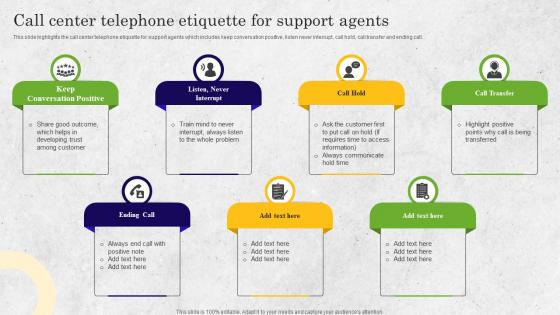
This slide highlights the call center telephone etiquette for support agents which includes keep conversation positive, listen never interrupt, call hold, call transfer and ending call.
People who downloaded this PowerPoint presentation also viewed the following :
Call Center Telephone Etiquette For Support Agents Bpo Performance Improvement Action Plan with all 6 slides:
Use our Call Center Telephone Etiquette For Support Agents Bpo Performance Improvement Action Plan to effectively help you save your valuable time. They are readymade to fit into any presentation structure.





FAQs for Call Center Telephone Etiquette For Support Agents Bpo Performance
So honestly, the biggest thing is just actually listening - like really hearing what they're saying instead of planning your response. Speak clearly, match their energy a bit. Always confirm you get their problem before diving into fixes (trust me, this saves so much headache). Even bad news can sound better with the right tone - keep it warm but not fake-friendly. I always wrap up by going over what we covered and what's happening next. Otherwise people call back confused and you're starting over. Short version: listen first, stay positive, summarize everything.
Honestly, just repeating back what they said makes such a huge difference. Customers calm down fast when they realize you're actually listening instead of rushing to your next script line. Ask follow-up questions, acknowledge how they're feeling - suddenly they don't hate you anymore lol. You'll catch way more details too, which means fewer back-and-forth calls later. The paraphrasing thing really works. Like "so you're saying the charge showed up twice?" People love feeling understood. Even when you can't fix everything perfectly, they'll still walk away happier because someone actually heard them out.
Dude, empathy is seriously a game-changer with pissed off customers. Once you acknowledge their frustration and actually show you get why they're mad, the whole vibe shifts. It stops being you against them. Now you're both on the same team trying to fix whatever went wrong. I've watched calls go from total disasters to smooth sailing just because someone said "Yeah, I'd be frustrated too if that happened to me." Honestly, it's wild how fast people calm down when they feel heard. Try mirroring their emotions first before jumping into solutions - works every time.
Okay so first thing - just let them get it all out. Don't jump in or defend yourself, even if they're being unreasonable. I know it's hard but hear them out completely. Then acknowledge what they're feeling like "wow that sounds really frustrating" or whatever fits. Most people honestly just want to feel heard before they'll actually work with you. After they've vented, start asking questions to figure out what's really wrong. Focus on what you can actually fix. And if you genuinely can't help? Pass it up the chain fast - don't make promises you can't keep because that'll just make everything worse later. Your tone is everything here.
Okay so this might sound weird, but smile when you're talking - it literally changes your voice even over the phone. Use their name and try to match their energy without being fake about it. When things get heated, slow way down. Don't say "can't" or "policy doesn't allow" - focus on what you CAN do instead. If you screw up, just own it fast and keep going. Oh and record yourself practicing! You'll cringe at first but it helps you hear what customers actually hear.
Okay so scripts are definitely your friend for staying compliant and hitting all the legal/pricing stuff - you don't want to mess that up. But yeah, they can sound super robotic and customers totally pick up on it. I'd say stick to the script for anything involving policies or money, but feel free to go off-script when someone's really upset or you're dealing with something weird that doesn't fit the template. Like, empathy can't be scripted, you know? Just make sure you still cover the main points and write down if you deviated much. Your gut instinct is usually right, but don't go too far outside company rules.
Document everything while you're still on the call or right after - seriously, don't wait. Your brain will dump those details the second you hang up and move to the next person. Get the main issue, what you did, and how it got resolved. Stick to facts, not emotions - like "customer reported March billing error" instead of "customer was mad about their bill." I learned this the hard way when I kept thinking I'd remember stuff later. Use whatever format your company wants, but make it detailed enough so the next agent won't be confused. Oh, and always note any follow-up actions needed.
Honestly, just let them talk first without cutting them off. Ask follow-up questions to figure out what's actually broken - not just what they think is wrong. I've watched people rush into "solutions" that totally miss the point lol. Have your resources pulled up so you're not scrambling or bouncing them around to different departments. Oh, and don't hang up until you've double-checked it's fixed on their side. Seriously though, those extra 30 seconds at the end save you from callbacks later. Most issues aren't that complicated once you dig into what's really happening.
Yeah, it totally depends on where you're dealing with customers! Like in Japan or Germany, you gotta be way more formal and follow their protocols to the letter. But Aussies and Americans? Way more chill and conversational. Americans usually want everything solved yesterday, while in a lot of Asian countries they actually expect you to chat and build some rapport first - which honestly makes more sense to me. Oh and using first names can be super rude in formal cultures but completely normal here. I definitely messed that up when I started! Ask your team leads about regional stuff for your main customers.
Dude, don't multitask on calls - customers can totally tell when you're not paying attention. I made that mistake constantly when I started, like checking emails while talking to people. You end up asking the same questions twice and missing obvious stuff. Plus your response time goes to hell. Short calls turn into these long, awkward conversations where you're scrambling to catch up on details you should've heard the first time. Honestly? It's way more stressful than just focusing. You'll actually get through more customers faster if you give each person your full attention instead of trying to juggle everything.
Okay so during rush times, keep greetings quick but still friendly. Use hold strategically - like when they're talking, pull up their account stuff. I totally bombed this during holiday season last year lol. Between calls, try batching similar tasks if you can. Don't get stuck on post-call work unless you really have to. Honestly, the hardest part is moving fast while making customers feel heard. Track your calls per hour - maybe check every hour so you don't fall behind. It's all about finding that balance where you're efficient but not seeming rushed.
Honestly, rotate those nightmare calls so nobody's stuck dealing with jerks all shift - that burns people out so fast. Let them actually take breaks without making them feel guilty about it. Flexible schedules help too when you can swing it. Set up some quiet spots where they can chill between calls, because sometimes you just need 30 seconds of silence, you know? Don't forget to call out good work when you see it. And give people a path forward so they're not thinking "great, I'll be here forever." Bottom line - treat them like humans instead of robots and you'll see the difference.
Honestly, I'd follow up within a day or two if you promised them more info or didn't totally fix their problem. Just shoot a quick email or call to check that everything's actually working. I get it - feels like extra work when you're swamped. But people really appreciate it, and it's one of those things that separates you from everyone else who just disappears after. Keep it simple though. Did the solution work? Need anything else? Cool, hit me up anytime. That's literally how you turn random one-off customers into people who'll come back forever.
Honestly, the biggest thing is breaking down those messy questions into smaller chunks first. Listen carefully and jot down notes while they're talking. Then repeat back what you heard - saves you from those awkward "wait, that's not what I meant" moments. Don't be afraid to ask follow-up questions instead of just winging it. I learned that one the hard way! Keep your explanations simple, even for technical stuff. Oh, and if you genuinely don't know something? Just say you'll find out. Way better than bullshitting your way through it.
Honestly, working with your team makes everything easier. You're not stuck figuring out weird customer issues by yourself anymore. I always share random tips I pick up - like shortcuts or how to handle difficult calls - and people do the same for me. Makes the shift fly by too, way better than being in your own head all day. Quick questions to coworkers beat putting customers on hold forever. Less stress shows in how you sound on calls. Oh, and customers can totally tell when you're confident vs. struggling alone. Try sharing one thing you learned each week.
-
Wonderful templates design to use in business meetings.
-
“Thank you to the SlideTeam. Your presentations look really skillful and have made my life so much easier.”