


Co Branding Powerpoint Ppt Template Bundles





Try Before you Buy Download Free Sample Product
 Impress Your
 Audience
 100%
100% Editable
 Save Hours
 of Time


Our Co Branding Powerpoint Ppt Template Bundles are topically designed to provide an attractive backdrop to any subject. Use them to look like a presentation pro.
People who downloaded this PowerPoint presentation also viewed the following :
Co Branding Powerpoint Ppt Template Bundles with all 20 slides:
Use our Co Branding Powerpoint Ppt Template Bundles to effectively help you save your valuable time. They are readymade to fit into any presentation structure.










FAQs for Co Branding Powerpoint
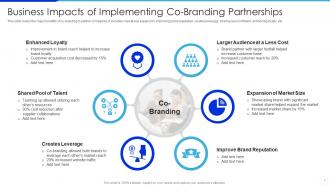
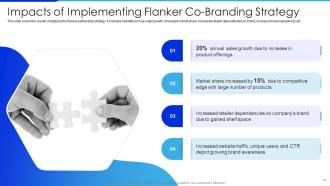
Co-branding delivers expanded market access, shared marketing costs, enhanced credibility, increased customer acquisition, and accelerated brand recognition through strategic partnerships. Through these collaborative approaches, companies leverage complementary strengths and established customer bases, with many organizations finding that co-branding enables faster market penetration while minimizing investment risks, ultimately delivering competitive advantage and sustainable growth.
Cultural differences significantly impact co-branding effectiveness by influencing consumer perceptions, brand associations, communication styles, and purchasing behaviors across international markets. Companies must navigate varying cultural values, religious considerations, and local preferences, with many global partnerships finding that strategic cultural adaptation, localized messaging, and region-specific partner selection ultimately deliver stronger market penetration and enhanced consumer acceptance.
Co-branding enhances customer loyalty by combining complementary brand strengths, creating unique value propositions, expanding customer touchpoints, and leveraging shared trust equity between partner brands. Through strategic partnerships, companies deliver enhanced experiences, access new customer segments, and reinforce brand credibility, with many organizations finding that collaborative offerings generate stronger emotional connections and increased customer retention than standalone products.
Brands should consider partner alignment in values, target audience overlap, complementary strengths, market reputation, and strategic objectives when selecting co-branding partners. Successful partnerships, like those between technology companies and retailers or automotive brands with luxury goods manufacturers, require compatible brand positioning, shared quality standards, and clear collaboration frameworks, ultimately delivering expanded market reach and enhanced customer value propositions.
Co-branding campaigns can be measured through brand awareness metrics, customer acquisition rates, revenue attribution, social media engagement, and cross-brand customer retention analysis. These measurement approaches enable organizations by tracking shared market penetration, evaluating cost-per-acquisition improvements, and assessing long-term customer value creation, with many retail and technology partnerships finding that comprehensive analytics ultimately deliver enhanced ROI visibility and strategic partnership optimization.
Successful co-branding examples include Nike and Apple's fitness integration, Starbucks and Spotify's music partnership, BMW and Louis Vuitton's luxury collaborations, and GoPro with Red Bull's adventure marketing initiatives. These partnerships demonstrate that strategic alignment between complementary brands, shared target audiences, and authentic value creation ultimately deliver expanded market reach, enhanced customer experiences, and sustained competitive advantage across industries.
Co-branding accelerates product innovation by combining complementary expertise, shared R&D resources, and diverse market insights from partner organizations. This strategic collaboration enables faster time-to-market, reduced development costs, and enhanced product features, with many technology and consumer goods companies finding that co-branded innovations deliver superior market penetration and competitive differentiation.
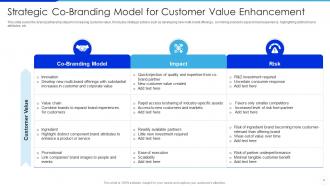
Co-branding risks include brand dilution, misaligned values, unequal contribution, loss of control, and potential reputation damage from partner actions. These challenges can be mitigated through comprehensive partner vetting, clear contractual agreements, defined roles and responsibilities, regular performance monitoring, and exit clauses, with many organizations finding that strategic alignment and ongoing communication ultimately deliver successful partnerships.
Consumer perception of one brand significantly influences co-branded product perception through association transfer, where positive or negative brand attributes automatically extend to the partnership. When trusted brands like Apple collaborate with established companies, consumers immediately associate reliability and innovation with the joint offering, while partnerships involving brands with poor reputations can diminish overall product credibility, ultimately affecting purchase decisions and market acceptance.
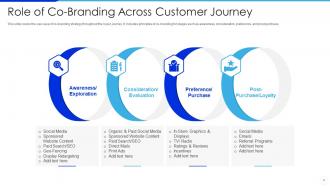
Social media serves as the primary amplification channel for co-branded campaigns, enabling partners to leverage combined audiences, cross-promote content, create viral moments, and generate authentic user engagement across multiple platforms simultaneously. Through strategic hashtag campaigns, influencer collaborations, and shared storytelling, brands like Nike-Apple or Spotify-Uber reach broader demographics while splitting advertising costs, ultimately delivering enhanced brand visibility and measurable engagement metrics.
Brands maintain identity in co-branding partnerships by establishing clear brand guidelines, defining distinct roles for each partner, and creating unified messaging that highlights complementary strengths rather than competing values. Through strategic agreements that preserve core brand elements, companies like Nike-Apple or Starbucks-Spotify successfully leverage shared audiences while maintaining individual brand recognition, ultimately delivering expanded market reach and enhanced customer experiences.
Companies should prioritize transparency in messaging, ensure fair representation of both brands, respect intellectual property rights, maintain authentic alignment with partner values, and avoid misleading consumers about product origins or quality standards. These ethical practices build trust with stakeholders while minimizing legal risks, with many successful partnerships finding that upfront ethical frameworks ultimately deliver stronger brand reputations and sustainable competitive advantage.
Co-branding amplifies cause-related marketing by combining brand resources, audiences, and credibility to create greater social impact and shared value. Through strategic partnerships, companies like Starbucks and RED or Nike and environmental organizations enhance message reach, authenticity, and consumer engagement, while building stronger brand loyalty and demonstrating genuine commitment to meaningful causes.
Co-branding significantly impacts pricing strategies by enabling premium positioning through enhanced perceived value, shared cost structures, and expanded market reach. Through strategic partnerships, brands can justify higher price points while reducing individual marketing expenses, with many retail and technology collaborations finding that combined brand equity allows for 15-20% pricing premiums over standalone products.
Co-branding strategies for digital products adapt through integrated user experiences, shared data analytics, cross-platform functionality, joint content creation, and seamless API integrations. Through strategic partnerships, companies like Spotify and Uber create unified digital ecosystems that enhance customer convenience, expand market reach, and deliver comprehensive solutions, while sharing development costs and leveraging combined technological capabilities for competitive advantage.
-
Best Representation of topics, really appreciable.
-
Easily Understandable slides.