


Co Branding Strategy For Product Awareness Branding CD V





Try Before you Buy Download Free Sample Product
 Impress Your
 Audience
 100%
100% Editable
 Save Hours
 of Time


A multi-branding approach allows organizations to introduce multiple products or services within the same market segment. Grab our Co-Branding Strategy for Product Awareness template. It enables companies to position and promote their brands in the same market but with different target audiences. Our Brand Marketing deck provides a professionally crafted resource for companies to explore various avenues for generating revenue and capturing market share. It begins by outlining the benefits and drawbacks of implementing a multi-branding strategy. Additionally, our Multi Brand Promotion PPT presents different brand architectures, including branded house, house of brands, hybrid brands, etc., to help organizations establish the structure of their brands for a multi-branding strategy. Further, our Brand Campaign module features a range of marketing and advertising strategies for a multi-branding campaign and key performance indicators KPIs to evaluate the strategys effectiveness. Lastly, it offers dashboards to help assess the results of multi-branding marketing campaigns. Download our 100 percent editable presentation, which contains highly researched and expertly designed content.
People who downloaded this PowerPoint presentation also viewed the following :
Content of this Powerpoint Presentation
Slide 1: This slide introduces Co- Branding Strategy for Product Awareness. Commence by stating Your Company Name.
Slide 2: This slide depicts the Agenda of the presentation.
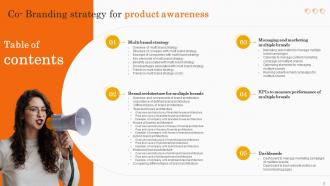
Slide 3: This slide includes the Table of contents.
Slide 4: This slide highlights the Title for the Topics to be covered further.
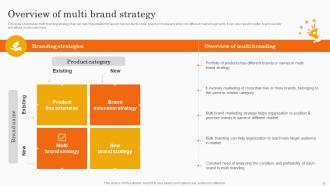
Slide 5: This slide showcases multi branding strategy that can help organization to launch new products.
Slide 6: This slide dipslays the Structure of company with multi brand strategy.
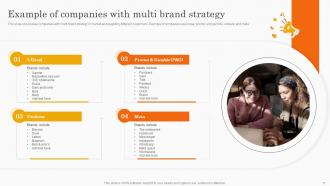
Slide 7: This slide highlights the Example of companies with multi brand strategy.
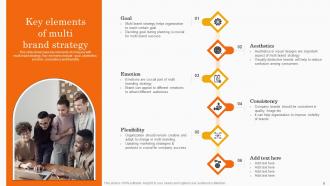
Slide 8: This slide states the Key elements of multi brand strategy.
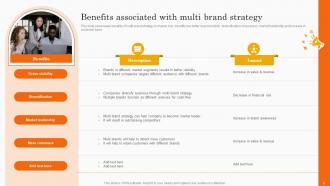
Slide 9: This slide exhibits the Benefits associated with multi brand strategy.
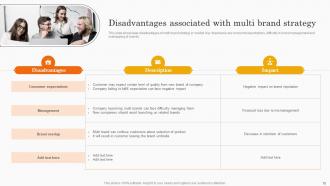
Slide 10: This slide reveals the Disadvantages associated with multi brand strategy.
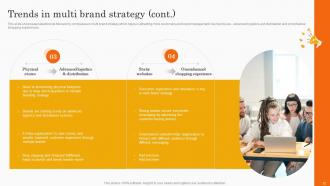
Slide 11: This slide talks about the Trends in multi brand strategy.
Slide 12: This slide continues the Trends in multi brand strategy.
Slide 13: This slide reveals the Heading for the Contents to be discussed next.
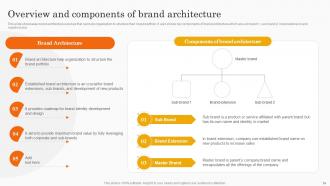
Slide 14: This slide showcases brand architecture overview that can help organization to structure their brand portfolio.
Slide 15: This slide presents the Importance of defined brand architecture.
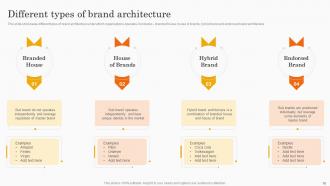
Slide 16: This slide states the Different types of brand architecture.
Slide 17: This slide contains the Title for the Ideas to be covered further.
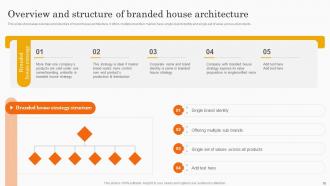
Slide 18: This slide portrays the Overview and structure of branded house architecture.
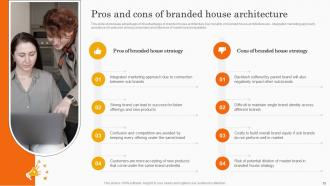
Slide 19: This slide exhibits the Pros and cons of branded house architecture.
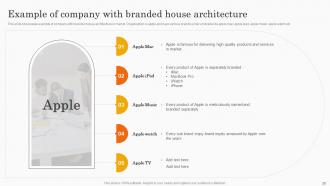
Slide 20: This slide showcases example of company with branded house architecture in market.
Slide 21: This slide displays the Heading for the Ideas to be discussed next.
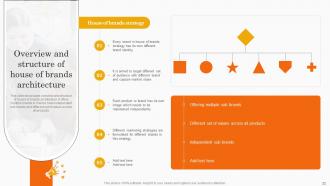
Slide 22: This slide displays the Overview and structure of house of brands architecture.
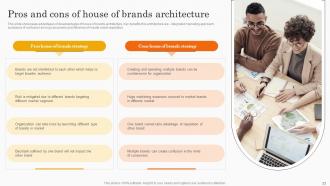
Slide 23: This slide represents the Pros and cons of house of brands architecture.
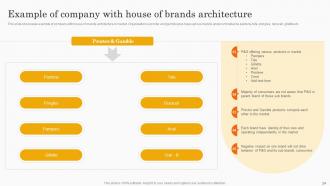
Slide 24: This slide states the Example of company with house of brands architecture.
Slide 25: This slide displays the Title for the Contents to be covered in the next template.
Slide 26: This slide presents the Overview and structure of hybrid brand architecture.
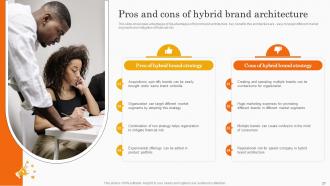
Slide 27: This slide highlights the Pros and cons of hybrid brand architecture.
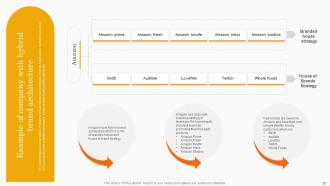
Slide 28: This slide portrays the Example of company with hybrid brand architecture.
Slide 29: This slide includes the Heading for the Topics to be discussed further.
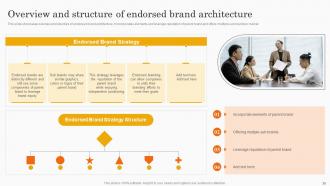
Slide 30: This slide showcases overview and structure of endorsed brand architecture.
Slide 31: This slide depicts the Pros and cons of endorsed brand architecture.
Slide 32: This slide reveals the Example of company with endorsed brand architecture.
Slide 33: This slide represents the Title for the Topics to be covered in the following template.
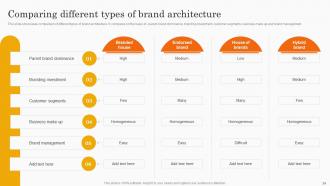
Slide 34: This slide deals with Comparing different types of brand architecture.
Slide 35: This slide mentions the Haeding for the Contents to be discussed next.
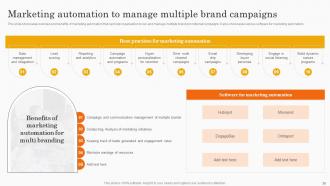
Slide 36: This slide indicates Marketing automation to manage multiple brand campaigns.
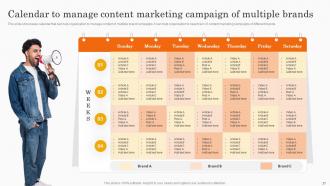
Slide 37: This slide displays the Calendar to manage content marketing campaign of multiple brands.
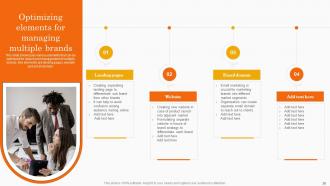
Slide 38: This slide focuses on Optimizing elements for managing multiple brands.
Slide 39: This slide deals with Running advertisement campaigns for multiple brands.
Slide 40: This slide depicts the Title for the Topics to be covered in the following template.
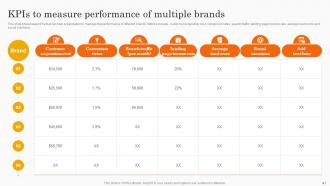
Slide 41: This slide reveals the KPIs to measure performance of multiple brands.
Slide 42: This slide mentions about the Heading for the Contents to be discussed next.
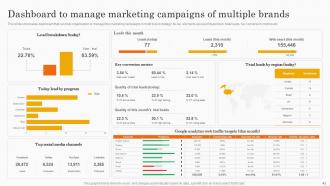
Slide 43: This slide reevals the Dashboard to manage marketing campaigns of multiple brands.
Slide 44: This slide showcases dashboard to track the visitors on landing pages of different brands.
Slide 45: This is the Icons slide containing all the Icons used in the plan.
Slide 46: This slide is used for depicting some Additional information.
Slide 47: This is the 30 60 90 days plan slide for effective planning.
Slide 48: This slide contains the Post it notes for reminders and deadlines.
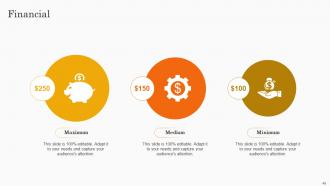
Slide 49: This slide elucidates information related to the Financial topic.
Slide 50: This slide exhibits the Company Timeline.
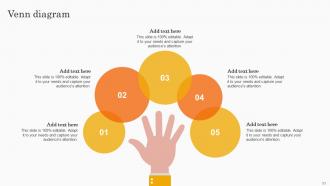
Slide 51: This is the Venn diagram slide.
Slide 52: This is Our target slide for stating the organizational targets.
Slide 53: This slide incorporates the firm's vision, mission, and goal.
Slide 54: This is the Idea generation slide for encouraging fresh ideas.
Slide 55: This is the Thank You slide for acknowledgement.
Co Branding Strategy For Product Awareness Branding CD V with all 60 slides:
Use our Co Branding Strategy For Product Awareness Powerpoint Presentation Slides Branding CD to effectively help you save your valuable time. They are readymade to fit into any presentation structure.





























FAQs for Co Branding Strategy For Product Awareness
Co-branding is actually pretty smart - you get their audience, they get yours. Both brands look more credible together too. The cost-sharing alone makes it worth considering since you can split marketing budgets and product development. Way less risky than trying to break into new markets by yourself. Honestly, I've seen some brands completely botch this by partnering with companies that had totally different values, so definitely avoid that mess. Look for brands that complement what you do without being direct competitors. Oh, and the expanded reach is probably the biggest win here.
Find brands that target your same audience but aren't competing with you directly - like how Nike and Apple both go after innovation-minded people. Make sure your values actually align and you're at similar quality levels. Reputation mismatches are brutal, trust me. Each side needs to bring something the other doesn't have, whether that's tech skills or access to new markets. Definitely research how they've handled partnerships before - some companies are just a nightmare to deal with. Oh, and always do a small test run first. You don't want to jump into something big and realize you can't stand working together.
Honestly, the biggest pain points are usually brand clashes and control battles. Like when your values don't match up with theirs - it gets weird quick. Who makes the final call on creative stuff? How do you split the money? That always turns into drama. Plus if they mess up publicly, you're kinda guilty by association which sucks. Revenue splits are probably the worst part though - everyone thinks they deserve more. My take? Hash out a super detailed agreement beforehand covering decision-making, brand rules, and how to bail if things go south. Trust me on this one.
So co-branding is basically like getting a referral from someone your customers already trust. You team up with another brand, and suddenly their audience sees you as legit too. Customers get excited about having the "best of both worlds" in one package, which honestly makes them way more loyal to both companies. The trick is finding partners who actually share your values - don't just go after whoever has the most followers, you know? I'd start by looking at what other brands your customers are already buying from and respecting. Those are your goldmine partnerships right there.
Dude, you absolutely have to do your homework before picking a co-branding partner. Look into both customer bases, how people see each brand, where you sit in the market - the whole picture. I've watched so many partnerships crash because companies just winged it and figured it'd work out somehow. Check if the brands actually make sense together, see how much your audiences overlap, scope out the competition. Oh, and definitely test the idea with focus groups first - seriously, it'll save you from some expensive headaches later. My old boss skipped this once and... yeah, that didn't end well.
Honestly, you've gotta nail down your brand guidelines together right from the start. Don't try to force connections between your values if they're not naturally there - people can smell that BS from a mile away. Set up regular check-ins because partnerships change fast, and create a joint approval process for content so nothing weird slips through. I'd say be super honest about your brand personalities upfront and figure out who handles what messaging. Document all this stuff and maybe revisit it every few months? Oh, and map out where your values actually overlap first - that's your foundation right there.
Dude, there are some killer examples out there. Nike teamed up with Apple for fitness tracking - basically made running feel way more high-tech. Spotify jumped in with Uber so you could control the music during rides, which was actually pretty smooth. Then Taco Bell went crazy with Doritos and made those Locos Tacos that everyone lost their minds over. Honestly, that one was pure marketing gold. What works is when both brands play to their strengths instead of trying to be something they're not. The best partnerships don't just add up - they multiply the value for customers.
So co-branding is basically like getting two endorsements at once - customers trust you more when they see familiar brands working together. You get instant access to their audience too, which is huge for awareness. It's honestly one of the faster ways to expand your reach without doing all the groundwork yourself. The trust factor really can't be overstated though. Just be careful who you partner with because their mess becomes your mess if things go sideways. I'd definitely do some digging into their reputation first. Oh, and make sure your values actually align - fake partnerships are pretty obvious to customers.
Track both brand awareness and actual sales numbers - that's your starting point. Surveys help with the awareness piece, but honestly the social media engagement tells you way more than people think. Look at whether you're hitting new customer segments and if your acquisition costs are dropping. Cross-selling between the partner brands is huge too. Oh, and definitely measure before you launch so you have something to compare against later. Customer lifetime value changes matter but don't get obsessed with tracking everything. Pick like 3-4 metrics that actually match what you're trying to accomplish. Check in quarterly and you'll spot the trends pretty quick.
For digital co-branding, you'll want to tap into what each brand does best online. Cross-posting on socials works great, plus sharing email lists gets you way more eyeballs. Joint content campaigns are solid too - honestly, some of the Instagram collabs I've seen recently have been insane, like millions of views insane. Try co-hosted webinars or teaming up with the same influencers. Oh, and don't sleep on creating SEO content that hits both your audiences' search terms. Just make sure you're not stepping on each other's toes digitally. Map out where both fanbases actually spend their time online first, then build from there.
Dude, start with the IP stuff - who owns what and how you can use each other's logos without getting sued later. That gets ugly real quick if you don't sort it out now. You'll want liability rules, quality standards, and what territories each of you can work in. Oh, and termination clauses because... well, you know how these things can end. Marketing guidelines are huge too - can't have them butchering your brand image. Profit splits and who pays for what needs to be crystal clear. Seriously though, find a lawyer who's done co-branding before, not just some general business attorney.
Honestly? Set your brand rules from day one and don't budge on the stuff that matters. Figure out what's totally off-limits - your voice, visuals, core messaging - before you even shake hands. I've watched so many brands completely lose their identity trying to make everyone happy (it's painful to see). Pick partners who actually share your values, not just the ones with huge followings. Document how both brands get represented and create assets that show off each identity clearly. Oh, and keep checking that it still feels like *you* throughout the whole thing.
Look, co-branding is tricky - it can boost your brand or totally mess it up. When your partner actually complements what you do and keeps their quality up, you'll probably see better perception and reach more people. The sketchy part though? You're basically handing over part of your reputation to them. Any screwup they make reflects back on you, which honestly keeps me up at night when I think about it. Your brand gets tied to theirs whether you like it or not. So definitely set solid guidelines from day one and check in regularly on how it's affecting your brand's value.
Honestly, co-branding is like taking a shortcut to stuff you can't do alone. You tap into their R&D, customer data, technical know-how - basically fill in your weak spots. Split the costs and risks while experimenting outside your normal territory. Their fresh perspective might spark ideas you'd never think of (which happens more than you'd expect). Plus you get access to their customers and distribution to test things faster. My advice? Find partners who have what you're missing in your innovation process. It's pretty straightforward once you map out those gaps.
Honestly, you've gotta be super clear upfront about what each brand actually brings to the table. Don't let people guess what the partnership will deliver - I've watched so many collabs crash because they were all mysterious about the "magic" happening. Be real about roles and benefits, no overselling. Also definitely test it with some key customers first. Their feedback will catch major issues before launch. Use both brands' normal communication styles across everything, and yeah - consistency is huge here. Trust me, that preview step alone will save you tons of headaches later.
-
I downloaded some of the presentations for work. They were simple to modify and saved me a lot of time and effort.
-
Thank you for offering such helpful pre-designed templates. They are really beneficial to me in my job.