


Coal power plant graphic with electrical power station




Try Before you Buy Download Free Sample Product
 Impress Your
 Audience
 100%
100% Editable
 Save Hours
 of Time


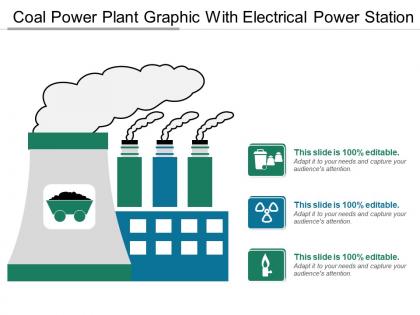
Understand the process of generating electricity by employing this Coal Power Plant Graphic with the Electrical Power Station. Utilize this useful coal-fired power plant PPT to explain the important concepts of conversion of heat into mechanical energy. Showcase the working of a thermal power plant in this electricity generation PPT layout. Make people aware of global warming caused by CO2 emission with the help of this effective power generation PowerPoint template. Utilize this coal-burning electric power plant visual and explain different kinds of pollution caused by coal industries. You can describe various components such as fuel processing and ash disposal of fossil fuel power stations to increase further knowledge. Make your presentation more knowledgeable by explaining how coal is transported and delivered. Therefore download this visual attention-grabbing thermal power station PPT layout to make your team understand this important topic of the coal power plant.
People who downloaded this PowerPoint presentation also viewed the following :
Coal power plant graphic with electrical power station with all 5 slides:
Halt the build up of bitter feelings with our Coal Power Plant Graphic With Electrical Power Station. Initiate action to cut down acrimony.



FAQs for Coal power plant graphic with
So it's basically a massive steam engine when you think about it. Coal gets stored and fed into the boiler where it burns to make steam. That steam hits the turbine - which is honestly the most important part - and spins the generator to make electricity. After that, the condenser cools everything back to water so you can use it again. Don't forget the cooling towers and smokestacks with all their pollution controls. Oh, and transformers bump up the voltage for transmission. If you're touring the place, pay attention to how the steam flows through the whole cycle. That's where they can really improve efficiency.
Coal plants are pretty straightforward actually. They grind up coal into powder and burn it in these huge furnaces to heat water into steam. The steam shoots through pipes to spin massive turbines, which are connected to generators that create electricity through electromagnetic induction or whatever (physics was never my strong suit lol). After the steam does its job, it cools back down to water and the whole thing starts over. If you get a tour, the control room is honestly the coolest part - they've got screens monitoring everything. It's like mission control but for making power.
Yeah so coal plants are pretty nasty for the environment. They pump out tons of CO2, sulfur dioxide, and other crap that makes smog worse and heats up the planet. The mining part is brutal too - strip mining just destroys entire landscapes. Oh and the ash waste? It's loaded with mercury and arsenic that seeps into water supplies. Even the leftover heat from the plants messes with local water temperatures. If you're looking at energy options, just know the real costs don't show up on your electric bill - we're all paying for it elsewhere.
Yeah, so modern coal plants are actually way different from whatever your dad probably dealt with. They're hitting like 40-45% efficiency now with supercritical steam tech, compared to maybe 33% back in the day. Honestly, the pollution control stuff is pretty impressive - they've got scrubbers, baghouse filters, some even do carbon capture. Everything's monitored in real-time too with automatic adjustments. When you're looking at plants, just check the heat rate and emission numbers. Those two things'll tell you if you're dealing with new tech or some old clunker that should've been retired years ago.
So coal plants basically have three main pollution controls these days. Scrubbers pull out sulfur dioxide, then there's selective catalytic reduction for NOx emissions. Particulates get caught by baghouse filters or electrostatic precipitators - those work pretty well honestly. Some plants are adding carbon capture but it's crazy expensive still. The EPA doesn't really give them a choice anymore on this stuff. You'll also see some switching to cleaner coal or mixing in biomass. When you're looking at a plant, definitely ask about their control equipment and when they last upgraded it.
So coal plants hit around 33-40% efficiency which isn't terrible, but honestly they're getting destroyed on price. Natural gas is way cheaper and cleaner. Solar and wind costs have absolutely tanked - like 60-70% drops over the past decade, it's crazy. The real problem with coal now? Higher fuel costs, environmental regs getting stricter, and you need massive investments just for pollution controls. My buddy works in energy and says it's brutal out there for coal companies. If you're looking at this for your project, I'd focus way more on the long-term money side than efficiency numbers.
Yeah, coal's still huge - like 27% of global electricity. China and India are absolutely burning through it to keep their economies running. Honestly, it's kind of crazy how much we still depend on coal when you see all the solar and wind headlines everywhere. The reality is coal plants are dirt cheap to operate once you've built them, plus lots of countries are sitting on massive coal reserves. Oh, and here's the weird part - while places like the US and Europe are cutting back, parts of Asia are actually using more coal than before. So it's not going anywhere anytime soon.
So there's some cool stuff happening with coal plants these days. Carbon capture tech literally grabs CO2 before it escapes into the air. Super/ultra-supercritical boilers burn coal way more efficiently than old ones. IGCC is wild - it turns coal into gas first, then burns that instead. Way cleaner. Advanced scrubbers are getting crazy good at filtering out sulfur and nitrogen crap too. Honestly, the difference is huge - we're talking 30-90% fewer emissions compared to ancient plants. Look for facilities using this newer tech if you're checking them out.
Dude, coal plants are buried in regulations. EPA air quality standards alone can force you to install millions worth of pollution controls. Then you've got state construction permits, environmental assessments, water discharge rules - honestly the cooling systems part is brutal since these things guzzle water. CO2 limits keep getting stricter too, which is why hardly anyone builds new ones anymore. My advice? Check what regulatory changes are coming down the pipeline before you even think about planning. That stuff will make or break your project way more than the engineering side.
Yeah, it's definitely gonna hurt some regions more than others. Coal towns are getting hammered with job losses, and utilities are stuck with worthless assets. Energy costs will probably spike short-term too. But here's the thing - coal was already on life support because gas and renewables got so damn cheap. On the bright side, clean energy is creating tons of jobs, and we'll save billions on healthcare from cleaner air. Plus electricity gets cheaper long-term. Honestly though, it all comes down to how well each area handles the transition and what kind of support they get.
Look, coal plants are complicated for communities. Jobs and tax money are nice - we're talking hundreds of positions that actually pay decent wages. But the health stuff is pretty brutal, especially if you live nearby. Air pollution cranks up respiratory problems, heart disease, cancer rates. The particles and sulfur dioxide are nasty. Here's the thing though - usually the people getting sick aren't the same ones landing those plant jobs. It's kind of messed up when you think about it. If you're looking at a coal project, figure out who actually benefits versus who's breathing that crap.
Honestly, it's mostly about money - renewables got ridiculously cheap and coal can't keep up. Natural gas is crushing them too on pricing. Then you've got all the environmental regulations tightening up, carbon taxes, phase-out deadlines. These plants are old as hell and need huge upgrades just to stay compliant. If your friend's dealing with coal stuff, I'd tell them to check what the local timeline looks like for shutdowns. Maybe look into converting to natural gas or biomass? Not perfect solutions but buys time while everything sorts itself out.
Look, coal plants are basically the backup generators of the power grid. They run 24/7 no matter what the weather's doing - unlike solar or wind that just... stop working sometimes. Grid operators can actually predict how much power they'll get, which is huge when demand suddenly spikes or other sources crap out. Yeah, they're terrible for the environment, obviously. But countries with coal reserves love them because they don't have to import fuel from anyone else. Honestly, if you're planning a power grid, you probably need some coal capacity sitting there as your safety net.
Most coal plants dump their ash in surface ponds or landfills, though some newer ones use dry storage - which honestly seems way safer to me. The big worry is groundwater contamination from nasty stuff like arsenic and mercury. You probably heard about that huge spill in North Carolina? Total disaster. When containment systems fail, all those heavy metals leak into drinking water and mess up local ecosystems. If you're looking at a coal plant, I'd definitely check how they handle their ash disposal and whether they're actually following EPA rules.
Honestly, countries ditching coal have learned you can't just flip a switch overnight. Germany's energy bills went nuts because they rushed things. The UK was way smarter - took decades, switched to natural gas first, then added renewables gradually. Poland's still stalling because they know entire communities will get screwed over (coal workers need new jobs, obviously). You need massive grid upgrades too since solar and wind are so unpredictable. Public support matters huge - nobody wants their lights going out. Start planning super early and have backup energy ready.
-
Awesome presentation, really professional and easy to edit.
-
Design layout is very impressive.