

Coca Colas Brand Communication Strategy Ppt Infographics




Try Before you Buy Download Free Sample Product
 Impress Your
 Audience
 100%
100% Editable
 Save Hours
 of Time


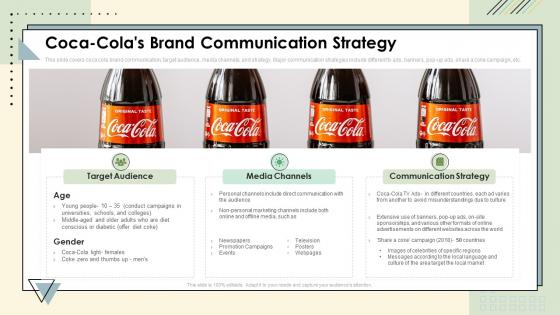
This slide covers coca cola brand communication, target audience, media channels, and strategy. Major communication strategies include different tv ads, banners, pop-up ads, share a coke campaign, etc.
People who downloaded this PowerPoint presentation also viewed the following :
Coca Colas Brand Communication Strategy Ppt Infographics with all 6 slides:
Use our Coca Colas Brand Communication Strategy Ppt Infographics to effectively help you save your valuable time. They are readymade to fit into any presentation structure.





FAQs for Coca Colas Brand Communication
Coca-Cola's brand communication strategy includes emotional storytelling, consistent visual identity, global-local messaging adaptation, multi-channel integration, and experiential marketing campaigns. These components work together by creating universal brand recognition while allowing cultural customization, with many beverage companies finding that this strategic combination of standardized brand elements and localized content ultimately delivers stronger market penetration and sustained customer loyalty across diverse demographics.
Coca-Cola utilizes storytelling by creating emotional narratives that connect personal moments with their brand, focusing on themes like happiness, togetherness, and shared experiences across cultures. Through campaigns like "Share a Coke" and holiday advertisements, they transform simple beverage consumption into meaningful life moments, ultimately building deep brand loyalty and emotional connections that drive sustained consumer engagement worldwide.
Coca-Cola employs a "glocal" strategy, maintaining universal themes like happiness and togetherness while adapting messaging, cultural references, language, and visual elements for local markets. Through regional partnerships, locally relevant campaigns, and culturally sensitive content, brands across industries find that this strategic combination of global consistency with local personalization enhances customer engagement, builds stronger market connections, and ultimately delivers competitive advantage in diverse geographical segments.
Coca-Cola incorporates social media through personalized campaigns, user-generated content initiatives, real-time engagement, influencer partnerships, and interactive storytelling across platforms like Instagram, TikTok, and Twitter. These digital strategies enable the brand to foster community connections, amplify seasonal campaigns, and maintain cultural relevance, while delivering enhanced customer experiences and sustained brand loyalty in an increasingly competitive beverage market.
Nostalgia serves as a cornerstone of Coca-Cola's marketing communications, connecting the brand to positive memories, family traditions, holiday celebrations, and shared cultural moments across generations. Through campaigns like "Share a Coke" and seasonal advertising featuring classic imagery, Coca-Cola leverages emotional storytelling to create deeper brand loyalty, ultimately delivering sustained customer engagement and competitive differentiation in an increasingly crowded beverage market.
Coca-Cola balances traditional and digital marketing through integrated campaigns that maintain consistent brand messaging across television, print, social media, and mobile platforms. The company leverages traditional advertising for broad reach and emotional storytelling, while using digital channels for personalized engagement, real-time interaction, and data-driven targeting, ultimately delivering cohesive brand experiences that maximize both mass appeal and individual customer connections.
Coca-Cola maintains brand consistency through standardized visual identity guidelines, unified messaging frameworks, centralized creative oversight, and comprehensive brand training programs across all markets. These strategies enable seamless integration across digital, traditional, and experiential channels, with regional teams finding that consistent brand elements, localized cultural adaptations, and coordinated campaign launches ultimately deliver stronger brand recognition and customer loyalty globally.
Coca-Cola leverages consumer engagement through personalized campaigns, interactive digital experiences, user-generated content initiatives, and emotional storytelling that connects with diverse audiences globally. The company strategically combines social media platforms, experiential marketing, and data-driven personalization to create meaningful touchpoints, ultimately building brand loyalty and driving sustained consumer connection across multiple demographics and markets.
Coca-Cola's primary target demographics include teenagers and young adults (13-29), families with children, diverse cultural communities, health-conscious consumers, and emerging market populations. The brand strategically segments campaigns by age, lifestyle, and regional preferences, with younger demographics receiving digital and social media focus while families encounter traditional advertising, ultimately enabling Coca-Cola to maintain broad market penetration across multiple consumer segments simultaneously.
Coca-Cola's communication strategy addresses corporate social responsibility through sustainability initiatives, community investment programs, environmental stewardship campaigns, and transparent reporting on social impact goals. The company leverages integrated messaging across digital platforms, partnerships with NGOs, and local community engagement to demonstrate commitment to water conservation, recycling, and social equity, ultimately strengthening brand trust and consumer loyalty.
Coca-Cola utilizes influencer marketing through strategic partnerships with celebrities, micro-influencers, and content creators across social media platforms, seasonal campaigns, and product launches. These collaborations enhance brand visibility by leveraging authentic storytelling, expanding reach to diverse demographics, and creating user-generated content, with many campaigns delivering increased engagement and strengthened emotional connections with consumers.
Coca-Cola measures brand communication effectiveness through comprehensive analytics including sales data analysis, brand awareness surveys, social media engagement metrics, consumer sentiment tracking, and market share performance indicators. These measurement tools enable the company to assess campaign reach, emotional connection levels, and purchase intent across diverse global markets, ultimately delivering data-driven insights that optimize future marketing investments and enhance competitive positioning.
Coca-Cola faces challenges including cultural adaptation across different value systems, language localization beyond translation, varying regulatory environments, competitive messaging strategies, and maintaining brand consistency while allowing regional relevance. These complexities require strategic balancing of global brand identity with local market sensitivities, with many multinational companies finding that successful communication demands deep cultural understanding, flexible creative execution, and collaborative regional partnerships to ultimately deliver authentic connections and sustained market penetration.
Seasonal marketing enhances Coca-Cola's brand communication by creating emotional connections through holiday campaigns, leveraging cultural moments, and maintaining year-round relevance across diverse markets. Through iconic campaigns like Christmas advertising and summer refreshment messaging, Coca-Cola reinforces its core happiness positioning while adapting to local celebrations, ultimately delivering consistent brand recognition and deeper consumer engagement globally.
Coca-Cola leverages augmented reality experiences, AI-powered personalization engines, interactive digital billboards, voice-activated campaigns, and IoT-enabled vending machines to enhance communication strategy. These technologies streamline customer engagement by delivering personalized content, creating immersive brand experiences, and enabling real-time interaction, with many retail and beverage companies finding that strategic technology integration ultimately drives stronger brand loyalty and competitive advantage.
-
SlideTeam, Please don’t stop sharing discount coupons! I love your occasional discounts and tend to buy your products around that corner.
-
Top Quality presentations that are easily editable.