

Developing Corporate Communication Strategy Plan Powerpoint Presentation Slides





Try Before you Buy Download Free Sample Product
 Impress Your
 Audience
 100%
100% Editable
 Save Hours
 of Time


Check out our professionally designed Developing corporate communication strategy plan PowerPoint presentation. It shows various corporate communication techniques that can be used at the workplace to deliver and understand information quickly. Acquaint people with various techniques to communicate with co workers at the workplace to foster a quick and precise flow of corporate communication. Additionally, our Business Communication PPT covers the various components of corporate communication strategy, issues arising with current strategies such as marketing communication challenges, leadership communication strategy challenges, and the importance of incorporating effective communication strategy. The Corporate Communication Process. module also covers corporate internal and external communication strategies along with key tools and techniques. Lastly, it covers cost involvement in developing corporate communication strategy along with its impact on the organization. Get access to this powerful template now.
People who downloaded this PowerPoint presentation also viewed the following :
Content of this Powerpoint Presentation
Slide 1: This slide introduces Developing corporate communication strategy plan. State Your Company Name and begin.
Slide 2: This is an Agenda slide. State your agendas here.
Slide 3: This slide shows Table of Content for the presentation.
Slide 4: This slide shows title for topics that are to be covered next in the template.
Slide 5: This slide describes overview of the corporate communication strategy.
Slide 6: This slide describes Various types of corporate communications.
Slide 7: This slide displays Corporate communication strategy and objectives.
Slide 8: This slide presents Elements of corporate communication strategy.
Slide 9: This slide showcases Corporate communication strategy effectiveness statistics.
Slide 10: This slide shows title for topics that are to be covered next in the template.
Slide 11: This slide showcases Corporate identity, branding, and reputation.
Slide 12: This slide displays Role of media relation in business communication.
Slide 13: This slide describes Corporate internal communication strategic plan.
Slide 14: This slide describes Corporate social responsibility in corporate communication.
Slide 15: This slide shows title for topics that are to be covered next in the template.
Slide 16: This slide describes Marketing communication challenges along with insights.
Slide 17: This slide describes Leadership communication strategy challenges.
Slide 18: This slide outlines Internal corporate communication challenges.
Slide 19: This slide describes Communication challenges via different communication platforms.
Slide 20: This slide shows title for topics that are to be covered next in the template.
Slide 21: This slide presents Improved stakeholder engagement and communication.
Slide 22: This slide describes Enhance consumer/marketing communication.
Slide 23: This slide presents Improved employee productivity within organization.
Slide 24: This slide shows title for topics that are to be covered next in the template.
Slide 25: This slide describes Developing corporate communication strategy.
Slide 26: This slide describes Leadership communication strategic plan.
Slide 27: This slide shows title for topics that are to be covered next in the template.
Slide 28: This slide represents Crisis communication strategy planning process.
Slide 29: This slide shows title for topics that are to be covered next in the template.
Slide 30: This slide illustrates Consumer communication strategy with business KPIs.
Slide 31: The slide showcases Supplier/vendor communication strategy overview.
Slide 32: This slide shows Retailer communication strategy to boost sales.
Slide 33: This slide displays Investor communication goals and strategies.
Slide 34: This slide shows Marketing communication strategy to boost sales.
Slide 35: This slide shows title for topics that are to be covered next in the template.
Slide 36: This slide describes Corporate partnership internal communication plan.
Slide 37: This slide shows title for topics that are to be covered next in the template.
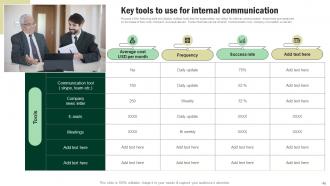
Slide 38: This slide presents Key tools to use for internal communication.
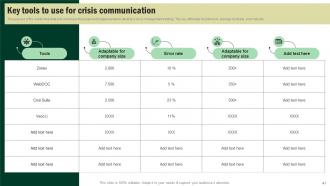
Slide 39: This slide presents Key tools to use for crisis communication.
Slide 40: This slide shows title for topics that are to be covered next in the template.
Slide 41: This slide contains Internal communication strategy for business growth.
Slide 42: This slide shows title for topics that are to be covered next in the template.
Slide 43: This slide presents Implementing corporate communication strategy.
Slide 44: This slide shows title for topics that are to be covered next in the template.
Slide 45: This slide displays Crisis communication plan budget.
Slide 46: This slide displays Marketing/consumer communication plan budget.
Slide 47: This slide displays Internal cross-department communication budget.
Slide 48: This slide displays Internal communication budget plan.
Slide 49: This slide shows title for topics that are to be covered next in the template.
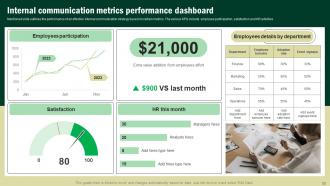
Slide 50: This slide presents Internal communication metrics performance dashboard.
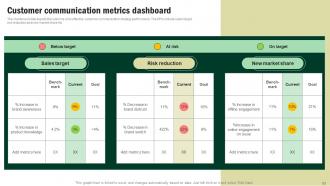
Slide 51: This slide presents Customer communication metrics dashboard.
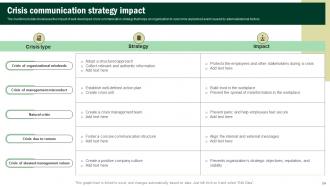
Slide 52: This slide displays Crisis communication strategy impact.
Slide 53: This slide shows all the icons included in the presentation.
Slide 54: This slide is titled as Additional Slides for moving forward.
Slide 55: This is Our Team slide with names and designation.
Slide 56: This is About Us slide to show company specifications etc.
Slide 57: This slide shows Post It Notes. Post your important notes here.
Slide 58: This slide shows SWOT analysis describing- Strength, Weakness, Opportunity, and Threat.
Slide 59: This slide provides 30 60 90 Days Plan with text boxes.
Slide 60: This is a Timeline slide. Show data related to time intervals here.
Slide 61: This is a Quotes slide to convey message, beliefs etc.
Slide 62: This is a Thank You slide with address, contact numbers and email address.
Developing Corporate Communication Strategy Plan Powerpoint Presentation Slides with all 73 slides:
Use our Developing Corporate Communication Strategy Plan Powerpoint Presentation Slides to effectively help you save your valuable time. They are readymade to fit into any presentation structure.
-

Developing Corporate Communication Strategy Plan
-
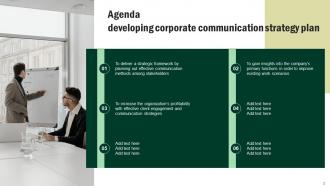
Agenda developing corporate communication strategy plan
-
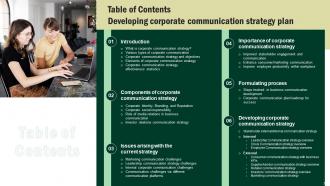
Developing corporate communication strategy plan
-
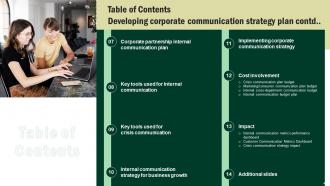
Developing corporate communication strategy plan contd
-
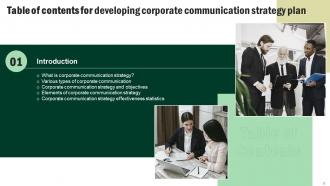
Table of contents for developing corporate communication strategy plan
-
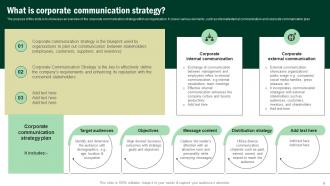
What is corporate communication strategy
-

Various types of corporate communications
-
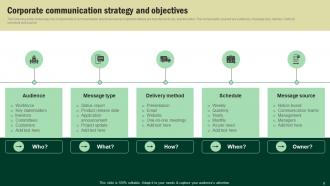
Corporate communication strategy and objectives
-
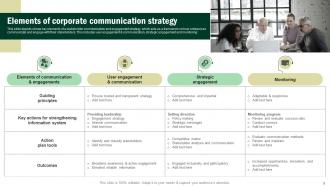
Elements of corporate communication strategy
-
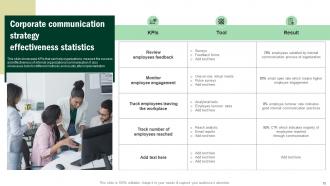
Corporate communication strategy effectiveness statistics
-
Table of contents for developing corporate communication strategy plan
-
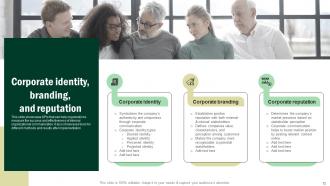
Corporate identity branding and reputation
-
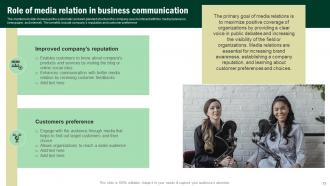
Role of media relation in business communication
-
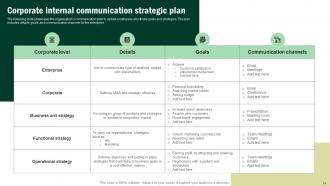
Corporate internal communication strategic plan
-
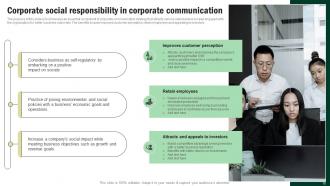
Corporate social responsibility in corporate communication
-
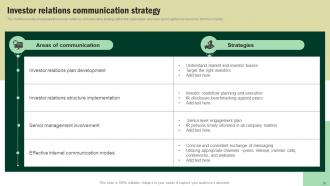
Investor relations communication strategy
-
Table of contents for developing corporate communication strategy plan
-
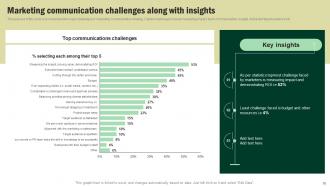
Marketing communication challenges along with insights
-
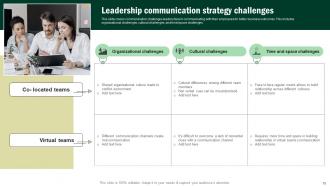
Leadership communication strategy challenges
-
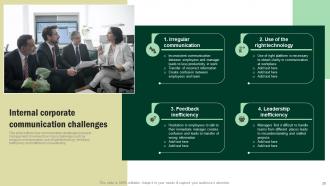
Internal corporate communication challenges
-
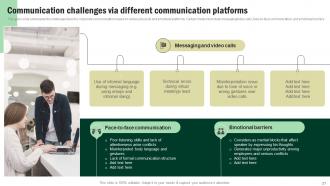
Communication challenges via different communication platforms
-
Table of contents for developing corporate communication strategy plan
-
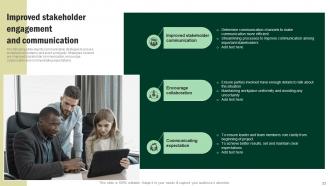
Improved stakeholder engagement and communication
-
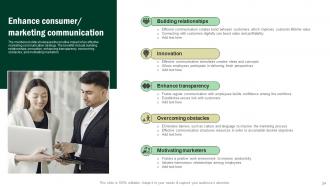
Enhance consumer marketing communication
-
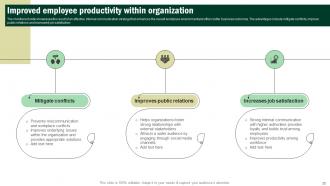
Improved employee productivity within organization
-
Table of contents for developing corporate communication strategy plan
-
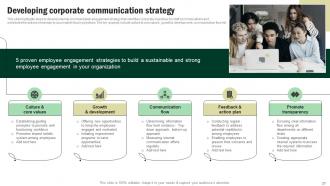
Developing corporate communication strategy
-
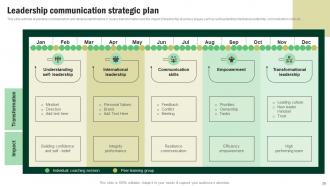
Leadership communication strategic plan
-
Table of contents for developing corporate communication strategy plan
-
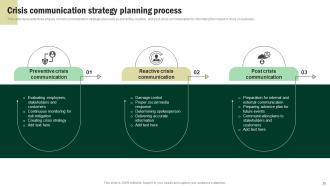
Crisis communication strategy planning process
-
Crisis communication strategy planning process
-
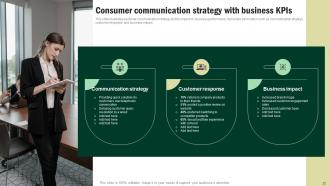
Consumer communication strategy with business KPIs
-
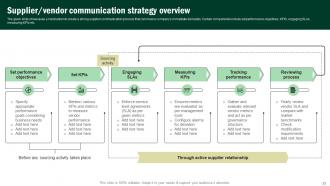
Supplier vendor communication strategy overview
-
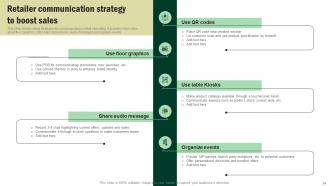
Retailer communication strategy to boost sales
-
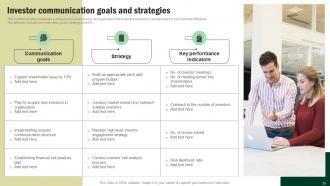
Investor communication goals and strategies
-
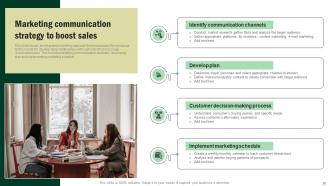
Marketing communication strategy to boost sales
-
Table of contents for developing corporate communication strategy plan
-
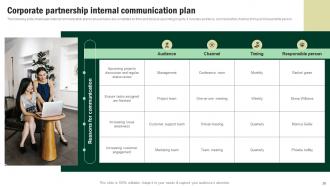
Corporate partnership internal communication plan
-
Table of contents for developing corporate communication strategy plan
-
Key tools to use for internal communication
-
Key tools to use for crisis communication
-
Table of contents for developing corporate communication strategy plan
-
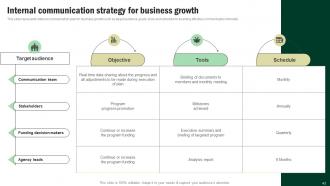
Internal communication strategy for business growth
-
Table of contents for developing corporate communication strategy plan
-
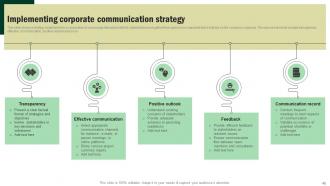
Implementing corporate communication strategy
-
Table of contents for developing corporate communication strategy plan
-
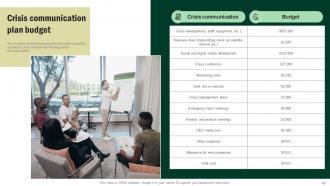
Crisis communication plan budget
-
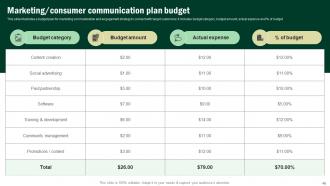
Marketing consumer communication plan budget
-
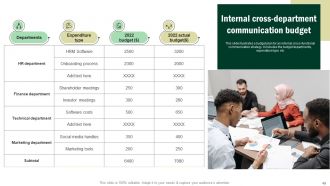
Internal cross department communication budget
-
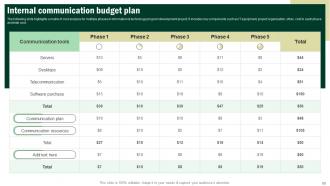
Internal communication budget plan
-
Table of contents for developing corporate communication strategy plan
-
Internal communication metrics performance dashboard
-
Customer communication metrics dashboard
-
Crisis communication strategy impact
-
Icons slide Developing corporate communication strategy plan
-

Additional slides
-

Our mission
-
Roadmap
-
Our goal
-
Timeline
-
SWOT analysis
-
Financial
-
Developing Corporate Communication Strategy Plan
-
Mind map
-

Thanks for watching
-

-

-

-

-

-

-

-

FAQs for Developing Corporate Communication Strategy Plan
Okay so first thing - figure out who you're actually talking to and what they give a shit about. That's like 80% of it right there. Then nail down your main messages and make sure they're consistent everywhere. Pick your channels based on where your people actually are (not just where you think they should be). Set up some way to track if it's working - even if it's just basic stuff. Oh and definitely map out all your stakeholders first, that'll save you so much headache later. Timeline-wise, just be realistic about what you can actually pull off.
Track the obvious stuff first - engagement rates, website traffic, social media clicks. Open rates if you're doing email campaigns. But honestly? The numbers are kinda meaningless without the human side. Set up quick surveys or just grab coffee with a few employees and ask what they're actually hearing. I'd do monthly pulse checks - nothing fancy, just "are people getting our main messages?" Oh, and throw it all into a simple dashboard so you're not drowning in spreadsheets. Mix the hard data with real feedback and you'll spot problems way faster.
Look, internal communication is honestly the foundation of everything else you do. Your employees need to actually understand your company's goals and messaging before they can represent you well externally. It's like - how can you expect consistent messaging if your own team is confused about what you stand for? When people feel informed and connected to the mission, they naturally become better brand ambassadors. Whether they're chatting with customers or posting on social media, they'll sound authentic. Regular team updates and town halls make a huge difference here. Oh, and good internal channels too - nothing fancy needed. Get your internal stuff sorted first, then your external communications will flow so much better.
Honestly, you need a brand guide that people will actually use - not something buried in folders nobody checks. Templates make it way easier for each channel. Set up approval flows for big stuff and get someone in each department to be your "brand police" before things go live. Oh, and those cross-team meetings? They're annoying but they work when you're doing multi-channel campaigns. Start by checking where you're inconsistent now, then fix those gaps. The whole point is making it simple for people to stay on brand without feeling like it's extra work.
Ugh, communication rollouts are honestly such a pain. First you've got to convince leadership - and trust me, everyone suddenly becomes a messaging expert. Different departments will fight you on everything because they all think they know best. Your own team probably won't even follow the strategy half the time, which is super frustrating. Budget's always tight too, especially when you're juggling like five different channels. But here's the thing - the hardest part is actually figuring out what's working versus what just looks good on paper. Honestly? Just pick one small pilot project first. Prove it works, then expand.
Honestly, speed is everything when crisis hits. Don't go radio silent - that just makes people assume the worst. Pick one person to handle all communication so you're not sending mixed signals everywhere. Acknowledge what happened fast, stick to facts, but show you actually care about whoever got hurt. Oh and keep your own team in the loop or they'll get ambushed by random questions. The real game-changer though? Having your crisis plan sorted beforehand. Draft those templates now, figure out who's doing what, maybe run through some worst-case scenarios. Sounds boring but you'll thank yourself later when everything's on fire.
Dude, collect real stories from your team and customers - that's where the gold is. Sarah from accounting saving 50K? Way more memorable than listing product specs. Nobody cares about features anyway. Drop these stories into your presentations, newsletters, whatever. Keep them short and actually relevant to your point though. Instead of opening your next meeting with boring quarterly numbers, try a customer story first. People connect with actual experiences and employee journeys, not corporate jargon. It's honestly wild how much better stories stick compared to data dumps.
Honestly, there's so much you can do here. Slack or Teams are solid for quick messaging between departments. Zoom's obviously great for meetings when you need that face-to-face vibe. For broader stuff like newsletters, Mailchimp works well - though I've heard mixed things about their pricing lately. Social media management gets way easier with Hootsuite if you're posting regularly. Project management tools like Asana actually help tons with keeping everyone on the same page about who's doing what. Don't go crazy though - pick maybe 2-3 tools that actually solve your biggest headaches first.
So your company culture is basically what drives how you talk to people - inside and outside. Hierarchical places tend to be super formal with that top-down messaging thing. Flatter companies? Way more casual back-and-forth at every level. Culture also shapes your brand voice - like are you the serious, suit-wearing type or more laid-back and weird? Here's what I've noticed though: if your communication doesn't actually match who you are as a company, people can smell the BS from a mile away. Honestly, figure out what your real culture is first, then build everything else around that.
Honestly, remote teams live or die by communication. You'll want daily standups and weekly one-on-ones - way more than you think you need. Use Slack for quick questions, video calls when things get complicated. The hardest part? Recreating those random hallway conversations. We do virtual coffee breaks which sounds cheesy but actually works. Write everything down since everyone's in different time zones anyway. Oh, and create some kind of communication guide upfront so people know when to text vs. call vs. email. Trust me, it saves so much confusion later.
Honestly, just ask people how they actually want to hear from you! Do a quick survey about whether they prefer email, Slack, whatever. Then - and this is where most companies mess up - actually use what they tell you. Set up regular check-ins too, like pulse surveys or those random coffee conversations. I swear, half the internal comms I see might as well go straight to spam. Pay attention to what messages people respond to and which ones get ignored. Start small with one survey asking about company updates, then adjust your timing and channels based on their answers. It's not rocket science, but you'd be surprised how few places do it.
Honestly, audience segmentation makes or breaks corporate communication. Your employees don't care about the same stuff as your investors, right? So why send them identical messages? I learned this the hard way watching companies bomb with generic announcements. Each group needs different info at different times. Employees want the real talk about changes, investors want numbers and strategy, customers just want to know how it affects them. Map out who needs what first, then adjust your tone and timing for each group. Way more work but actually gets results.
Dude, social media totally changed everything. Companies can't just blast out press releases anymore - people expect you to actually talk back to them, like right away. It's honestly pretty draining but way more fun than the corporate stuff from before. One bad tweet can blow up in minutes though, so you better have your crisis plan ready. The whole thing needs to feel like actual conversations now. I'd start by just listening to what people are saying about your company first. Then jump in and respond like you're a real human, not some PR robot. Wild how different it is from even 5 years ago.
Honestly, securities laws are your biggest headache here - anything that might mess with stock price needs legal review first. Don't make future predictions without disclaimers, and never give analysts or investors info before it's public. Employment stuff is tricky too since your messaging can bite you later with HR issues. If you're in a regulated industry like healthcare or finance, there's probably extra rules on top of everything else. I learned this the hard way once. Just get legal involved early - way easier than cleaning up a mess afterward.
Dude, definitely dig into each market's cultural stuff and business norms first. Germany vs Japan? Completely different worlds - trust me on this one. Your messaging tone needs to shift big time, plus visuals and even which channels you use. Some places want super formal, detailed info while others are all about casual, visual content. Oh and timing is huge too - their holidays, work schedules, how they actually make decisions. Honestly? Find local comms people in each region to partner with. You'll save yourself from some truly cringe mistakes.
-
Attractive design and informative presentation.
-
Excellent products for quick understanding.