


Building An Effective Corporate Communication Strategy Powerpoint Presentation Slides
Check out our professionally designed Building an effective corporate communication strategy PowerPoint presentation. It shows various corporate communication techniques that can be used at the workplace to deliver and understand information quickly. Acquaint people with various techniques to communicate with co workers at the workplace to foster a quick and precise flow of corporate communication. Additionally, our Business Communication PPT covers the various components of corporate communication strategy, issues arising with current strategies such as marketing communication challenges, leadership communication strategy challenges, and the importance of incorporating effective communication strategy. The Corporate Communication Process. module also covers corporate internal and external communication strategies along with key tools and techniques. Lastly, it covers cost involvement in developing corporate communication strategy along with its impact on the organization. Get access to this powerful template now.
















































You must be logged in to download this presentation.


Do you want to remove this product from your favourites?
 Impress your
 audience
 100%
100% Editable
 Save Hours
 of Time
PowerPoint presentation slides
Enthrall your audience with this Building An Effective Corporate Communication Strategy Powerpoint Presentation Slides Increase your presentation threshold by deploying this well-crafted template. It acts as a great communication tool due to its well-researched content. It also contains stylized icons, graphics, visuals etc, which make it an immediate attention-grabber. Comprising sixty two slides, this complete deck is all you need to get noticed. All the slides and their content can be altered to suit your unique business setting. Not only that, other components and graphics can also be modified to add personal touches to this prefabricated set.

People who downloaded this PowerPoint presentation also viewed the following :
Content of this Powerpoint Presentation
Slide 1: This slide introduces Building an Effective Corporate Communication Strategy. State Your Company Name and begin.
Slide 2: This is an Agenda slide. State your agendas here.
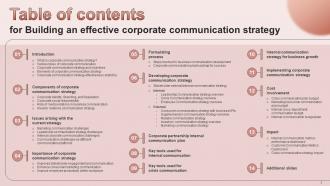
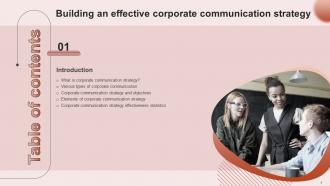
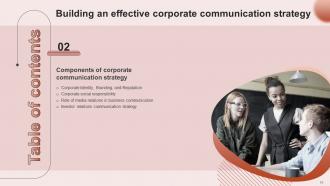
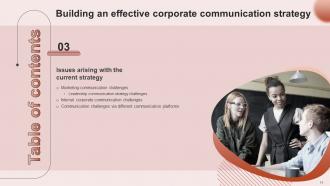
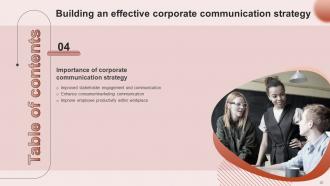
Slide 3: This slide shows Table of Content for the presentation.
Slide 4: This slide shows title for topics that are to be covered next in the template.
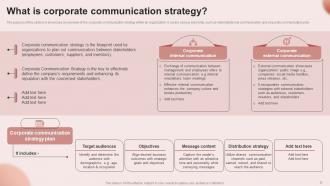
Slide 5: This slide describes overview of the corporate communication strategy.
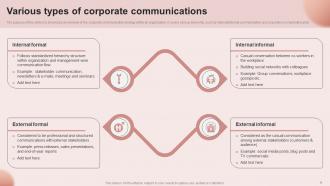
Slide 6: This slide describes Various types of corporate communications.
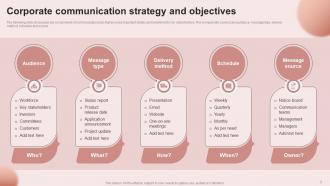
Slide 7: This slide displays Corporate communication strategy and objectives.
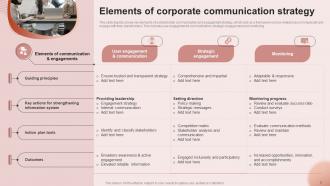
Slide 8: This slide presents Elements of corporate communication strategy.
Slide 9: This slide showcases Corporate communication strategy effectiveness statistics.
Slide 10: This slide shows title for topics that are to be covered next in the template.
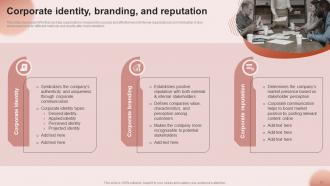
Slide 11: This slide showcases Corporate identity, branding, and reputation.
Slide 12: This slide displays Role of media relation in business communication.
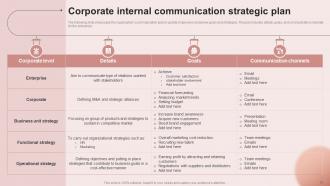
Slide 13: This slide describes Corporate internal communication strategic plan.
Slide 14: This slide describes Corporate social responsibility in corporate communication.
Slide 15: This slide shows title for topics that are to be covered next in the template.
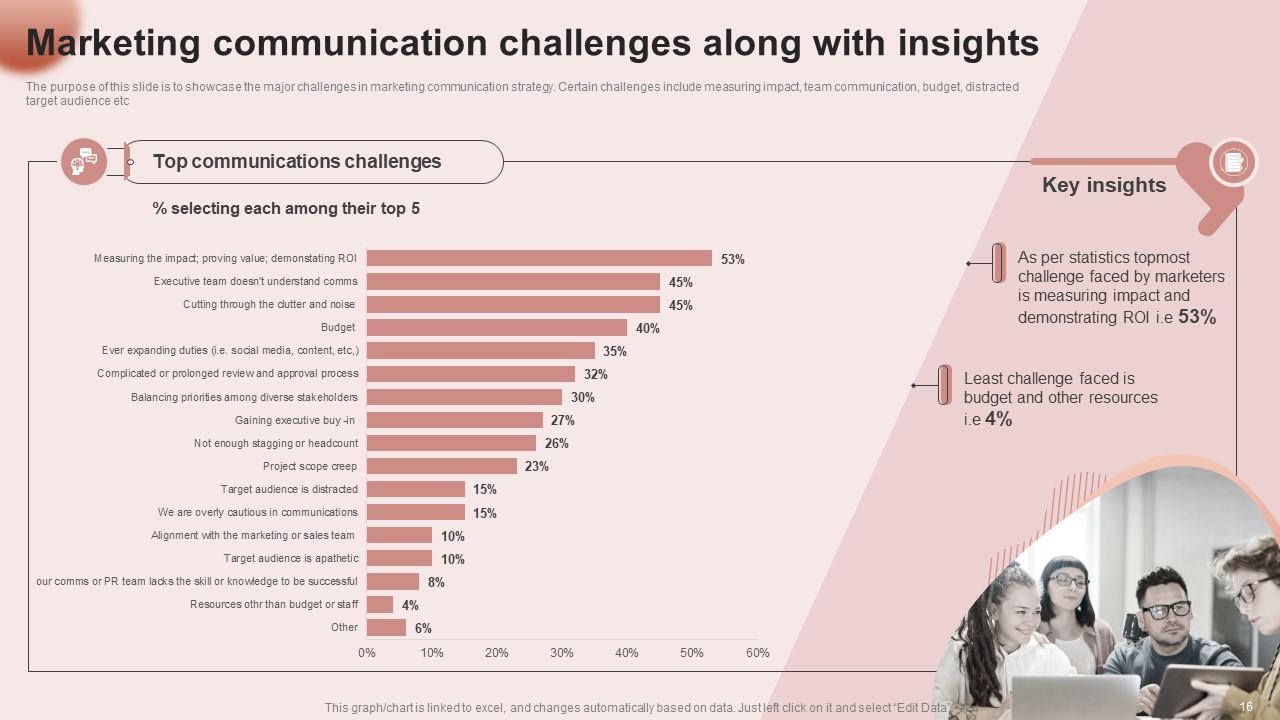
Slide 16: This slide describes Marketing communication challenges along with insights.
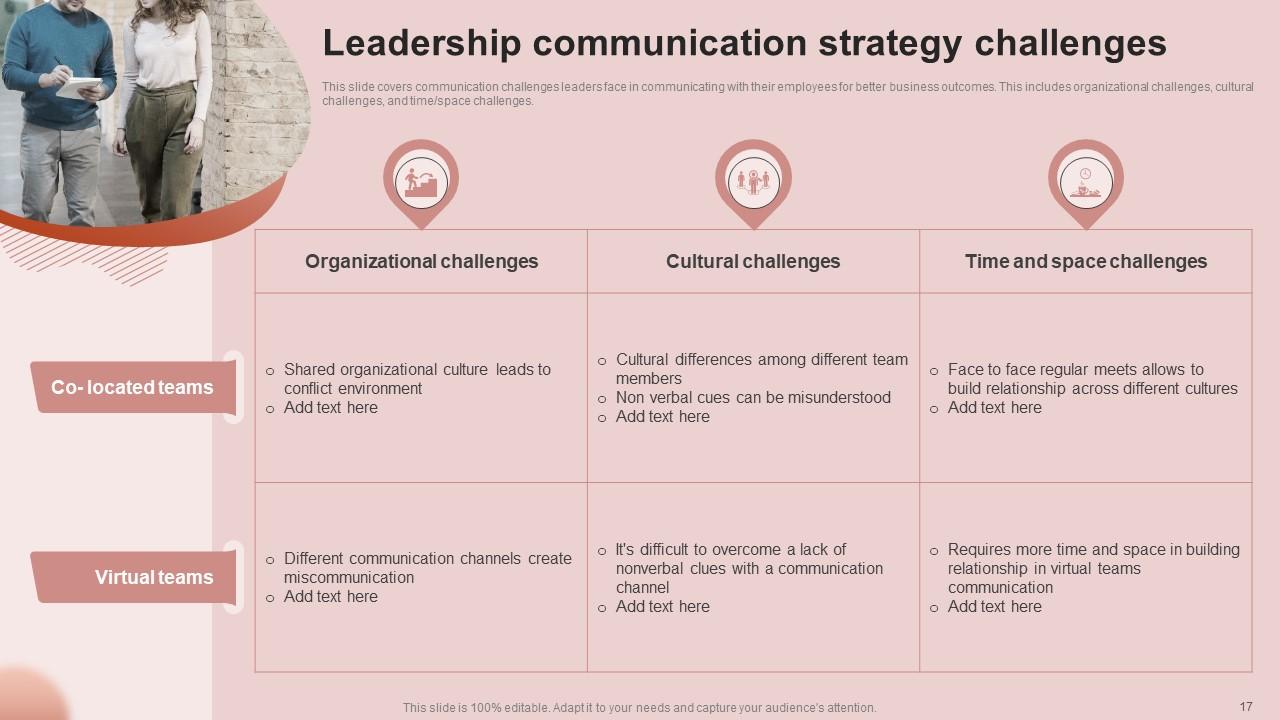
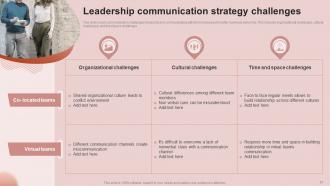
Slide 17: This slide describes Leadership communication strategy challenges.
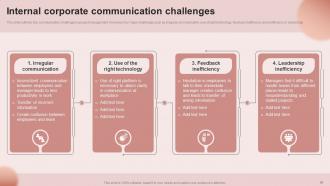
Slide 18: This slide outlines Internal corporate communication challenges.
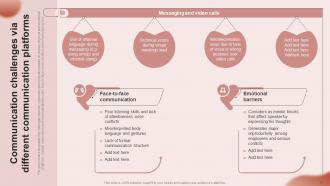
Slide 19: This slide describes Communication challenges via different communication platforms.
Slide 20: This slide shows title for topics that are to be covered next in the template.
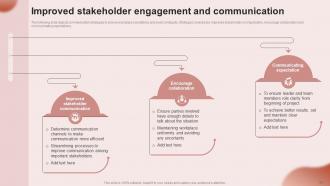
Slide 21: This slide presents Improved stakeholder engagement and communication.
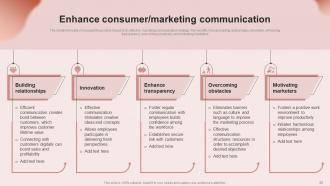
Slide 22: This slide describes Enhance consumer/marketing communication.
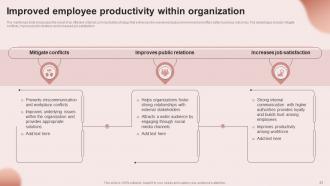
Slide 23: This slide presents Improved employee productivity within organization.
Slide 24: This slide shows title for topics that are to be covered next in the template.
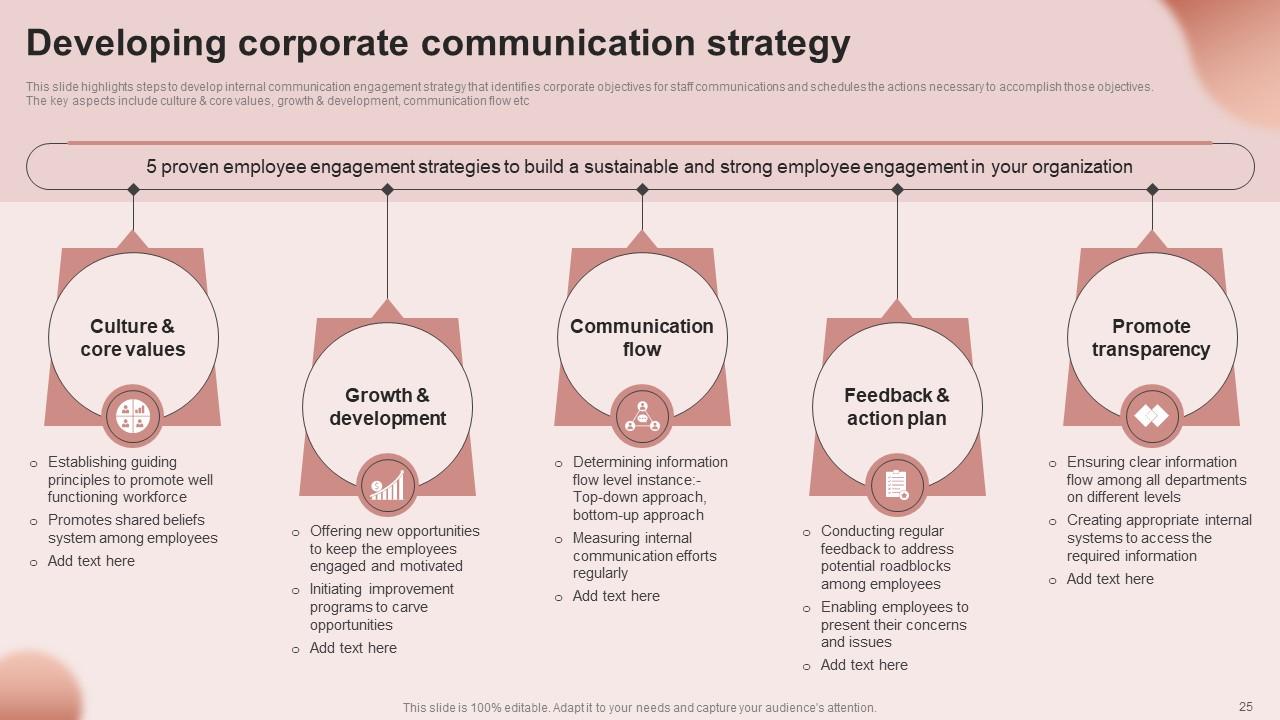
Slide 25: This slide describes Developing corporate communication strategy.
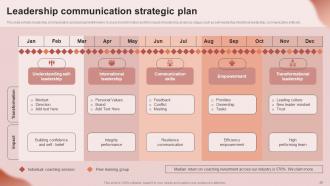
Slide 26: This slide describes Leadership communication strategic plan.
Slide 27: This slide shows title for topics that are to be covered next in the template.
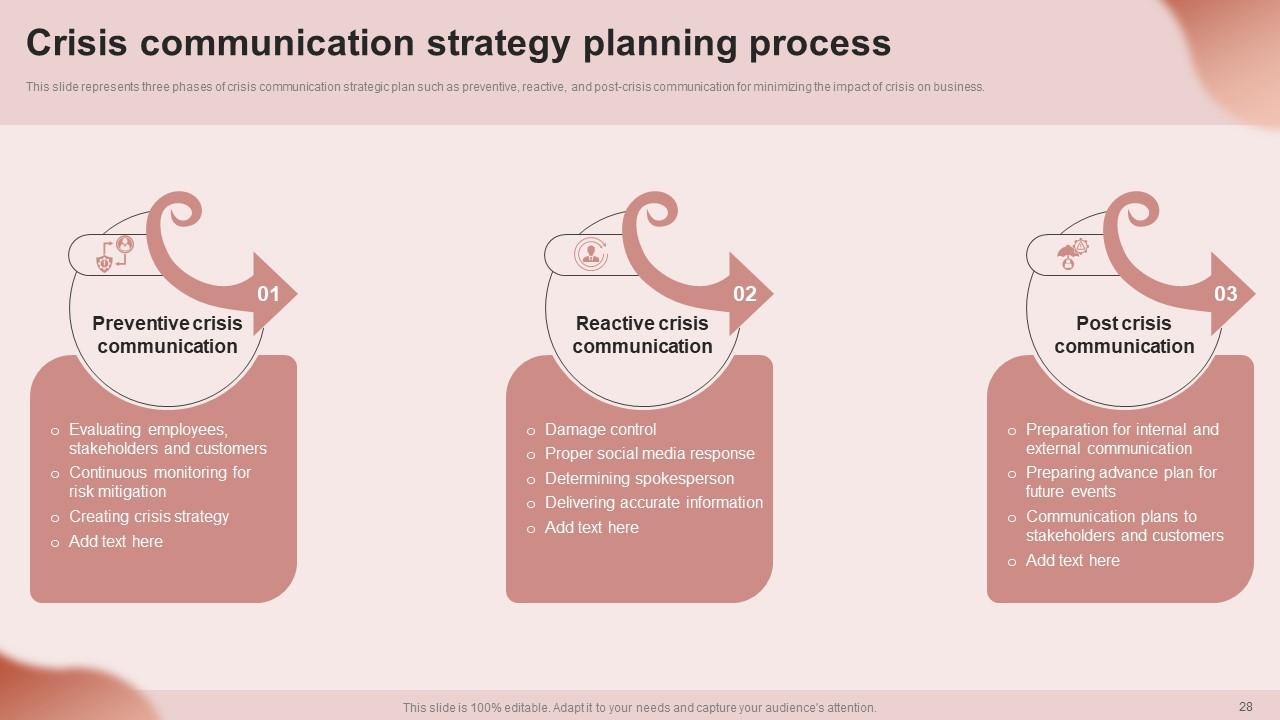
Slide 28: This slide represents Crisis communication strategy planning process.
Slide 29: This slide shows title for topics that are to be covered next in the template.
Slide 30: This slide illustrates Consumer communication strategy with business KPIs.
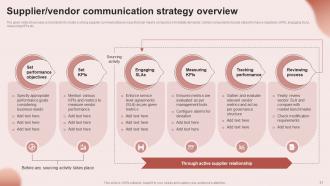
Slide 31: The slide showcases Supplier/vendor communication strategy overview.
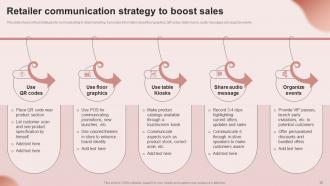
Slide 32: This slide shows Retailer communication strategy to boost sales.
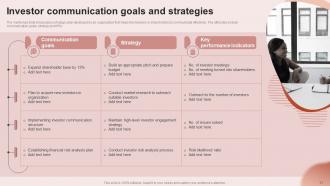
Slide 33: This slide displays Investor communication goals and strategies.
Slide 34: This slide shows Marketing communication strategy to boost sales.
Slide 35: This slide shows title for topics that are to be covered next in the template.
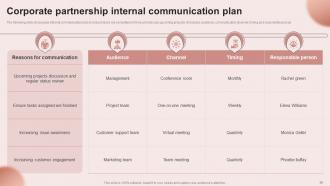
Slide 36: This slide describes Corporate partnership internal communication plan.
Slide 37: This slide shows title for topics that are to be covered next in the template.
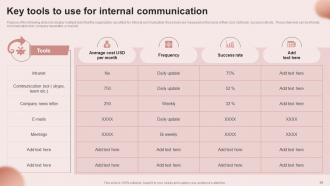
Slide 38: This slide presents Key tools to use for internal communication.
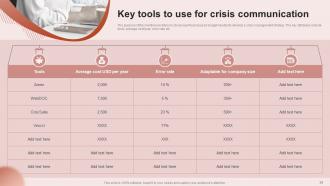
Slide 39: This slide presents Key tools to use for crisis communication.
Slide 40: This slide shows title for topics that are to be covered next in the template.
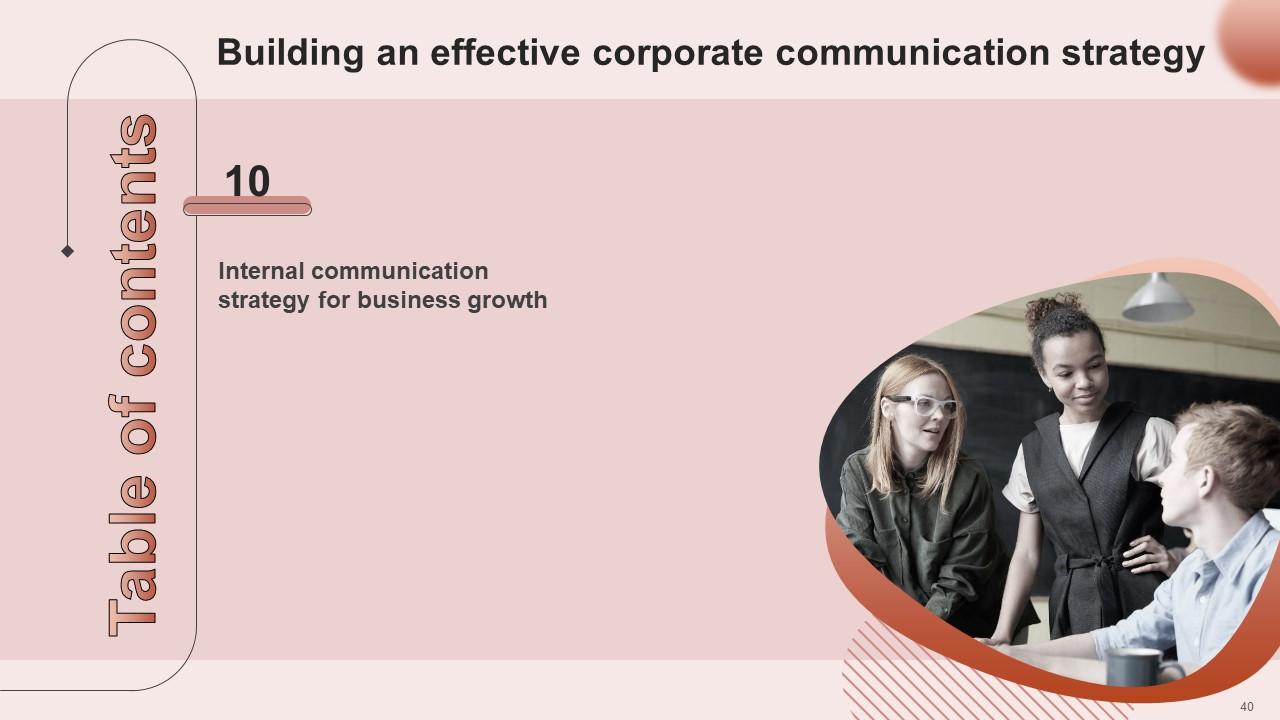
Slide 41: This slide contains Internal communication strategy for business growth.
Slide 42: This slide shows title for topics that are to be covered next in the template.
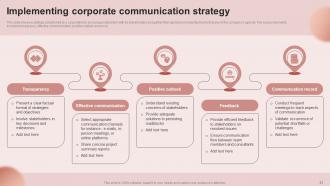
Slide 43: This slide presents Implementing corporate communication strategy.
Slide 44: This slide shows title for topics that are to be covered next in the template.
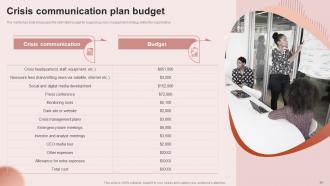
Slide 45: This slide displays Crisis communication plan budget.
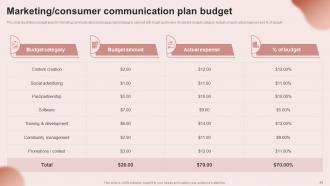
Slide 46: This slide displays Marketing/consumer communication plan budget.
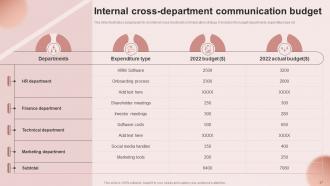
Slide 47: This slide displays Internal cross-department communication budget.
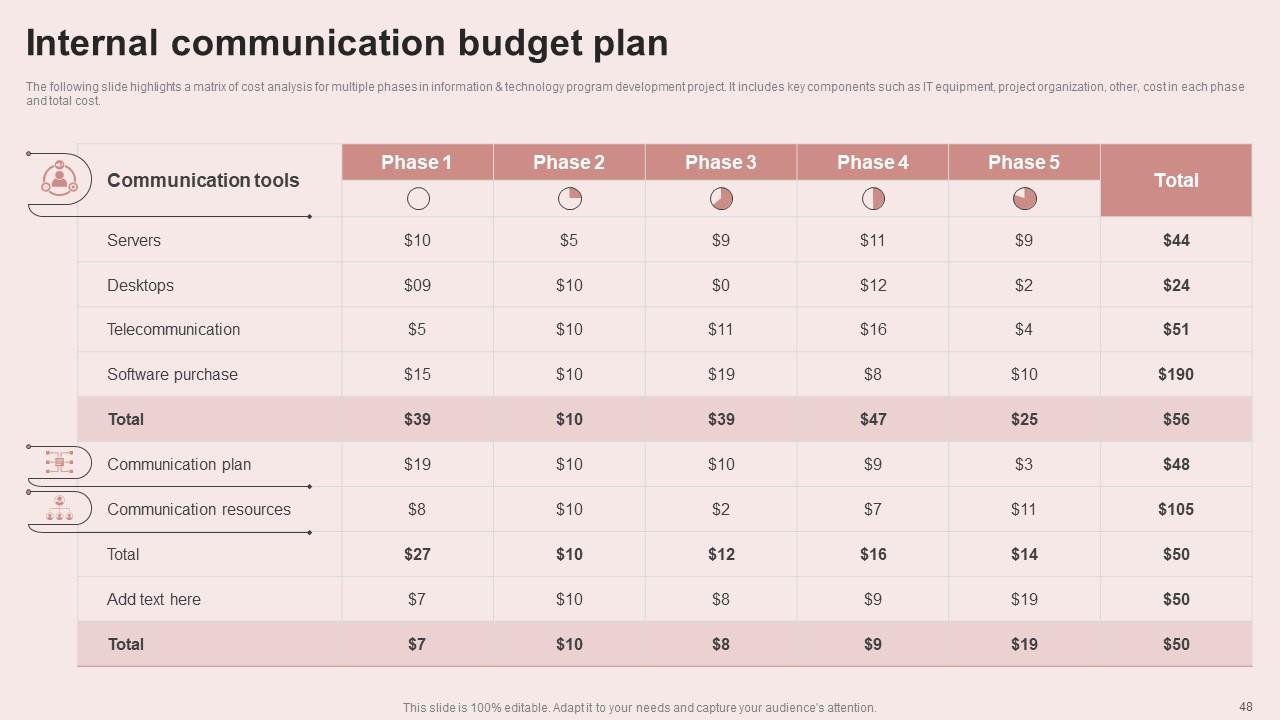
Slide 48: This slide displays Internal communication budget plan.
Slide 49: This slide shows title for topics that are to be covered next in the template.
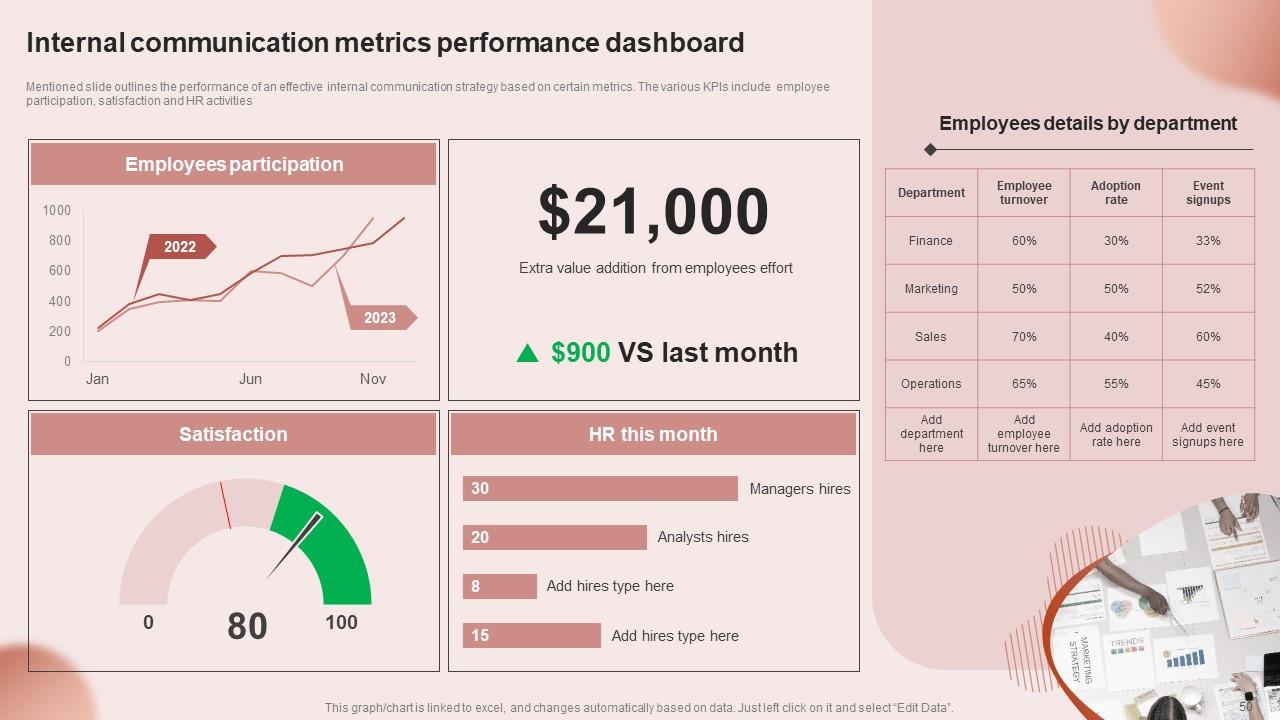
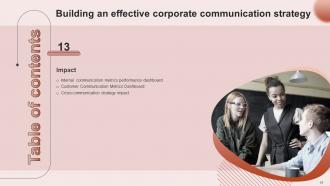
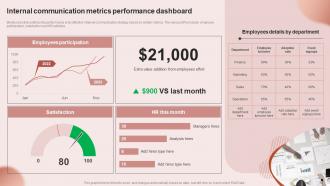
Slide 50: This slide presents Internal communication metrics performance dashboard.
Slide 51: This slide presents Customer communication metrics dashboard.
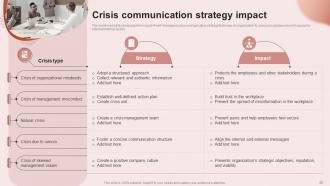
Slide 52: This slide displays Crisis communication strategy impact.
Slide 53: This slide shows all the icons included in the presentation.
Slide 54: This slide is titled as Additional Slides for moving forward.
Slide 55: This is Our Team slide with names and designation.
Slide 56: This is About Us slide to show company specifications etc.
Slide 57: This slide shows Post It Notes. Post your important notes here.
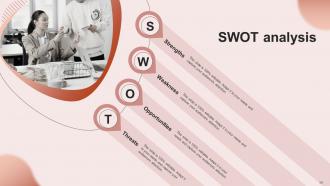
Slide 58: This slide shows SWOT analysis describing- Strength, Weakness, Opportunity, and Threat.
Slide 59: This slide provides 30 60 90 Days Plan with text boxes.
Slide 60: This is a Timeline slide. Show data related to time intervals here.
Slide 61: This is a Quotes slide to convey message, beliefs etc.
Slide 62: This is a Thank You slide with address, contact numbers and email address.
Building An Effective Corporate Communication Strategy Powerpoint Presentation Slides with all 67 slides:
Use our Building An Effective Corporate Communication Strategy Powerpoint Presentation Slides to effectively help you save your valuable time. They are readymade to fit into any presentation structure.
-
Loved the collection. Editing the presentation was seamless with their templates.
-
“I always have a wonderful experience with SlideTeam. It's my ""go to"" when I need a template.”
