


Commercial Roofing Proposal Powerpoint Presentation Slides




Try Before you Buy Download Free Sample Product
 Impress Your
 Audience
 100%
100% Editable
 Save Hours
 of Time


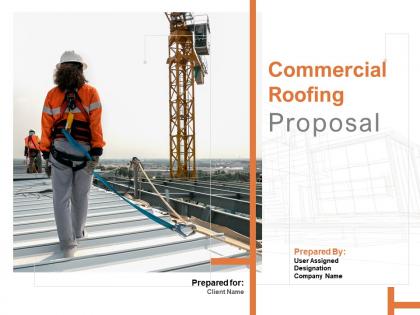
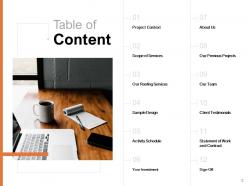
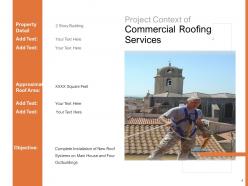
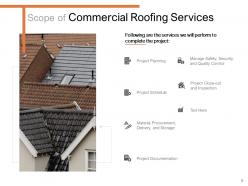
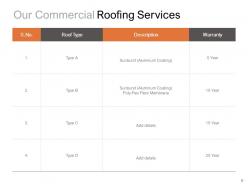
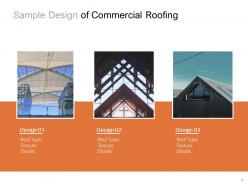
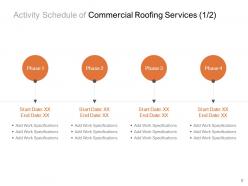
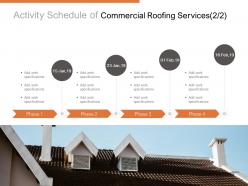
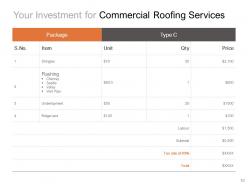
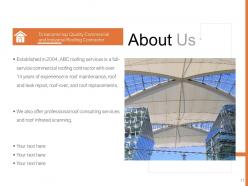
Introducing Commercial Roofing Proposal PowerPoint Presentation Slides for roofing contractors and roofing businesses. Utilize this PowerPoint template to place your roofing bid. Document and discuss the details of the project with the concerned parties with the help of this roofing bid estimate PowerPoint slideshow. Perform a detailed analysis of the various attributes of the roofing components and present the results in front of your client by employing this simple roofing contract PowerPoint layout. Gain your client’s trust by providing valuable solutions to all his roofing problems such as its maintenance, repair, making it waterproof, etc. This commercial roofing business plan PPT is a reliable and trustworthy tool that can help you pitch your services such as the replacement of shingles, ridge vents, flashing, decking to name a few. You can also showcase and explain concepts like project context, objectives, offerings, sample design, etc. Additionally, present your activity schedule outlining all the important dates such as the start date and end date of the project. Apart from this describe your various packages and their individual prices. This will help the client to choose as well as comprehend the most suitable package for himself. You can also outline a few of your previous achievements and talk about your team members which were your biggest support by utilizing this simple roofing bid estimate PowerPoint complete deck. Also, state your various abilities in fulfilling the project undertaken by employing this ready-to-use simple roofing contract PowerPoint theme that has a fully editable layout. Add relevant content in the text placeholders to make this roofing estimate PowerPoint template more adaptable to your business needs. Therefore, take advantage of this sample roof replacement customizable template by clicking on the download button now.
People who downloaded this PowerPoint presentation also viewed the following :
Commercial Roofing Proposal Powerpoint Presentation Slides with all 24 slides:
Use our Commercial Roofing Proposal Powerpoint Presentation Slides to effectively help you save your valuable time. They are readymade to fit into any presentation structure.




FAQs for Commercial Roofing Proposal
Alright, so you'll want detailed scope, material specs with quality ratings, and a solid timeline - honestly, the timeline part is huge because I've watched good contractors lose jobs just for being wishy-washy about when stuff gets done. Break down your pricing transparently, throw in warranty details (people eat that up), and don't skip your team credentials or insurance info. Maybe add some photos from similar projects? The whole thing should be scannable since these folks are crazy busy. Show them you actually get what they need instead of sending some generic template.
Dude, break down your timeline with actual dates and milestones. Clients need to see when inspections happen, when materials show up, all that stuff. Most contractors just say "2-3 weeks" and call it a day - which is honestly lazy. When you give specific phases with real dates, you look like you actually know what you're doing. Oh and throw in some buffer days for weather delays upfront. Trust me, they'd rather know about potential rain delays now than be surprised later when it's pouring and nothing's getting done.
Start with material costs - include waste, delivery, and those annoying price hikes suppliers spring on you. Base labor on how YOUR crew actually works, not some generic industry numbers. Overhead stuff like insurance and permits adds up fast too. Weather's gonna mess with your timeline (learned that one the hard way), so pad your schedule. Get multiple quotes and lock those prices down in writing before you bid. Oh, and don't forget equipment rental costs - that can bite you if you're not careful.
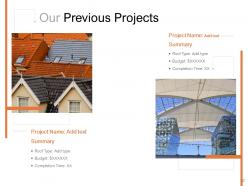
Definitely throw in 2-3 solid case studies that match their situation - same building size, roof type, weather stuff. Before/after photos are huge, plus real numbers on savings and how long it took. I always go for the projects where we fixed something messy or really came through in a pinch. Third-party testimonials hit different than just saying you're good at your job, you know? If you've got client quotes, use them. Oh and put these right after your executive summary - they'll see you actually know what you're doing before getting lost in all the technical details.
Dude, sustainability is huge in roofing proposals right now. Clients literally expect it - cool roofs, energy-efficient stuff, recyclable materials for LEED points. The whole green building thing isn't some fad anymore, it's just how business works. You're screwed if you ignore it honestly. Most proposals throw in lifecycle cost breakdowns now, showing how sustainable picks save money long-term. Carbon footprint numbers too. Oh and definitely frame it as smart investing, not tree-hugging - that's what actually sells. Trust me, the financial angle works way better than the environmental guilt trip.
Dude, you gotta dig into what each industry actually deals with first. Restaurants hate grease buildup and need solid ventilation - that's their main headache. Manufacturing places? They want tough roofing that won't crack from all the machinery vibrations. Healthcare is where things get messy though - drainage systems are complicated and the regulatory stuff will make you want to pull your hair out, but you can't skip it. Retail clients mostly care about looking good and saving on energy bills. Oh, and definitely bring up similar projects you've done and any certifications. Ask them straight up what's driving them crazy about their current roof situation.
Definitely get some before/after shots of the damage first. Aerial photos work great for showing the full picture. Then I'd add diagrams of your solution with all the materials labeled - cross-sections are clutch because people really want to see how those layers fit together. Oh, and throw in pics from other jobs you've done. That stuff builds trust like crazy. A simple timeline showing each phase helps too. The whole point is making it super clear what they're getting. Visual proposals just close faster, you know? Way better than drowning them in text.
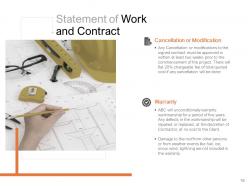
Definitely do a whole warranty section - spell out what's covered like materials, workmanship, weather damage, all of it. Clients get super confused about manufacturer vs. contractor warranties (honestly, I would too). Break down the duration, what triggers coverage, and how fast you'll respond. Oh and throw in something about your track record with past claims - shows you're not just gonna disappear when there's an issue. Any extended warranties or maintenance stuff you offer? Highlight that. The more specific you are about coverage, the better they'll feel about signing. People hate surprises with this stuff.
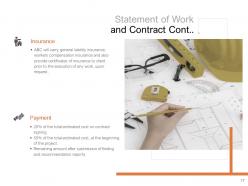
Dude, get your liability insurance, workers' comp, and bonding stuff front and center - commercial clients won't even look at you without it. License info needs to be current and obvious. Warranty terms are honestly where everything goes sideways later, so spell out exactly what you'll cover and for how long. Don't forget payment deadlines and your dispute process. Oh, and definitely add something about change orders and weather delays because they're gonna happen whether you plan for them or not. Have your lawyer check the big proposals before you send them out - learned that one the hard way.
Look, testimonials are basically your proof that you're not just talking a big game. Roofing's expensive as hell - people don't want to get screwed over by some contractor who promises the moon and delivers garbage. When they see other homeowners had good experiences, it kills most of their worry about picking you. Always throw 3-4 recent testimonials in your proposal. References are even better because they can actually call and ask questions directly. Just make sure you get permission from past clients first - nobody likes surprise calls asking about their roof! Trust me, this stuff works way better than any sales pitch you'll give them.
Scope and timeline - be super specific about materials and when you'll actually finish. Don't lowball to get the job because change orders will wreck your rep later. I learned the hard way about permits and disposal costs - always factor those in upfront. Weather delays happen, so put that in writing. Build in a buffer too because honestly, commercial jobs are a nightmare and something always goes sideways. Warranty terms need to be crystal clear or you'll get calls forever. Oh, and realistic completion dates matter way more than aggressive ones that make you look desperate.
Honestly, get that inspection done before you even look at proposals - it's like your secret weapon for negotiations. The report will show you exactly what's wrong, so when contractors try to lowball you, you'll catch them skipping stuff they shouldn't. Plus you can use any damage findings to push for better warranties or get them to throw in extra prep work for free. I learned this the hard way on my last project. Those "standard" bids suddenly don't seem so fair when you've got actual data backing you up. Makes the whole process way less sketchy.
Dude, check out JobNimbus or AccuLynx for roofing stuff. The drone measurement features are honestly incredible - no more sketchy ladder climbs just to get dimensions. Both do the whole package: proposals, customer management, photos, instant pricing. If you're already using Buildertrend or PlanSwift though, might as well stick with what you know. Main thing is getting software that actually spits out clean estimates your clients won't toss in the trash. JobNimbus has a free trial and most guys I work with are pretty obsessed with it. Oh, and EagleView's aerial measurements are solid too if you want another option.
Dude, pricing transparency is everything when you're comparing bids. You can't really stack different contractors against each other if one gives you a random lump sum and another breaks down labor, materials, permits - the whole deal. I've seen way too many people get burned by vague estimates. Clear breakdowns help you catch weird stuff too, like when material costs look suspiciously low or they "forgot" about permit fees. It's so much easier to feel good about your decision when you know exactly where your money's going instead of just crossing your fingers.
Honestly, clients get super anxious when they don't know what's happening with their roof project. Put together a communication plan that spells out who they'll talk to and how often you'll check in - email, calls, whatever. Response times matter too, so include those. I learned this the hard way after a client kept calling because they hadn't heard from us in like a week. It looks professional in your proposal and prevents those awkward "where the hell is my contractor" moments. Trust me, they'll appreciate knowing upfront how you'll keep them posted on delays or surprises.
-
Innovative and Colorful designs.
-
Unique and attractive product design.
-
Very well designed and informative templates.
-
Commendable slides with attractive designs. Extremely pleased with the fact that they are easy to modify. Great work!
-
Amazing product with appealing content and design.
-
Much better than the original! Thanks for the quick turnaround.
-
Great product with highly impressive and engaging designs.
-
Easily Editable.