


Communication Technology Powerpoint Ppt Template Bundles




Try Before you Buy Download Free Sample Product
 Impress Your
 Audience
 100%
100% Editable
 Save Hours
 of Time


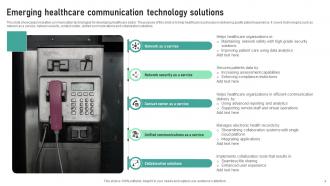
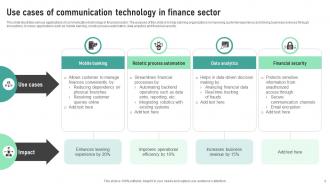
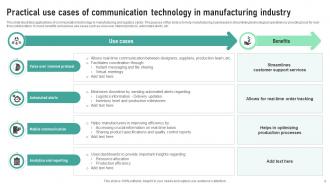
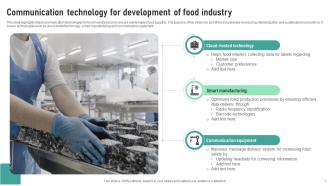
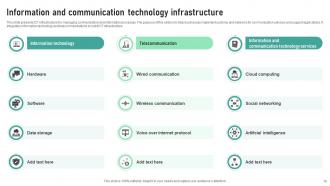
Communication technology is a wide range of devices, frameworks, and resources which make it simple organizations to share information. It includes both software and hardware elements aimed to facilitate sharing of information and other kinds of communication. With our Communication Technology PowerPoint presentation, Explore the complex subject of communication, examining how mobile technology has evolved and the way it affects connectivity throughout the world. Discover how Voice over Internet Protocol VoIP may revolutionize voice communication on a wide range of platforms and how it may influence communication. This presentation provides information and insights necessary for effectively navigating the rapidly evolving world of communication technology. Learn about the future of interconnection, best practises, and upcoming trends to make sure that team is always ahead of the trends when it comes to using the potential of advanced communication technology.
People who downloaded this PowerPoint presentation also viewed the following :
Communication Technology Powerpoint Ppt Template Bundles with all 30 slides:
Use our Communication Technology Powerpoint Ppt Template Bundles to effectively help you save your valuable time. They are readymade to fit into any presentation structure.









FAQs for Communication Technology Powerpoint
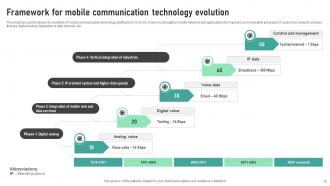
Mobile communication technology has revolutionized global connectivity by enabling instant communication across continents, breaking down geographical barriers, and facilitating real-time collaboration between distributed teams and organizations. This transformation has streamlined international business operations, enhanced remote work capabilities, and accelerated economic development, with many enterprises finding that mobile connectivity ultimately delivers competitive advantages and operational efficiency in an increasingly interconnected marketplace.
Advancements in communication technology have revolutionized business operations by enabling real-time collaboration, streamlining decision-making processes, and facilitating seamless remote work capabilities. Through cloud-based platforms, video conferencing, and instant messaging systems, organizations enhance operational efficiency, reduce communication delays, and accelerate project timelines, with many companies finding that these technologies ultimately deliver improved productivity and competitive advantage.
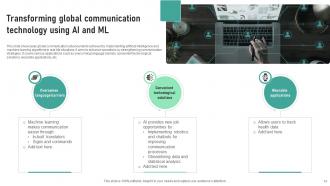
Artificial intelligence enhances communication technologies through natural language processing, real-time translation, automated transcription, predictive text, and intelligent routing systems. These AI-powered capabilities streamline customer service interactions, enable seamless multilingual conversations, and automate routine communications, with organizations increasingly finding that AI delivers faster response times, reduced operational costs, and significantly improved user experiences.
Social media platforms revolutionize information sharing by enabling instant global communication, real-time updates, personalized content feeds, multimedia integration, and interactive engagement features. These technologies streamline information dissemination by bypassing traditional gatekeepers, facilitating direct audience connections, and creating viral distribution networks, ultimately delivering faster news cycles and enhanced customer experiences across industries.
Emerging communication technologies enhance educational access through satellite internet, mobile learning platforms, virtual classrooms, AI-powered tutoring systems, and offline-capable devices. These solutions enable remote learning by delivering curriculum content, facilitating teacher-student interactions, and providing personalized instruction, with many rural and low-income communities finding that mobile-first approaches significantly reduce geographical barriers while improving learning outcomes.
Surveillance technologies present both privacy protection challenges and security enhancement opportunities, requiring careful balance between individual rights, organizational transparency, data governance, and regulatory compliance. While these systems enable enhanced security monitoring and threat detection for institutions like banks and hospitals, they also raise concerns about data misuse and consent, with many organizations finding that clear privacy policies and ethical frameworks ultimately deliver greater trust and competitive advantage.
Cultural adaptation to new communication technologies varies significantly, with some cultures embracing rapid adoption while others prioritize gradual integration that aligns with traditional values and social structures. Collectivist societies often focus on technologies that enhance group communication and community building, while individualistic cultures gravitate toward personal efficiency tools, with many organizations finding that understanding these cultural preferences enables more effective global technology implementations and ultimately delivers better user engagement across diverse markets.
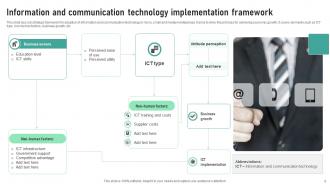
Companies face challenges including employee resistance to change, compatibility issues with legacy systems, training requirements, data security concerns, and workflow disruption during transitions. While these integration hurdles can temporarily impact productivity, organizations increasingly find that strategic implementation with proper change management, phased rollouts, and comprehensive training ultimately delivers enhanced collaboration, streamlined operations, and competitive advantage.
The COVID-19 pandemic dramatically accelerated digital communication adoption by forcing remote work transitions, virtual collaboration needs, and contactless customer interactions across industries. Organizations rapidly implemented video conferencing, cloud-based messaging, and digital meeting platforms, with many companies discovering enhanced productivity, reduced travel costs, and improved work-life balance, ultimately transforming communication strategies permanently.
Synchronous communication technologies enable real-time interaction through video calls, instant messaging, and live collaboration platforms, while asynchronous communication allows delayed responses via email, project management tools, and recorded messages. While synchronous methods enhance immediate collaboration and decision-making, asynchronous approaches streamline workflow flexibility and global team coordination, ultimately delivering both instant connectivity and strategic operational efficiency.
Communication technology facilitates crisis management through real-time alerts, GPS tracking, social media monitoring, video conferencing, and automated notification systems. These tools enable emergency responders to coordinate resources more effectively, disseminate critical information instantly, and maintain situational awareness, with hospitals and government agencies finding faster response times ultimately save lives and minimize damage.
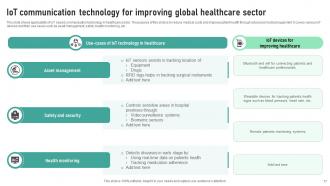
IoT enhances smart home and city communication by connecting devices through wireless networks, enabling real-time data exchange, and automating responses based on environmental conditions. Through integrated sensors and centralized platforms, municipalities streamline traffic management, energy distribution, and emergency services, while homeowners optimize security systems, climate control, and appliances, ultimately delivering improved efficiency and responsive urban experiences.
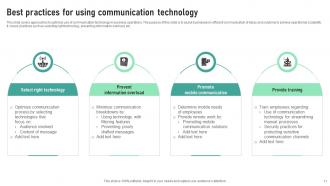
Organizations can ensure effective remote communication through regular video conferences, collaborative platforms like Slack or Microsoft Teams, clear communication protocols, structured virtual meetings, and designated response timeframes. These measures streamline information flow by establishing consistent touchpoints, reducing miscommunication, and maintaining team cohesion, with many companies finding that structured digital communication ultimately enhances productivity and employee engagement.
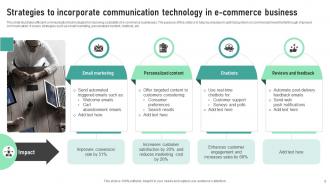
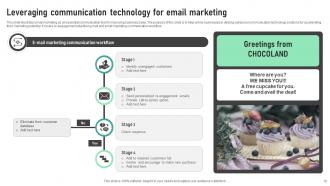
Communication technologies reshape consumer behavior by enabling instant feedback, personalized experiences, and multi-channel interactions across social media, mobile apps, and messaging platforms. These technologies allow marketers to target audiences precisely, track engagement in real-time, and adapt campaigns dynamically, with retail and e-commerce companies finding significantly improved conversion rates and customer loyalty through data-driven personalization strategies.
Organizations should prepare for AI-powered communication platforms, immersive virtual and augmented reality meetings, advanced voice synthesis, blockchain-secured messaging, and quantum-encrypted communications. These technologies streamline remote collaboration, enhance customer interactions, and minimize security risks, with many enterprises finding that early adoption delivers competitive advantage, operational efficiency, and significantly improved stakeholder experiences across global markets.
-
Unique and attractive product design.
-
Out of the box and creative design.