


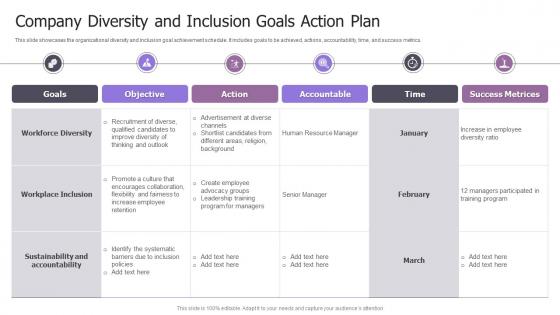
Company Diversity And Inclusion Goals Action Plan




Try Before you Buy Download Free Sample Product
 Impress Your
 Audience
 100%
100% Editable
 Save Hours
 of Time


This slide showcases the organizational diversity and inclusion goal achievement schedule. It includes goals to be achieved, actions, accountability, time, and success metrics.
People who downloaded this PowerPoint presentation also viewed the following :
Company Diversity And Inclusion Goals Action Plan with all 6 slides:
Use our Company Diversity And Inclusion Goals Action Plan to effectively help you save your valuable time. They are readymade to fit into any presentation structure.





FAQs for Company Diversity And Inclusion
Honestly, it starts with psychological safety - people won't speak up if they're scared of backlash. Fair hiring and promotion processes matter too, but here's the thing: leadership has to actually mean it, not just talk about it. Everyone can smell fake commitment from a mile away. Create real space for different voices in meetings and decisions. Also, representation at every level is crucial. I'd start by auditing what you're doing now and - this part's key - actually asking underrepresented folks what roadblocks they're hitting. Their answers might surprise you.
Look, when you get different types of people making decisions together, they actually challenge each other's assumptions way more. Each person brings their own background and way of thinking - kinda like looking at the same problem through different colored glasses, you know? Sure, it might take longer to hash things out at first (which can be annoying), but the solutions end up being way more creative. Research backs this up too - diverse teams avoid that echo chamber effect and come up with better ideas. I'd start by checking who's currently calling the shots and figure out where you can mix in some fresh perspectives.
So basically, unconscious bias messes with how we judge people without us even knowing it. Your brain makes these automatic connections - like assuming certain traits belong to specific groups. Really sneaky stuff. This shows up everywhere from who gets hired to everyday conversations. Over time, it creates these barriers where some people get left out of opportunities or treated differently. What's crazy is how it all compounds - one small bias leads to another missed chance, then another. You've gotta start by admitting you probably have these biases (we all do), then put systems in place to catch yourself before making decisions.
Mix hard data with actual employee feedback - that's your best bet. Track hiring/promotion/retention rates across different groups, but also dig into survey responses about belonging and inclusion. Exit interviews are honestly where you'll get the most brutal truth since people have nothing to lose at that point. Don't forget softer stuff like who's actually participating in employee resource groups or speaking up in meetings. Regular pulse surveys catch problems before they explode. The real trick? Stay consistent with your measuring instead of just doing random one-time checks.
Honestly, start with psychological safety - people need to feel like they can be themselves without getting judged. Your hiring process should be inclusive, obviously, but the real work happens in daily interactions. Make sure meetings actually welcome different viewpoints (not just the fake "any other thoughts?" at the end). I'd set up listening sessions and maybe some employee resource groups. Oh, and train your managers on this stuff because they're the ones who really set the vibe. Here's the kicker though - tie belonging metrics to performance reviews or nothing will change. Do a quick pulse survey first to see where you're at.
Yeah, demographics totally affect how people see D&I stuff. Underrepresented folks notice right away when diversity is missing or feels fake. Meanwhile, people from majority groups might not catch those signals - or they view the whole thing completely different. Younger employees usually want more progressive approaches, but older workers sometimes need help understanding why it matters. Actually, I've seen this play out at my last job too. Bottom line though - you gotta have different perspectives when you're planning this stuff. Otherwise you're just guessing what works.
OK so first thing - post on different job boards and partner with groups that help underrepresented people. Your job descriptions need inclusive language too. Focus on what skills actually matter instead of random "nice to have" stuff that just cuts out good candidates. Seriously, I see so many postings asking for like 15 different things when they need maybe 5. Train your hiring managers about unconscious bias and keep interviews structured. Oh, and try removing names from resumes during initial screening. It's all about widening your search while ditching requirements that don't predict if someone can actually do the job.
Try storytelling sessions with your team - they're honestly pretty powerful. People share personal stuff like childhood traditions or big challenges they've faced, which makes everyone see past just work roles. Start small though, maybe "what's a tradition from your childhood?" before getting into deeper territory. The trick is making sure people actually feel safe being vulnerable, not just saying you want them to be. I've done this in regular team meetings and... yeah, it works way better than those generic icebreakers. Just don't make it a one-time thing - consistency matters more than you'd think.
Honestly, the biggest pain points are pretty predictable. Resistance to change is huge - people get super defensive or think you're just checking boxes. Which, let's be real, sometimes companies are! Leadership buy-in makes or breaks everything though. If your executives aren't actually championing this stuff, you're screwed. Measuring impact is tricky too since culture shifts happen slowly, but everyone wants quick results. I'd say start small with clear goals that tie to actual business outcomes. Skip the feel-good metrics - they don't convince anyone who matters.
So intersectionality is basically about how people's different identities stack up and create totally unique workplace experiences. Like, a Black woman doesn't just deal with sexism OR racism separately - she faces this whole different combo that white women and Black men don't experience. The challenges literally compound in ways most diversity programs completely miss because they treat everything like separate boxes. Short version: someone juggling multiple identities hits roadblocks that single-identity approaches won't catch. It's honestly pretty frustrating how often companies overlook this. When you're planning inclusion stuff, you've gotta think about how identities actually intersect in real life.
Honestly, the numbers don't lie on this one. Diverse teams just perform better - more innovation, better problem-solving, stronger financials. Different perspectives catch stuff that homogeneous groups totally miss. Your customers are diverse too, so it makes sense to have people who actually get them. I mean, yeah it sounds like corporate speak sometimes, but the research is solid. Plus people stick around longer when they feel valued. Oh, and retention saves you a ton on hiring costs - hadn't thought about that until recently. Start with your recruiting process first. See where you're sourcing candidates and branch out from there.
Dude, skip those boring hour-long videos nobody actually watches. You need interactive stuff - case studies, role-playing, small group discussions. Real scenarios people can practice with. The programs that actually work give people specific tools for hiring and performance reviews, not just vague "be better" advice. Monthly check-ins help too, or peer feedback sessions. Keeps it fresh in everyone's minds instead of that one-and-done training approach. Oh, and don't make it preachy - that's when people tune out completely. Focus on practical skills they'll actually use day-to-day.
Honestly, mentorship is a game-changer for diverse talent. It's like having someone who actually gets it and will advocate for you. You know how tricky it is navigating all those unwritten office rules when you already stick out? That's where a solid mentor comes in clutch - they'll share their network, give you real feedback, and basically open doors you didn't even know existed. The trick is being smart about who you pair together, not just throwing people together randomly. Find your high-potential diverse employees first, then match them with senior leaders who are genuinely invested in seeing them succeed. Makes all the difference.
Honestly, start small with maybe 1-2 tools that hit your biggest problem areas. Those blind recruitment platforms are pretty solid - they strip out names and photos so you're not accidentally biasing yourself. Analytics dashboards sound boring but they're actually super helpful for tracking where you're at with hiring and promotions. Anonymous feedback tools? Total game changer - people will tell you what's really going on when they don't have to put their name on it. Employee resource group platforms help people connect too, though I'd probably tackle the feedback stuff first. Don't try to implement everything at once or you'll just overwhelm everyone.
Salesforce spent millions on pay equity audits - pretty bold move but it worked. Microsoft's approach is smart too, tying exec bonuses to diversity goals so leaders actually care about it. Google goes hard on bias training for managers and rethinking their hiring process. Johnson & Johnson lets their employee groups influence real business decisions, which is cool. Oh and track the right stuff - not just who you hire but promotion rates and whether people actually stay. Psychological safety surveys are huge too since retention matters way more than initial numbers.
-
I've been looking for a good template source for some time. I'm happy that I discovered SlideTeam. Excellent presentations must try!
-
I am a big fan of their newsletters because that is how I found my perfect requirement at the time of urgency. Thank God, I kept opening those.