

Comparison Between Potential And Performance Appraisal




Try Before you Buy Download Free Sample Product
 Impress Your
 Audience
 100%
100% Editable
 Save Hours
 of Time


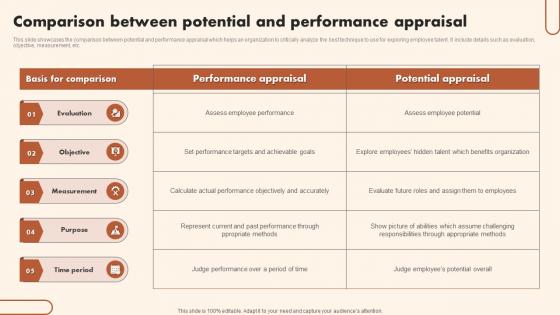
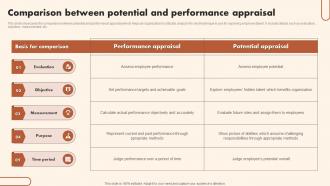
This slide showcases the comparison between potential and performance appraisal which helps an organization to critically analyze the best technique to use for exploring employee talent. It include details such as evaluation, objective, measurement, etc.
People who downloaded this PowerPoint presentation also viewed the following :
Comparison Between Potential And Performance Appraisal with all 9 slides:
Use our Comparison Between Potential And Performance Appraisal to effectively help you save your valuable time. They are readymade to fit into any presentation structure.








FAQs for Comparison Between Potential
So you'll want goal setting, regular feedback, performance reviews, and development planning as your main pieces. Clear objectives that actually tie to company goals are crucial. Don't do the whole annual review thing only - that's honestly terrible timing. Monthly or quarterly check-ins work way better. Document everything consistently and make conversations go both ways about strengths, what needs work, and where people want their careers to go. Oh, and connect it to pay/promotion decisions too or people won't take it seriously. Just start with setting clear expectations upfront, then schedule regular one-on-ones.
Start with your big company goals, then work backwards. What does each department need to hit for that to happen? From there, figure out individual targets that actually connect to those department wins. Honestly, I've watched this fall apart so many times when people can't see how their work matters to the bigger picture. Your sales guy should know exactly how his numbers feed into revenue targets, you know? Do quarterly reviews to course-correct when things drift. Most important thing? Everyone needs to understand how their daily grind moves the company forward. Otherwise you're just throwing darts in the dark.
Feedback is honestly the backbone of good performance management. Most problems I've seen aren't actually skill issues - they're communication breakdowns. You've got to make it a two-way street though. Give your people regular input on how they're doing, but also ask what they need from you. Weekly check-ins work way better than those dreaded annual reviews nobody likes. Keep it conversational, not formal. When you're constantly talking, you can fix small issues before they become big ones. Trust me, it makes everything so much smoother.
Honestly, tech makes performance management so much less painful. Real-time dashboards show you exactly where people stand with their goals. Mobile apps let you give feedback right when something happens instead of waiting for some quarterly review (which nobody likes anyway). The AI stuff is actually pretty neat - it catches patterns you'd totally miss otherwise. Your team can track their own progress too, which makes them way more invested. Oh, and automated reminders for check-ins are a lifesaver. I'd say just pick one tool that fixes your biggest headache first - maybe scheduling those 1:1s or tracking goals.
Honestly, ditch the whole annual review thing - it's basically useless. What actually works is having quick weekly check-ins, maybe 15 minutes max. Celebrate wins publicly when they happen, and let people set their own development goals (they know what they need better than you do anyway). The biggest thing though? People need to feel safe screwing up and trying stuff. Train your managers to coach instead of just judging performance. Oh, and ask for feedback yourself - shows you're not above it. Start small with one change and go from there.
Stick to stuff you can actually measure - sales figures, how many projects got finished on time, customer ratings. That fuzzy "good attitude" nonsense doesn't help anyone. Make sure you're comparing apples to apples too. Like, don't pit someone with the worst territory against your top performer who gets all the good leads - that's just setting people up to fail. Being upfront about everything matters a lot. People need to know exactly what they're being judged on. Oh, and get a few different people to look over your metrics first. You'll probably miss something obvious.
Honestly, good performance reviews totally work if you don't make them suck. Give people clear expectations and actually talk about their growth - shows you care. I've been in way too many of those awful checkbox meetings where everyone's just going through the motions. Make it a real conversation instead. Specific feedback is huge, plus discussing where they want their career to go makes people feel valued. You'll spot what's getting in their way too so you can fix it. Oh, and don't save everything for once a year - check in regularly or people will hate you for it.
Deal with it early - that's the biggest thing. Don't wait until you're pissed off and then come down hard. I've seen that backfire so many times. Focus on the actual work stuff, not their personality. Ask what's blocking them first - usually it's unclear expectations or they need training, not that they don't care. Frame it like "let's figure out how to get you back on track" instead of making them feel like garbage. Regular check-ins help too. Most people want to do well, they just need clearer goals or better support.
Honestly, the situation-behavior-impact thing actually works even though it sounds super corporate. Tell them what happened, what they did, how it affected everyone. Don't go after their personality - stick to behaviors you can change. Always give them something actionable to work with too. I'd mix in some wins with the tough stuff, and definitely ask what they think about it. Makes it feel less like you're just dumping on them. Oh, and circle back in a couple weeks! People forget feedback exists if you don't follow up.
Yeah so Gen Z and younger millennials are all about getting feedback constantly - like weekly check-ins instead of those dreaded annual reviews. They love digital stuff and instant recognition through apps. Older millennials and Gen X want more structure though, like quarterly reviews with actual metrics and development plans. Boomers still prefer the old-school face-to-face talks with written notes. Honestly the whole annual review thing feels so outdated now - who has time for that? Just ask your team how they actually want feedback. Way better results that way.
Honestly, the hardest part is you can't just walk over and see how things are going. No more random check-ins or picking up on vibes - everything has to be planned now, which feels weird at first. I'd definitely schedule more one-on-ones than you think you need. Project management tools become your best friend for tracking stuff. Focus on what gets done rather than when people are online (trust me on this one). Create regular feedback sessions since those casual conversations are basically extinct. Oh, and just ask your team what they actually need instead of making assumptions.
Honestly, just document everything upfront - what the ratings mean, when reviews happen, all that stuff. Most people are totally lost about what's actually expected of them (I was at my last job!). Get it all in writing first, then blast it out during onboarding and team meetings. Train your managers so they're not all giving different explanations. Regular check-ins work way better than springing the annual review on people. I'd make like a simple one-page cheat sheet that covers the basics - what, when, how. Sounds obvious but you'd be surprised how many companies skip this step entirely.
Honestly, start simple - track engagement scores and retention rates first. Goal completion is obvious but tells you a lot. Are managers actually doing regular one-on-ones? That's where the magic happens but half of them skip it. I'd throw in some surveys about feedback quality too. Internal promotions are clutch - shows if people are actually developing or just stuck. But here's the thing - just ask your team straight up. Are these performance chats helping or just corporate theater? Don't try measuring everything at once though, you'll go crazy. Pick 2-3 things that actually matter for your company and nail those first.
So during your performance reviews, make development goals just as important as hitting numbers. Most places totally mess this up - they treat growth like some side thing. Build individual plans that actually match what your people want AND what the business needs. Check-ins should dig into skill gaps and where they want their careers to go. Performance data's great for spotting who needs training or tougher assignments. The whole point? Make your team feel like you're investing in their future, not just pointing out what they suck at.
Honestly, leadership makes or breaks the whole thing. Your managers will only care as much as the people above them do - I've watched this play out so many times. If leaders aren't having real conversations and actually using performance data for decisions, everyone else just phones it in. You'll get that classic "check the box" mentality where it's all just paperwork. The trick is getting leadership bought in first. Train them up on meaningful discussions, not just the annual review dance. Once they're modeling it properly, the rest usually follows.
-
“Love it! I was able to grab an exciting proposal because of SlideTeam.”
-
Innovative and attractive designs.