


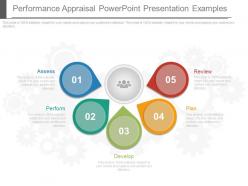
Performance appraisal powerpoint presentation examples






Try Before you Buy Download Free Sample Product
 Impress Your
 Audience
 100%
100% Editable
 Save Hours
 of Time


Our Performance Appraisal Powerpoint Presentation Examples attract bigger crowds. A lot of folks find them greatly appealing.
People who downloaded this PowerPoint presentation also viewed the following :
Performance appraisal powerpoint presentation examples with all 5 slides:
Our Performance Appraisal Powerpoint Presentation Examples help discover common ground. They facilitate consensus creation.
FAQs for Performance appraisal
So basically they're trying to figure out what you're good at and what needs work. Plus they want to make sure you're actually working toward company goals, not just doing your own thing. Obviously it's also about money stuff - raises, promotions, that whole deal. Sometimes firing people too but let's not go there lol. Honestly, the best part should be getting a clear picture of where your career's heading. Managers need that data to justify paying you more (or not). Don't just sit there nodding though - actually engage with the process. You'll get way more out of it.
First thing - audit what you're doing now to see where bias sneaks in. Train your managers on consistent evaluation criteria that everyone knows beforehand. Multiple reviewers help a ton when you can swing it. Document everything because honestly, who remembers specifics from months ago? Same timeline, same questions, same rating scales for everyone. If possible, strip out names during initial reviews. You'll want to track outcomes by demographics too - patterns show up fast that way. The whole thing falls apart without consistency, so that's really your north star here. Sounds like a pain but it works.
Oh this is totally your chance to brag about yourself before your boss writes their review! Honestly, most managers miss half the stuff we actually do. Just be real about your wins and struggles - don't turn it into some dramatic confessional though lol. The whole point is getting you both on the same page so your actual review isn't awkward. When your manager sees how you view your performance vs. how they see it, way better conversations happen. Trust me on this - start jotting down your accomplishments now instead of panicking later trying to remember everything you did six months ago.
Honestly, performance management software is a game changer for appraisals. It automates all that tedious data collection and tracks feedback in real-time instead of scrambling before annual reviews. You'll get better 360 feedback, automated check-in reminders, and continuous goal tracking. AI analytics can spot patterns you'd totally miss - though nothing beats an actual conversation with your team. The trick is finding tools that save time rather than creating more busywork (learned that the hard way). Start simple by digitizing what you're already doing, then add fancier features later.
Don't turn it into a monologue where you're just dumping criticism on them. Listen to what they have to say too. Never bring up problems for the first time during the review - that's honestly just cruel and makes people defensive. Your brain will want to focus on whatever happened last week, but try looking at their whole performance period instead. Skip the comparisons to other teammates too. Ask open questions, give specific examples of what you mean, and actually let them talk. Oh, and leave room to brainstorm solutions together rather than just telling them what's wrong.
Honestly, the "needs improvement" stuff is where you'll find the real gems for development planning. Start there and figure out what specific skills are missing. Then get creative - maybe it's a workshop, some hands-on training, or giving them a challenging project to stretch their abilities. Don't forget about their strengths though, you can build on those too. The trick is framing it as growth, not punishment (nobody wants to feel like they're in trouble). I'd sit down with them again pretty soon after - like within a week - to hash out the actual plan and what resources they'll need.
Mix hard data with soft skills stuff - sales numbers, project deadlines, customer ratings give you solid facts. But honestly that's only half the battle. Manager feedback and peer reviews help you see communication, teamwork, problem-solving abilities. Track goal achievement too since that shows real performance. Don't go crazy with metrics though - 3 or 4 max or you'll drown in spreadsheets. Pick what actually moves the needle for their specific job and stay consistent with it. The combo approach works way better than just looking at numbers alone.
Annual reviews are still pretty standard, but honestly they're kinda useless on their own. Some companies do quarterly check-ins now, which is better. The real magic happens with monthly one-on-ones though - way less formal, just chat about how things are going and what's blocking them. I mean, imagine only hearing feedback once a year? That'd be brutal. Your team needs to know where they stand before review season hits. Pick whatever schedule you can actually stick to - even bi-monthly beats the hell out of annual-only. Consistency wins over frequency every time.
Look, appraisals can totally motivate people or completely kill their vibe. Really comes down to execution. Good ones with actual feedback and growth plans? Employees feel valued and know where they're headed. But let's be real - most people hate them because they're just boring paperwork with cookie-cutter comments. Make yours feel like real conversations about development, not some weird performance trial. Give specific examples, ask what they actually need from you, then follow through. Oh, and don't do that thing where you sandwich criticism between fake compliments - people see right through that.
Look, you've gotta match your review system to what your company actually cares about. Say you're big on teamwork - don't just measure solo wins, throw in peer feedback too. Innovation places? Reward smart risks and failures, not just safe bets. Some teams love constant check-ins, others want formal annual sit-downs. I swear, half the companies I know completely whiff on this and can't figure out why their reviews feel fake. Quick test: list your core values, then honestly ask if your current system actually measures that stuff. Most don't, which is... yeah, that's the problem right there.
Remote appraisals are tricky because you can't see what people are doing day-to-day. Plus you miss all those random conversations that actually tell you how someone's performing. I'd say ditch the once-a-year review thing and do regular check-ins instead. Use whatever project management tools you have to track stuff as it happens - way easier than trying to remember everything later. Focus on actual results rather than whether someone "seems engaged" or whatever. Oh, and definitely do video calls for the important conversations. Makes a huge difference when you can see someone's face, you know?
Honestly, talk about what they actually *did*, not their personality. Like use that SBI thing - the situation, their behavior, how it affected stuff. But don't just tear them down, you know? Mention what's working too. Ask questions like "what's making this hard for you?" because then it's actually a conversation instead of you just dumping criticism on them. Be straight with them but not brutal - nobody wants to walk out feeling like garbage. The key thing is having clear next steps with real deadlines so they're not guessing what you want.
SMART goals totally save your butt during reviews because there's no arguing about what was supposed to happen. You know those vague goals like "be a better team player"? Forget that noise. Make everything specific with actual deadlines and numbers. I learned this the hard way - used to spend review meetings trying to remember what people even did last quarter. Now progress tracking is straightforward year-round. The trick is answering "what exactly, by when, and how will we measure it" for every single goal. Makes those awkward performance conversations way less awkward, trust me.
Performance reviews are basically treasure troves for figuring out succession planning. They show you who's crushing it and has that natural leadership vibe. You'll spot the skill gaps people need to work on, plus see who's been delivering solid results consistently. What I love about them is they reveal which employees actually want to grow - that motivation matters way more than people think. Don't just look at current performance though. Check how they make decisions, handle tough situations, and lead others. Use all that intel to build your talent pipeline for key roles and start prepping those future leaders.
Honestly, start with feedback training - most managers just say "nice work" which helps nobody. Role-playing is huge too because they'll totally panic when someone gets defensive or starts crying (trust me, it happens). Active listening is another big one so reviews actually become conversations instead of your manager just rambling at you for 30 minutes. Don't forget to walk them through whatever forms your company uses - sounds boring but they'll be grateful later. Skip the one-day crash course thing though. Better to spread training throughout the year so it actually sticks.
-
Unique design & color.
-
Great designs, Easily Editable.