

Performance Review Process Powerpoint Presentation Slides





Try Before you Buy Download Free Sample Product
 Impress Your
 Audience
 100%
100% Editable
 Save Hours
 of Time


Increase your performance graph in the market using this Performance Review Process PowerPoint Presentation Slides. This performance improvement plan professionally designed editable PPT deck contains twenty-two slides. You can maintain your business growth with the help of some key points which are mentioned in this performance improvement plan PowerPoint slide. The performance evaluation PPT includes various features such as employee assessments, promotion, appraisal, cost accounting, confidential records, etc. which are helpful in maintaining the reputation of the business. Use data-driven charts, graphs, diagrams, and professionally designed slides to improve your performance plan in minutes. The performance coaching presentation template helps you to review the productivity and profitability of your organization. This performance analysis PPT slideshow includes ready to use PowerPoint templates on systematic observations like decision making, visual feedback, data analysis, net fixed asset turnover, income statement, dividend per share, and profit after tax. Download this performance management presentation deck and accomplish your target in an effective manner.
People who downloaded this PowerPoint presentation also viewed the following :
Content of this Powerpoint Presentation
Slide 1: This slide introduces Performance Review Process. State Your Company Name and begin.
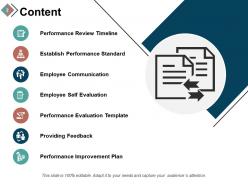
Slide 2: This slide shows Contents of the presentation which includes- Performance Review Timeline, Establish Performance Standard, Employee Communication, Employee Self Evaluation, Performance Evaluation Template, Providing Feedback and Performance Improvement Plan.
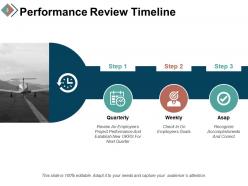
Slide 3: This slide presents Performance Review Timeline to review performance as soon as possible or on Weekly or quarterly basis.
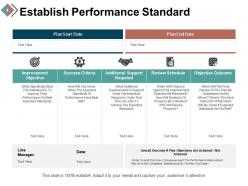
Slide 4: This slide represents Establish a Performance Standard describing- Improvement Objective, Success criteria, Additional support required, Review Schedule and objective outcome.
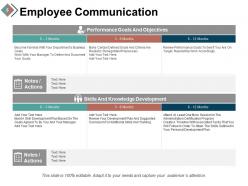
Slide 5: This slide displays Employee Communication defining Performance goals & objectives and Skills & knowledge development.
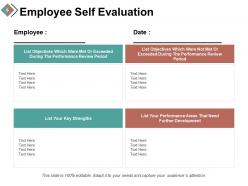
Slide 6: This slide showcases Employee Self Evaluation with- List Objectives Which Were Met Or Exceeded During The Performance Review Period, List Objectives Which Were Not Met Or Exceeded During The Performance Review Period, List of Key Strengths, List of Performance Areas That Need Further Development.
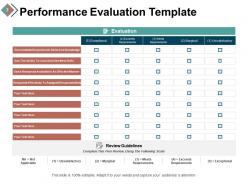
Slide 7: This slide shows Performance Evaluation Template in a table form with review guidelines as- Exceptional, Exceeds Requirements, Meets Requirements, Marginal and Unsatisfactory, Demonstrate Required Job Skills And Knowledge, Has The Ability To Learn And Use New Skills, Uses Resources Available In An Effective Manner, Responds Effectively To Assigned Responsibilities.
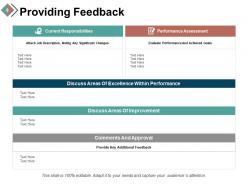
Slide 8: This slide presents Providing Feedback including- Current Responsibilities, Performance Assessment, Discuss Areas Of Excellence Within Performance, Discuss Areas Of Improvement, Comments And Approval.
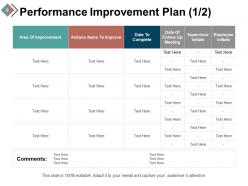
Slide 9: This slide displays Performance Improvement Plan in table form with headings as- Areas of improvement, Actions items to improve, Date to complete, Date of follow up meeting, Supervisor Initials and employee initials.
Slide 10: This is another slide on Performance Improvement Plan describing Performance needing improvement, Performance period and supervisor comments.
Slide 11: This slide shows Performance Review Process Icons.
Slide 12: This slide is titled Additional slides for moving forward. You may change the content as per need.
Slide 13: This is Our mission slide with imagery and text boxes to go with.
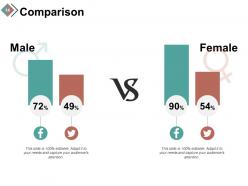
Slide 14: This is a Comparison slide To state comparison between commodities/ entities etc.
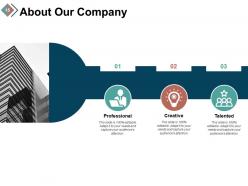
Slide 15: This slide displays About Our company. You can shows company/team specifications etc. here.
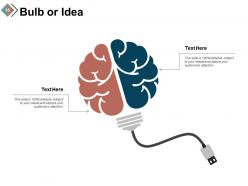
Slide 16: This is a Bulb or Idea to show information, ideas, specifications etc.
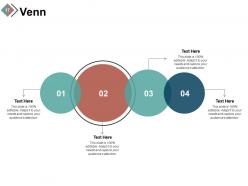
Slide 17: This is a Venn slide with text boxes to show information.
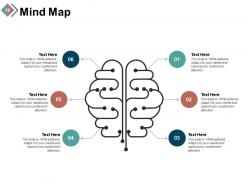
Slide 18: This slide shows a Mind map for representing entities.
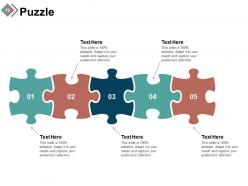
Slide 19: This slide shows Puzzle with text boxes.
Slide 20: This slide shows a Stacked Column chart with three products comparison.
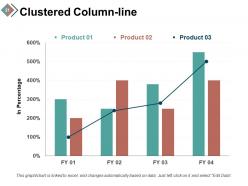
Slide 21: This slide presents a Clustered Column-line chart with three products comparison.
Slide 22: This is a Thank You slide with Address# street number, city, state, Contact Number, Email Address.
Performance Review Process Powerpoint Presentation Slides with all 22 slides:
Breathe life into your talk with our Performance Review Process Powerpoint Presentation Slides. They will add to the reality of your message.



FAQs for Performance Review Process
Hit the big three: goal achievement, core competencies, and specific behavioral examples. Also throw in development areas and future goals - that's honestly where the magic happens. You'll want space for both manager and employee input. Career aspirations too, plus what support they actually need from you or the company. Oh, and be specific! Saying someone's a "good communicator" is useless feedback that helps nobody. STAR method works great for examples if you can swing it. The whole thing should feel more like a real conversation than checking boxes.
Honestly, just ask each team what works for them instead of forcing the same process everywhere. Your sales people probably want quarterly numbers-focused check-ins, but creatives? They'd rather do project reviews that actually look at innovation and teamwork. Engineering teams are weird about this stuff - they prefer peer feedback over traditional reviews anyway (most of them hate the corporate review thing). Success looks totally different for each department, so build your evaluation around their specific metrics. Start by just asking your team leads what would actually help their people grow. Way easier than guessing.
Give your people the review forms like two weeks ahead of time - seriously, don't spring this stuff on them last minute. Have them fill out a self-assessment first. You'll be shocked how much better the actual conversation goes when they've thought about their own performance beforehand. I always do a quick 15-minute pre-meeting to walk through the process and calm any nerves. Double-check you're both on the same page about last period's goals. Honestly, the biggest thing is no surprises. Nobody should sit down and hear criticism they've never heard before.
Honestly, ditch the whole "evaluation" mindset and make it about growth instead. I'd focus on finding skill gaps together and mapping out where they actually want their career to go. Yeah, giving real feedback feels super awkward at first, but people genuinely need to hear both what they're crushing and what needs work. The magic happens when you connect their current stuff to future opportunities - like "build this skill and you're looking at that promotion." Make it collaborative, not you just talking at them. Oh, and definitely do quarterly check-ins or they'll forget everything by next year.
Honestly, it's a game changer for all that mind-numbing admin work. Set up automated deadline reminders so you're not constantly nagging people. Templates are your best friend - they'll auto-fill employee info and save you tons of time. Real-time dashboards show completion rates instantly, which is actually pretty satisfying to watch. The 360 feedback collection happens automatically too, so no more awkward email chains. I love the analytics part though - spotting trends and identifying top performers becomes way easier. Just don't go crazy at first. Pick one platform, test it with maybe 10-15 people, then expand from there.
Start with structured forms that have actual measurable stuff instead of fuzzy things like "team player" - those are basically bias traps. Train your managers on unconscious bias too, that's huge. Get multiple people reviewing each employee, not just their direct boss. Peers, other managers who've worked with them. Document things all year long instead of scrambling at review time trying to remember what happened in March, you know? The whole point is removing as much subjectivity as possible. Create a solid rubric and actually use it the same way for everyone - consistency is everything here.
Mix hard numbers with the softer stuff - that's what actually works. Goal completion, productivity metrics, role-specific KPIs are your baseline data points. But honestly? Communication skills, teamwork, problem-solving ability matter just as much. Get input from their peers too, plus customers if that makes sense for the role. I'd probably focus on 3-5 key areas that really define success in their position, then figure out how to measure each one. The metrics should match what good performance looks like for them specifically, not some generic template.
Honestly? Twice a year works best for most teams. You're staying on top of things without being that micromanaging boss everyone hates. Quarterly reviews can be solid if you've got new people or you're in the middle of some big transition, but monthly formal ones are overkill - trust me on this. People just start going through the motions. What really matters is those quick informal chats every few weeks anyway. Your team needs feedback in the moment, not just during those big formal sit-downs. I'd start with twice yearly and see how it goes.
Honestly, the biggest mistake is waiting until review time and only remembering what happened last week. I used to do this all the time! Document stuff as it happens - Sarah's big win in March, that project Tom struggled with in June. Focus on actual results and behaviors, not personality traits or vague garbage like "needs better communication skills." Also? Skip the compliment-criticism-compliment thing. It's confusing and nobody learns anything. Have real conversations throughout the year instead of dumping everything into one awkward formal meeting. Start keeping notes now even if reviews aren't for months - you'll thank yourself later.
So the key thing is making feedback super specific instead of leaving it vague. Like if someone says "improve communication" - that means nothing, right? Work with them to figure out what that actually looks like. Maybe it's sending weekly updates or asking more questions in meetings. Pick 2-3 concrete goals with actual deadlines. I always tie these back to their career stuff too since that's what they really care about. Oh, and don't forget to schedule a check-in within a month or it'll just get forgotten. Most feedback dies because it's too abstract anyway.
Stick to actual behaviors, not personality stuff - like "you missed three deadlines" instead of calling someone lazy. I always do that sandwich thing where you start positive, hit the real issue, then wrap up on a good note. Works way better than just dumping criticism on people. Ask questions too, like what's blocking them? Turns the whole thing into figuring stuff out together rather than me just lecturing. Those conversations are already awkward enough without making someone feel attacked, you know?
Honestly, peer reviews are so much better than just getting feedback from your boss. Your coworkers see how you actually work day-to-day - like, do you respond to Slack quickly? Are you helpful in meetings? Your manager probably doesn't notice half that stuff. Getting multiple perspectives helps you spot blind spots too. The downside is most people suck at giving feedback unless they're trained properly. Otherwise you just get useless stuff like "team player" that tells you nothing. But when done right? Way more valuable than your annual review.
Ugh, this sucks but you gotta have that awkward conversation first. Be direct about what's not working and figure out why it's happening. Document everything though - trust me on this one, you'll thank yourself later. Build a plan together with actual deadlines and goals they can hit. Give them what they need to succeed, but honestly? If they don't turn it around after a real shot, you'll have to loop in HR. Just be super clear upfront about what you expect and what happens if things don't change.
Honestly, the best performance reviews feel more like brainstorming sessions than formal evaluations. Start with what they're doing well, then use "we" language for challenges - like "how can we tackle this?" instead of pointing fingers. Ask open-ended questions and actually listen to their answers. I always try to be specific with examples, but frame problems as chances to grow. The whole point is making them feel supported, not torn down. Oh, and don't forget to end each topic with clear next steps - they should walk away knowing exactly what to do next.
Honestly, just bake your company goals right into people's individual reviews. Like if you're trying to boost customer retention, make that part of everyone's targets - not just the customer service team. Way better than those vague "be a team player" comments that don't mean anything. Each department should break down the big company objectives so people actually see how their daily work matters. Oh and train your managers properly on this stuff - they're the ones having these conversations. When done right, people get way more motivated because their growth connects to real business wins.
No Reviews