

Performance Appraisal Powerpoint Presentation Slides




Try Before you Buy Download Free Sample Product
 Impress Your
 Audience
 100%
100% Editable
 Save Hours
 of Time


Your search for a simple yet extensively designed Performance Appraisal PowerPoint Presentation Slides ends here. We bring to you this deck of thirty three slides based on performance appraisal which include the various facets of work force review namely, employee assessment criteria, employee review chart, employee assessment scorecard, employee skill assessment template and cross training employee assessment chart to name a few. These slides can be implemented in weekly, monthly or annual review of employee performance. The performance evaluation slides aid business planning and fixing goals as they ascertain desired promotions and pays. These employee job analysis PPT slides are helpful in maintaining a healthy work environment because they play an important role in creating a positive relation between the employees and the management. These templates certainly motivate the employees and aid in determining the required training sessions. This ready-to-use employee performance PowerPoint deck can be downloaded at a click! Be able to face future demands with our Performance Appraisal Powerpoint Presentation Slides. Develop greater and better ability.
People who downloaded this PowerPoint presentation also viewed the following :
Content of this Powerpoint Presentation
How often does your company conduct performance appraisals? The general trend is between quarterly to yearly as this period is enough to give the correct testament of an employee’s character, conduct, and efficiency. During this time, while many may be off-boarded or asked to leave, others will stick through, and even enroll in skill development programs.
Based on performance evaluation, work conduct, and other qualities demonstrated at work, managements will reward employees accordingly. For proper evaluation, well-defined criteria needs to be established, ratings determined, and the reviewing committee defined. Only then is a fair evaluation possible. Finally, in defining employee performance appraisal, percentage increments and the type of appraisal (cash or kind) must also be specified. These rules and guidelines must be defined, beforehand, in the form of a booklet that can be referred to from time to time. Here’s where SlideTeam’s performance appraisal PowerPoint Templates assume importance. Explore this complete deck featuring 33 PPT Slides to help you prepare rules and also define parameters of evaluation. Edit this PPT Layout today to create a rigorous appraisal system that relies on facts and is fair in nature.
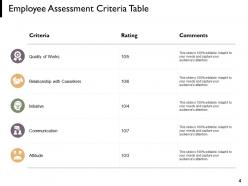
Template 1: Employee Assessment Criteria Table
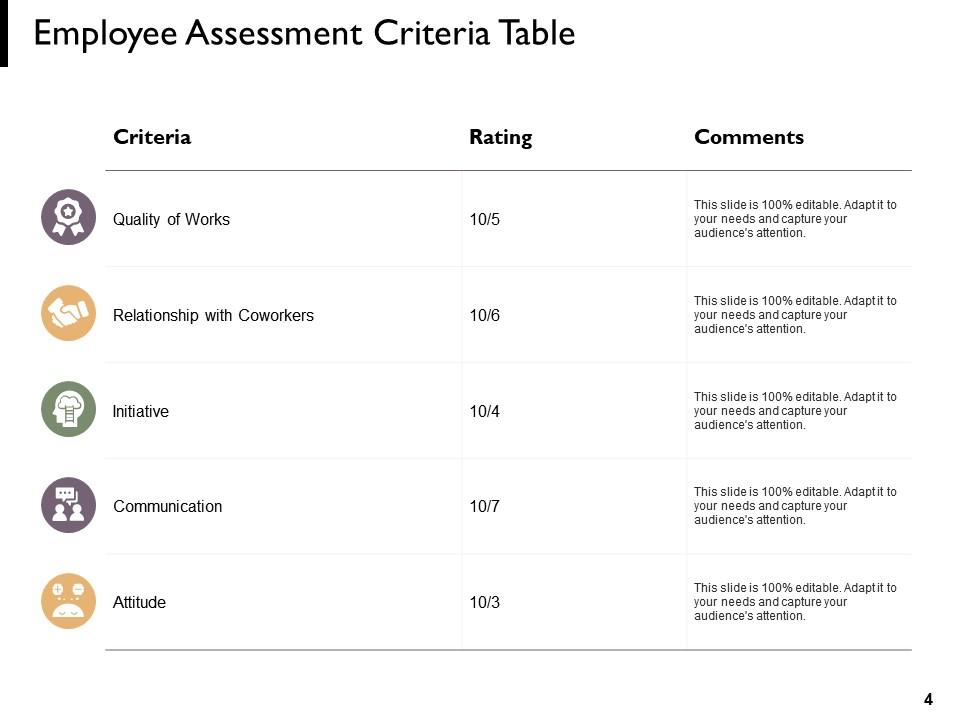
Establish an assessment criteria for granting appraisals to your employees with the PPT Template. Assign a score to each skill or abilities tested under the appraisal program and allot marks to each employee. Fill this scorecard for all employees within the organization with a score against the criteria measures. You can also adjust additional comments to support the score of employees who have understood the foundation of this assessment system.
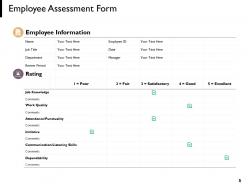
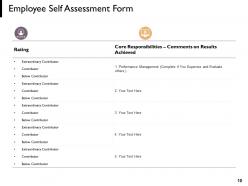
Template 2: Employee Assessment Form
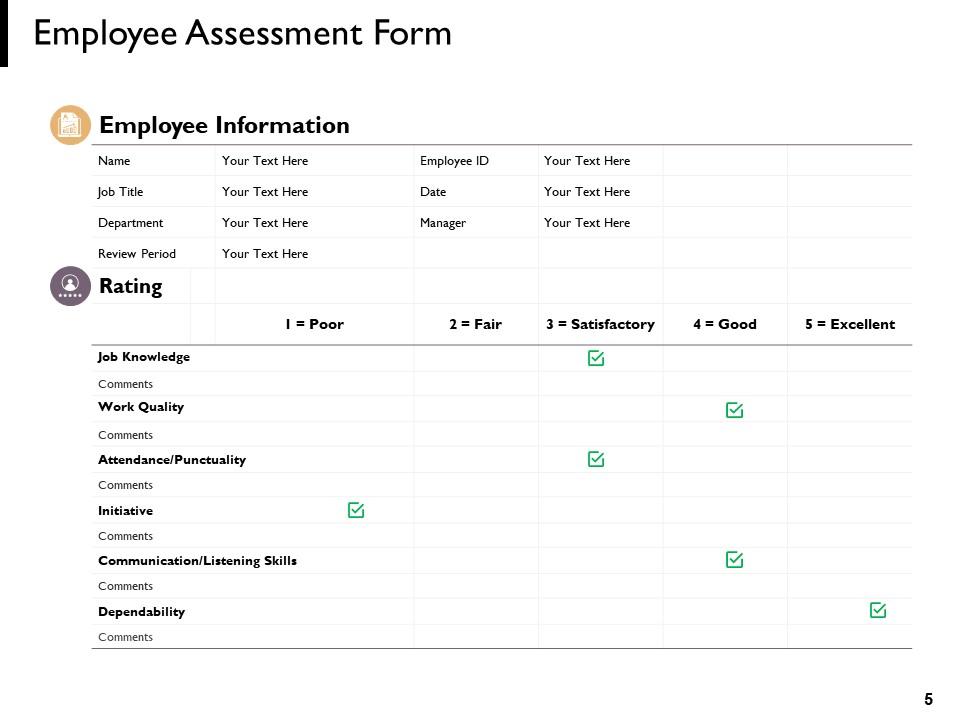
Within this Performance Appraisal PPT Presentation, you’ll get access to this assessment form template that functions as a progress card for employees. You can define the ratings for a particular review period and even customize this for employees of your organization. Rate work skills and work ethics on a scale between 1-5, one being poor, and 5 being excellent. Mark each criteria of assessment against the rating the employee receives. This is an easy to use PPT Presentation, get it now from the link below.
Template 3: Employee Assessment Review Chart
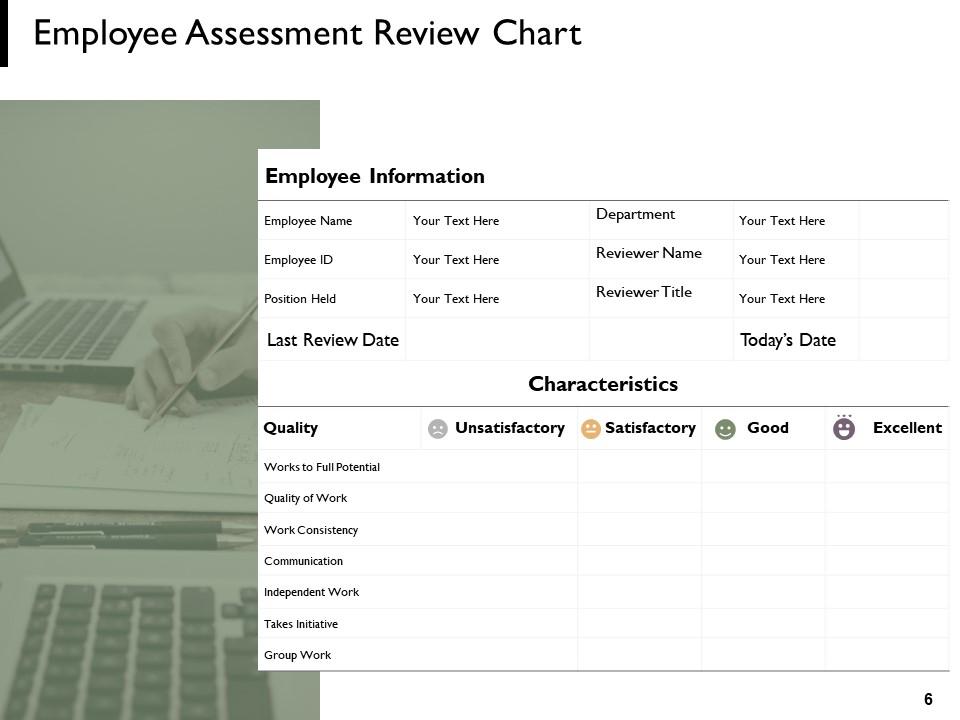
With this employee assessment review chart, you can compare employee performance on a scale between unsatisfactory to excellent. This chart comparison of characteristics can be customized for all employees and specified with their employee ID, position held, reviewer name, and reviewer title. Once the assessment is complete, this PPT Template can then be shared with the employee in PPT Form or document form. Our presentation templates are compatible across MS PPT, and Google Slides.
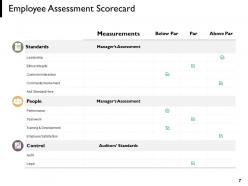
Template 4: Employee Assessment Scorecard
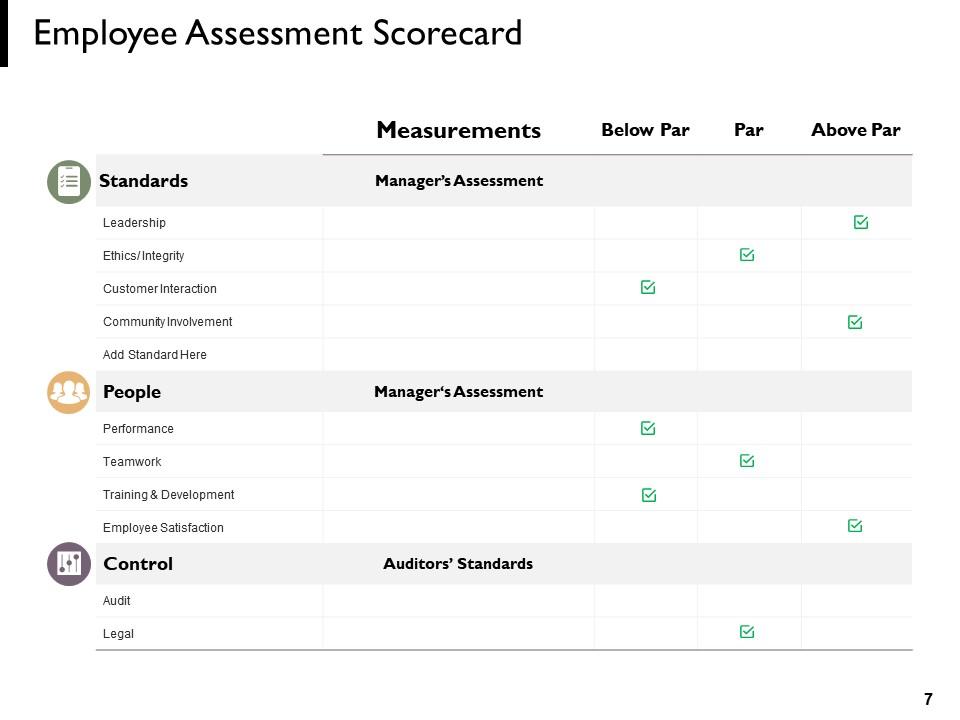
Looking for a scorecard layout to report and record employee performance for appraisal, use this design-ready PPT Template. Rate qualities of employees with respect to work standards, teamwork, and control i.e. in audit or legal. Report ratings under each section assessed by the manager or auditor in charge. Finally give each criteria a score of below par, at par, or above par as guided in this presentation template.
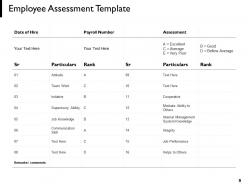
Template 5: Employee Assessment Template

Evaluate Employees based on their ethics, social skills, and work expertise by listing all relevant caraterics and their scores against them. You can list up to 15 particulars that will affect their appraisal for that period. Rate each characteristic between A-D and thus calculate their appraisal percentage based on this grading system.
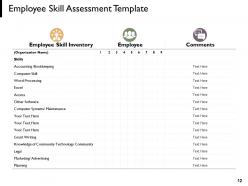
Template 6: Employee Skill Assessment Template
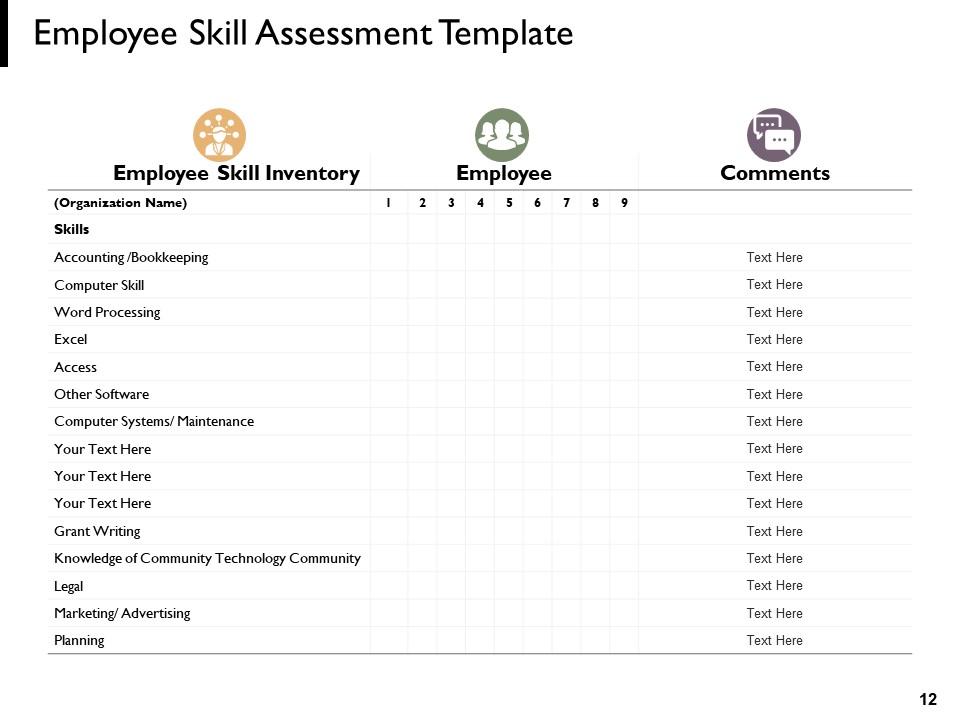
In the corporate world, appraisal can also imply promotion in addition to salary raise, and this template will help you determine the deserving ones for the quarter. Compare employee skills by listing these under the inventory section. Rate each skill for each employee along with side comments shared by the assessing manager. Rate both soft skills and technical skills and you can even perform gap analysis thereby knowing which training programs to invest in.
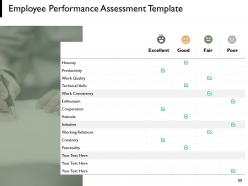
Template 7: Employee Performance Assessment Chart

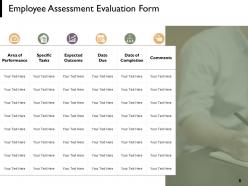
Management can use this assessment form to evaluate their employees. The slide provides a clear analysis of which employee is deserving of appraisal and recognition, and estimate the percentage of salary increment due to them. Track features like attendance, sense of responsibility, interest, policy adherence, quality of work, etc You can also support this assessment with additional comments shared by the reviewer and help the employee understand their performance in depth.
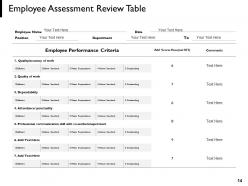
Template 8: Employee Assessment Review Table
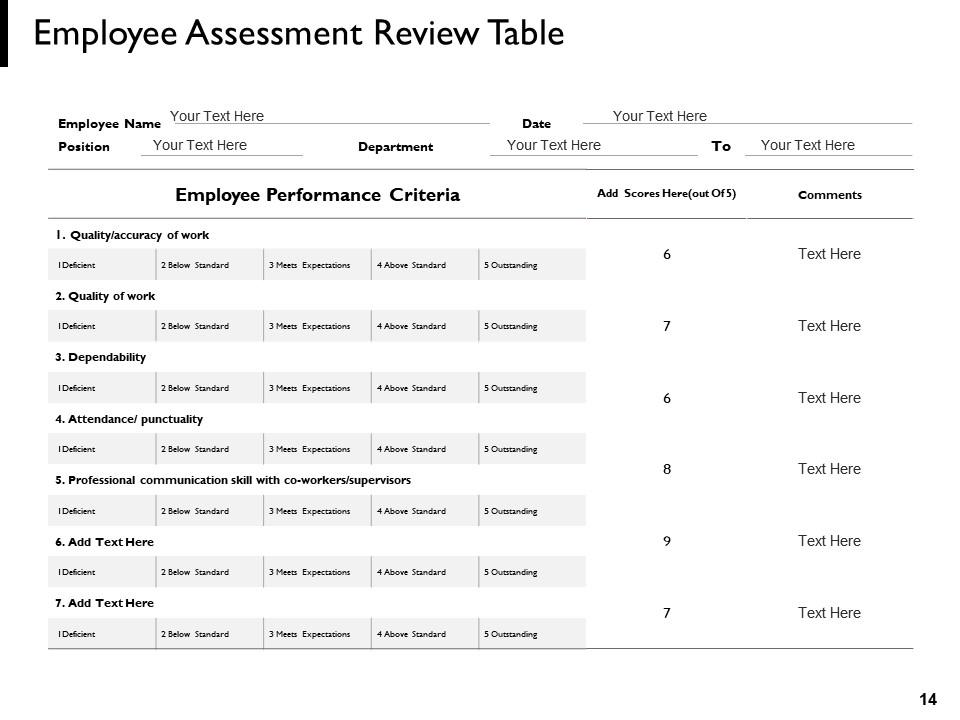
Invest in this ready to use performance appraisal assessment template and create a customized report card for all employees within your company. Assess employee performance criteria such as quality of work, dependability, professional communication skills, etc and record their weightage for employees between below standard to outstanding. Give an overall rating to the employee based on this assessment and determine their appraisal accordingly.
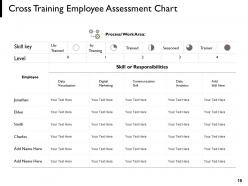
Template 9: Cross Training Employee Assessment Card
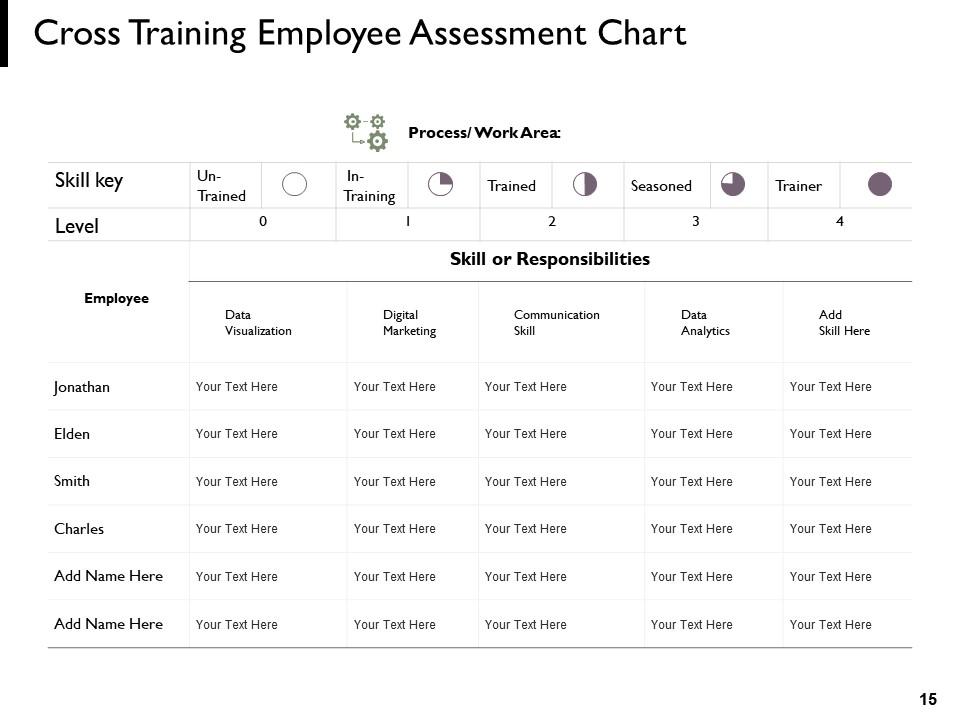
Once the assessments are complete in all forms, as a responsible management, you can create training programs for upskilling employees.While some employees will receive appraisals, others will receive training, ensuring no one is without any. In this way, fulfilling this important responsibility will help build your brand among your employees and also impact your employee retention.
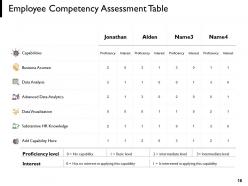
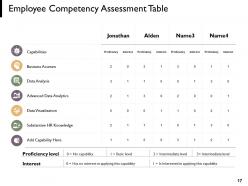
Template 10: Employee Competency Assessment Table
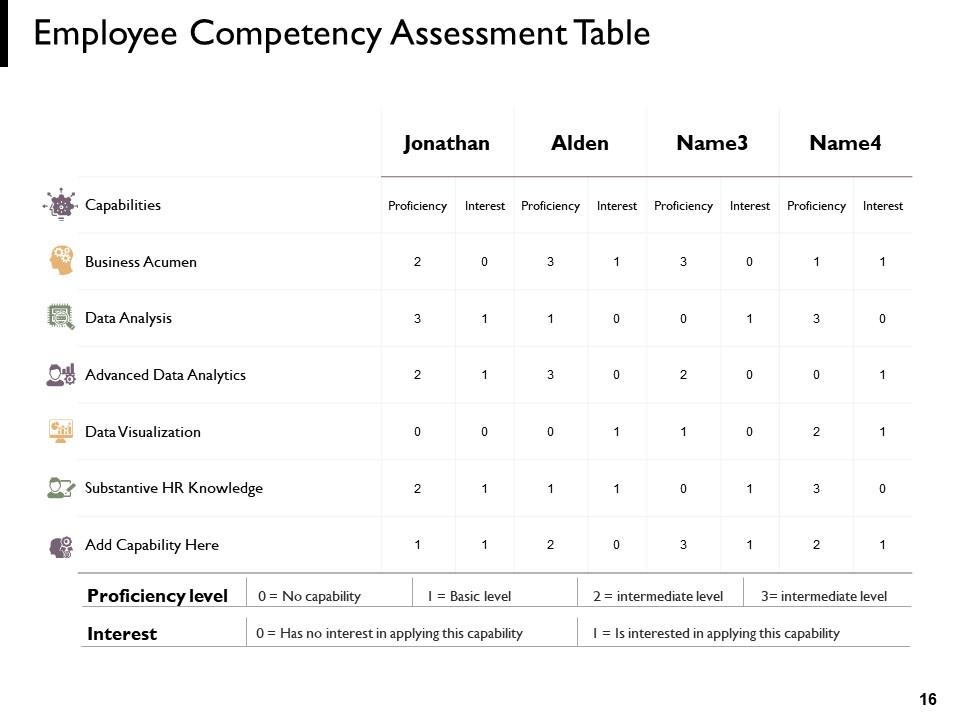
Here’s another tabular PPT Slide to record and report the level of competencies that exist in your organization. Rate employees on skills like data analysis, data visualization, business acumen, etc, and use work ethos etc to determine their value for your organization. You can also determine appraisals, suggest training programs, and identify the dead-end employees with this assessment. Go ahead and make this important analysis as the management.
The Key to Unbiased Appraisals
Ensure a proper system of rules is in place while giving employee appraisals. Invest in this readymade guide now and give fair appraisals to the deserving employees.
Performance Appraisal Powerpoint Presentation Slides with all 33 slides:
Use our Performance Appraisal Powerpoint Presentation Slides to effectively help you save your valuable time. They are readymade to fit into any presentation structure.






FAQs for Performance Appraisal
So basically, performance reviews are about three main things: developing your skills, making sure your work connects to what the company actually wants, and figuring out how you're doing overall. They help spot your strong points and where you might need backup. Plus they're tied to pay decisions and career stuff (which yeah, can get weird). Instead of wondering if your boss even sees your good work, you get real feedback. Oh, and don't just sit there - bring your own questions and goals to talk about. Makes it way more useful.
So basically, appraisals are your chance to figure out what's actually working for you and what isn't. They'll point out strengths you can build on, plus gaps you need to fill. The good managers will even call out skills you didn't realize you needed - honestly happened to me more than once. Then they can hook you up with training or special projects that actually help. But here's the thing - don't just sit there nodding. Come ready with your own goals and straight-up ask what you need to work on to get there. Make it about where YOU want to go.
Okay so there's a bunch of ways to handle this. 360-degree feedback is pretty solid - you get input from everyone around them, not just you. Self-assessments work well too because people actually think about their own stuff first. Goal-based reviews are straightforward - did they hit what they said they'd hit? Behavioral stuff focuses more on how they work, which honestly can be more telling than just results. Oh, and quarterly check-ins are way better than those dreaded annual reviews everyone hates. Just document things as they happen throughout the year - you'll thank yourself later when review time rolls around.
Honestly, appraisals can either pump people up or completely crush them. Give specific feedback that shows you actually pay attention to their work? They'll feel valued and motivated. Drop some vague "good job" or tear them down without offering help? Yeah, that backfires fast. You've gotta be real about what needs fixing while celebrating their wins too. I always try to connect their daily stuff to the bigger picture - people want to know their work matters. Oh, and let them talk back! Make it a conversation, not a lecture. Frame everything as "here's how you can grow" instead of just pointing out flaws.
Honestly, self-assessments are super underrated. You get to tell your story before your boss does - highlight wins, own up to where you struggled, all that. Most people just phone it in though, which is wild to me. Your manager actually wants to see how you think about your own work and challenges. Don't just bullet-point your accomplishments like a robot. Give real examples and be honest about what you want to get better at. It usually ends up being the whole foundation for that awkward performance chat anyway, so might as well make it count.
Honestly, the biggest thing is getting your managers on the same page with how they evaluate people. Train them consistently so they're not all doing their own thing. Ditch the vague feedback like "attitude problems" - that's just lazy managing if you ask me. Be specific and measurable instead. Get multiple people weighing in when you can, and don't wait until review season to document stuff. Write things down as they happen throughout the year. 360-degree feedback helps too since it gives you different angles. The whole point is making sure two managers would basically agree about the same employee's performance.
Ugh, the worst thing you can do is stay super vague with your feedback. Like, what does "needs improvement" even mean? Also don't wait until review time to mention problems - that's just cruel. I hate when managers do the whole compliment-sandwich thing too, it's so transparent. Focus on what people actually *did* rather than their personality. Oh, and don't let recent stuff overshadow the whole year's work just because it's fresh in your mind. Come with real examples and tell them what needs to change going forward. Honestly just be direct but fair about it.
Honestly, tech makes appraisals so much less of a nightmare. Performance management platforms let you track goals in real-time and send automatic reminders - no more chasing people down. All the feedback gets stored in one spot instead of scattered across random emails. Those 360-degree tools are actually pretty cool, they pull input from everyone automatically. Analytics dashboards show you patterns you'd miss otherwise, like who's crushing it or where teams need help. I'd say start with just one tool though. Don't try to change everything at once or you'll hate yourself. Everything being digital means you're not digging through your inbox during review season, which is honestly a lifesaver.
Ok so the biggest thing is being transparent about your criteria upfront - nobody wants to get blindsided. Train your managers to give actual specific feedback instead of those useless vague comments we've all gotten (you know what I mean lol). Two-way conversations are huge too. People mostly just want to feel heard during the whole thing! Try to keep development talks separate from the money decisions if you can. And honestly? Make it feel more like coaching than some kind of interrogation. Follow through on whatever development plans you create together - that's where a lot of companies drop the ball.
Honestly, quarterly seems to be the sweet spot for most companies that have their stuff together. Some teams do monthly but that can get annoying fast. Annual reviews are basically dead - way too much happens in a year to wait that long, you know? I'd probably start with quarterly formal ones plus maybe monthly quick check-ins. The whole point is catching issues early and actually helping people grow. You can always tweak the timing based on your team's vibe. Just pick something and stick with it - consistency matters more than getting the perfect schedule right away.
Honestly, your company's culture is gonna dictate how performance reviews actually go down. Collaborative places focus on teamwork stuff and knowledge sharing. Competitive environments? They're all about individual wins and rankings. The feedback style totally shifts too - some companies are brutally direct (which can be rough), while others take this gentler, development-focused approach. Reviews either feel like real growth conversations or just checking boxes - depends on your workplace vibe. Here's the thing though: watch how leadership talks about performance daily. That's what you'll actually get in your formal review, not whatever's written in the HR manual.
Okay so first thing - dig up all their paperwork and goals from earlier this year. Trust me, you'll kick yourself if you forgot something major from like 6 months ago. Get some concrete examples ready, both good stuff and things that need work. Don't rush the actual sit-down either. Block out real time for it. Ask questions that get them talking instead of just lecturing at them. Oh and come with some development ideas too, not just criticism. The whole point is having an actual conversation, you know? Not just going through the motions because HR said you have to.
Definitely include job goals and whether they hit them, plus soft skills like communication and teamwork. Oh, and don't forget development goals - I always remember those at like 11pm the night before reviews are due lol. You'll also want sections for strengths and improvement areas. Employee self-assessment is key too. 360 feedback from peers and direct reports is honestly game-changing if your company does that. Makes such a difference from just your perspective. Bottom line: build something that captures the full picture of how they're actually performing.
Right after the meeting, nail down specific deadlines and who's doing what. Don't let that stuff just... vanish. Monthly check-ins work well for most goals, but honestly it depends on what you're tracking. Both of you should have the same written summary - send that email within 24 hours while everything's still clear in your head. Here's the thing: treat these follow-ups like real commitments, not wishful thinking. Put it all in your calendar immediately. Otherwise you'll be scrambling three months later wondering what you actually agreed on.
Honestly, companies are ditching those awful yearly reviews for way more check-ins - like monthly or quarterly stuff. Makes sense since your boss can't just peek over your shoulder anymore. There's also this big push toward measuring actual results instead of how many hours you're sitting there (thank god). Self-assessments are huge now, plus they're doing more 360 feedback from coworkers to get the full story. Oh and random tip - start keeping track of your wins as they happen. Don't wait till review time to remember what you did. Also bug your manager for regular one-on-ones if they're not happening.
-
Excellent work done on template design and graphics.