

Performance Rating Powerpoint Presentation Slides




Try Before you Buy Download Free Sample Product
 Impress Your
 Audience
 100%
100% Editable
 Save Hours
 of Time


Determine the ways to assess the overall work quality of your staff members by using our content ready Performance Rating PowerPoint Presentation Slides. With the aid of this engaging performance management presentation template, you can highlight the measurable performance standards of individual members. You can showcase the points like the quality of work, relationships with co-workers, attitude, the behavioral approach of an employee with the help of employee job evaluation PowerPoint graphic. Use the performance assessment PPT theme and demonstrate the methods of employee review and rating. Take the assistance of our professionally designed workforce evaluation PowerPoint layout and list out the various rewards & recognition programs to acknowledge the employee on a monthly or annual basis. Employ this visually appealing employee succession planning PPT visual and elaborate on the key skills and capabilities of your employees. Therefore, download our ready-to-use staff performance rating PowerPoint deck and display the numerous appraisals and perks offered to an employee.
People who downloaded this PowerPoint presentation also viewed the following :
Content of this Powerpoint Presentation
Slide 1: This slide introduces Performance Rating. State Your Company Name and begin.
Slide 2: This slide shows Content of the presentation.
Slide 3: This slide presents Employee Assessment Criteria Table describing quality of works, relationship with coworkers, initiative, communication and attitude.
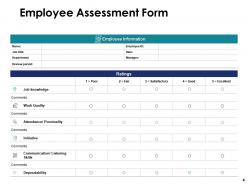
Slide 4: This slide displays Employee Assessment Form with employee information and ratings.
Slide 5: This slide represents Employee Assessment Review Chart with employee information and characteristics.
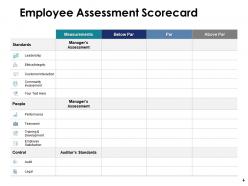
Slide 6: This slide showcases Employee Assessment Scorecard in a tabular form with categories as measurements, below par, par and above par.
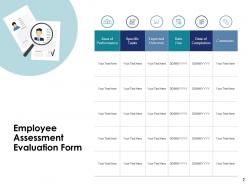
Slide 7: This slide shows Employee Assessment Evaluation Form with categories as- area of performance, specific tasks, expected outcome, date due, date of completion and comments.
Slide 8: This slide presents Employee Assessment Template with date of hire, payroll number and assessment.
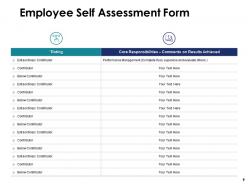
Slide 9: This slide displays Employee Self Assessment Form describing ratings.
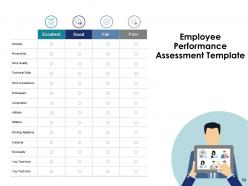
Slide 10: This slide represents Employee Performance Assessment Template.
Slide 11: This slide showcases Employee Skill Assessment Template with categories as employee skill inventory, employee and comments.
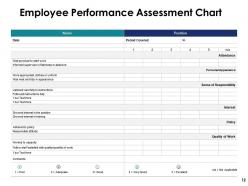
Slide 12: This slide shows Employee Performance Assessment Chart with attendance, personal appearance, sense of responsibility, interest, policy, quality of works and comments.
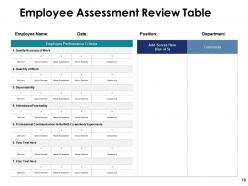
Slide 13: This slide presents Employee Assessment Review Table. You can add or edit data as per requirements.
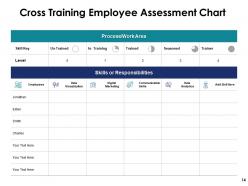
Slide 14: This slide displays Cross Training Employee Assessment Chart with process/work area and skills/responsibilities.
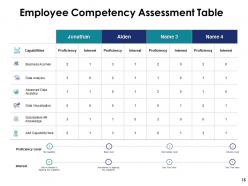
Slide 15: This slide represents Employee Competency Assessment Table with categories as- capabilities, business acumen, data analysis, advanced data analysis, data visualization and substantive Hr knowledge.
Slide 16: This slide showcases Performance Rating Icons.
Slide 17: This slide reminds about a 15 minutes Coffee Break.
Slide 18: This slide is titled as Additional Slides for moving forward.
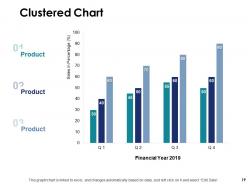
Slide 19: This slide shows Clustered Chart with three products comparison.
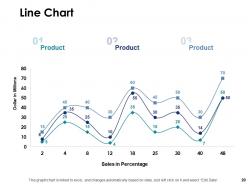
Slide 20: This slide presents Line Chart with three products comparison.
Slide 21: This is a Quotes slide to convey message, beliefs etc.
Slide 22: This is a Timeline slide to show information related with time period.
Slide 23: This is a Thank You slide with address, contact numbers and email address.
Performance Rating Powerpoint Presentation Slides with all 23 slides:
Use our Performance Rating Powerpoint Presentation Slides to effectively help you save your valuable time. They are readymade to fit into any presentation structure.







FAQs for Performance Rating
So you'll need hard numbers - sales, project completion rates, that kind of stuff. But honestly, the soft skills matter just as much. Communication, teamwork, problem-solving. How'd they do on their specific goals this quarter? I'd definitely get 360 feedback if you can swing it - managers miss a lot of day-to-day stuff. Oh, and don't sleep on behavioral competencies. People always focus on the metrics but those soft skills are what make or break someone long-term. Just make sure whatever you're measuring actually connects to their job performance, otherwise you're wasting everyone's time.
Look at what your competitors actually measure first - customer sat scores for retail, billable hours if you're in consulting, that kind of thing. Then figure out how to fit those into your current rating system. Here's the thing though - don't just copy generic "teamwork and communication" categories. That stuff's pretty useless honestly. Tech companies care way more about innovation while manufacturing is all about safety compliance. Map your ratings to what actually gets people promoted in your industry. Otherwise you're just rating people on random stuff that doesn't matter for their career growth.
Honestly, employee feedback is everything when it comes to rating systems. Ask them regularly what they think about the criteria and whether evaluations feel fair. Their input catches things you'd totally miss otherwise - plus they know their jobs way better than management does, right? Without getting their take, you're basically just guessing what good performance looks like. Don't just do one survey per year either. Make it ongoing so you can actually fix problems as they come up.
Honestly, tech makes this so much easier than the old days of trying to remember everything. You can pull actual data from your project management tools, feedback platforms, goal trackers - whatever you're already using. No more relying on scattered sticky notes or hoping your memory's accurate. AI can catch patterns you'd totally miss, though it's definitely not foolproof. The real win? You'll spend way less time hunting down info and way more time having actual conversations with your team. Just start with the tools you've got - there's probably more useful data sitting there than you think.
Oh man, definitely train your managers first - I've seen too many places skip this and it becomes a total mess. Don't force those bell curve quotas either, they're the worst for morale. Keep the whole thing simple instead of creating some overcomplicated system with 20 different criteria. Focus on actual work results, not just who talks the most in meetings (you know the type). The biggest thing though? No surprises during reviews. Give feedback all year so people aren't blindsided when ratings come out.
Dude, performance ratings are such a big deal for keeping people motivated. Fair ratings with real feedback? Your team will actually feel valued and know where they stand. But mess this up with vague or unfair ratings and you'll tank morale so fast. People don't just want a number - they want to know how to get better or move up. I've seen too many managers just go through the motions for HR. The ratings that actually work are tied to real growth opportunities. Otherwise you're just wasting everyone's time, honestly.
First thing - get your criteria written down, like actual specific behaviors instead of fuzzy stuff like "plays well with others." Then drill your managers on using the same standards. Calibration meetings are honestly a game-changer (most companies skip these for some reason). Before anyone submits final ratings, have managers compare notes and hash out differences. Keep an eye on patterns too - if Bob's team is always getting perfect scores while Sarah's are mediocre, something's off. Oh and start documenting everything this quarter before you forget.
Honestly, I'd go with quarterly check-ins plus one big annual review. Monthly feels like way too much unless someone's totally new or really struggling - nobody wants that hanging over them constantly. Quarterly gives you enough chances to catch problems early and recognize good work, but it's not this endless cycle of paperwork. Here's the thing though: write stuff down when it actually happens. Don't trust yourself to remember everything three months later because you won't. I set phone reminders to prep before each quarter so I'm not scrambling.
Look, your performance rating basically tells you what to work on next year. Got dinged for communication? That'll probably end up as a development goal. Crushed it and exceeded expectations? They'll likely push you toward leadership stuff or bigger projects. The whole system makes sense when you break it down - ratings show where you're strong and where you're not, then your development plan tackles those gaps. I'd definitely look back at your latest review before setting any growth goals. Actually, sometimes the feedback surprises you more than you'd think.
Set up clear criteria beforehand so nobody's blindsided later. Multiple managers should be rating, not just one person calling all the shots. Those calibration meetings where managers compare notes? They actually catch a lot of inconsistencies. Look, bias training sounds like total corporate fluff, but it does help if they focus on real examples instead of touchy-feely personality stuff. First thing though - audit what you're doing now. Check if there's weird patterns in who gets high ratings. Does it match up with actual performance or is something else going on? Sometimes the data tells a story you weren't expecting.
Honestly, it comes down to what you're trying to accomplish. Numbers (1-5) are way easier for comparing people and tracking changes over time - managers love the data aspect. But qualitative stuff like "exceeds expectations" feels less brutal when you're sitting across from someone. I mean, imagine telling Sarah from accounting she's a solid 2.5 this quarter, yikes. The downside with words though? Every manager interprets "meets expectations" differently. Numbers keep things more consistent across teams. Go numerical if you want clean data, descriptive if the conversations matter more.
Start with clear weightings - like 60% hard metrics (sales, project completions) and 40% soft skills. Here's the thing though: don't just say "collaboration." Get specific with behavioral examples of what that actually looks like. I've watched so many reviews blow up because managers just winged the people skills part. Get multiple people evaluating the subjective stuff to cut down on bias. Oh, and document everything with real examples. The game changer? Train your managers on what good teamwork actually means in practice instead of leaving it up to their random judgment calls.
Honestly, the best thing you can do is flip it around - ask them first how they think they did. Most people are pretty self-aware anyway, and it gets them talking instead of just sitting there waiting for judgment. Don't give vague stuff like "nice work this quarter." Have actual examples ready (I usually jot down 3-4 stories beforehand so I don't blank out). Let them push back if they disagree with something. The real magic happens when you focus on what's coming next rather than relitigating everything they already know they did. Send them out with maybe 2-3 concrete things to work on.
So basically you want to work backwards from your big company goals. Figure out what success looks like at the top, then break it down by department, then get super specific about what each person needs to hit. I always think of it like - if someone crushes their performance review, did they actually help the business win? Their metrics should tie directly to real stuff like revenue or customer happiness. Otherwise you're just rating people on random tasks that don't matter. It's kinda like reverse-engineering the whole thing, but it works.
Peer reviews basically give your boss more than just their own opinion when rating your performance. Your coworkers see stuff your manager totally misses - like how you actually collaborate on projects or handle day-to-day teamwork. They're kinda stressful at first, not gonna lie. But most companies don't use them as the only factor, just one piece of the puzzle. The feedback creates a way more complete picture of your work. Oh, and if you give detailed, specific comments instead of generic "great job!" stuff, people usually return the favor. It's worth taking them seriously.
-
Amazing product with appealing content and design.
-
Use of different colors is good. It's simple and attractive.
-
Topic best represented with attractive design.
-
Great product with highly impressive and engaging designs.