

Performance Assessment Powerpoint Presentation Slides





Try Before you Buy Download Free Sample Product
 Impress Your
Audience
 100%
Editable
 Save Hours
of Time


Yearly performance reviews are critical, download our ready to use Performance Assessment Powerpoint Presentation Slides to initiate the performance review process. Performance Analysis PowerPoint complete deck includes a set of content ready PPT slides such as introduction, background, our team, performance management program, core performance criteria, performance planning, guidelines, type of goals/ priorities, goal setting process, performance coaching, employee’s responsibilities, supervisor’s responsibilities, Do’s and Don’ts, feedback, multiple sources of feedback, one to one feedback form, self-evaluation form, performance review and development, performance review form, assessment and rating, performance improvement plan, supervisors’ comments, employee development program, performance management, KPI and Dashboard, KPI metrics, etc. With this work performance evaluation presentation deck, HR people can easily streamline their employee performance analysis process. Furthermore, our job evaluation presentation design can be used to give employees feedback and to set goals. Demonstrate your concepts with this fully editable team performance management PowerPoint template. Just insert your text and you have a professional presentation in front of you in no time. Our Performance Assessment Powerpoint Presentation Slides embody the art of the achievable. Believe in the fact that you can.
People who downloaded this PowerPoint presentation also viewed the following :
Content of this Powerpoint Presentation
Slide 1: This slide introduces Performance Assessment. State Your Company Name and begin.
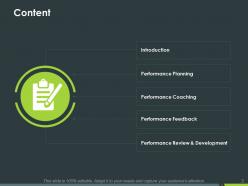
Slide 2: This slide shows Content of the presentation.
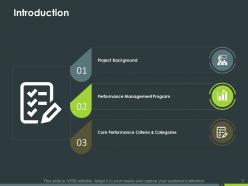
Slide 3: This is an Introduction slide describing- Project Background, Performance Management Program, Core Performance Criteria & Categories.
Slide 4: This slide showcases Background with- Project Fund, Duration, Objectives, Project Brief or Summary, Expected Outcomes, Core Performance Criteria & Categories.
Slide 5: This is Our Team slide with names and designation.
Slide 6: This slide shows Performance Management Program with- Planning, Action, Results, Feedback Loop.
Slide 7: This is another slide describing Performance Management Program.
Slide 8: This slide presents Core Performance Criteria priority wise.
Slide 9: This slide displays Core Performance Criteria rating wise.
Slide 10: This is another slide on Core Performance Criteria. You can add or edit data as per requirements.
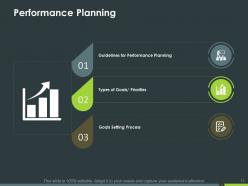
Slide 11: This slide represents Performance Planning describing- Guidelines for Performance Planning, Types of Goals/ Priorities, Goals Setting Process.
Slide 12: This slide shows Performance Guidelines in a tabular form.
Slide 13: This slide presents Types of Goals/Priorities. You can add or edit goals and their priorities as per requirements.
Slide 14: This is another slide describing Types of Goals/Priorities.
Slide 15: This slide displays Goals Setting Process describing- Specify Tasks and Results, Set Targets or Standards, Determine the Measures, Outline Time Frames, Rate Goal Performance, Coordinate Efforts for Goal Achievement, Prioritize Goals.
Slide 16: This slide represents Goals Setting Template describing- Specific, Measurable, Attainable, Relevant, Time-Bound.
Slide 17: This slide displays Performance Coaching with related imagery.
Slide 18: This slide represents Employees Responsibilities in a matrix form.
Slide 19: This slide showcases Supervisor’s Responsibilities in tabular form.
Slide 20: This slide shows Do’s & Don’ts. You can add or edit data as per requirements.
Slide 21: This slide presents Performance Feedback with related imagery.
Slide 22: This slide displays Multiple Sources of Feedback as- Peers, Subordinates, Suppliers, Customers, Team Members, Line Managers, Direct Reports.
Slide 23: This slide represents Feedback - One to One Form. You can add or edit data as per requirements.
Slide 24: This is another slide for Feedback - One to One Form.
Slide 25: This slide showcases Feedback - Self Evaluation Form.
Slide 26: This slide displays Performance Review & Development with related imagery.
Slide 27: This slide shows Performance Review Form with categories as Productivity, Communication, Leadership and Personal development.
Slide 28: This is another slide with Performance Review Form describing characteristics.
Slide 29: This slide presents Performance Assessment in a tabular form.
Slide 30: This slide displays Performance Ratings in a tabular form with rating scale from poor to excellent.
Slide 31: This is another slide on Performance Ratings. You can add or edit text as per requirements.
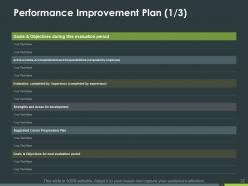
Slide 32: This slide represents Performance Improvement Plan in tabular form with additional text boxes.
Slide 33: This slide showcases Performance Improvement Plan describing Improvement objectives, Success Criteria, Additional support required, review schedule and objective outcome.
Slide 34: This slide shows Performance Improvement Plan with duties and improvement required, expected outcome/measurement, support and dependencies.
Slide 35: This slide presents Supervisor’s Comments with categories as Current responsibilities, Performance assessment. Comments & approval.
Slide 36: This is another slide on Supervisor’s Comments in tabular form.
Slide 37: This slide displays Employee Development Program with weekly, 30 day, 60 day, and 90 day activities.
Slide 38: This is another slide on Employee Development Program with categories as Learning & development, Type of development, Timescales, person responsible, Comments.
Slide 39: This is another slide on Employee Development Program in a matrix form.
Slide 40: This slide displays Performance Management KPIs & Dashboard with related imagery.
Slide 41: This slide shows Performance Management KPI Metrics with imagery and text.
Slide 42: This slide presents Performance Management KPI Metrics describing- Positive Feedbacks, Negative Feedbacks, Annual Appraisal Pending, Pending Feedbacks, Meetings Attended by Employee.
Slide 43: This is another slide on Performance Management KPI Metrics with donut pie chart.
Slide 44: This slide represents Performance Management KPI Metrics with person for review and person who needs a review.
Slide 45: This slide showcases Performance Management Dashboard with donut pie chart and bar graph.
Slide 46: This slide shows Performance Management Dashboard with categories as- Employment Profile, Training Profile, CPD & Qualifications, Appraisal Profile.
Slide 47: This slide presents Performance Management Dashboard with the help of graphs.
Slide 48: This slide displays Performance Appraisal Icons.
Slide 49: This slide reminds about a 15 minutes coffee break.
Slide 50: This slide is titled as Additional Slides for moving forward.
Slide 51: This slide shows Stacked bar chart with three products comparison.
Slide 52: This slide presents Clustered Bar chart with data in percentage.
Slide 53: This is Our Team slide with names and designation.
Slide 54: This is Our Mission slide with related imagery and text.
Slide 55: This is About Us to show company specifications etc.
Slide 56: This is a Comparison slide to state comparison between commodities, entities etc.
Slide 57: This is a Financial slide. Show your finance related stuff here.
Slide 58: This is a Quotes slide to convey message, beliefs etc.
Slide 59: This is a Location slide with maps to show data related with different locations.
Slide 60: This is a Thank You slide with address, contact numbers and email address.
Performance Assessment Powerpoint Presentation Slides with all 60 slides:
Breeze through any inspection with our Performance Assessment Powerpoint Presentation Slides. You will acquire a high grading.







FAQs for Performance Assessment
Honestly, it totally depends on what you do, but I'd focus on the basics first. Quality stuff like error rates and customer satisfaction scores are solid. Then track your actual output - tasks done, revenue if that applies to you. Time-to-completion is pretty useful too. Goal achievement is probably the biggest one though - are you actually hitting what you said you would? But seriously, don't go overboard tracking like 15 different things. That'll drive you crazy. Pick maybe 3-5 that actually connect to real business results. Make sure they reflect actual good work, not just staying busy. What specific role are you thinking about?
Okay so first thing - you've gotta connect what you're measuring to actual business goals. Most companies are terrible at this! They'll rate people on vague stuff like "collaboration" when they should be looking at behaviors that actually matter. Say customer retention is huge for you right now. Your sales folks shouldn't just get scored on closing deals - track how they're building relationships and growing existing accounts too. Make it super clear to everyone how their day-to-day work connects to the big wins the company needs. People perform way better when they can see that link.
Dude, you definitely need employee feedback - makes everything way more fair and accurate. People absolutely hate getting evaluated without any say in it. When they can explain what went wrong, share context you missed, or talk up their wins, you get the full story instead of just your side. Plus it builds trust, which honestly matters more than people think. Ask open-ended stuff and actually listen to their answers. You'll catch things like roadblocks or challenges that weren't on your radar. The whole process just works better when it's a conversation, not a one-way judgment call.
So basically, you can automate most of the tedious stuff - data collection, goal tracking, all that. Performance management platforms are pretty solid for setting up check-in reminders and storing feedback in one spot. Real-time analytics save you hours of manual work too. The AI insights are actually useful for spotting trends, which honestly surprised me at first. No more digging through old emails trying to find feedback from months ago. Just make sure whatever tool you pick works with what your team's already using - nobody wants to learn another complicated system on top of everything else.
First thing - tell everyone why you're doing this upfront. People freak out otherwise. Pick reviewers who actually know the person's work, not just random colleagues. Make questions super specific instead of wishy-washy stuff like "how's their communication?" (what does that even mean?). Give people time to think about their answers properly. Promise anonymity and stick to it - this is huge. Here's where most companies mess up though: they collect all this feedback then... nothing. Don't do that. Actually sit down with the person afterward, go through themes, make a real plan. Otherwise you've just wasted everyone's time.
Honestly, performance reviews are perfect for figuring out what your team's already crushing and where they need help. I'd use them to actually talk about where people want their careers to go - not just grade them on last quarter. Here's the thing though: you've got to make it about their future, not some report card nonsense. Connect those results to real stuff like training, mentoring, or maybe a challenging project. Shows you actually care about growing them. Plus regular check-ins let you pivot when things change, which they always do.
Honestly, good performance reviews can totally change the game for keeping people around. Your team feels way more valued when they're getting real feedback regularly, not just those awful once-a-year sit-downs we all dread. People actually stick around when they see a clear path forward. The trick is making them actual conversations about growth instead of just going through the motions. I mean, nobody wants to feel like they're just checking boxes, right? Keep them frequent and specific. Tie everything back to how they can actually develop their skills. That's what really makes people care about their work and want to stay.
You gotta stop caring about hours and start tracking actual results. Set clear goals upfront, then check in through video calls or those async updates everyone's doing now. Honestly? Some managers are just control freaks who can't handle not seeing butts in seats - but remote work makes performance way clearer if you do it right. Document everything in shared tools so progress is visible. Instead of measuring office stuff, focus on what people actually deliver and how well they work with the team. Oh, and audit your current metrics first - half of them probably don't matter anyway.
Get multiple people involved instead of having one manager decide everything - balances out the weird blind spots we all have. Focus on actual behaviors and stuff you can measure, not fuzzy "team player" nonsense without examples. Structured rating scales beat random feedback every time. Oh and don't mix performance talks with salary conversations, that's just awkward for everyone. More frequent check-ins work way better than cramming a whole year into one brutal review session. Standardize your criteria first though - otherwise you're comparing apples to oranges across different employees.
Yeah, technically you should do formal reviews once a year, but honestly that's pretty useless. Monthly one-on-ones are where the real work happens - you can actually fix stuff before it becomes a problem. Annual reviews? By then you're basically doing damage control on issues that are ancient history. Your people need feedback way more often than that to actually get better at their jobs. Even quick 15-minute check-ins make a huge difference. Oh, and quarterly reviews aren't bad either if you can swing it. Trust me, everyone wins when you're not saving up feedback for one awkward conversation per year.
Honestly, most managers mess up the timing - they scramble at the last second instead of tracking stuff all year. Recency bias is huge too, where you only remember what happened last week. Don't let personal feelings get in the way either. Oh, and never blindside someone with feedback they've never heard before - that's just cruel. I learned this the hard way with my first team. Document things as they happen. Keep talking to your people regularly, not just during official review time. Makes the whole process way less painful for everyone involved.
Don't just wing it with vague memories - trust me, I tried that once and it was painful. Gather actual examples of wins AND areas to improve from throughout the review period. Write down 2-3 concrete situations for each point you want to make. Your employee needs specifics they can act on, not just "you're doing fine but could be better." Focus on what they did and the results, not personality stuff. Frame any criticism as growth opportunities (sounds cheesy but it works). Plan how the conversation will flow so you're having a real dialogue about their development instead of just dumping feedback on them.
Your performance review scores are basically what determines your raises, bonuses, and whether you get promoted. Higher ratings = bigger percentage increases, at least in theory. Budget constraints can totally screw this up though - I've seen people with great reviews get mediocre raises because the company was being cheap that year. Document everything you accomplish as it happens, not just when review season rolls around. You'll want concrete examples to back up why you deserve more money. Oh, and figure out how your specific company weighs different performance areas - some care more about teamwork, others just want results.
Track both your immediate metrics and the long-term stuff. Employee engagement scores, retention after reviews, actual performance improvements quarter to quarter. Manager feedback matters most though - are they getting value or just going through the motions? Because honestly, most of these systems end up being total time wasters. Completion rates tell you if people are even bothering. Check if assessments actually predict who'll succeed later on. Oh, and run pulse surveys regularly with both managers and employees - catches problems before they spiral. Calibration across teams is key too so everyone's using the same standards.
Honestly, three things will make or break your one-on-ones. First - and I'm guilty of this too - actually listen more than you talk. Most managers just ramble the whole time. Second, ditch the vague "great work" comments for specific feedback about what they did well or what needs tweaking. The third thing? Ask open-ended questions that get them thinking about their own performance instead of you just telling them everything. Makes it way more collaborative and less like a lecture, which nobody wants to sit through anyway.
No Reviews