


Complete Guide To Conflict Resolution Powerpoint Presentation Slides




Try Before you Buy Download Free Sample Product
 Impress Your
 Audience
 100%
100% Editable
 Save Hours
 of Time


Introducing our customizable Complete Guide to Conflict Resolution PowerPoint template, expertly designed by our professionals at SlideTeam. In any organization, conflicts may arise due to diverse personalities, attitudes, and viewpoints among team members. However, these conflicts can be effectively resolved to strengthen team relationships, boost employee morale, reduce absenteeism, and enhance overall productivity. Our Workplace conflict scenarios deck begins by highlighting the latest trends and statistics in organizational conflict, covering various phases of conflict. It also includes a section where managers can emphasize the impact of unresolved team conflicts on the companys financial performance. Additionally, our Interpersonal conflicts PPT presents common workplace conflict scenarios and provides strategies for overcoming them. Furthermore, it offers a Key Performance Indicator KPI dashboard, enabling firms to analyze the impact of conflict resolution strategies on both employees and overall company performance. This powerful template is designed to empower businesses in effectively resolving workplace conflicts, fostering a positive work environment, and achieving long-term success. Gain access to this valuable resource today.
People who downloaded this PowerPoint presentation also viewed the following :
Content of this Powerpoint Presentation
Slide 1: This slide introduces Complete Guide to Conflict Resolution. Commence by stating Your Company Name.
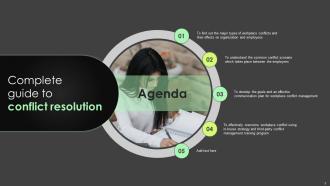
Slide 2: This slide depicts the Agenda of the presentation.
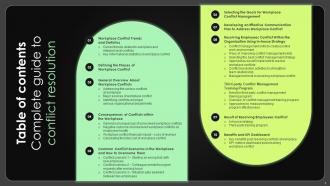
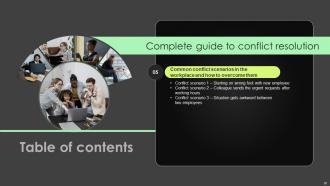
Slide 3: This slide includes the Table of contents.
Slide 4: This slide highlights the Title for the Topics to be covered further.
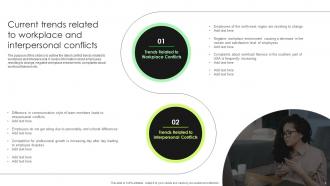
Slide 5: This slide exhibits the Current trends related to workplace and interpersonal conflicts.
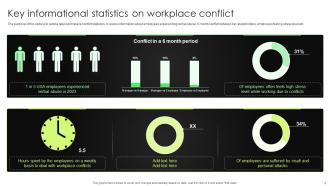
Slide 6: This slide states the Key informational statistics on workplace conflict.
Slide 7: This slide indicates the Heading for the Contents to be discussed next.
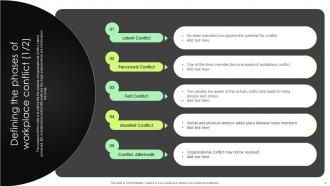
Slide 8: This slide deals with Defining the phases of workplace conflict.
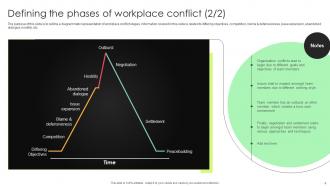
Slide 9: This slide continues Defining the phases of workplace conflict.
Slide 10: This slide depicts the Title for the Ideas to be covered in the following template.
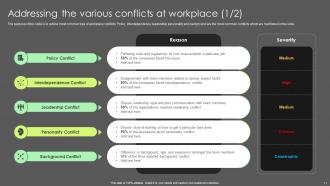
Slide 11: This slide focuses on Addressing the various conflicts at workplace.
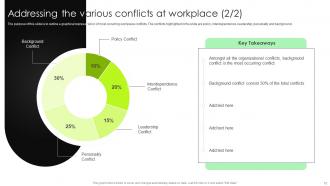
Slide 12: This slide continues Addressing the various conflicts at workplace.
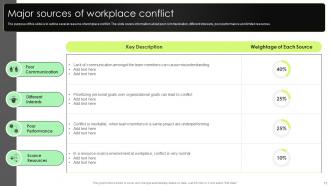
Slide 13: This slide states the Major sources of workplace conflict.
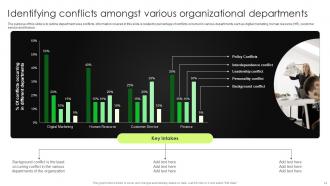
Slide 14: This slide emphasizes on Identifying conflicts amongst various organizational departments.
Slide 15: This slide includes the Heading for the Ideas to be discussed further.
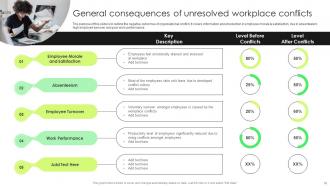
Slide 16: The purpose of this slide is to outline the negative outcomes of organizational conflict.
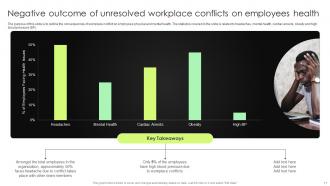
Slide 17: This slide highlights the Negative outcome of unresolved workplace conflicts on employees health.
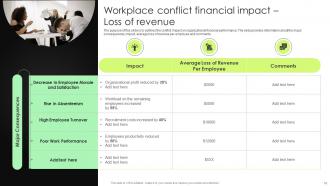
Slide 18: The purpose of this slide is to outlines the conflict impact on organizational financial performance.
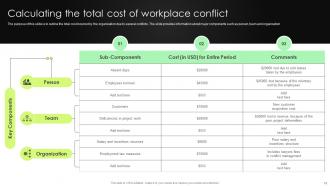
Slide 19: This slide portrays Calculating the total cost of workplace conflict.
Slide 20: This slide includes the Title for the Contents to be covered next.
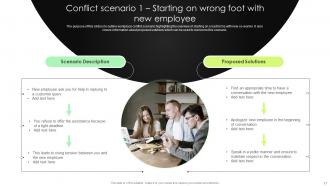
Slide 21: The purpose of this slide is to outline workplace conflict scenario highlighting the overview of starting on a bad terms with new co-worker.
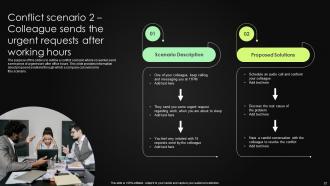
Slide 22: This slide showcases a conflict scenario where co-worker send some piece of urgent work after office hours.
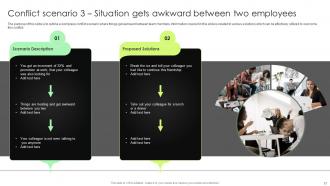
Slide 23: The purpose of this slide is to outline a workplace conflict scenario where things get awkward between team members.
Slide 24: This slide displays the Heading for the Topics to be discussed further.
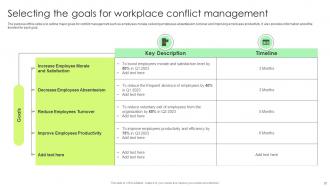
Slide 25: This slide deals with Selecting the goals for workplace conflict management.
Slide 26: This slide reveals the Title for the Topics to be covered in the upcoming template.
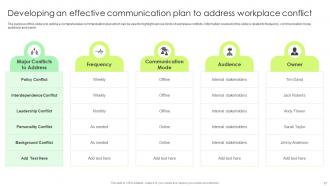
Slide 27: This slide focuses on Developing an effective communication plan to address workplace conflict.
Slide 28: This slide indicates the Heading for the Contents to be further discussed.
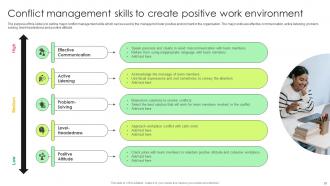
Slide 29: This slide reveals the Conflict management skills to create positive work environment.
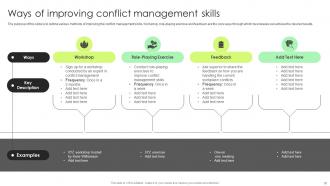
Slide 30: This slide states the Ways of improving conflict management skills.
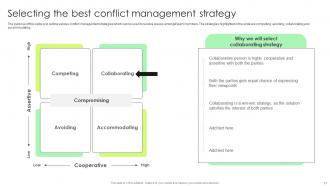
Slide 31: This slide emphasizes on Selecting the best conflict management strategy.
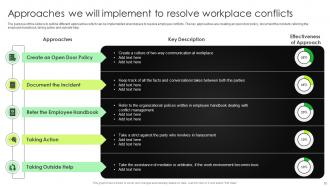
Slide 32: This slide highlights the Approaches we will implement to resolve workplace conflicts.
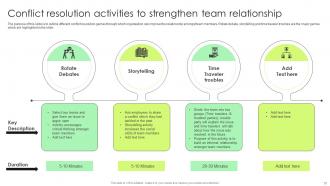
Slide 33: This slide shows the Conflict resolution activities to strengthen team relationship.
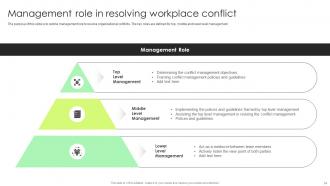
Slide 34: The purpose of this slide is to outline management role to resolve organizational conflicts.
Slide 35: This slide contains the Title for the Ideas to be covered in the following template.
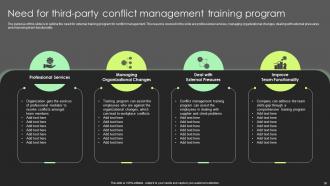
Slide 36: This slide highlights the Need for third-party conflict management training program.
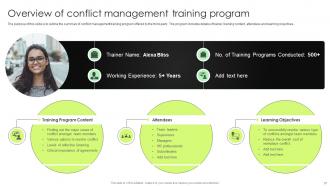
Slide 37: The purpose of this slide is to outline the summary of conflict management training program offered by the third-party.
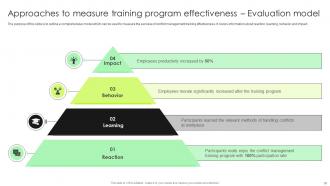
Slide 38: This slide outlines a comprehensive model which can be used to measure the success of conflict management training effectiveness.
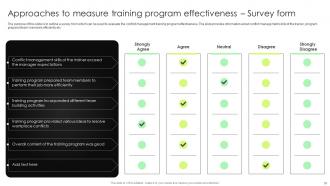
Slide 39: This slide depicts the Approaches to measure training program effectiveness.
Slide 40: This slide exhibits the Heading for the Ideas to be discussed next.
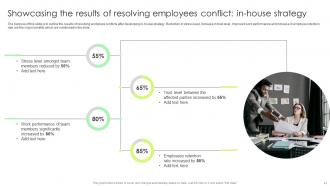
Slide 41: The purpose of this slide is to outline the results of resolving workplace conflicts after developing in-house strategy.
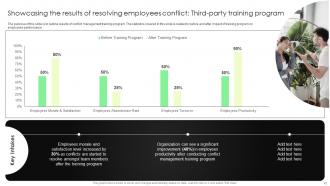
Slide 42: The purpose of this slide is to show results of conflict management training program.
Slide 43: This slide mentions about the Title for the Contents to be covered in the upcoming template.
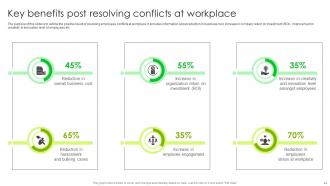
Slide 44: This slide states the Key benefits post resolving conflicts at workplace.
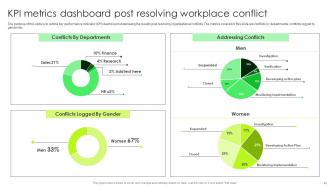
Slide 45: This slide illustrates the KPI metrics dashboard post resolving workplace conflict.
Slide 46: This is the Icons slide containing all the Icons used in the plan.
Slide 47: This slide is used for depicting some Additional information.
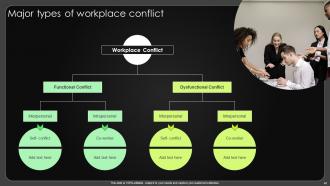
Slide 48: This slide showcases the Major types of workplace conflict.
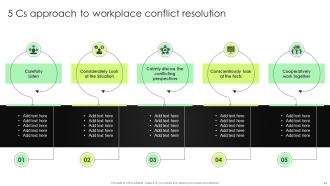
Slide 49: This slide exhibits the 5 Cs approach to workplace conflict resolution.
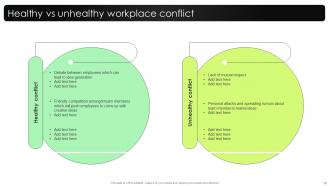
Slide 50: This slide displays the Healthy vs unhealthy workplace conflict.
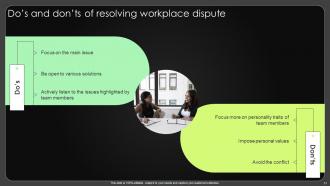
Slide 51: This slide showcases the Do’s and don’ts of resolving workplace dispute.
Slide 52: This slide represents the SWOT analysis.
Slide 53: This is the About us slide. State your comapny-related information here.
Slide 54: This slide reveals the company's Vision, Mission, and Goal.
Slide 55: This is Meet our team slide. State your team-related information here.
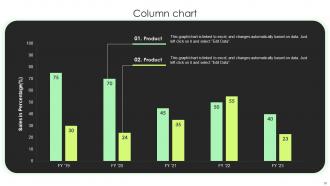
Slide 56: This slide displays the Column chart.
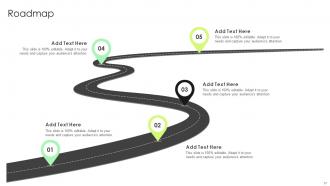
Slide 57: This slide represents the Roadmap of the company-related information here.
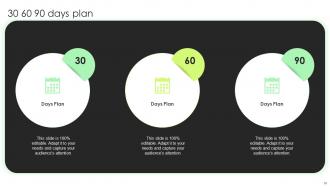
Slide 58: This is the 30 60 90 days plan slide for effective planning.
Slide 59: This is the Thank you slide for acknowledgement.
Complete Guide To Conflict Resolution Powerpoint Presentation Slides with all 64 slides:
Use our Complete Guide To Conflict Resolution Powerpoint Presentation Slides to effectively help you save your valuable time. They are readymade to fit into any presentation structure.






FAQs for Complete Guide To Conflict Resolution
Honestly, most team drama comes from people not talking clearly to each other. Also when nobody knows who's supposed to do what - that's always a mess. Different priorities cause fights too, plus everyone's fighting over budget and resources (which, fair enough). Personality stuff gets weird when you've got detail people clashing with the big picture folks. Oh and when team values don't line up? Yikes. But here's the thing - if you catch this stuff early with regular check-ins, you can actually fix it before it blows up.
Honestly, active listening is like a cheat code for arguments. When you actually focus on what they're saying instead of prepping your comeback, people calm down so fast. I learned this the hard way lol. Just reflect back their words, ask questions that show you get it. They'll drop their guard once they feel heard - it's wild how defensive people get when they think you're not listening. Oh, and paraphrase their main point before you jump into fixing anything. Works every time.
Dude, emotional intelligence is a game changer for dealing with conflict. When you can actually read what's going on emotionally - both with yourself and the other person - you're not just throwing random solutions at the wall. You stay way calmer too, instead of getting all defensive. I swear, half the arguments I see could've been avoided if people just took a sec to figure out what everyone was actually feeling underneath all the drama. Oh, and it helps you find fixes that don't fall apart a week later. Next time things get heated, pause and ask yourself what's really driving this mess before you try fixing it.
Dude, culture plays such a huge role in handling conflicts - I can't stress this enough. What seems totally normal to you might come across as rude or aggressive to someone else. Like, being super direct works great in some places, but other cultures? They'd rather die than have that kind of confrontation. Some people need you to go through a mutual friend first instead of just marching up to them. I made this mistake once and it was... awkward. The timing matters too - there's definitely a "right" way and time to bring stuff up depending on someone's background. Just take a sec to think about where they're coming from before diving in.
Honestly, just listen. Like actually listen to what they need, not what they're asking for - there's usually a difference. I had this project blow up last year because I kept arguing about the wrong stuff. Ask things like "why does this matter to you?" instead of defending your point right away. Find something you both agree on first. Then try to figure out how you both win instead of who's right. Sounds cheesy but it works. Oh, and repeat back what you heard before jumping into your side of things. People just want to feel heard most of the time.
Honestly, it comes down to whether you're actually trying to solve something or just trying to be right. With constructive conflict, you're both focused on fixing the actual problem - might disagree on the approach, but you're still listening and willing to meet halfway. Destructive stuff? That's when it gets personal and ugly. You start going after who they are instead of what they did (been guilty of this myself). Nobody's budging, everyone's just trying to "win." Quick reality check: is this fight actually helping anything, or are you just feeling vindicated?
Okay so there's basically 5 steps that work pretty well. Start by figuring out what the real problem actually is - not just what people are complaining about on the surface. Get everyone's side of the story next. Then brainstorm solutions together (this part can get messy but that's fine). Pick the best option and put it into action. Here's the thing though - you absolutely have to circle back later and check if it's still working. I've seen so many conflicts flare up again because people assume everything's fine and never follow through.
Honestly, mediation is clutch because you get someone neutral running the show who keeps everyone from losing their minds. They're not there to pick sides or make calls for you - just help you actually listen to each other instead of just waiting for your turn to talk. Way better than dragging HR into it or going nuclear with lawyers (and your wallet will thank you). Here's the thing though - everyone's gotta actually want to fix things, not just be "right." You end up with way more control since you're building the solution together. Just don't wait until things get totally toxic.
Dude, seriously - deal with stuff right away before it blows up in your face. I learned this the hard way at my last job, but whatever. When you jump on problems early, people don't have time to get all bitter and resentful. Plus everyone's still being reasonable instead of digging their heels in like stubborn kids. You'll save yourself so much drama, time, and honestly probably money too. The creative solutions come way easier when nobody's pissed off yet. Don't wait around hoping things magically fix themselves - they won't.
Honestly, start with making sure people can actually talk to each other without drama. Day one, set up those expectations clearly - who does what, when they do it, all that stuff. I've watched too many teams implode because nobody wanted to say anything when things got weird. Your managers need to jump on issues fast instead of pretending they'll magically disappear (spoiler: they won't). Regular check-ins help a ton - gives people a safe space to bring up problems before someone has a meltdown in the break room. Oh, and whatever vibe you want from your team? You gotta show it first.
So there's this Thomas-Kilmann thing that breaks down conflict styles - like are you competing or compromising, that kind of stuff. Interest-Based Problem Solving is probably my favorite though, since it digs into what people actually need instead of just what they're demanding. Oh, and PEACE process covers the basics: Partnership, Empathy, Apology, Clarification, Evaluation. Sounds kinda corporate but it works. The biggest game-changer for me has been separating the person from the actual problem. Active listening helps too - you know, "I" statements and all that. Just pick whatever feels right for your situation first.
Start by just listening more - catch yourself when you interrupt or get all defensive. I know role-playing sounds super awkward, but doing practice runs with coworkers you trust actually helps. Look into stuff like reframing and finding common ground, then test it out in smaller conflicts first. After every disagreement, think about what went well and what didn't. Your emotions probably played a bigger role than you realize. Notice if you're always reacting the same way. Oh, and definitely ask people who've watched you handle conflict for their honest take - sometimes we're blind to our own patterns.
Honestly, your leadership style makes or breaks how conflicts play out. Create that safe space where people actually talk to you early? Issues get fixed fast. But those autocratic types just get fake smiles while everything blows up later - seen it happen so many times. Democratic leaders usually nail it because everyone feels heard. Short conflicts, lasting solutions. You still gotta know when to step in hard during heated moments though. Reading the room is everything. Sometimes you facilitate, sometimes you direct. Really depends on what that specific mess needs, you know?
Honestly, feedback is like catching problems before they explode in your face. Create safe spaces where people can actually speak up - I've watched entire teams implode because everyone stayed quiet about tensions brewing. Make it routine and go both ways. Regular check-ins help, but ask direct questions about how people are getting along. Listen when someone says they're "a bit frustrated" instead of just nodding along. Dig deeper! That's usually code for bigger issues. Way easier to fix small friction than deal with people who completely hate each other later.
So basically, conflict resolution training teaches your team how to deal with disagreements before they spiral into major drama. People learn to speak up about issues and actually listen to each other - which honestly cuts down on so much workplace weirdness. You know those awkward tensions that hang around for weeks? Yeah, way less of that. The training covers stuff like active listening and finding middle ground. Oh, and communication techniques are huge. I'd probably start with a basic workshop on that - you'll likely notice better teamwork pretty fast.
-
SlideTeam is the way to go when you are in a time crunch. Their templates have saved me many times in the past three months.
-
The best part about SlideTeam is their meticulously prepared presentations (complete-decks and single-slides both), infused with high-quality graphics and easy to edit. All-in-all worthy products.